Classic French Crepes
Make classic French crepes with tender centers, lightly crisp edges, and golden-brown spots. Learn how to swirl the batter, judge the flip, and fold them.
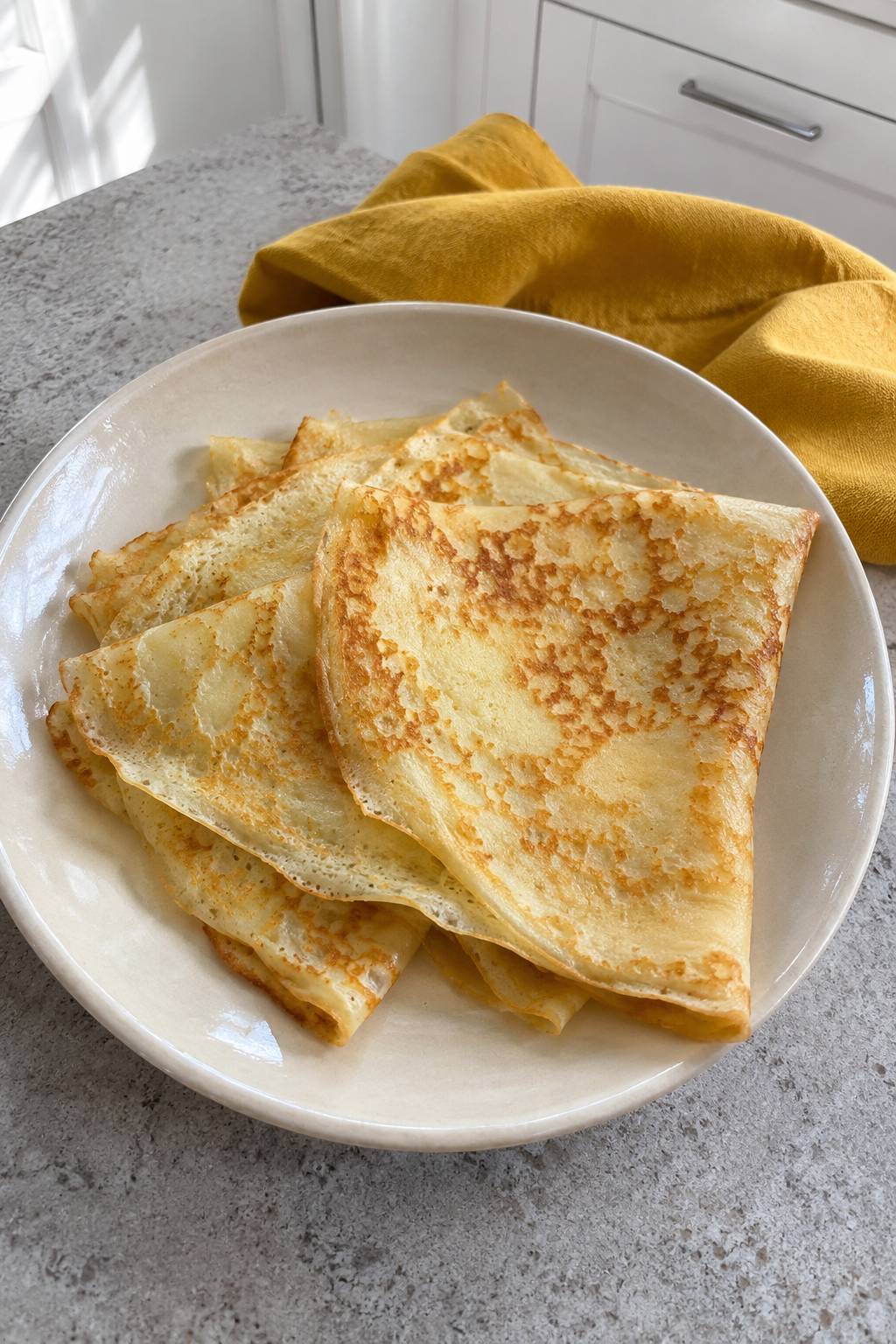
Classic French crepes are thin and tender, with lightly crisp edges and golden-brown spots across the surface. The centers stay supple enough to fold into quarters, so you get a little crispness at the rim and soft layers in every bite. If you’re making them for breakfast or brunch, look for those details as you cook. The way the batter moves across the skillet and the way the edges lift tell you how each crepe is coming along.
What makes the batter smooth and pourable
All-purpose flour gives the crepes enough body to hold together in a thin layer. Granulated sugar adds a touch of sweetness, and fine salt rounds out the flavor. Large eggs give the crepes structure while keeping them tender. Whole milk makes the batter pourable, and melted, slightly cooled unsalted butter adds richness.
Adding the milk in stages gives you a chance to smooth out the flour mixture while the batter is still thick enough for the whisk to work through it easily. After the covered batter has rested, stir it gently. What matters at the skillet is how readily it flows into a thin layer as you tilt the pan.
How to get an even layer in the skillet
A nonstick skillet makes a thin crepe easier to release, especially around the delicate edges. Brush the surface lightly with unsalted butter for an even coating. As you work through the batter, you can brush on more as needed.
The batter starts setting where it lands, so have your wrist ready to tilt as you pour. Lifting the skillet off the burner gives you room to turn it smoothly and guide the batter across the bottom. If the batter stops moving while part of the skillet is still bare, pay attention to how it behaved at the pour. Batter that flowed freely and then set on contact is a cue to lower the heat slightly for the next crepe.
What the edges and underside tell you
The rim is usually the easiest place to see how the crepe is cooking. As the top sets, the edges begin to lift slightly and give you a place to slip in a thin spatula. Lift the edge just enough to look underneath. Golden-brown spots are the color you’re after, and the paler areas are part of the mottled finish. The other side can be more lightly spotted.
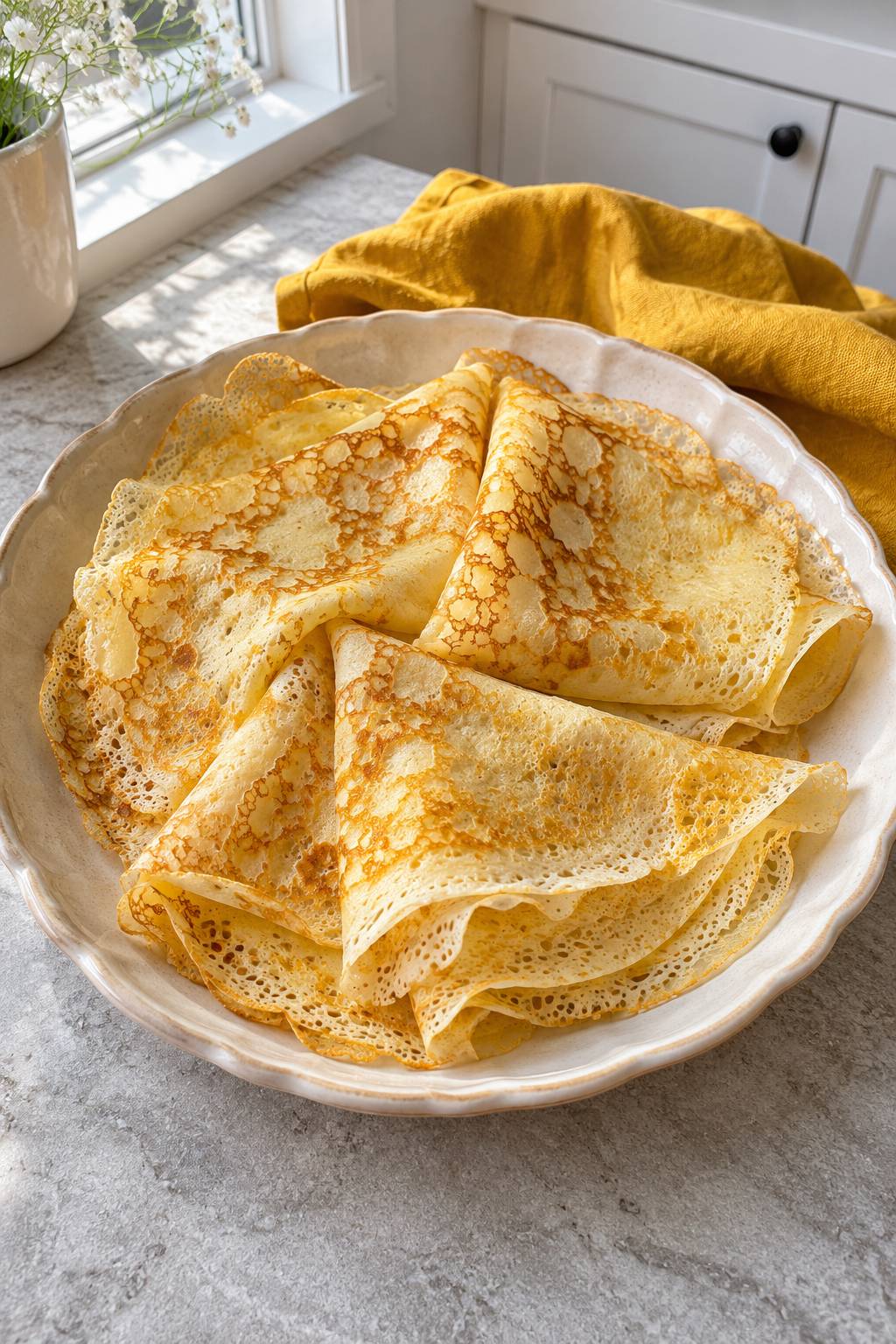
As the crepes come out of the skillet, stack them on a plate and cover them loosely with a clean kitchen towel. The towel helps keep the stack warm and pliable so the crepes bend easily when you fold them into quarters for serving.
Frequently Asked Questions
What if the rested batter is too thick to swirl?
If the batter moves sluggishly and leaves a thick layer as you tilt the skillet, whisk in the water called for in the recipe card’s note. Try swirling the batter again. It should flow readily enough to coat the bottom in a thin layer.
How can I tell when a crepe is ready to flip?
Look for a set surface and edges that have begun to curl away from the skillet. Ease a thin spatula under the rim and peek at the underside. Once you see golden-brown spots there, loosen the rest of the crepe and turn it over.
How do I fold the crepes into quarters?
Take a warm crepe from the covered stack and fold it in half to make a semicircle. Bring the straight edges together to make a quarter circle. The warm crepe should be pliable enough to fold easily, and you can serve it right away.
Recipe
Classic French Crepes
These thin French crepes are tender with lightly crisp edges and mottled golden-brown spots. Serve them warm, folded into quarters.
- Course
- Breakfast, Brunch
- Cuisine
- French
- Difficulty
- Easy
- Servings
- 4 servings
- Prep time
- 10 mins
- Cook time
- 18 mins
- Total time
- 58 mins
- Calories
- 265 kcal
Ingredients
Instructions
Whisk the flour, sugar, and salt in a medium bowl. In a separate bowl, whisk the eggs with 1/2 cup of the milk. Gradually whisk the egg mixture into the flour mixture until smooth. Whisk in the remaining 1 cup milk, then whisk in the melted butter.
Cover the bowl and let the batter rest at room temperature for 30 minutes. Stir gently before cooking.
Heat an 8-inch nonstick skillet over medium heat and brush it lightly with some of the butter for the skillet. Lift the skillet off the heat, pour in a scant 1/4 cup of batter, and immediately tilt and swirl to coat the bottom in a thin layer.
Return the skillet to the heat and cook for about 1 minute, until the top looks set, the edges lift slightly, and the underside has golden-brown spots. Loosen the crepe with a thin spatula, flip it, and cook for about 30 seconds more, until lightly spotted on the second side. Slide it onto a plate.
Repeat with the remaining batter, brushing the skillet with more butter as needed. Stack the cooked crepes on the plate and cover loosely with a clean kitchen towel to keep them warm and pliable. Fold each crepe in half twice to form quarters. Serve warm, about 3 crepes per person.
Notes
- If the batter sets before you can swirl it across the skillet, lower the heat slightly before cooking the next crepe.
- If the rested batter is too thick to coat the skillet in a thin layer, whisk in 1 tbsp of water and try again.
Recipe: https://naileditrecipes.co/classic-french-crepes/