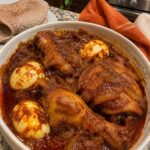
Ethiopian Chicken Doro Wat with Hard-Boiled Eggs
Learn how to make Ethiopian chicken doro wat with hard-boiled eggs: a deep red onion stew with berbere, butter, and warm spices, served with injera.
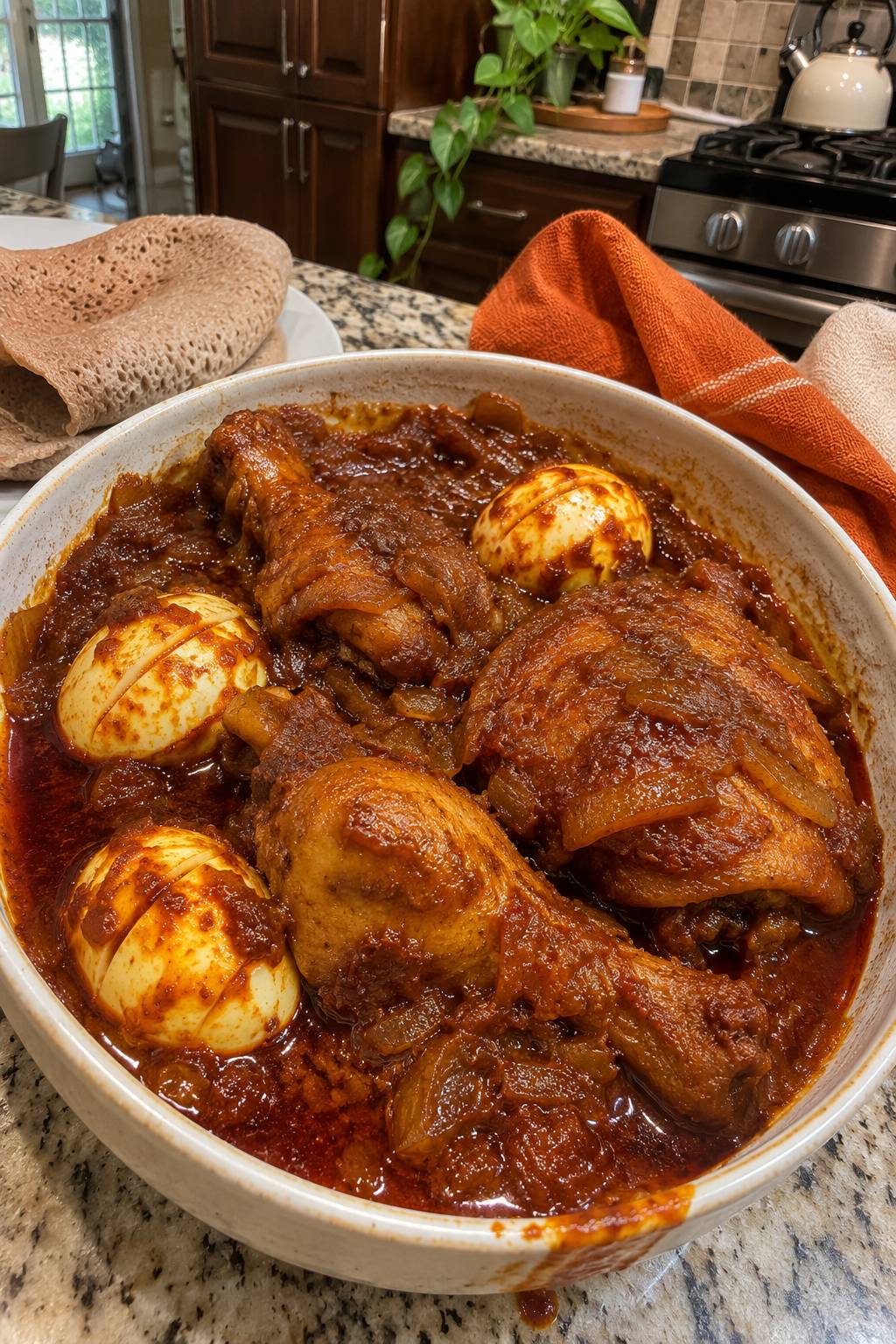
Doro wat is one of the most beloved dishes in Ethiopian cooking, and it rewards patience more than fussy technique. Bone-in chicken simmers slowly in a sauce that begins with onions cooked until they turn deep golden brown. Butter, garlic, ginger, berbere, and cardamom then give the sauce its warm, layered color and flavor.
The stew is also known for the hard-boiled eggs that simmer right in the sauce. Scored lightly and bathed in the spiced red gravy, they absorb its flavor all the way through. Serve it hot with injera, the spongy flatbread used to scoop up every last bit of sauce, and you will see why this dish has such a loyal following at the table.
Why the Onions Need Patience
Onions do most of the work in this stew, so give them the time they need. There is no added fat at the start. Instead, the onions release their moisture, and that liquid slowly evaporates. Once it is gone, the onions can brown, and that browning gives the sauce its sweetness and depth.
Stir often and keep the heat moderate, because the pot can scorch once the sugars darken. If you notice dark spots forming, lower the heat right away rather than stepping away from the stove.
Seasoning the Chicken and the Sauce Separately
Bone-in drumsticks and thighs are a smart choice here because they stay juicy through the long, gentle simmer, and their bones add richness to the sauce. Removing the skin keeps the finished stew from tasting greasy and lets the sauce cling to the meat. Season the chicken on its own before it goes into the pot so the meat is seasoned itself, not just the sauce around it.
Berbere is the heart of the flavor, but it is not standardized. Blends differ widely in heat and saltiness, and some already contain salt. Taste the sauce before you add more, and you will avoid a stew that tastes harsh or overly salty.
Getting the Eggs Ready for the Pot
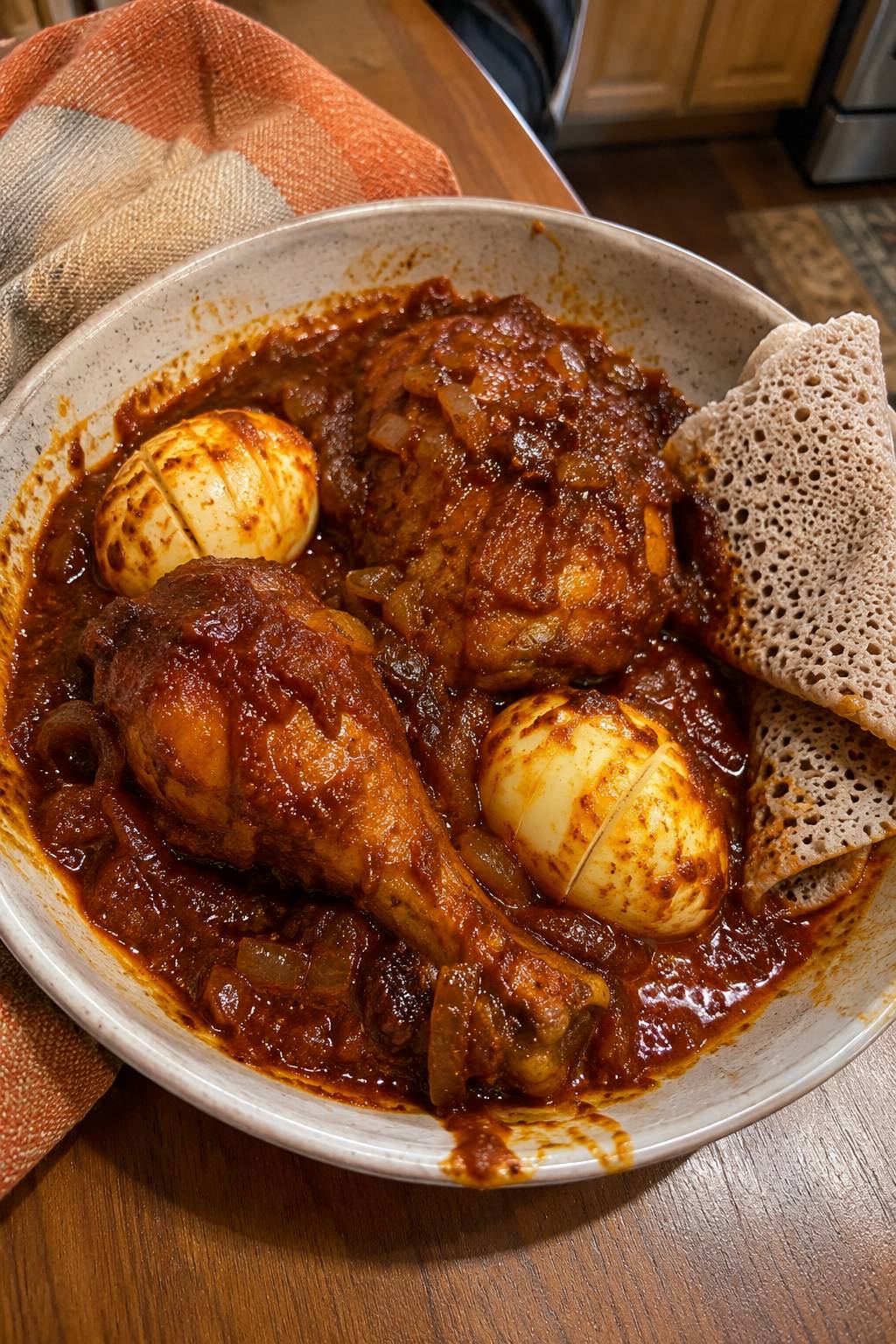
The eggs are much more than a garnish. Cooking them gently and then cooling them in ice water gives you tender whites and yolks that are easier to peel. Once peeled, make shallow lengthwise cuts in each egg. Those slits give the sauce a path into the whites and yolks, so every bite tastes of the stew rather than of plain egg.
Add the eggs near the end and spoon sauce over them so they warm through and pick up color without falling apart. Handle them gently, since peeled eggs are delicate.
Judging When the Sauce Is Ready
The sauce should look thick, glossy, and deep red, and it should cling to the chicken rather than pool around it. That texture develops during the final uncovered simmer, when the liquid reduces and the flavors concentrate. Stir gently so the pieces stay intact, and resist the urge to rush this stage.
Lemon juice added with the broth brightens the sauce and balances the richness of the butter. Finish by tasting, then garnish with cilantro or parsley and serve while the sauce is still at its best.
Frequently Asked Questions
Why is it important to cook the onions without fat?
Dry-cooking drives off the onions' moisture so they can brown instead of steam. That browning builds a sweet, deep base for the sauce, so the stew gets much of its rich color and flavor from the onions before the butter and spices go in.
My sauce tastes too salty. What went wrong?
Berbere blends vary a lot in saltiness, and some already contain salt. Taste the sauce before adding any more, and make your final salt adjustments only after the sauce has thickened, since reducing concentrates the flavors and can make a seasoned sauce taste saltier.
What is the best way to serve doro wat?
Serve it hot, garnished with chopped cilantro or parsley, alongside injera or flatbread. The bread is used to scoop up the thick sauce, chicken, and eggs, so tear off pieces as you eat and let each bite combine the meat, the sauce, and the bread.
Recipe
Ethiopian Chicken Doro Wat with Hard-Boiled Eggs
Bone-in chicken drumsticks and thighs simmer slowly in a deep red onion sauce seasoned with berbere, butter, and warm spices, with scored hard-boiled eggs cooked right in the stew. It is traditionally served with injera for scooping up the sauce.
- Course
- Main Course
- Cuisine
- Ethiopian
- Difficulty
- Medium
- Servings
- 6 servings
- Prep time
- 30 mins
- Cook time
- 1 hr 20 mins
- Total time
- 1 hr 35 mins
- Calories
- 470 kcal
Ingredients
Chicken and eggs
Sauce
For serving
Instructions
Prep
Pat the chicken pieces dry, remove the skin, and season all over with 1 tsp kosher salt. Set aside.
Place the eggs in a saucepan and cover with cold water by 1 inch. Bring to a boil over high heat, then reduce to a gentle simmer and cook for 10 minutes. Transfer the eggs to a bowl of ice water for 10 minutes. Peel the eggs and make 4 shallow lengthwise cuts in each one.
Sauce
Add the chopped onions to a large heavy Dutch oven or pot over medium heat, with no added fat. Cook, stirring often, until the liquid evaporates and the onions turn deep golden brown, about 25 minutes. Lower the heat if they begin to scorch.
Push the onions to one side. Add the butter, garlic, ginger, berbere, cardamom, and the sauce salt. Cook, stirring constantly, for 5 minutes, until the spices smell fragrant and the butter turns a deep red.
Stir in the broth, water, and lemon juice, scraping up any browned bits from the bottom of the pot. Add the chicken and turn to coat. Bring to a simmer, cover, and cook over low heat for 30 minutes, turning the chicken once, until the thickest pieces reach 175°F.
Uncover the pot and simmer for 10 minutes to thicken the sauce. Add the peeled eggs and spoon the sauce over them. Simmer uncovered for another 10 minutes, until the sauce is thick and clings to the chicken.
Serve
Taste the sauce and adjust the salt if needed. Garnish with cilantro or parsley and serve hot with injera.
Notes
- Berbere blends vary a lot in heat and saltiness, so taste the sauce before adding more salt.
- Dry-cooking the onions drives off their moisture so they can brown and build a sweet, deep base for the sauce without added oil.
- Cutting shallow slits in the eggs lets the sauce soak into the whites and yolks, so they absorb the flavor of the stew.
Recipe: https://naileditrecipes.co/ethiopian-chicken-doro-wat-with-hard-boiled-eggs/