Japanese Soufflé Pancakes
Learn what stiff peaks look like, how to fold the batter, and why low heat helps Japanese soufflé pancakes cook through while keeping their sides pale.
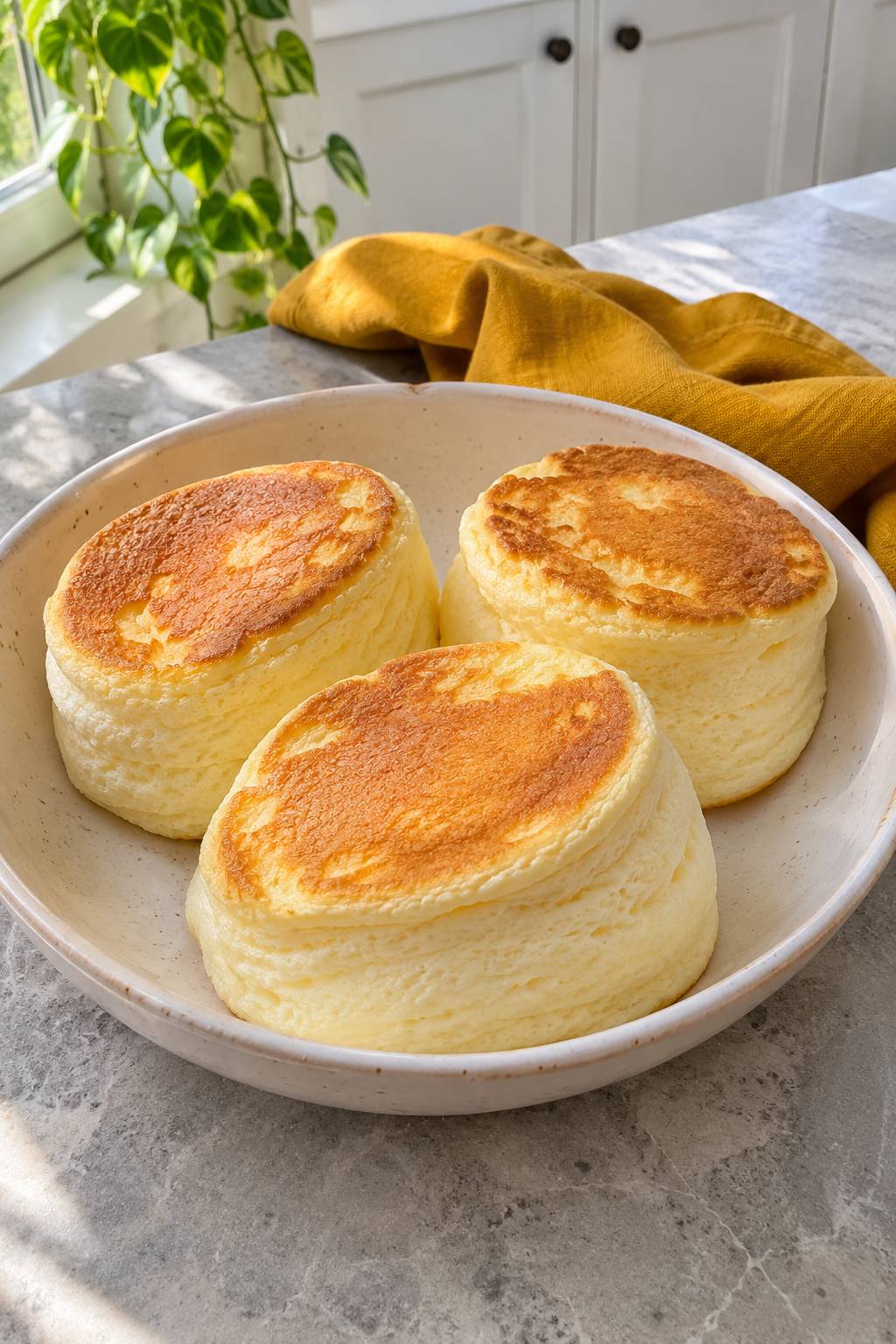
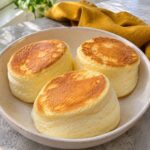
Japanese soufflé pancakes look a little different from the pancakes you might usually make for breakfast. They’re tall, with golden tops and bottoms and soft, pale sides. That contrast is exactly what you want: the surfaces that touch the skillet brown, while the sides stay tucked inside the rings. You don’t need to wait for the sides to color before you take the pancakes out.
What glossy, stiff peaks look like
The separated eggs give you two mixtures with different jobs. The yolks and whole milk make a smooth base with the cake flour and baking powder, while the whipped whites give the batter its airy texture. Sifting the cake flour and baking powder into the yolk mixture helps you whisk out lumps without mixing beyond the point where the batter looks smooth.
For the whites, start with a clean, dry bowl. The cream of tartar goes in with the whites, but the granulated sugar goes in gradually after the whites turn foamy. Foam isn’t the sign that you’re done: look for a glossy mixture that holds a standing peak when you lift the beaters. If the tip droops, the whites aren’t at stiff peaks yet.
Keep the batter airy as you fold
You don’t have to fold the whipped whites into the yolk base from the very start. Whisking some of the whites into the base first lightens it so the rest is easier to fold in with a rubber spatula. Once you no longer see white streaks, stop. The batter doesn’t need any extra stirring to look perfectly uniform.
That same restraint helps when you fill the rings. Aim for an even fill so the pancakes can cook at a similar pace, but resist pressing the batter down to level the tops. A light coating of unsalted butter inside the metal rings helps them release without having to tug at the soft sides.
Judge doneness by the tops and centers, not the sides
Check that the lid clears the tops of the rings before you warm the nonstick skillet. The lid needs to sit properly over the pan, and the water belongs in a bare spot in the skillet, not in the rings. The covered pan gives the centers a chance to set while the surfaces against the skillet turn golden.
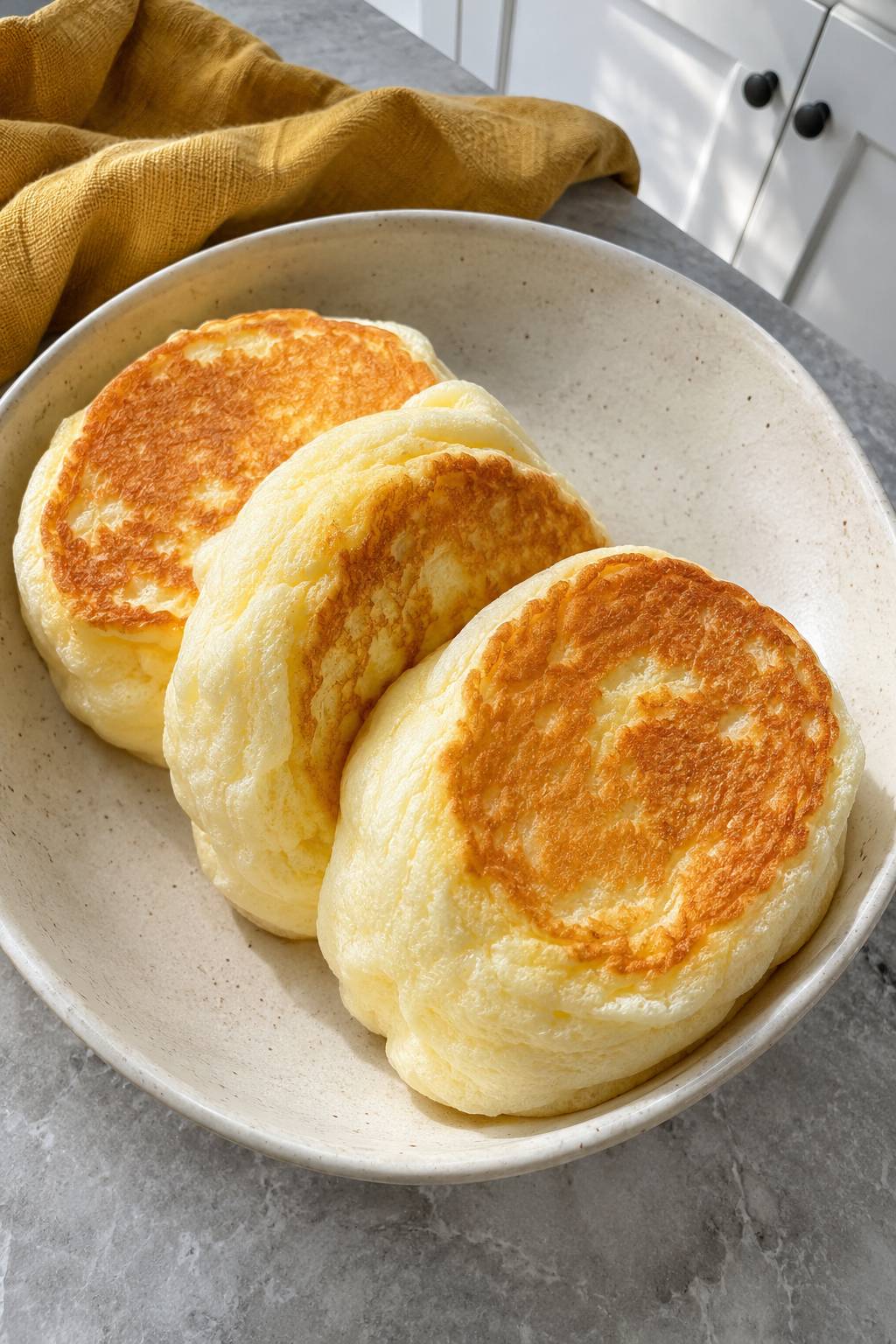
If the pancakes seem slow to brown, keep the heat low. Turning it up can darken the outside before the inside is ready. Before you flip, look for a golden bottom and a top that looks mostly set. After the flip, a golden second side is only part of the picture: you want the center set as well.
Frequently Asked Questions
How do I flip the pancakes without sliding them out of the rings?
Slide a thin spatula under the pancake and use tongs to steady the ring. Turn the pancake and ring together rather than trying to release the pancake first. The spatula supports the pancake while the tongs keep the ring from shifting.
What if a pancake sticks to its ring?
Once the pancake is on the plate, run a thin knife around the inside edge of the ring to free any spots that cling. Then lift the ring away rather than pulling against the pancake’s soft sides.
Is it normal for the pancakes to sink a little after unmolding?
Yes. A little settling after you lift off the rings is normal, even when the centers are set. Don’t use that slight drop in height as a reason to cook them longer. These pancakes are meant to be served right away.
Recipe
Japanese Soufflé Pancakes
These thick Japanese pancakes have golden tops and bottoms and soft, pale sides. They cook in rings in a covered skillet so the centers have time to set without the outsides getting too dark.
- Course
- Breakfast, Brunch
- Cuisine
- Japanese
- Difficulty
- Intermediate
- Servings
- 3 pancakes
- Prep time
- 15 mins
- Cook time
- 12 mins
- Total time
- 27 mins
- Calories
- 130 kcal
Ingredients
Batter
For cooking
Instructions
Batter
Use a little of the butter to lightly grease the insides of three metal ring molds, each 3 inches wide and 1 1/2 inches tall. Set out a 12-inch nonstick skillet with a lid that clears the tops of the rings.
Whisk the egg yolks and milk in a medium bowl. Sift in the cake flour and baking powder, then whisk just until smooth.
In a clean, dry bowl, beat the egg whites and cream of tartar with a hand mixer on medium speed until foamy. Add the sugar a little at a time while beating. Continue until the whites are glossy and hold stiff peaks when you lift the beaters.
Heat the skillet over low heat. Whisk about one-third of the beaten whites into the yolk mixture to lighten it. Fold in the rest in two additions with a rubber spatula, stopping as soon as no white streaks remain.
Cooking
Wipe the remaining butter into a thin film over the warm skillet and set the rings in the pan. Divide the batter evenly among them without pressing it down. Add 2 tsp of the water to a bare spot in the skillet, away from the batter. Cover and cook over low heat for 7 minutes, until the bottoms are golden and the tops look mostly set.
Slide a thin spatula under each pancake and use tongs to steady the ring as you gently flip the pancake and ring together. Add the remaining 2 tsp water to a bare spot, cover, and cook for 5 minutes, until the second sides are golden and the centers are set. Transfer to a shallow plate, lift off the rings, and serve right away.
Notes
- Keep the heat low even if the pancakes seem slow to brown. Higher heat can darken the outsides before the centers set.
- If a pancake clings to its ring, run a thin knife around the inside edge before lifting the ring away. A little settling after unmolding is normal.
Recipe: https://naileditrecipes.co/japanese-souffle-pancakes/