Liège Waffles
Liège waffles start with a buttery yeast dough and Belgian pearl sugar for crunchy pockets inside and glossy amber patches along their craggy edges.
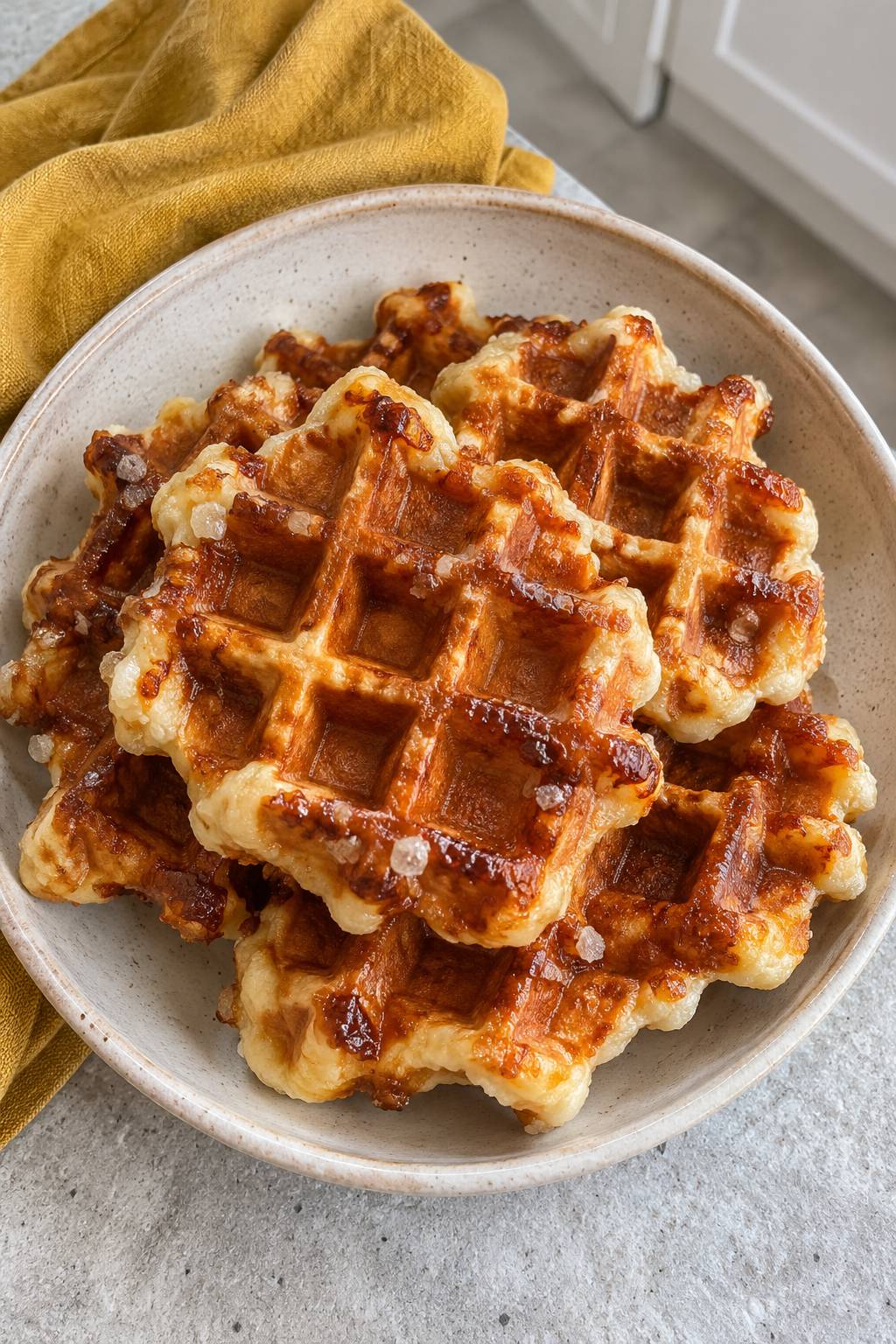
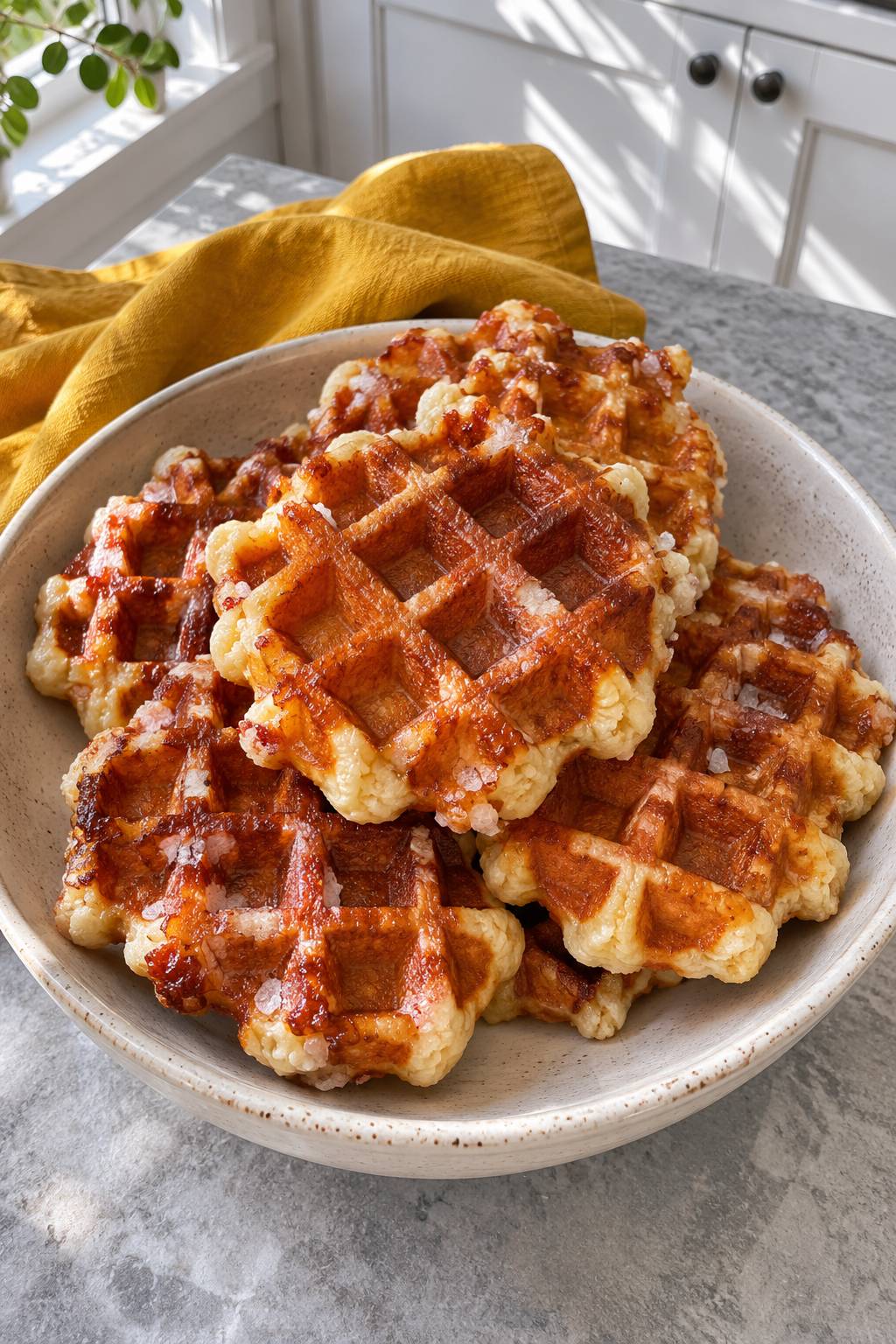
A Liège waffle looks a little different from the waffles you make with pourable batter. Its edges are craggy rather than neat, and the deep golden surface is dotted with glossy amber patches. Inside, the buttery yeast dough is studded with little pockets of crunch. Both the crunch and the caramelized patches come from Belgian pearl sugar, but where the sugar lands in the dough makes a difference: some pearls stay tucked inside, while others meet the hot iron.
If you’re used to pouring batter into a waffle iron, the biggest adjustment is learning what good dough looks and feels like. Soft and tacky is what you want here. A rough ball is all the shaping it needs, so there’s no need to smooth it into a tidy round or try to spread it across the iron.
Look for Stretch, Not a Dry Dough
With the dough hook, look for the dough to begin smoothing out and stretching before you add the butter. Softened butter is easier to work in gradually. Let each piece mostly disappear into the dough before adding the next. Once the butter is incorporated, the dough should look glossy and feel stretchy. It can still cling to your fingers even when it’s ready, so don’t use a dry feel as your test.
For the rise, look for a change in volume rather than a change in how sticky the dough feels. In a warm, draft-free spot, it should become puffy and nearly double. That’s your cue that it’s ready for the pearl sugar.
Choose the Larger Belgian Pearl Sugar
Belgian and Swedish pearl sugar may sound interchangeable, but the Belgian kind has larger pieces. Those larger pearls are more likely to leave distinct crunchy pockets after cooking. The packed light brown sugar serves a different purpose: it’s mixed in with the flour and other dry ingredients rather than folded in as pieces you’ll bite into.
When you add the pearls, scatter them over the flattened dough rather than leaving them in a mound. Fold and knead just enough to distribute them. You’re looking for pearls throughout the dough, not a big cluster in one spot and bare dough everywhere else.
Distinguish Amber Patches From Overall Browning
The amber patches are part of the waffle’s finish, but a dark patch on its own doesn’t tell you the center is cooked. Look at the dough around the caramelized spots: the waffle should be deep golden overall. If the outside gets dark before the center cooks through, turn the iron down. The sugar can brown faster than the dough cooks.
Frequently Asked Questions
Should I press the dough flat in the waffle iron?
No. Center the rough dough ball on the hot nonstick Belgian waffle iron and close the lid gently. You don’t need to press the dough flat by hand or spread it to the edges of the iron.
How do I lift a waffle out of the iron?
Use silicone-tipped tongs to transfer the waffle directly to a wire rack. Keep in mind that those shiny patches are still hot caramel, even though the waffle is cooked, so let them set on the rack before serving.
Can I stack the waffles as they come off the iron?
Keep them in a single layer on the wire rack instead. Stacking hot waffles traps steam between them and softens the crust. Giving each waffle its own space also lets the caramel set before you serve the waffles warm.
Recipe
Liège Waffles
These Belgian waffles start with a buttery yeast dough rather than a pourable batter. Belgian pearl sugar leaves crunchy pockets inside and glossy amber patches along the craggy edges.
- Course
- Breakfast, Brunch
- Cuisine
- Belgian
- Difficulty
- Intermediate
- Servings
- 10 waffles
- Prep time
- 25 mins
- Cook time
- 40 mins
- Total time
- 2 hr 45 mins
- Calories
- 345 kcal
Ingredients
Instructions
Whisk the flour, yeast, brown sugar, and salt in the bowl of a stand mixer. Add the warm milk and eggs. Mix with the dough hook on low until no dry flour remains, then knead on medium-low for about 4 minutes, until the dough begins to look smooth and elastic.
With the mixer on medium-low, add the softened butter 1 piece at a time, letting each piece mostly disappear before adding the next. Once all the butter is in, knead for 6 to 8 minutes, until the dough is glossy and stretchy. It will be soft and tacky.
Cover the bowl and let the dough rise in a warm, draft-free spot for about 75 minutes, until puffy and nearly doubled.
Gently press down the dough and turn it out onto a clean work surface. Flatten it, scatter the pearl sugar over it, and fold and knead briefly by hand until the sugar is evenly distributed. Divide the dough into 10 equal portions and shape each into a rough ball. Cover and rest for 20 minutes. During the rest, preheat a nonstick Belgian waffle iron to medium.
Center one dough ball on the hot iron and close the lid gently. Cook for about 4 minutes, until the waffle is deep golden brown with amber caramelized patches. Transfer it to a wire rack with silicone-tipped tongs. Repeat with the remaining dough, cooking one waffle at a time and keeping the uncooked portions covered.
Let the last waffle cool on the rack for about 5 minutes so the hot caramel can set. Serve warm.
Notes
- Use the larger Belgian pearl sugar rather than the smaller Swedish kind. The larger pieces are more likely to leave crunchy pockets after cooking.
- If the first waffle darkens before the center is cooked through, lower the iron one setting. The sugar can brown faster than the dough cooks.
- Keep the waffles in a single layer on the rack while they cool. Stacking them while hot traps steam and softens the crust.
Recipe: https://naileditrecipes.co/liege-waffles/