Scotch Pancakes
Scotch pancakes, also called drop scones, are lightly sweet with golden outsides and fluffy centers. Learn what the batter and bubbles tell you as they cook.
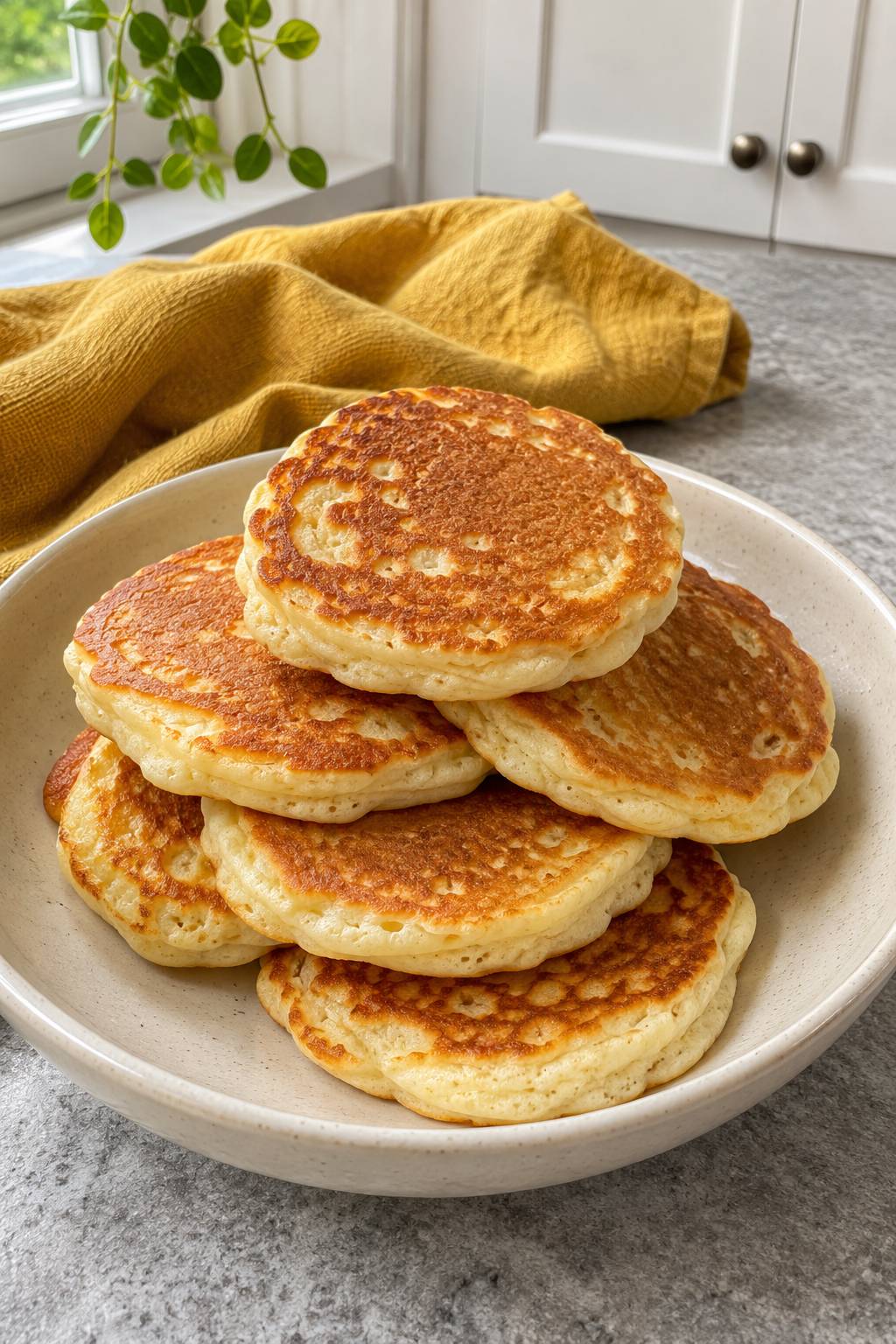
Scotch pancakes are small Scottish breakfast pancakes, also known as drop scones. The name describes how the batter goes into the skillet: you drop it from a spoon rather than pour it in a stream. The pancakes are lightly sweet, with golden-brown surfaces and soft, fluffy centers. Their small size makes them easy to stack on a plate and serve warm.
What Goes Into a Soft, Fluffy Drop Scone
All-purpose flour gives the batter enough body to sit in a mound before it spreads. Baking powder helps the pancakes rise, granulated sugar gives them their gentle sweetness, and fine salt balances that sweetness without making the pancakes taste salty. The large egg and whole milk form the wet mixture that brings the dry ingredients together.
How you measure the flour can change the feel of the batter more than you might expect. Spoon it into the measuring cup and level off the top rather than dipping the cup into the bag. A scooped cup can hold packed flour, making the batter so stiff that it clings to the spoon instead of dropping from it.
A Spoonable Batter Doesn't Have to Be Smooth
The batter should be thick enough that you can scoop it, but it should still fall from the spoon and spread a little in the skillet. If you’re used to a pancake batter that pours easily, this one may look thicker than you expect. That thicker consistency is what lets you drop it into small rounds without having to spread it yourself.
Look for dry streaks rather than judging by how smooth the batter looks. A streak of flour means the wet and dry ingredients aren’t fully combined. A small lump in an otherwise evenly mixed batter is fine. Once the dry streaks disappear, there’s no need to keep stirring just to smooth out those lumps.
Read the Top and Bottom Before You Flip
A nonstick skillet needs only a thin film of neutral oil, such as canola oil. You want a light coating rather than visible pools around the batter. Give the rounds some room to spread, too. If their edges meet, it’s harder to see whether each pancake has set and to get a spatula underneath it cleanly.
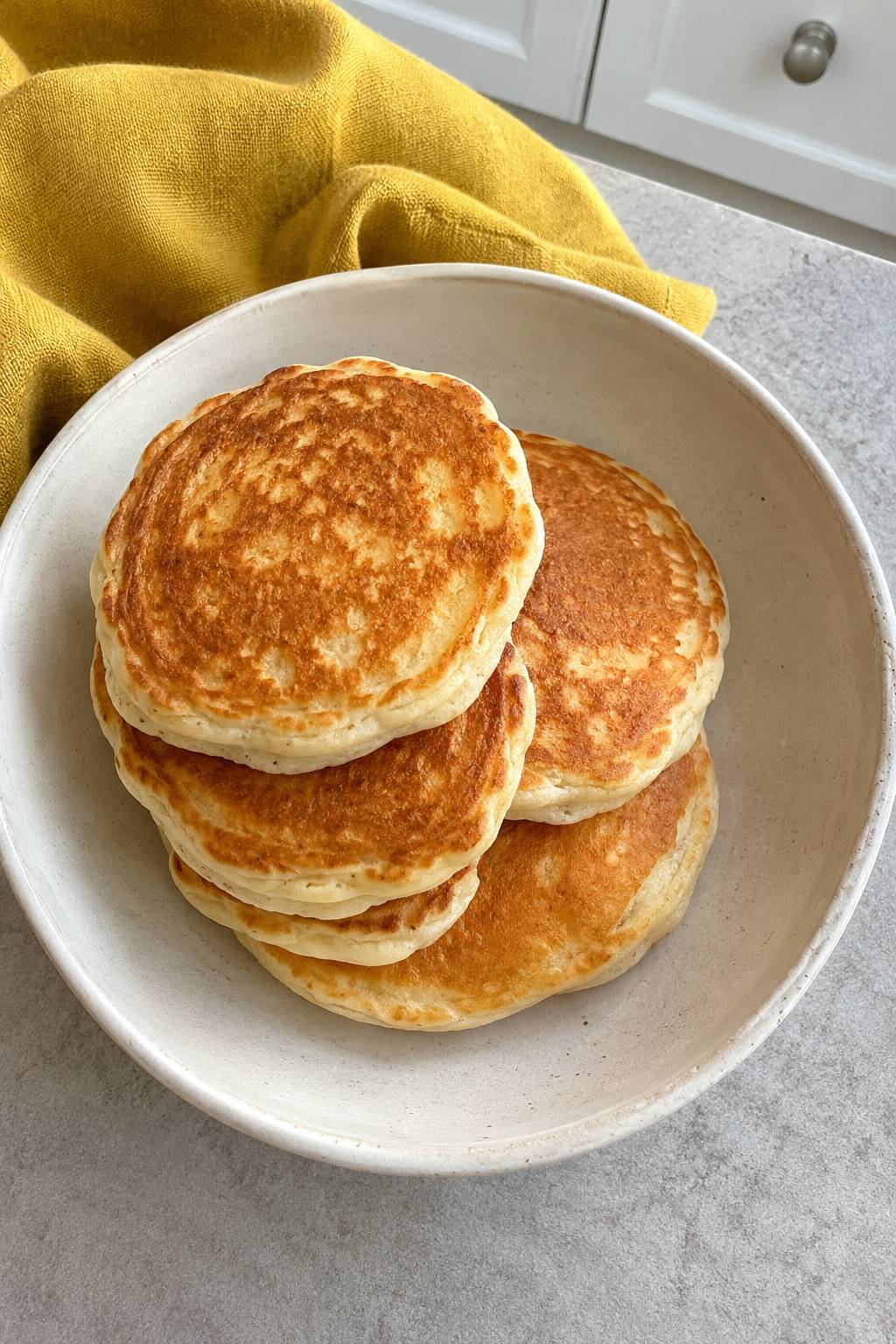
Bubbles on top are a useful clue, but don’t rely on them alone. The edges should also look set rather than wet, and a peek underneath should show a golden-brown surface. After the flip, look for a golden second side and a center that’s cooked through. Color tells you how the surface is doing; it doesn’t tell you whether the middle has caught up.
Frequently Asked Questions
What if the bottoms brown before bubbles appear?
Turn the heat down slightly for the next batch. If the bottoms are already golden while the tops are still smooth and the edges look wet, the undersides are browning before the pancakes are ready to flip.
Do I need to oil the skillet again between batches?
Yes. Brush on a fresh, thin film of neutral oil between batches, even if you’re using a nonstick skillet. The goal is a light coating where the batter will land, not enough oil to collect around the edges of the pancakes.
How can I tell if the centers are cooked through?
If you’re unsure, open a pancake and check the middle rather than judging by the color alone. The inside should look soft and fluffy, without a wet streak of batter, even if both sides already look golden.
Recipe
Scotch Pancakes
Also called drop scones, these small Scottish pancakes are lightly sweet, with golden-brown tops and soft, fluffy centers.
- Course
- Breakfast
- Cuisine
- Scottish
- Difficulty
- Easy
- Servings
- 4 servings
- Prep time
- 8 mins
- Cook time
- 12 mins
- Total time
- 20 mins
- Calories
- 240 kcal
Ingredients
Instructions
Whisk the flour, sugar, baking powder, and salt in a medium bowl. In a separate bowl, whisk the egg and milk. Pour the wet ingredients into the dry ingredients and stir just until no dry streaks remain. The batter should be thick enough to drop from a spoon, and a few small lumps are fine.
Heat a 12-inch nonstick skillet over medium heat and brush it with a thin film of oil. Drop about 2 tbsp of batter per pancake into the skillet, cooking 3 at a time and leaving room for them to spread.
Cook for about 2 minutes, until bubbles appear on top, the edges look set, and the bottoms are golden brown. Flip and cook for about 1 minute more, until the second side is golden and the centers are cooked through. Repeat with the remaining batter in 3 more batches, lightly oiling the skillet between batches. Stack on a plate and serve warm.
Notes
- Spoon the flour into the measuring cup and level it off. Scooping directly from the bag can pack in extra flour and make the batter too stiff.
- If the bottoms brown before bubbles appear on top, turn the heat down slightly for the next batch.
Recipe: https://naileditrecipes.co/scotch-pancakes/