Swedish Saffron Buns
Bake Swedish saffron buns with soft golden centers, glossy tops, and classic S-shaped curls. Learn how to handle the dough and keep each bun tender.
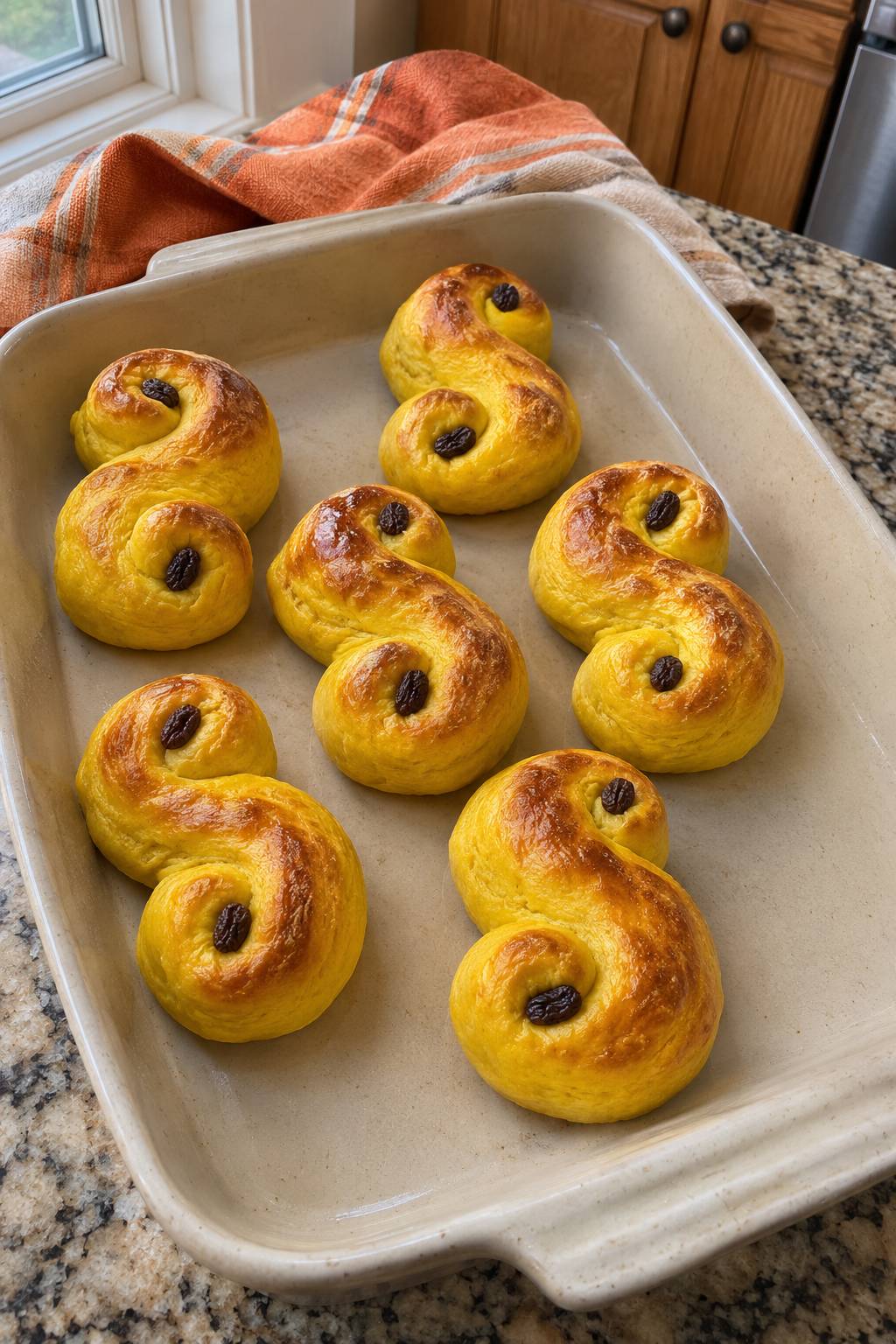
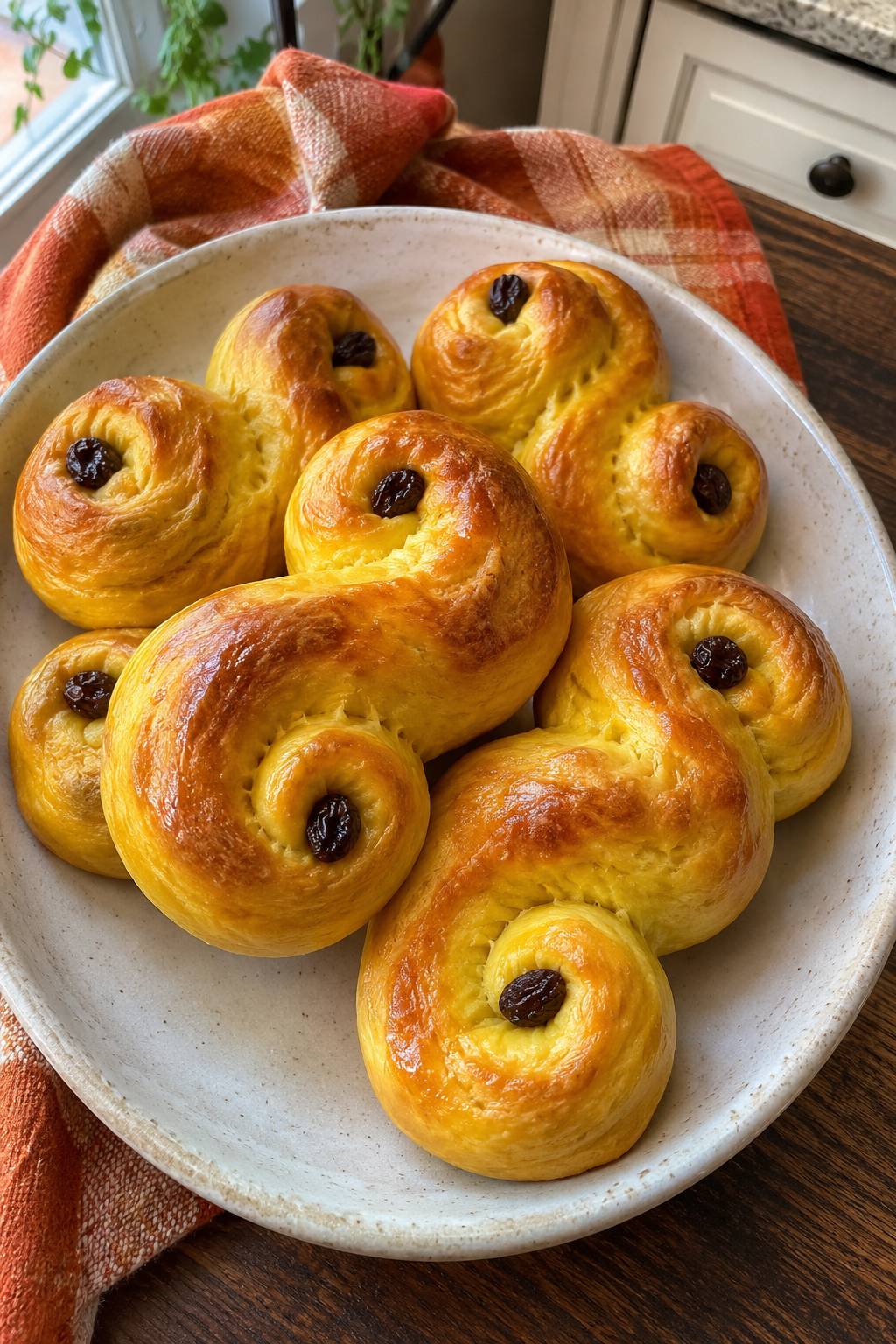
Swedish saffron buns, called lussekatter, bring a golden glow to the breakfast table. Their traditional S shape gives each bun curled ends, with a raisin nestled into each curl. Beneath the glossy, browned tops, the centers should be soft and tender, making the contrast between crust and crumb part of their appeal.
The dough is enriched with whole milk, butter, sugar, and egg, so handling it gently matters. You’re looking for a supple dough that holds its shape without feeling stiff or dry. Paying attention to that texture helps you preserve the softness that makes these buns so inviting.
Let the Saffron Infuse the Milk
Finely crushed saffron threads go into the whole milk, where gentle heating helps distribute their color and flavor throughout the dough. Aim for steaming milk rather than a boil, and stir as directed on the recipe card. The saffron gives these buns their distinctive golden interior, while the egg wash provides the glossy finish on the surface.
The milk mixture also carries the butter and sugar into the dough. Make sure the butter melts and the sugar dissolves, then follow the recipe card’s cooling guidance before adding the active dry yeast. Don’t assume that a mixture comfortable to stir is ready for yeast; check it as directed.
Keep the Dough Supple, Not Floury
Spoon and level the all-purpose flour for the dough rather than packing it into the measuring cup. During kneading and shaping, treat the additional flour as a way to manage sticking, rather than something you must use up. Adding too much makes the baked buns firmer and drier.
Slightly tacky dough is the goal. It should become smooth and supple through kneading while retaining a little stickiness. Resist dusting the surface every time the dough catches against it. Use only enough flour to keep it manageable, and judge the finished dough by its feel rather than expecting a completely dry surface.
Give the S-Shaped Curls Room to Rise
Even pieces and evenly rolled ropes help the buns bake consistently. When forming the traditional S, keep the curls snug but leave space inside them for expansion. Press each raisin firmly into the center of its curl so it sits securely in the dough.
Use the dough’s appearance alongside the recipe card’s timing: the initial rise should bring it to approximately double its size, and the shaped buns should look puffy. A warm, draft-free spot supports the rise, but room conditions affect how quickly the dough gets there. Leave space between buns on the parchment-lined baking sheets so their shapes have room to expand.
Balance Glossy Tops with Fully Baked Centers
Brush the puffy buns gently with the egg-and-water wash to coat the surface without pressing down on the dough. During baking, rotating the sheets and switching their rack positions helps them brown evenly. Look for richly golden tops, and use the recipe card’s internal doneness guidance to check the centers rather than relying on color alone.
Frequently Asked Questions
Should I add flour until the dough stops feeling sticky?
Keep a little tackiness in the dough. You want it smooth and supple, with just enough additional flour to make kneading and shaping manageable. A dry, stiff dough can produce buns that feel firmer and less tender.
How can I tell whether the shaped buns are ready to bake?
Look for visibly puffy buns, using the recipe card’s rise guidance as your reference. The dough may rise differently depending on your room conditions, so its appearance matters. Brush the risen buns gently to preserve that puffiness.
Are golden tops enough to tell me the buns are done?
Golden tops are a useful visual cue, but you should also check the centers according to the recipe card. The egg wash gives the surface its gloss and browning, so crust color alone doesn’t establish that the interior is fully baked.
Recipe
Swedish Saffron Buns
These Swedish saffron buns, called lussekatter, have soft golden centers and glossy, browned tops. Each bun is shaped into a traditional S with a raisin tucked into each curl.
- Course
- Breakfast
- Cuisine
- Swedish
- Difficulty
- Easy
- Servings
- 12 buns
- Prep time
- 35 mins
- Cook time
- 20 mins
- Total time
- 3 hr 5 mins
- Calories
- 250 kcal
Ingredients
Dough
Finishing
Instructions
Make the dough
Combine the milk and crushed saffron in a small saucepan. Heat over medium-low heat for 3 minutes, stirring, until steaming but not boiling. Remove from the heat and stir in the butter and sugar until melted and dissolved. Let stand for 15 minutes, or until the mixture cools to 105–110°F.
Pour the warm milk mixture into a large mixing bowl. Stir in the yeast and let stand for 5 minutes, until foamy. Add the dough egg and salt, then stir in the 3 1/2 cups flour until a shaggy dough forms.
Knead on a lightly floured surface for 8–10 minutes, using only as much of the additional 2 tbsp flour as needed. The dough should become smooth, supple and slightly tacky. Place in the bowl and cover.
First rise
Let rise in a warm, draft-free place for 60 minutes, until approximately doubled in size.
Shape
Line two large baking sheets with parchment paper. Gently press down the dough and divide it into 12 equal pieces. Roll each piece into a rope about 12 inches long. Curl the ends in opposite directions to form a snug S, leaving a little room inside each curl for expansion.
Second rise
Arrange 6 buns on each baking sheet, leaving at least 2 inches between them. Press a raisin firmly into the center of each curl. Cover loosely and let rise for 40 minutes, until puffy. Toward the end of the rise, preheat the oven to 375°F with racks in the upper and lower thirds.
Bake
Beat the remaining egg with 1 tbsp water. Gently brush the buns with the egg wash. Bake both sheets for 17 minutes, rotating the sheets front to back and switching their rack positions halfway through, until the buns are richly golden and the centers register 190°F. If needed, bake a few minutes longer to reach that temperature.
Cool
Transfer the buns to a wire rack and let cool for 10 minutes before serving.
Notes
- The timing includes a 5-minute yeast rest. Rising times depend on room temperature; use the dough's size and puffiness as your guides.
- Keep the dough slightly tacky. Adding excessive flour makes the baked buns firmer and drier.
- Bake on baking sheets so the buns have room to expand and brown evenly.
- Store completely cooled buns in an airtight container for up to 2 days, or freeze for up to 2 months.
Recipe: https://naileditrecipes.co/swedish-saffron-buns/