Alfajores with Dulce de Leche
Make delicate alfajores with pale, crumbly cookies and thick dulce de leche. Learn what to look for when mixing, rolling, baking, and filling them.
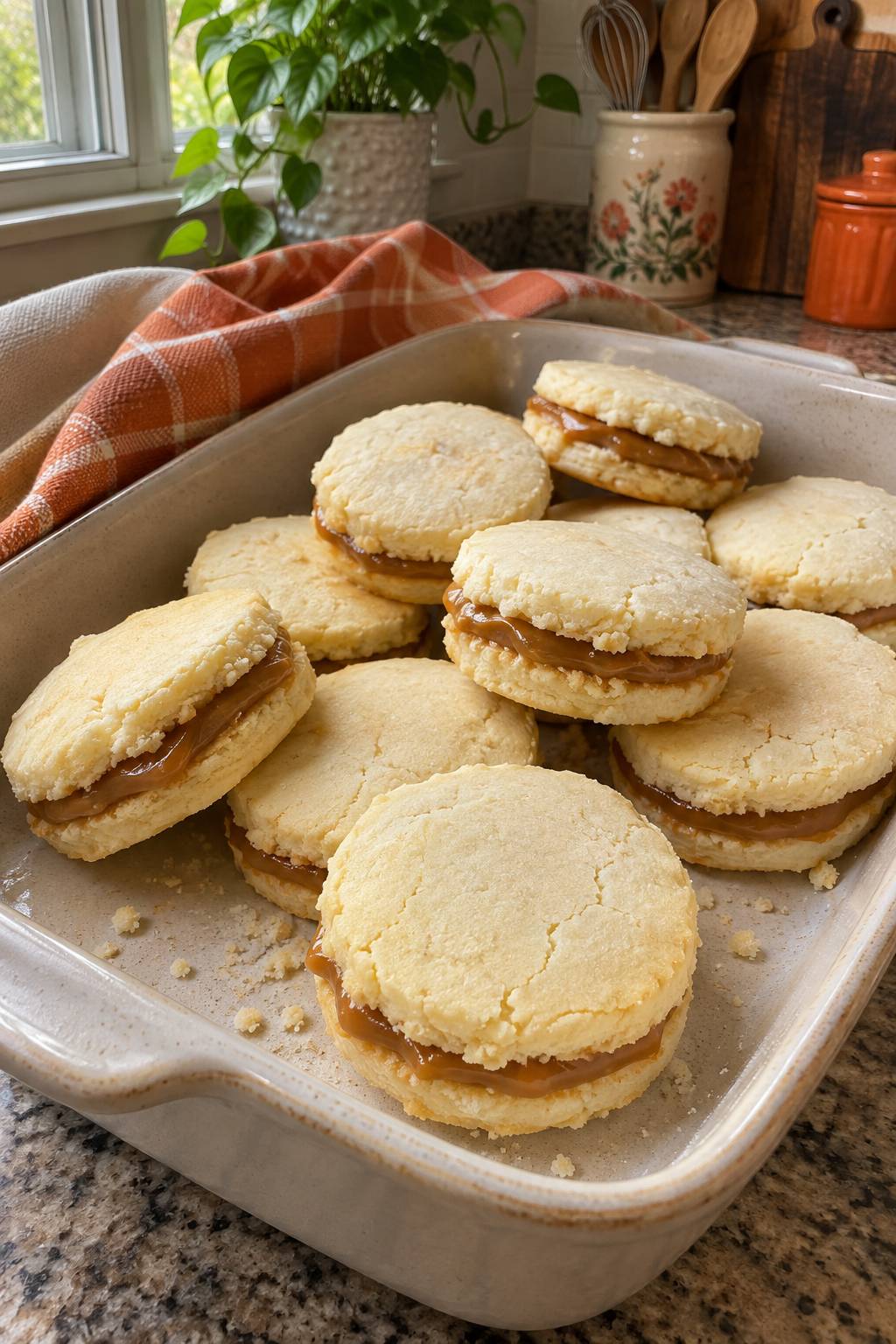
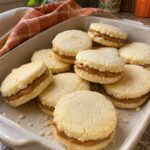
Alfajores bring together tender, crumbly cookies and a generous layer of dulce de leche. In this Argentinian recipe, the cookies stay pale, with barely golden bottoms and a delicate bite. The thick filling adds rich caramel sweetness, while finely grated lemon zest brings a bright note that balances it.
These sandwich cookies reward a gentle touch. If you pay attention to the dough’s texture, keep the rounds even, and resist baking them until browned on top, you’ll preserve the contrast between the crumbly cookies and their smooth filling.
The ingredients behind the delicate texture
Cornstarch and all-purpose flour form the base of these cookies, giving them their characteristic tender, crumbly texture. Powdered sugar blends into the softened unsalted butter, and egg yolks help bring the dough together. Baking powder and salt round out the dough, while lemon zest adds flavor without competing with the dulce de leche.
Use finely grated zest so it distributes throughout the dough. The goal is a subtle lemon note in each bite. Thick, spreadable dulce de leche matters just as much: it needs to stay between the cookies when you assemble them. A pourable filling will escape around the edges.
Recognize when the dough has been mixed enough
The butter and powdered sugar should look creamy before you incorporate the yolks and zest. Scraping down the bowl helps bring everything into the mixture, so you aren’t left with patches of butter or zest clinging to the sides.
Once the dry ingredients go in, watch for moist clumps rather than waiting for a smooth ball to form in the mixer. That is your cue to stop and gently press the dough together by hand. Skip kneading; this dough needs careful handling to retain the delicate texture you want in the finished cookies.
Roll evenly without adding excess flour
Chilling is part of preparing this dough for rolling, but dough that cracks needs a little flexibility before you continue. Let it become pliable enough to roll, then gently press any cracks together. Forcing the rolling pin across stiff, fractured dough makes it harder to produce neat rounds.
Dust your counter and rolling pin lightly with the reserved flour, using only what you need to prevent sticking. Aim for consistent thickness so the cookies bake evenly and pair neatly. Gather scraps gently for rerolling, and support the cut rounds as you transfer them to the parchment.
Keep the cookies pale and assemble gently
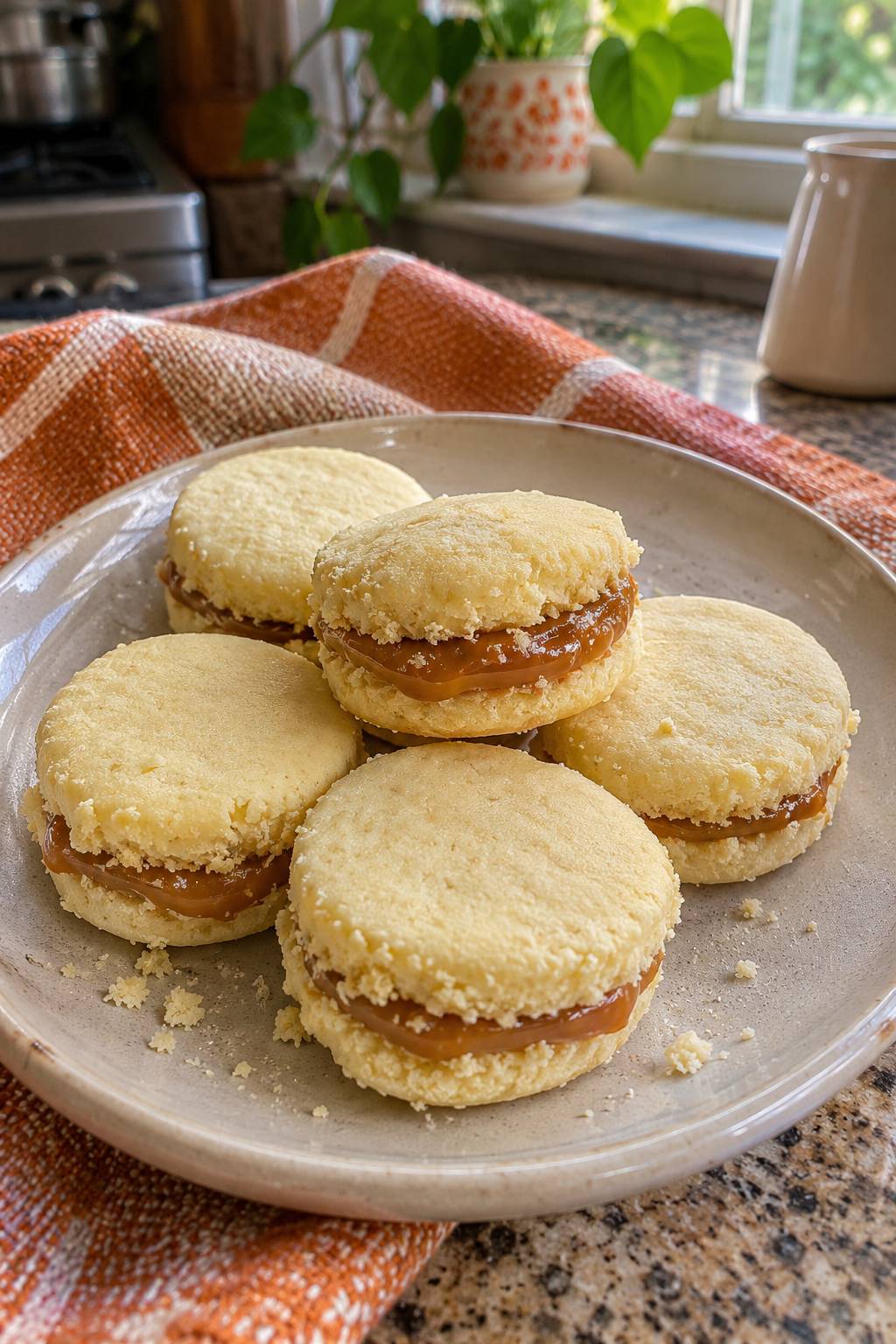
Look for dry tops and set edges when judging doneness. The bottoms should be barely golden, while the tops remain pale. Waiting for an all-over golden color takes these cookies past the appearance described on the recipe card.
Freshly baked cookies are delicate, so allow them to firm up on the baking sheet before transferring them carefully to a rack. Fill only when completely cool. Spread dulce de leche almost to the edges of the flat bottoms, then sandwich with the remaining cookies and press gently. Firm pressure can break the cookies or squeeze out the filling.
Frequently Asked Questions
Why does my dough crack when I roll it?
Chilled dough can crack if it is too stiff to roll comfortably. Let it become slightly more pliable at room temperature, then press the cracks together gently. Avoid trying to fix the problem by kneading the dough.
Can I use pourable dulce de leche?
Choose thick, spreadable dulce de leche for this recipe. A pourable consistency will run out of the sandwiches instead of holding a distinct layer. You should be able to spread the filling across a cookie without it flowing over the sides.
Should the cookies turn golden on top?
The tops should stay pale. Look instead for a dry surface, edges that feel set, and barely golden bottoms. Use those cues alongside the recipe card’s baking guidance, rather than waiting for the tops to develop a browned color.
Recipe
Alfajores with Dulce de Leche
These alfajores pair pale, crumbly butter-and-cornstarch cookies with a thick layer of dulce de leche. A little lemon zest balances the sweet caramel filling.
- Course
- Dessert
- Cuisine
- Argentinian
- Difficulty
- Easy
- Servings
- 12 sandwich cookies
- Prep time
- 30 mins
- Cook time
- 28 mins
- Total time
- 1 hr 48 mins
- Calories
- 350 kcal
Ingredients
Cookies
Filling
Instructions
Make the dough
Whisk the cornstarch, 1 cup flour, baking powder, and salt together in a medium bowl.
In a large bowl, beat the butter and powdered sugar with an electric mixer on medium speed for 2 minutes, until creamy. Beat in the egg yolks and lemon zest, scraping down the bowl. Add the dry ingredients and mix on low just until the dough forms moist clumps. Gently press together by hand without kneading.
Chill
Divide the dough in half, flatten into disks, and wrap tightly. Refrigerate for 30 minutes. Meanwhile, preheat the oven to 325°F and line two large baking sheets with parchment paper.
Shape
Lightly dust the counter and rolling pin with some of the reserved flour. Roll the dough to 1/4-inch thickness. Cut into rounds with a 2 1/2-inch cutter and transfer carefully to the prepared sheets, leaving 1 inch between rounds. Gently gather and reroll scraps as needed to make 24 cookies. Use only as much of the reserved flour as necessary to prevent sticking.
Bake
Bake one sheet at a time on the center rack for 14 minutes per sheet, for 28 minutes of total baking. The cookies should look dry on top and feel set around the edges, with pale tops and barely golden bottoms.
Cool
Let each batch rest on its baking sheet for 10 minutes before carefully transferring to a wire rack. After the second sheet leaves the oven, allow 20 minutes total for that batch to cool completely before filling.
Fill
Divide the dulce de leche among the flat bottoms of 12 cooled cookies, using about 1 tablespoon plus 2 teaspoons per cookie. Spread almost to the edges. Top with the remaining cookies, flat sides against the filling, and press very gently to make sandwiches.
Notes
- Use thick, spreadable dulce de leche; pourable caramel sauce will run out of the sandwiches.
- If the chilled dough cracks when rolled, let it sit at room temperature for a few minutes, then gently press the cracks together.
- The cookies are delicate while warm, so let them firm up on the baking sheets before moving them.
- Store in an airtight container in the refrigerator for up to 5 days. Let stand at room temperature for 15 minutes before serving; the cookies soften slightly as they absorb moisture from the filling.
Recipe: https://naileditrecipes.co/alfajores-with-dulce-de-leche/