Cinnamon Sugar Pull-Apart Bread
Bake cinnamon sugar pull-apart bread with tender centers, crisp golden edges, and buttery spirals. Get helpful tips for shaping, rising, and checking your loaf.
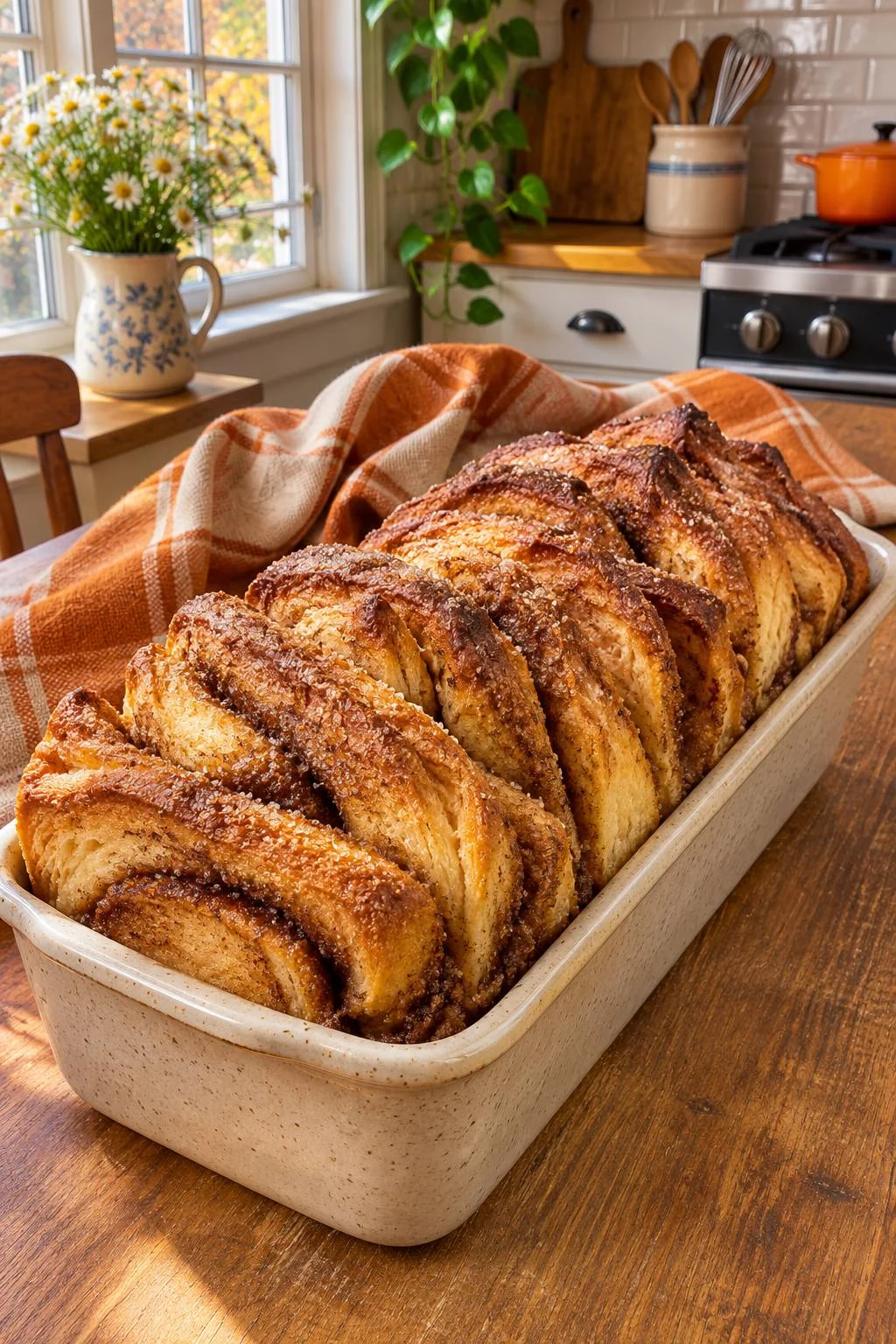
Cinnamon sugar pull-apart bread brings the cozy appeal of cinnamon rolls to a loaf pan. Buttery spirals of soft yeast dough bake close together, creating tender centers and deep golden edges with a satisfying crispness. Cinnamon sugar tucked between the layers makes each piece especially inviting.
The beauty of this loaf is in its contrast: soft dough inside, caramel-colored edges outside, and visible swirls throughout. A little attention to the dough’s texture and the way the rounds fit in the pan will help you make the most of those layers.
Build a soft, workable yeast dough
All-purpose flour gives the dough its structure, while milk, egg, and melted butter contribute to its soft texture. Instant yeast is mixed directly with the dry ingredients, so it can be incorporated throughout the dough before the warm milk goes in. Use the milk temperature on the recipe card rather than guessing, and let the melted butter cool slightly before adding it.
The dough starts out shaggy and becomes smooth and elastic as you knead. It should still feel slightly tacky when it is ready. Add only enough flour to keep it from sticking to the work surface; working in too much extra flour can leave the dough less tender. Follow the recipe card for the kneading time, but pay attention to how the dough feels as well.
Keep the cinnamon sugar layers distinct
Softened butter spreads over the rolled dough without the resistance you would get from cold butter. Granulated sugar, light brown sugar, and cinnamon make the filling, with the brown sugar adding a deeper flavor alongside the familiar warmth of cinnamon.
Spread the filling evenly and press the cinnamon sugar lightly into the butter so it stays in place as you roll. Leave the border specified on the recipe card bare, then pinch the seam closed. A sharp serrated knife helps you cut the log into rounds without unnecessarily flattening the spirals.
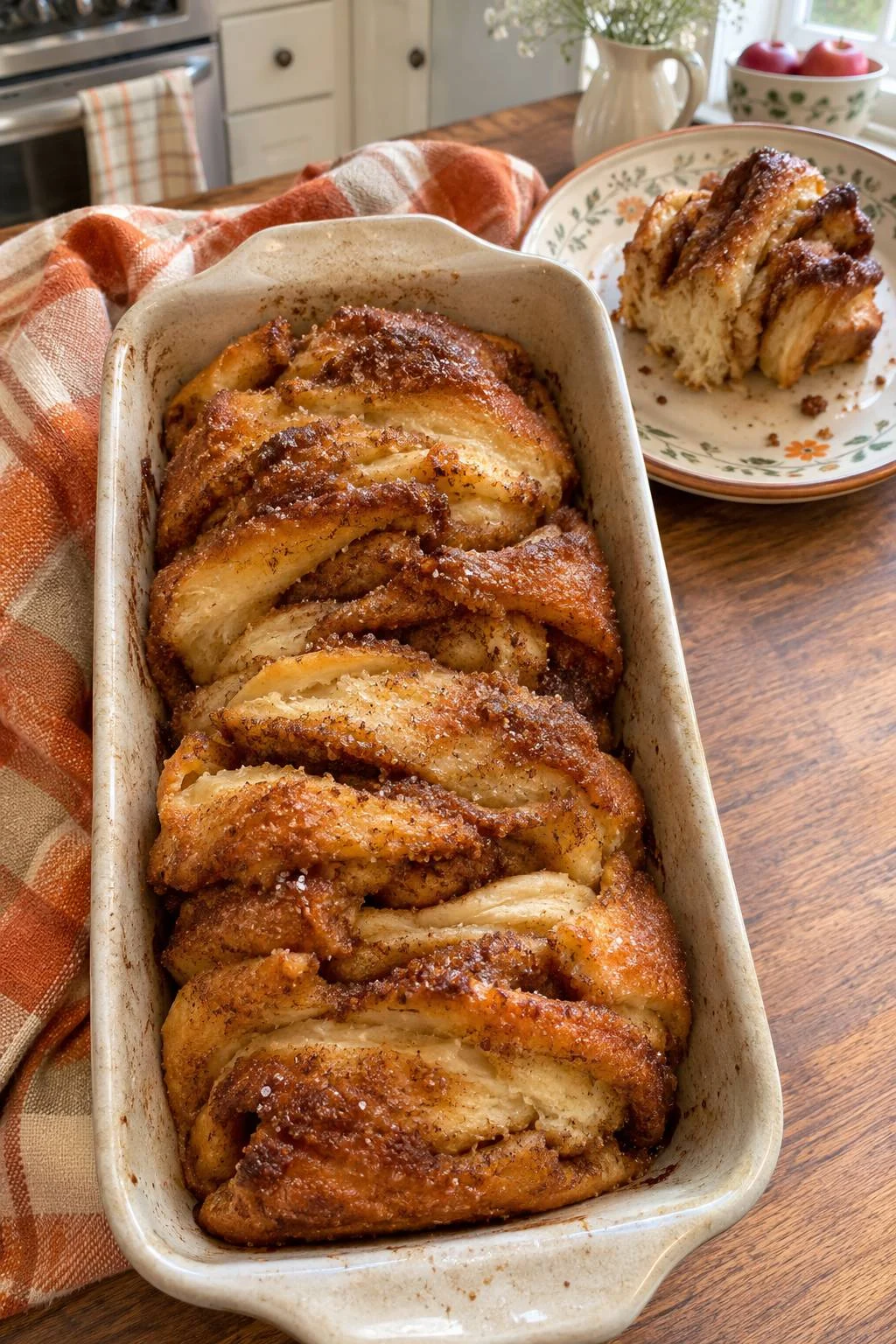
The rounds stand on edge in the prepared loaf pan, with their spiral faces pointing toward the short ends. Fanning them slightly allows their curved tops to peek above each other, giving the baked loaf its appealing pull-apart shape.
Use the dough and crust as your guides
Rise times are useful estimates, but the dough itself tells you more. Let the covered dough rise until doubled, and give the shaped loaf time to become puffy. In a cool kitchen, either rise may take longer than the recipe card suggests.
For the final rise, gently press the dough with a fingertip. A dent that springs back slowly is the cue to bake. Place the oven rack in the lower-middle position as directed, and watch the exposed tops as they brown. If they become deep golden before the loaf is done, loosely tent them with foil.
Well-browned edges are part of the loaf’s appeal, but color alone is not the best check for the center. Use an instant-read thermometer and compare the reading with the doneness range on the recipe card. After cooling as directed, the parchment overhang makes it easier to lift the loaf from the pan.
Frequently Asked Questions
Why is my dough taking longer to rise?
A cool kitchen can slow the rise, so use the dough’s appearance rather than the clock alone. The first rise is finished when the dough has doubled. After shaping, look for puffy rounds and a fingertip dent that springs back slowly.
How do I keep the spirals from losing their shape?
Roll the filled dough snugly, pinch the seam closed, and use a sharp serrated knife to cut the rounds. When arranging them in the pan, stand them on edge with their spiral faces toward the short ends, then fan them slightly.
Where should I check the bread’s internal temperature?
Insert an instant-read thermometer into a thick part of the dough near the center, avoiding a cinnamon sugar seam. Compare the reading with the doneness range on the recipe card. The exposed edges should also be well browned when the bread is ready.
Recipe
Cinnamon Sugar Pull-Apart Bread
Buttery spirals of soft yeast dough bake together in a loaf pan, with cinnamon sugar tucked between the layers. The exposed edges turn deep golden and crisp while the centers stay tender.
- Course
- Breakfast, Dessert
- Cuisine
- American
- Difficulty
- Easy
- Servings
- 12 Portionen
- Prep time
- 30 mins
- Cook time
- 40 mins
- Total time
- 3 hr 20 mins
- Calories
- 265 kcal
Ingredients
Dough
Cinnamon Sugar Filling and Topping
For the Pan
Instructions
Make the Dough
Whisk the flour, sugar, yeast, and salt in a large bowl. Stir in the warm milk, egg, and melted butter until a shaggy dough forms. Knead on a lightly floured surface for 7 to 9 minutes, until smooth, elastic, and slightly tacky. Use only enough extra flour to keep the dough from sticking to the work surface.
First Rise
Return the dough to the bowl, cover, and let rise in a warm spot for about 75 minutes, or until doubled in size.
Shape the Loaf
Butter a 9x5-inch loaf pan and line the bottom and long sides with parchment, leaving an overhang. Mix 1/2 cup granulated sugar with the brown sugar and cinnamon. Roll the dough into a 9x16-inch rectangle on a lightly floured surface. Spread the softened butter over the dough, leaving a 1/2-inch border along one short edge. Sprinkle the cinnamon sugar evenly over the butter and press it in lightly.
Starting at the short edge opposite the bare border, roll the dough into a snug 9-inch log and pinch the seam closed. Cut the log into 12 rounds with a sharp serrated knife. Stand the rounds on edge in the pan so their spiral faces point toward the short ends, then fan them slightly so the curved tops peek above one another.
Second Rise
Cover the pan loosely and let the loaf rise for about 40 minutes, until the rounds are puffy and a light fingertip dent springs back slowly. While the loaf rises, preheat the oven to 350°F with a rack in the lower-middle position.
Bake and Serve
Sprinkle the remaining 1 tbsp granulated sugar over the tops. Bake for 40 minutes, loosely tenting the loaf with foil after 25 minutes if the tops are already deep golden. The bread is ready when the exposed edges are well browned and an instant-read thermometer inserted into the dough near the center registers 190°F to 195°F. Cool in the pan for 15 minutes, then lift out with the parchment or serve warm from the pan.
Notes
- Use the rise cues rather than the clock alone. Dough in a cool kitchen may take longer to double or puff.
- Check the temperature in a thick part of the center dough rather than in a cinnamon sugar seam.
Recipe: https://naileditrecipes.co/cinnamon-sugar-pull-apart-bread/