Angel Biscuits
Southern angel biscuits bake up tall and tender with golden, buttery tops. Learn how to handle the soft dough and tell when the biscuits are ready to bake.
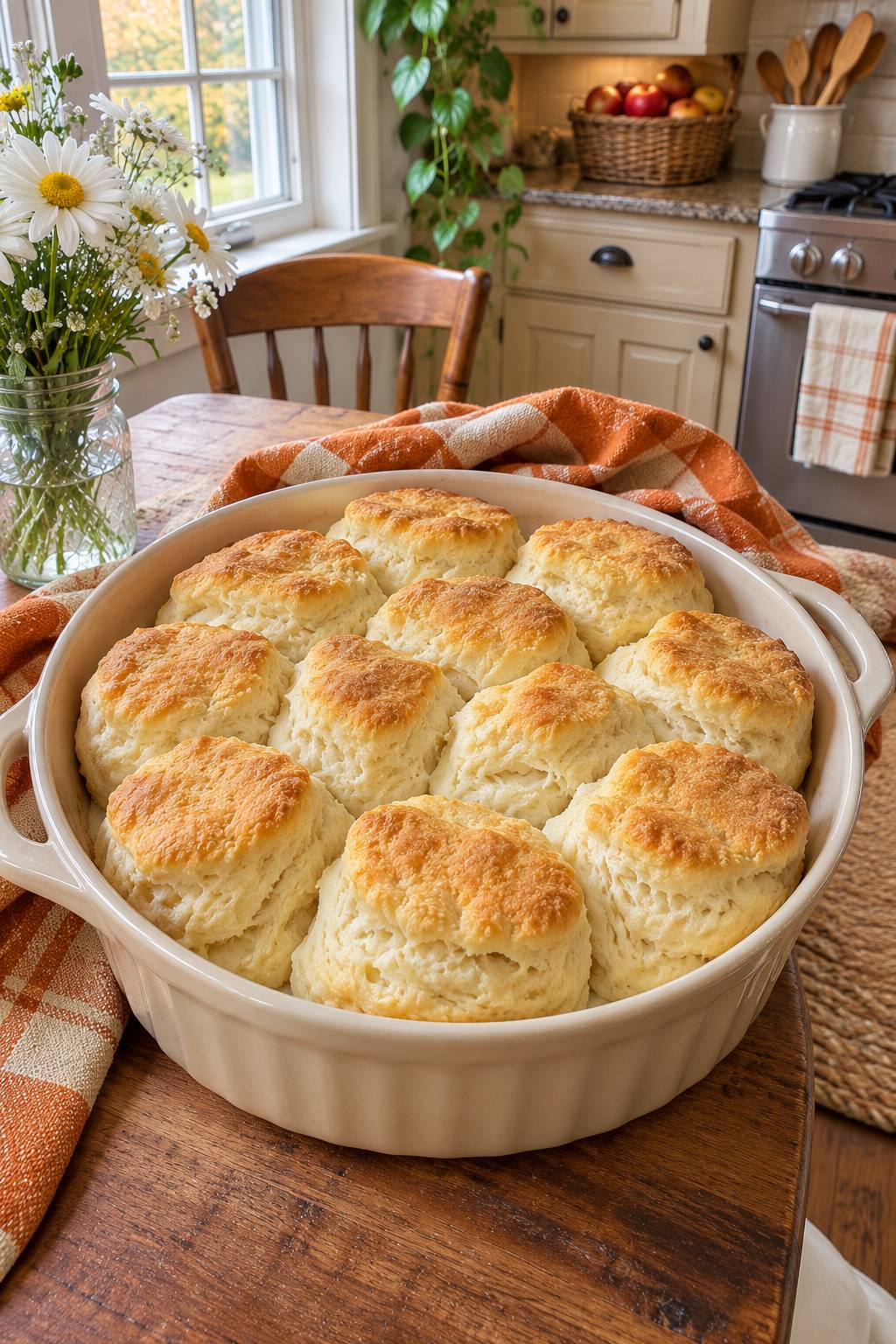
Angel biscuits have the tender crumb you expect from a Southern buttermilk biscuit, with a puffiness that makes them look almost like dinner rolls in the dish. They get their lift from active dry yeast, baking powder, and baking soda, but you don't knead the dough the way you would for rolls. A shaggy dough is what you're after, and the less you fuss with it, the better.
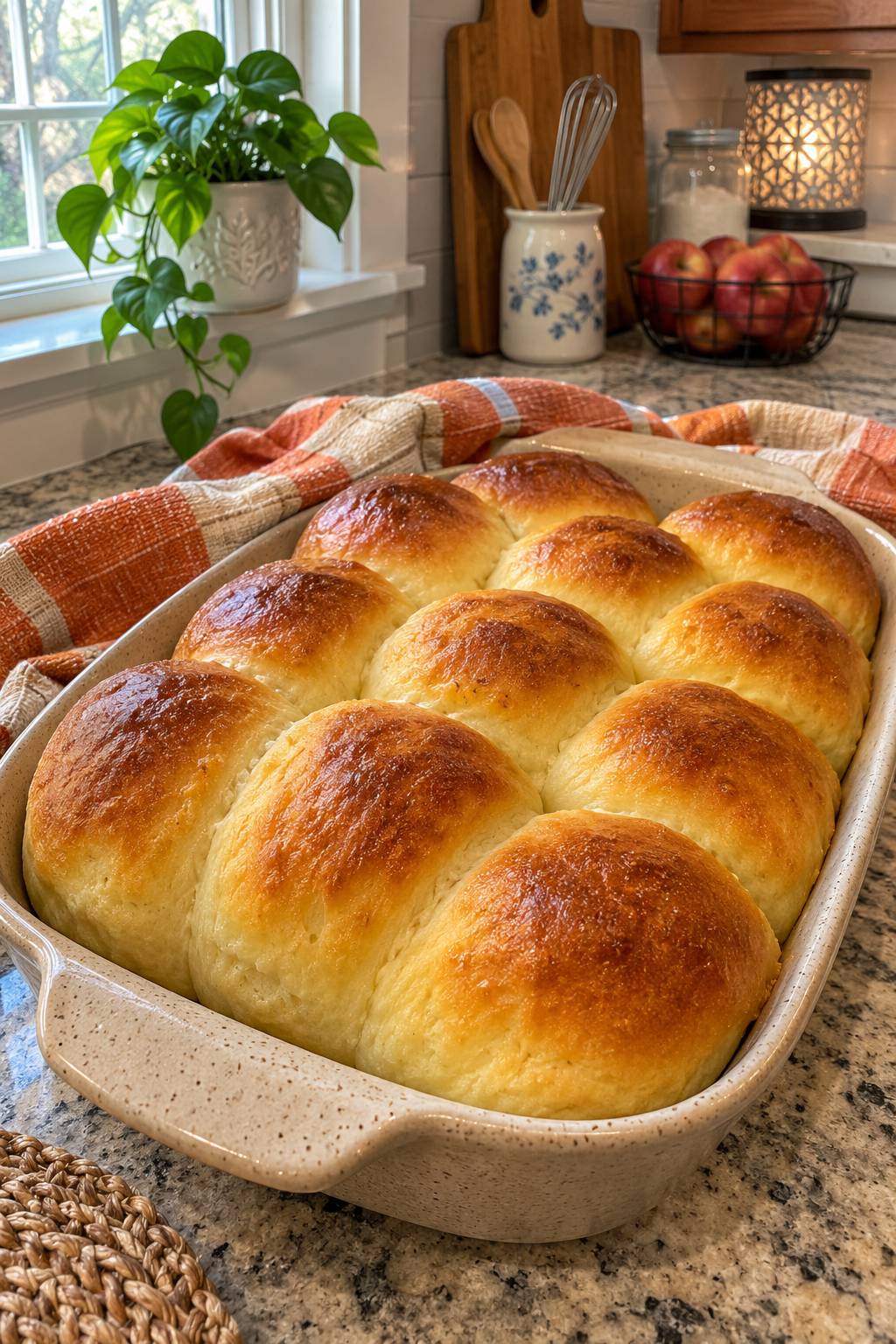
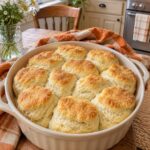
The round baking dish gives the batch its pull-apart look. The biscuits sit close together, so you get golden tops and soft sides where they meet. Those tops are also where the melted butter goes, giving them a glossy finish without changing the tender crumb underneath.
Know what each ingredient brings to the dough
Baking powder and baking soda help the biscuits rise, while the yeast gives the shaped biscuits a chance to puff before they go into the oven. Granulated sugar is divided in this recipe because some goes into the warm water with the yeast and the rest goes into the flour mixture. Look for foam on the yeast mixture before you add it to the dough; that's your cue that the yeast is active.
The butter is used in different forms for a reason. Cold butter belongs in the dough, where you want to see distinct pieces rather than a uniform paste. Softened butter spreads easily over the baking dish, and melted butter brushes easily over the hot biscuit tops. Keep the buttermilk cold, too, so the dough stays cool as you mix it.
Keep the dough shaggy and the edges clean
Spoon the all-purpose flour into the measuring cup and level it off instead of scooping straight from the bag. Scooping packs flour into the cup, and that extra flour can make the biscuits dry. If the dough sticks during shaping, dust your hands and the counter lightly rather than kneading more flour into it.
The letter folds give the dough layers without the prolonged handling that can make biscuits tough. Pat the dough gently rather than working it until it looks smooth. When you cut the rounds, use a floured cutter and press straight down. Twisting can pinch the cut edges together, making it harder for the biscuits to rise evenly. Treat the scraps just as gently: press them together rather than kneading them into a ball.
Judge the rise and the bake by different cues
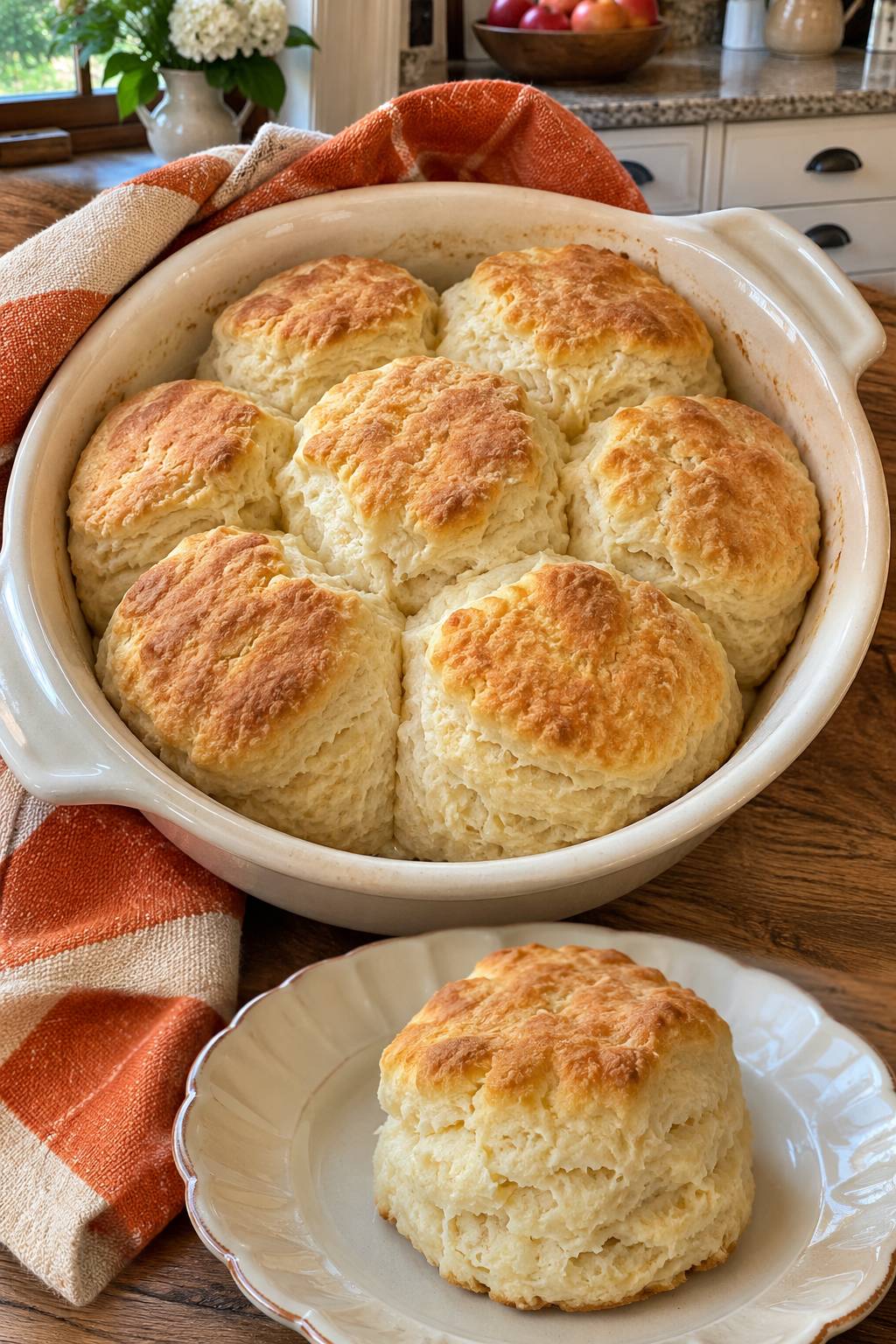
During the rise, look for rounds that are visibly puffier than when you set them in the dish. You're not waiting for them to double. In the oven, look beyond the color of the tops: the biscuits in the middle should be set, too. The outside biscuits are easier to see, but they don't tell you whether the center of the batch is ready.
Frequently Asked Questions
How finely should I cut in the cold butter?
Stop when the largest pieces are about the size of peas. Smaller bits are fine, so there's no need to make them all match. You can use a pastry blender or your fingertips; either way, stop before the butter disappears into the flour.
Should I leave space between the biscuits in the dish?
Arrange the rounds close together rather than spacing them out as you would cookies. You don't need to press them against each other. As they rise and bake, the sides that meet stay soft while the exposed tops turn golden.
When should I brush the tops with melted butter?
Brush them while they're still hot from the oven, then let the biscuits cool in the dish as directed on the recipe card. The melted butter is a finish for the tops, not the butter you use to grease the dish.
Recipe
Angel Biscuits
These Southern buttermilk biscuits use yeast, baking powder, and baking soda for a light, tender crumb. They bake up tall with golden tops in a round baking dish.
- Course
- Bread
- Cuisine
- American
- Difficulty
- Easy
- Servings
- 12 biscuits
- Prep time
- 20 mins
- Cook time
- 22 mins
- Total time
- 1 hr 22 mins
- Calories
- 205 kcal
Ingredients
Biscuit Dough
For the Dish and Tops
Instructions
Stir the warm water, yeast, and 1 tsp of the sugar together in a small bowl. Let stand for 5 minutes, until foamy. Meanwhile, grease a 10-inch round baking dish with the softened butter.
While the yeast stands, whisk the flour, remaining sugar, baking powder, baking soda, and salt in a large bowl. Cut in the cold butter with a pastry blender or your fingertips until the largest pieces are about the size of peas.
Pour the yeast mixture and buttermilk into the flour mixture. Stir just until a shaggy dough forms. Turn it out onto a lightly floured counter and gently pat it into a rectangle. Fold it in thirds like a letter, then pat it out and repeat the fold once more.
Pat the dough to about 1 inch thick. Cut rounds with a floured 2 1/4-inch biscuit cutter, pressing straight down without twisting. Gently press the scraps together and cut more rounds to make 12. Arrange the biscuits close together in the prepared dish.
Cover the dish loosely and let the biscuits rise in a warm spot for 30 to 40 minutes, until visibly puffy but not doubled. During the rise, preheat the oven to 400°F.
Uncover and bake on the center rack for 20 to 24 minutes, until the tops are golden brown and the center biscuits are set. Brush the hot tops with the melted butter and let the biscuits cool in the dish for 5 minutes before serving.
Notes
- Spoon the flour into the measuring cup and level it off. Scooping directly from the bag can pack in extra flour and make the biscuits dry.
- If the dough sticks while you shape it, dust the counter and your hands lightly rather than kneading more flour into the dough.
Recipe: https://naileditrecipes.co/angel-biscuits/