Basque Burnt Cheesecake
Make Basque burnt cheesecake with a deeply browned top and a soft, jiggly center. Learn how parchment, gentle mixing, and chilling shape each slice.
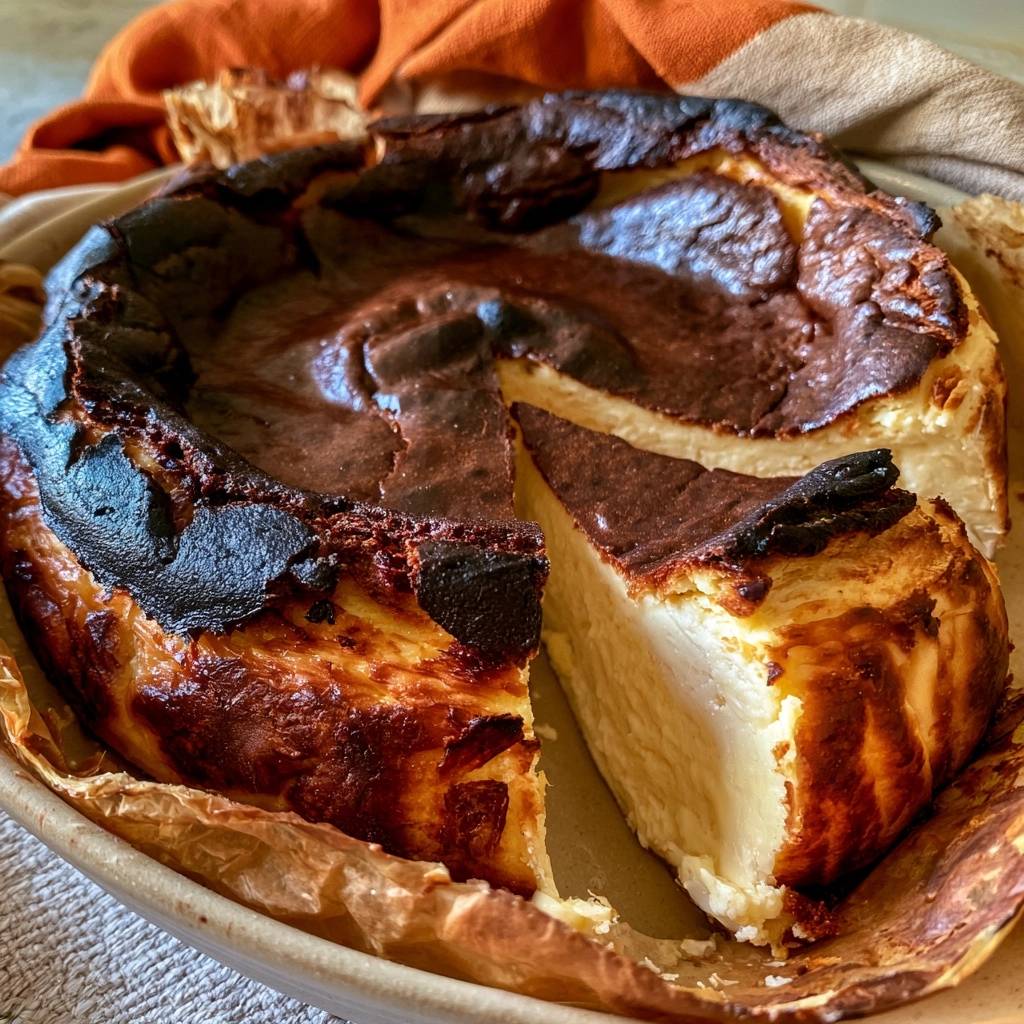
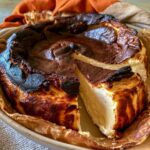
Basque Burnt Cheesecake stands out for its deeply browned top and creamy center. It has a tall profile and a rustic look, with parchment rising above the pan as the cheesecake bakes.
The texture depends on a simple contrast: the center should still jiggle when the cheesecake leaves the oven, then firm as it cools and chills. Follow the recipe card for the oven setting and timing, and use the visual cues to guide you through the process.
Why the ingredients and mixing method matter
Softened cream cheese is easier to beat smooth with granulated sugar. Take a moment to check for lumps before adding the eggs; once they go in, beat just until each is incorporated. Mixing only as much as needed keeps the batter smooth without turning this into a lengthy beating process.
Heavy cream adds to the batter’s rich, soft texture, while all-purpose flour gives it structure. Vanilla powder and kosher salt round out the flavor. Pour the cream in gradually with the mixer on low, then mix in the whisked dry ingredients just until smooth. Overmixing at this stage can make it harder to preserve the batter’s even texture.
Set up the parchment and pan carefully
The parchment lining is part of the cheesecake’s distinctive shape. Press two overlapping sheets into the springform pan, smoothing them against the base and sides as much as you can. The paper will crease and fold; that’s expected. Let it rise evenly above the rim so it can contain the tall batter as it bakes.
An uneven lining can leave gaps or cause the paper to lean to one side. Before pouring in the batter, check that the parchment is secure and rises around the pan. The finished edge will look rustic, so a few folds in the paper are not a problem.
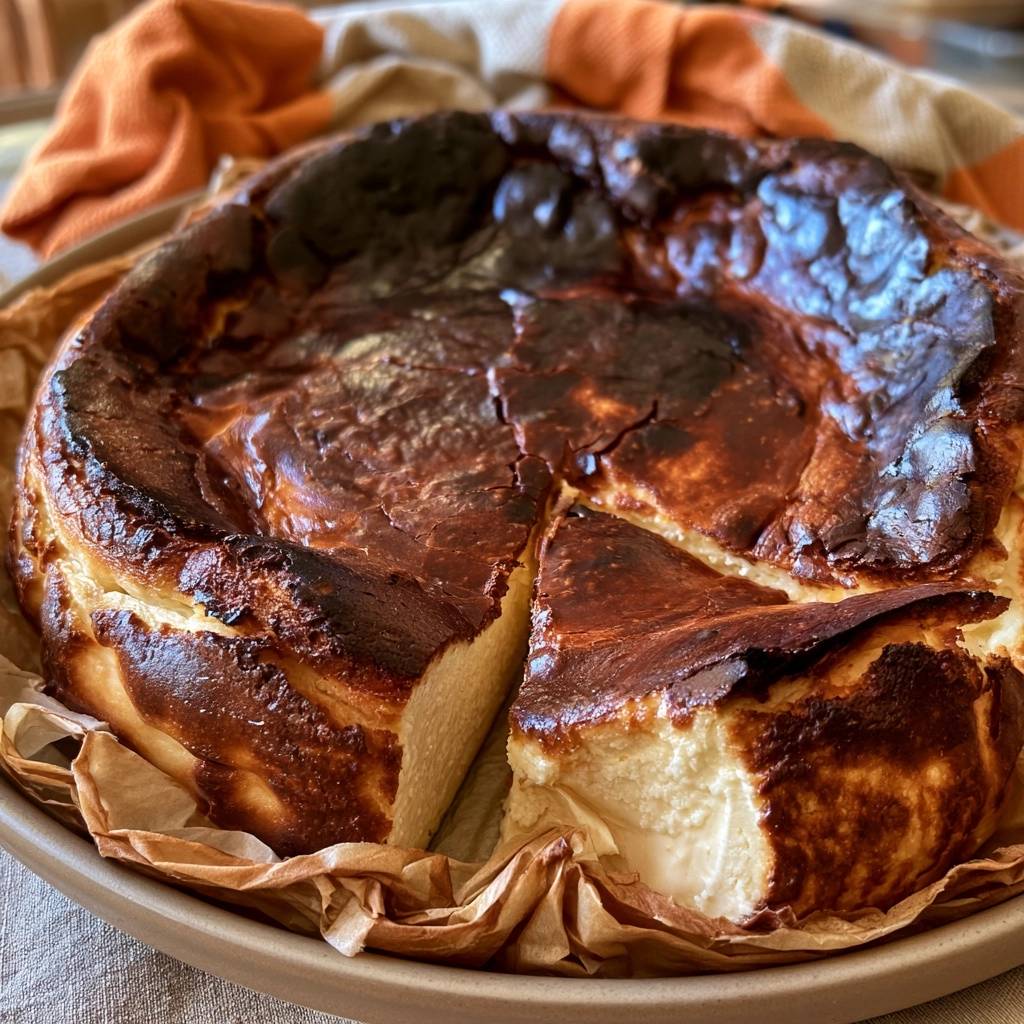
Use color and movement to judge doneness
The top should be deeply browned, while the center still moves when you gently shake the pan. That jiggle can look like the cheesecake needs more baking, but the center is meant to be soft at this point. Rely on the recipe card’s baking time along with these visual cues; don’t wait for the center to look fully set in the oven.
Once the cheesecake is out, let it cool in the pan at room temperature for the listed time. The center firms as the cake cools, then chills. Removing the springform ring after cooling makes it easier to cover the cheesecake without disturbing its browned top.
Chill for a cleaner slice
Refrigerate the cooled cheesecake for at least the time listed on the recipe card before slicing. Chilling gives the soft center time to firm, helping each cut look neater. For a clean cut, wait until the chill is complete rather than judging the texture while the cheesecake is still warm.
If the center seems especially soft after baking, that alone doesn’t mean something went wrong. The key is to let it cool and chill as directed. The browned top and creamy middle are meant to offer different textures in the same slice.
Frequently Asked Questions
Why does the center still jiggle when the cheesecake comes out?
That soft center is an expected cue for Basque burnt cheesecake. It firms as the cake cools and chills, so don’t wait for it to look fully set in the oven. Use the recipe card’s baking time along with the browned top and gentle jiggle.
How do I know when the top is browned enough?
Look for a deeply browned surface, as described in the recipe card. The center should still jiggle when you gently shake the pan. If the top is pale or the center appears completely firm in the oven, those cues differ from the intended finish.
When should I remove the springform ring and slice the cheesecake?
Let the cheesecake cool in the pan at room temperature for the time listed on the recipe card. Then remove the ring, cover the cooled cake, and refrigerate it for at least the listed chill time before slicing for a cleaner cut.
Recipe
Basque Burnt Cheesecake
This tall cheesecake bakes in a parchment-lined pan until its top is deeply browned and its center still jiggles. Chill it before slicing for a clean cut.
- Course
- Dessert
- Cuisine
- Spanish
- Difficulty
- Easy
- Servings
- 12 servings
- Prep time
- 20 mins
- Cook time
- 55 mins
- Total time
- 7 hr 15 mins
- Calories
- 540 kcal
Ingredients
Cheesecake
Instructions
Heat the oven to 450°F. Press two overlapping sheets of parchment into a 9-inch springform pan, letting the paper rise about 2 inches above the rim.
Beat the cream cheese and sugar until smooth. Add the eggs one at a time, beating just until each is incorporated.
With the mixer on low, gradually pour in the heavy cream. Whisk the flour, vanilla powder, and salt together, then mix them into the batter just until smooth.
Pour the batter into the prepared pan. Bake for 55 minutes, until the top is deeply browned and the center still jiggles when the pan is gently shaken.
Cool the cheesecake in the pan at room temperature for 2 hours. Remove the springform ring, cover the cooled cheesecake, and refrigerate for at least 4 hours before slicing.
Notes
- The center will look soft when the cheesecake comes out of the oven; it firms as it cools and chills.
Recipe: https://naileditrecipes.co/basque-burnt-cheesecake/