Chocolate Babka
Bake chocolate babka with rich chocolate swirls and a glossy, golden crust. Learn how to handle the dough, shape the twist, and spot a well-baked loaf.
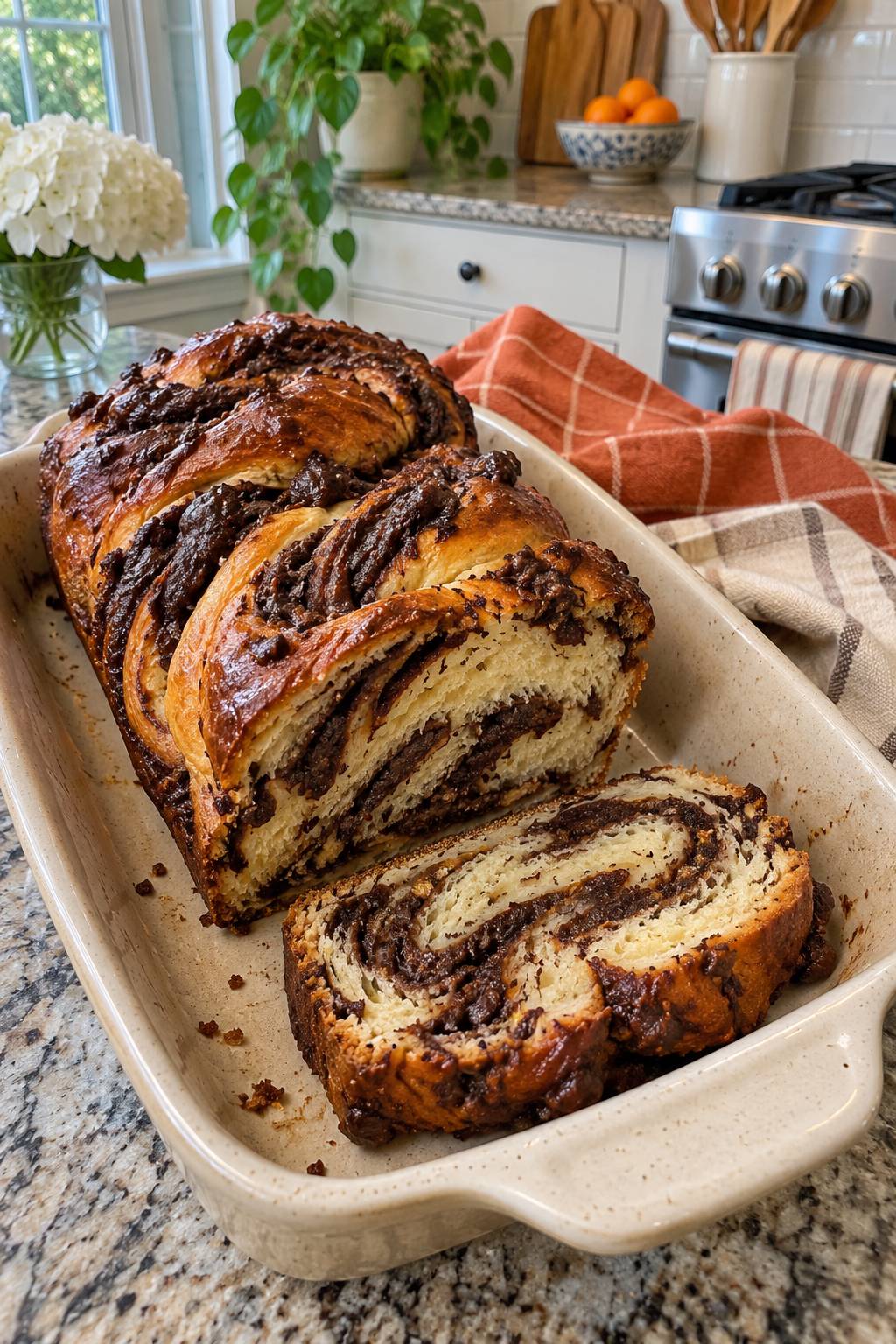
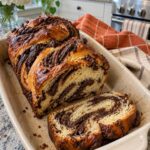
Chocolate babka brings together a tender, buttery crumb, thick chocolate ribbons, and a deeply golden crust finished with sugar syrup. Slicing through the loaf reveals the layered pattern created by splitting and twisting the filled dough. It looks intricate, but the shaping is easier to understand when you focus on keeping those chocolate layers visible.
This Jewish dessert rewards attention to texture. You’re looking for dough that feels elastic and slightly tacky, filling that spreads without running, and a shaped loaf that looks noticeably puffy before baking. Those cues help you work confidently alongside the recipe card.
What gives the dough and filling their texture
Whole milk, eggs, and softened butter enrich the all-purpose flour dough, while instant yeast provides the rise. Add the butter gradually so each addition incorporates into the dough. Scraping the bowl helps bring everything together without reaching for extra flour.
The filling combines semisweet chocolate and butter with powdered sugar and unsweetened cocoa powder. Finely chopped chocolate melts readily over gentle heat. Stirring in the powdered sugar and cocoa creates a smooth chocolate mixture; its consistency matters just as much as its flavor when you spread it over the dough.
Read the dough before reaching for flour
Slightly tacky dough is the target, so a little stickiness doesn’t mean something has gone wrong. Keep kneading as directed and look for a smooth, elastic dough. Extra flour is only worth considering if the mixture remains loose and paste-like; adding it automatically can take you away from the intended texture.
Let appearance guide the rises. The initial rise should bring the dough to doubled volume, while the shaped loaf needs to become noticeably puffy and may not double. A cool kitchen can slow that progress. Chilling as directed firms the butter and makes the dough easier to roll, cut, and twist.
Keep the chocolate layers clear when shaping
Spreadable filling gives you the most control. Runny chocolate is difficult to contain, while overly firm filling resists spreading evenly. Let the melted mixture cool to the right consistency. If it firms too much, gentle warming in a bowl of warm water helps loosen it.
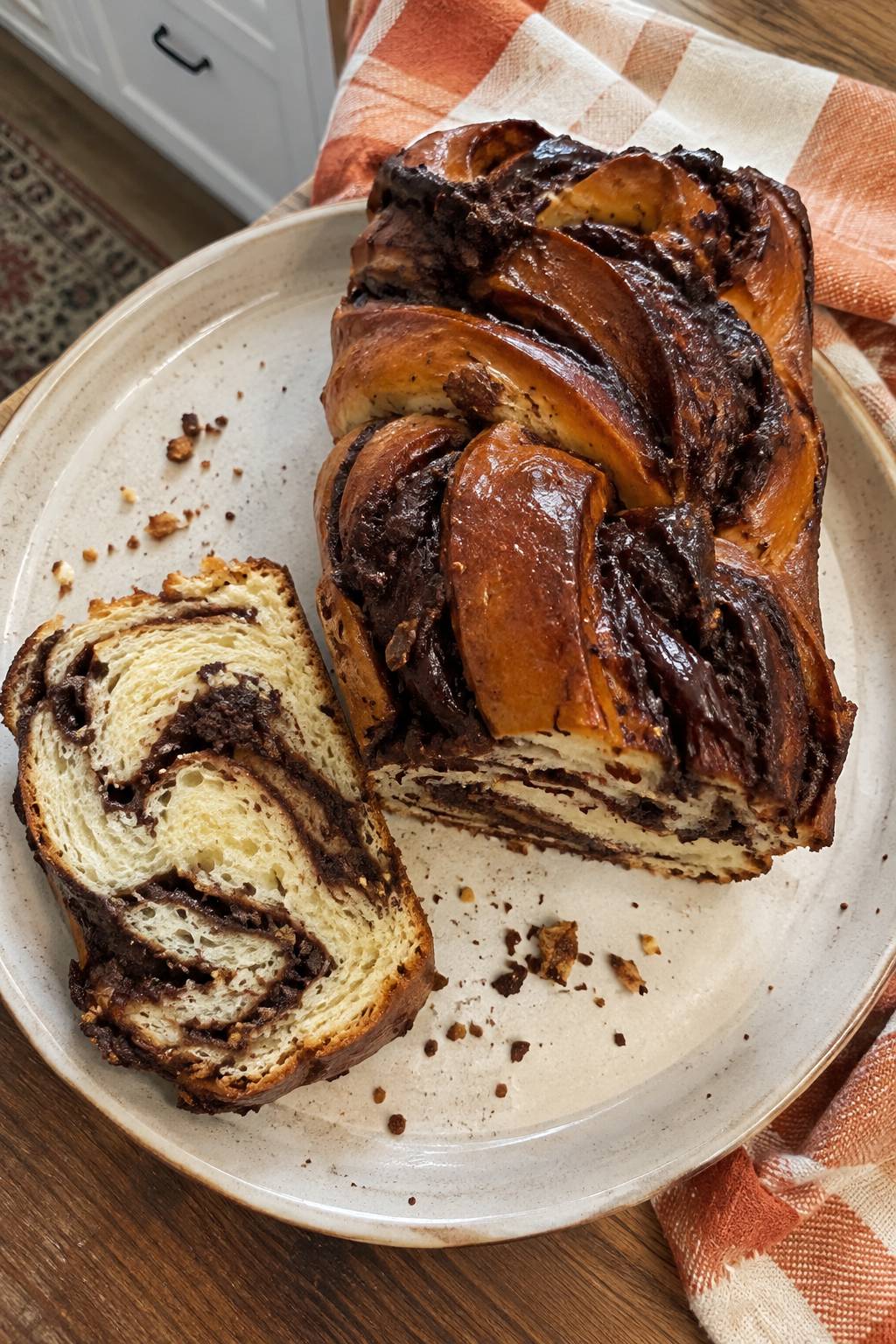
A tight roll and a pinched seam help create a defined log for splitting. Once the log is cut lengthwise, keep the exposed chocolate layers facing upward as you cross the strips. Handle the twist gently when transferring it to the pan so the layered shape stays visible.
Balance a golden crust with a baked center
The chocolate makes the center harder to judge by appearance alone. Check the bread near the center with an instant-read thermometer, avoiding chocolate pockets, and use the doneness guidance on the recipe card. If the top is already deeply golden, a loose foil tent helps protect it as baking continues.
Brush the warm sugar syrup over the hot loaf for its glossy finish. The parchment overhang helps you lift the babka from the pan. Follow the cooling directions before slicing with a serrated knife so you can reveal the chocolate swirls cleanly.
Frequently Asked Questions
Why is my babka dough difficult to roll?
Check that you’ve chilled it as directed. Chilling firms the butter in this enriched dough, making it easier to handle. Lightly dusting the counter with the reserved flour also helps you roll without the dough sticking to the surface.
What should I do if the chocolate filling gets too thick?
Set the saucepan in a bowl of warm water and stir until the filling becomes spreadable again. You want it soft enough to move easily across the dough, but thick enough to stay in place as you roll.
Does a dark golden top mean the babka is done?
Crust color is only part of the check. Test the bread near the center with an instant-read thermometer, steering clear of chocolate pockets. Follow the recipe card’s doneness guidance, and tent the top loosely with foil if it needs protection.
Recipe
Chocolate Babka
This chocolate babka has a glossy, deeply golden crust and thick chocolate swirls. The filled dough is split and twisted before baking, then brushed with a simple sugar syrup.
- Course
- Dessert
- Cuisine
- Jewish
- Difficulty
- Intermediate
- Servings
- 12 slices
- Prep time
- 45 mins
- Cook time
- 55 mins
- Total time
- 6 hr 5 mins
- Calories
- 330 kcal
Ingredients
Dough
Chocolate Filling
Sugar Syrup
Instructions
Make the Dough
Combine the 3 cups flour, granulated sugar, yeast and salt in the bowl of a stand mixer fitted with a dough hook. Add the milk and eggs. Mix on low speed until a shaggy dough forms, about 3 minutes.
With the mixer running on medium-low, add the softened butter a few pieces at a time, letting each addition incorporate. Knead for another 8 to 10 minutes, until smooth, elastic and slightly tacky. Scrape down the bowl as needed; avoid adding extra flour unless the dough remains loose and paste-like.
First Rise
Shape the dough into a ball and place it back in the bowl. Cover and let rise in a warm spot until doubled, about 120 minutes. Gently press down the dough, cover and refrigerate for 30 minutes to make it easier to roll.
Make the Filling
During the first rise, combine the chocolate and butter in a small saucepan. Heat over low heat, stirring, for about 3 minutes, until just melted. Remove from the heat and stir in the powdered sugar and cocoa until smooth. Let cool while the dough finishes rising; the filling should be spreadable, not runny. If it becomes too firm, set the saucepan in a bowl of warm water and stir until spreadable.
Shape the Babka
Grease a 9x5-inch metal loaf pan with the 1 tsp butter. Line it with parchment paper, leaving an overhang along the long sides. Lightly dust the counter with some of the reserved flour. Roll the chilled dough into a 12x16-inch rectangle, with a 12-inch edge facing you.
Spread the chocolate filling evenly over the dough, leaving a 1/2-inch border. Starting at the 12-inch edge nearest you, roll tightly into a 12-inch log. Pinch the seam closed and place it seam-side down. Cut the log lengthwise into two strips with a sharp knife.
Turn both strips so the cut chocolate layers face up. Cross the strips over each other 3 or 4 times, keeping the exposed layers facing upward. Pinch the ends together, tuck them underneath and gently lift the twist into the prepared pan.
Second Rise
Cover loosely and let rise in a warm spot for about 60 minutes, until noticeably puffy. The dough may not double. Toward the end of the rise, preheat the oven to 350°F with a rack in the center.
Bake
Bake for 50 minutes, tenting loosely with foil after 25 minutes if the top is already deeply golden. The loaf should be well browned, and an instant-read thermometer inserted into bread near the center, avoiding a chocolate pocket, should register 190°F to 195°F. If necessary, continue baking in 5-minute increments.
Finish
During the final few minutes of baking, combine the syrup sugar and water in a small saucepan. Bring to a simmer over medium heat and cook, stirring, for about 2 minutes, until the sugar dissolves. Slowly brush all the warm syrup over the hot babka as soon as it comes out of the oven.
Cool
Cool in the pan for 20 minutes. Lift out using the parchment and transfer to a wire rack for another 40 minutes before slicing with a serrated knife.
Notes
- Rising times depend on room temperature. Follow the dough's appearance and allow extra time in a cool kitchen.
- The 55-minute cooking estimate includes 3 minutes for melting the filling, 50 minutes for baking and 2 minutes for cooking the syrup. The 5-minute overlap accounts for melting the filling during the first rise and cooking the syrup during baking.
- Chilling firms the butter in the dough, making the filled log easier to slice and twist.
- Store completely cooled babka tightly wrapped at room temperature for up to 3 days, or freeze individual slices for up to 2 months.
Recipe: https://naileditrecipes.co/chocolate-babka/