Dutch Baby Pancake
Make a Dutch baby pancake with a deeply browned, puffy rim and a soft, custardy center. Learn how to handle the hot skillet and check for doneness.
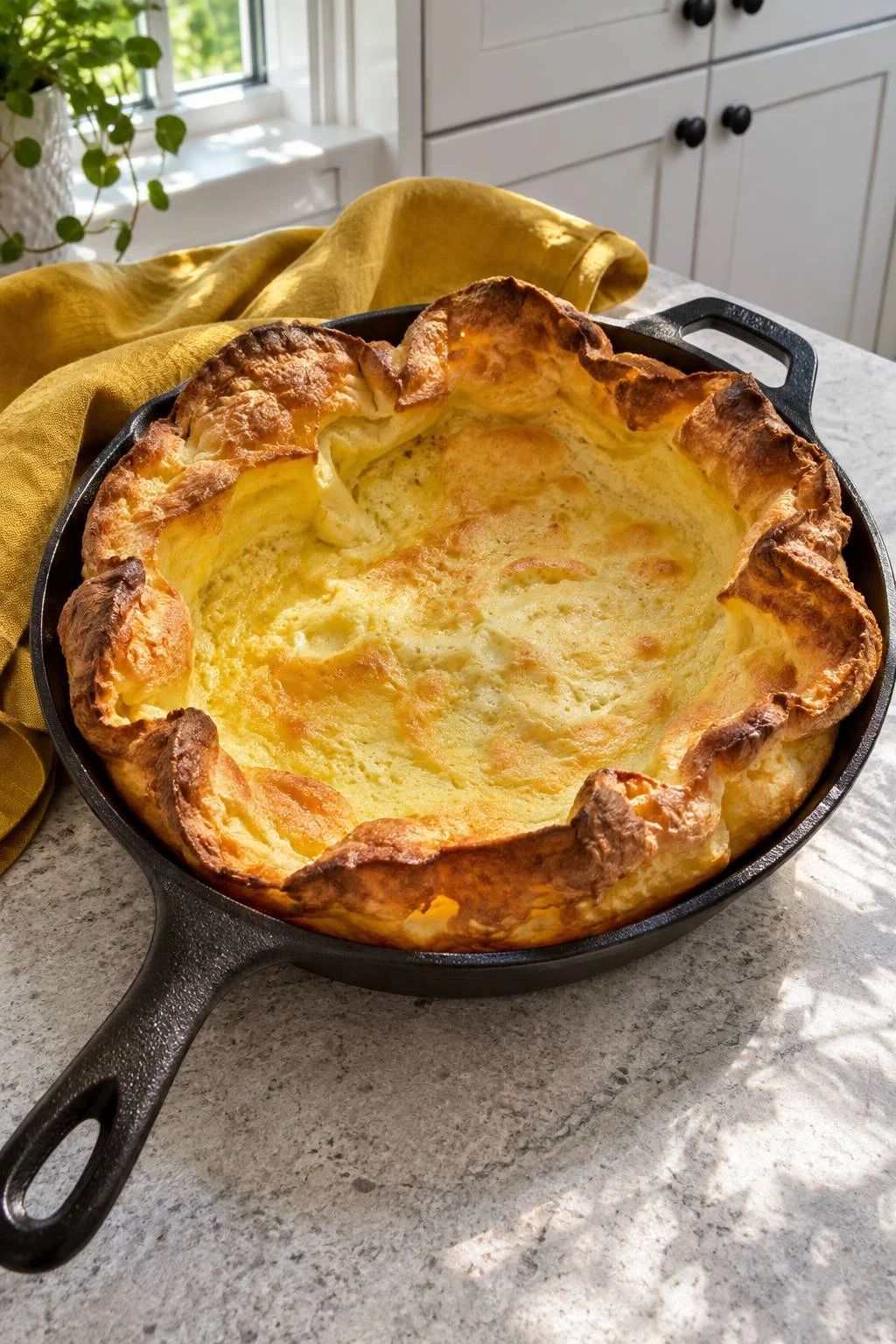
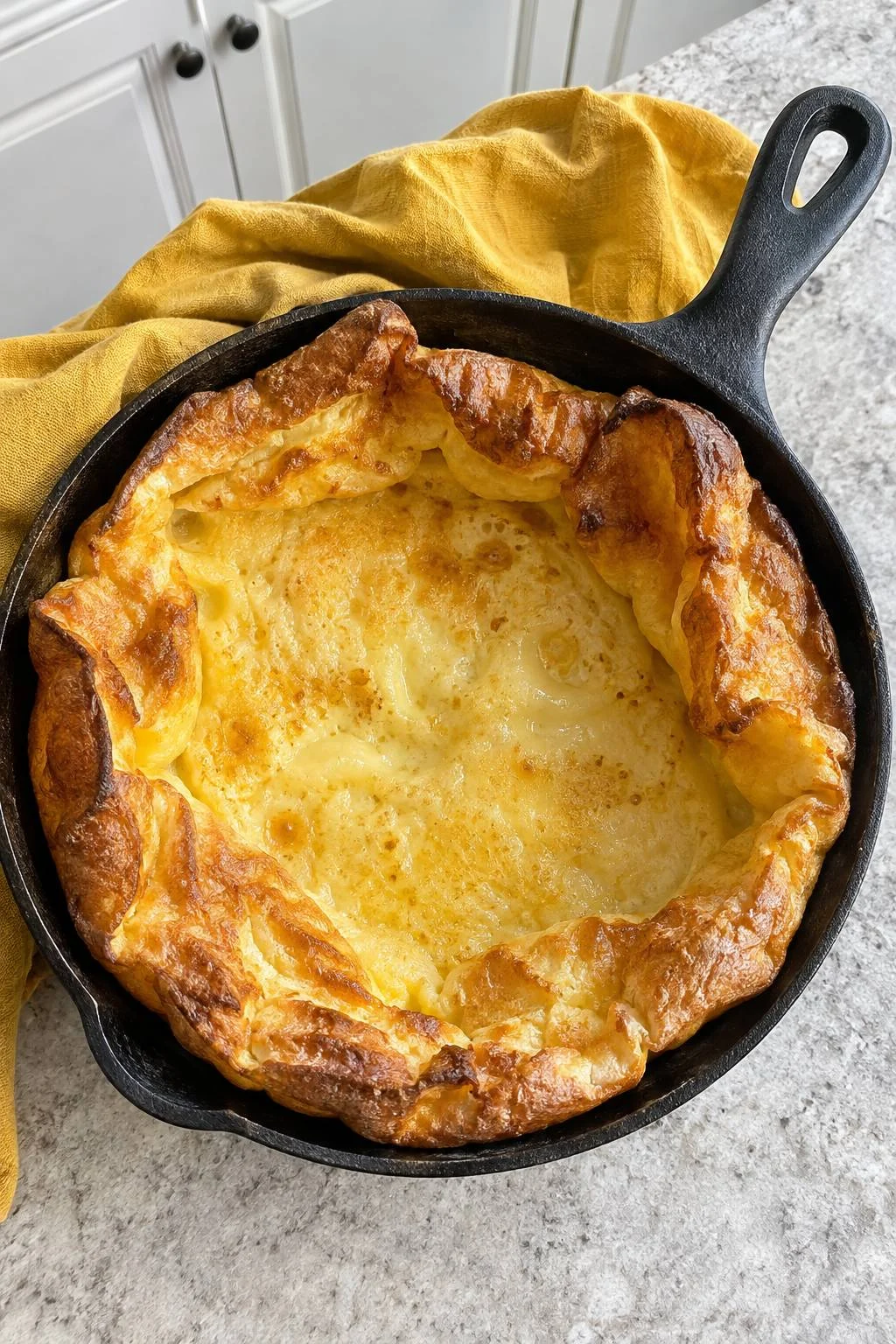
A Dutch baby pancake brings a little drama to the breakfast table. Its tall, deeply browned rim rises around a soft, custardy center, creating a contrast of textures in every warm wedge.
This oven-baked pancake is simple to prepare, but a few details make it easier to get the result you want. A thoroughly heated skillet, smooth batter, and a careful check for doneness all matter.
Why These Ingredients Work Together
Large eggs and whole milk give the pancake its soft, custardy character, while all-purpose flour gives the batter structure. The recipe calls for flour to be spooned and leveled, so follow that measuring cue rather than packing it into the measure. It helps you use the flour as intended for this batter.
Granulated sugar and fine salt season the pancake without distracting from its simple flavor. Unsalted butter coats the hot skillet and contributes richness. Have the ingredients ready before you begin so you can move the batter into the prepared skillet promptly.
Make a Smooth Batter Without Floury Patches
The blender brings the eggs, milk, flour, sugar, and salt together into a smooth batter. Look at the sides of the jar as well as the batter itself: flour can cling above the mixture even when the center looks blended. Scrape down any flour you see and blend briefly again.
This quick check helps you avoid pockets of unblended flour in the finished pancake. You are looking for a smooth mixture, not a prolonged blending session. Once the skillet is hot and the butter has melted, the batter is ready to go in.
Handle the Hot Skillet With Care
Preheat the cast-iron skillet on the middle oven rack as directed on the recipe card. The skillet needs to be fully heated before the butter and batter are added, so wait until the oven has finished preheating.
Use oven mitts to move the skillet to a heatproof surface, and remember that its handle is hot. Swirl the melted butter to coat the bottom, then pour in the batter immediately. Return the skillet to the oven with care, keeping the mitts on as you handle it.
Recognize a Finished Dutch Baby
Use the recipe card as your guide for baking, and look for both visual cues before taking the skillet out. The edges should be tall and deeply golden brown, while the center should be set with no wet batter. A browned rim alone is not the only sign to check.
Keep the oven door closed until the pancake is nearly done. Once it comes out, the rim will settle a little as steam escapes; that is expected, not a sign that you did something wrong. Cut the pancake into wedges and serve it warm from the skillet.
Frequently Asked Questions
Why does the skillet need to preheat in the oven?
The recipe calls for the cast-iron skillet to heat along with the oven before you add the butter and batter. Let the oven finish preheating, and use oven mitts whenever you handle the skillet; both the pan and its handle will be hot.
How can you tell when the center is done?
Look beyond the tall, deeply golden brown edges and check the center too. It should be set, with no wet batter visible. The finished center is meant to be soft and custardy, so it will look different from the browned rim.
Is it normal for the pancake to settle?
Yes. The raised rim settles a little after baking as steam escapes. Keep the oven door closed until the pancake is nearly done, then serve the finished Dutch baby warm, cut into wedges straight from the skillet.
Recipe
Dutch Baby Pancake
This oven-baked pancake puffs into a tall, deeply browned rim with a soft, custardy center. Serve it warm in wedges straight from the skillet.
- Course
- Breakfast
- Cuisine
- American
- Difficulty
- Easy
- Servings
- 4 Portionen
- Prep time
- 10 mins
- Cook time
- 20 mins
- Total time
- 30 mins
- Calories
- 220 kcal
Ingredients
Instructions
Set a rack in the middle of the oven and place a 10-inch cast-iron skillet on it. Preheat the oven to 425°F with the skillet inside.
Put the eggs, milk, flour, sugar, and salt in a blender. Blend on high until smooth, about 20 seconds. Scrape down the sides and blend briefly again if any flour clings to the jar.
When the oven is fully preheated, use oven mitts to set the skillet on a heatproof surface. Add the butter and swirl the skillet until the butter melts and coats the bottom. Immediately pour the batter into the skillet and return it to the oven.
Bake for about 20 minutes, until the edges are tall and deeply golden brown and the center is set with no wet batter. Cut into wedges and serve right away.
Notes
- Keep the oven door closed until the pancake is nearly done. The rim will settle a little after baking as steam escapes.
Recipe: https://naileditrecipes.co/dutch-baby-pancake/