Hearty Black Bean Butternut Squash Soup
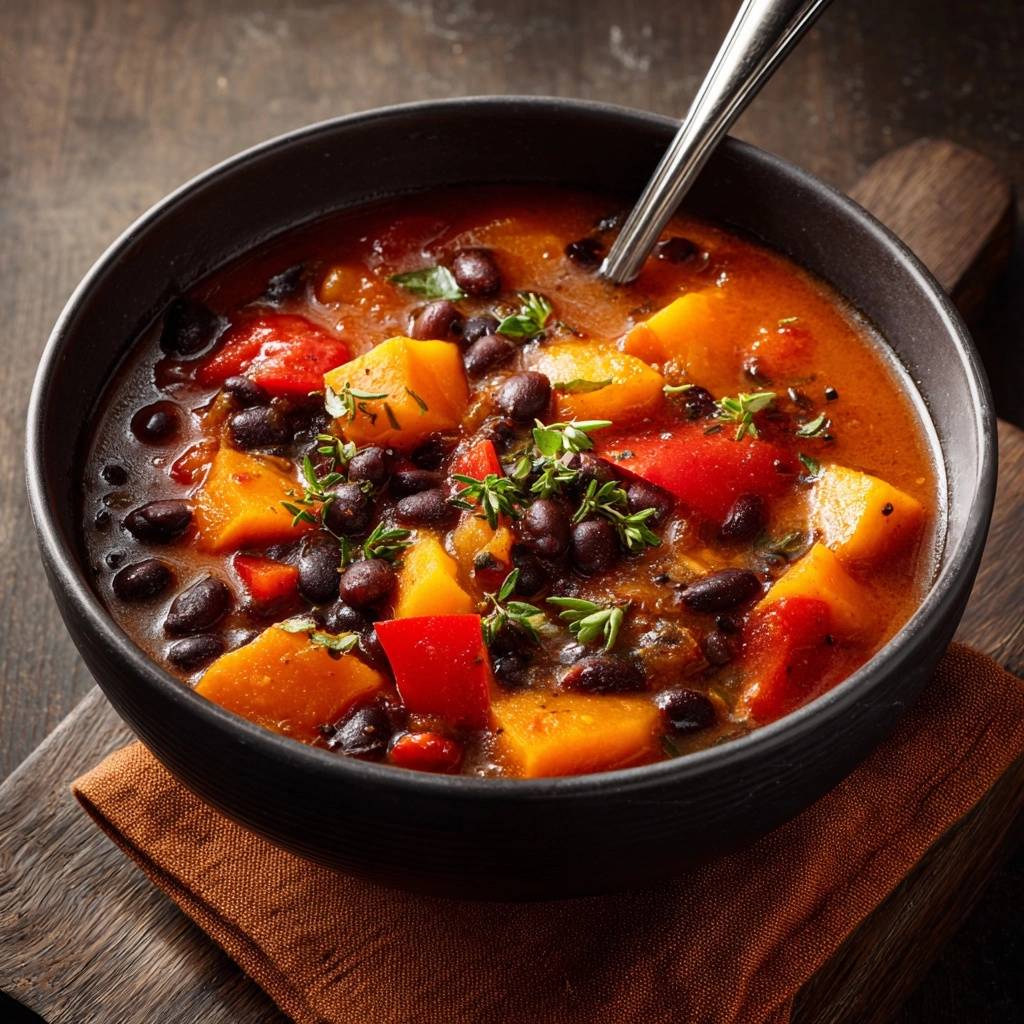
Why Roast Butternut Squash First
Picture this: you’ve boiled butternut squash for soup before, only to end up with a watery mess that tastes like mild mush. But roasting changes everything. In just 25 to 30 minutes at 425 degrees F, those cubes turn golden and caramelized, locking in a velvety thickness that no stovetop simmer can match.
So why does this matter? Roasting evaporates excess moisture and concentrates natural sugars, creating deep flavor without adding cream or thickeners. You’ll get that hearty, spoon-coating broth every time. Plus, it pairs perfectly with black beans for a filling, plant-based win.
Here’s the pro tip that seals it: spread the squash in a single layer and stir halfway. This ensures even caramelization without steaming, preventing the bland disasters so many folks face.
Caramelization Builds Deep Flavor
At 425 degrees F, the Maillard reaction kicks in on the squash’s surface. Sugars and amino acids brown, releasing nutty, toasty notes way beyond raw squash’s subtle sweetness. Roasted edges get crisp and golden, while the inside stays tender.
Compare that to boiled versions: they stay pale and watery, missing those rich layers. Stir at the 15-minute mark to avoid burning, and you’ll smell that irresistible caramel aroma filling your kitchen.
Moisture Control Prevents Thin Broth
Raw butternut squash holds over 80% water. Roasting drives off 30 to 40% of it through evaporation, especially in a single layer. Therefore, your soup thickens naturally without cornstarch or extra cooking time.
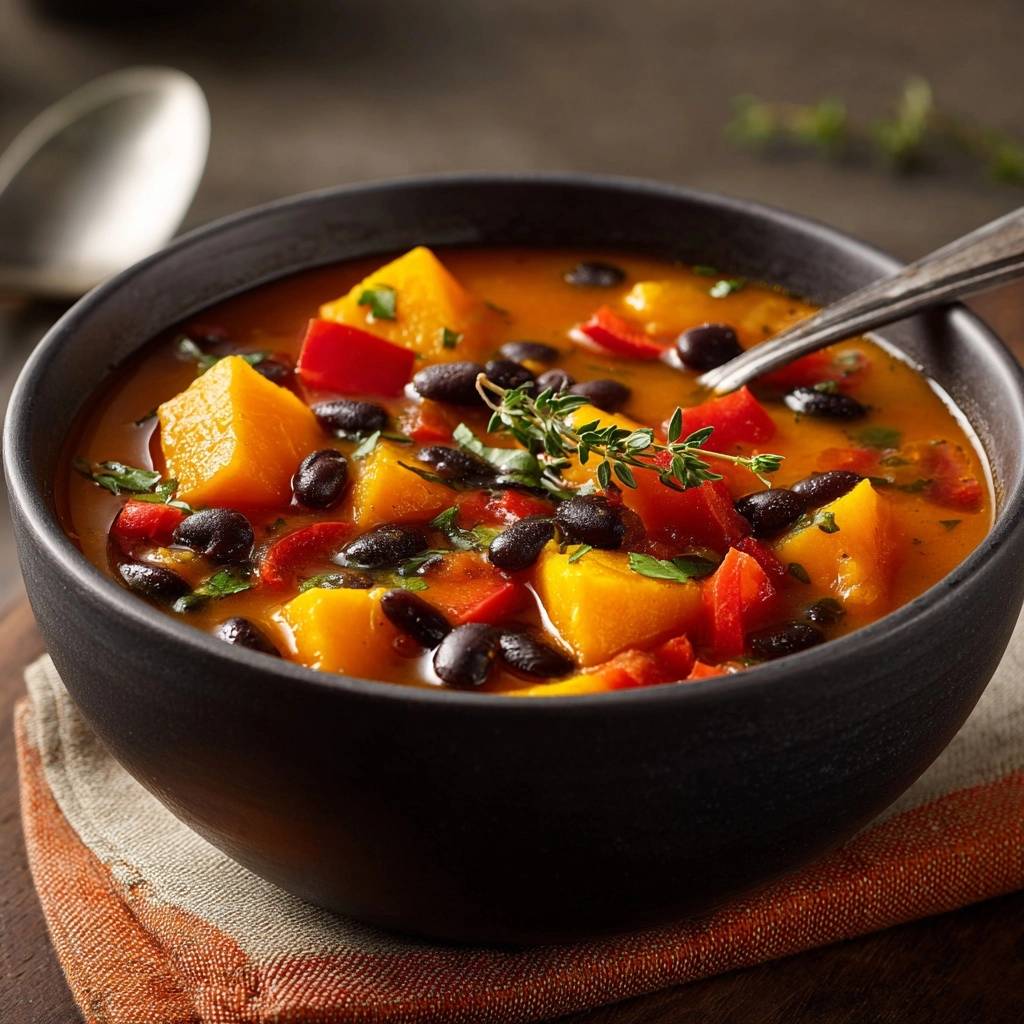
After 25 to 30 minutes, cubes shrink and weigh less, proving the transformation. Skip this, and you’re stuck blending in watery disappointment.
Key Ingredients for Hearty Black Bean Butternut Squash Soup
Start with a 2-pound butternut squash: its dense flesh roasts up sweet and sturdy. Canned black beans bring creaminess and protein; their starches release during simmering for natural thickness. Rinse them well to cut sodium by 40%.
Red bell peppers add juicy sweetness and vitamin C, boosting iron absorption from the beans. Fresh thyme delivers earthy aroma that dried can’t match. Use low-sodium vegetable broth to control salt, and olive oil for its high smoke point during roasting.
In addition, opt for organic squash if possible; it often tastes sweeter. These picks keep the soup vegan, gluten-free, and packed with fiber.
Butternut Squash Cube Prep Essentials
Peel thickly, scoop seeds, and cut into 1-inch cubes for even roasting. Smaller pieces cook faster but dry out; larger ones stay moist inside. Store prepped squash in the fridge up to two days in a damp towel.
Honeynut varieties roast quicker and pack more flavor per bite than standard ones.
Black Beans and Red Peppers Synergy
Black beans thicken as they simmer, releasing starches that bind the broth. Red peppers balance with mild sweetness and crunch before blending. Rinse beans thoroughly; it slashes sodium without losing texture.
Moreover, peppers’ vitamin C enhances bean nutrition, making each bowl more satisfying.
Roasting Phase: Golden Squash Foundation
Preheat your oven to 425 degrees F while you cube the squash. Toss with 1 tablespoon olive oil, 1/2 teaspoon salt, and 1/4 teaspoon pepper. Spread on an aluminum sheet pan for best heat conduction; nonstick works too but browns less.
Roast 25 to 30 minutes, stirring halfway. Look for golden edges and a fork-tender bite. At high altitude, add 5 minutes. Always use oven mitts; pans stay screaming hot.
Single-Layer Spread Technique
Overcrowd, and squash steams instead of roasts, staying pale and wet. Single layer allows airflow for crisp edges. Flip with a spatula for even browning; roast in batches if doubling.
Sautéing Peppers and Thyme Base
Grab a 4- to 6-quart pot and heat 1 tablespoon olive oil over medium. Add diced red peppers, stripped thyme leaves, 1/2 teaspoon salt, and 1/4 teaspoon pepper. Sauté 5 minutes until peppers soften and release a sweet scent.
Medium heat prevents scorching; stir often. This builds the flavor base before adding squash. Woody thyme stems? Strip leaves by pinching and sliding.
Thyme’s Role in Aromatics
Fresh thyme packs three times the punch of dried, so don’t swap 1:1. Strip 4 sprigs efficiently by holding the top and pulling backward. Reserve extra for garnish; one per bowl looks pro.
Try rosemary or sage if needed, but halve the amount for balance.
Simmering and Melding Flavors
Add roasted squash, rinsed black beans, and 4 cups vegetable broth. Bring to a simmer, then lower heat and cook 10 minutes covered. Bean starches gelatinize, thickening everything nicely.
Simmer gently; boiling muddies flavors. Taste midway and adjust salt. Lid on traps steam for faster melding.
Broth Integration Timing
Pour broth after veggies to deglaze any stuck bits. Choose low-sodium brands for umami control; add a splash of soy sauce if flat. Taste at 5 minutes for seasoning tweaks.
If you prefer a smoother texture, try this velvety butternut squash soup instead.
Immersion Blending for Chunky Texture
Turn off heat and use an immersion blender right in the pot. Pulse 4 to 6 times for partial puree: half smooth, half chunky. This keeps the hearty mouthfeel without cream.
Immersion beats stand blenders by avoiding splatter transfers. Retain chunks for satisfaction; over-blend, and it turns gluey. Pro tip: blend off-heat to prevent burns.
Blender Safety and Consistency Control
Submerge the blender head fully in deeper pot areas. Aim for 50/50 smooth-to-chunky by pulsing briefly. Fixed an over-blend? Stir in extra whole beans.
Flavor Variations for Hearty Black Bean Butternut Squash Soup
Craving heat? Stir in 1 teaspoon chipotle powder post-roast. For creaminess, add 1/2 cup coconut milk before blending. Wilt in kale during simmer for greens.
Smoked paprika (1 teaspoon) adds depth; sub pumpkin for squash in fall. All keep it vegan and gluten-free. Double beans for bigger yield, but watch blending time.
Spice and Herb Swaps
Cumin (1 teaspoon) brings earthiness; roast with squash. Fresh ginger (1-inch grated) adds warmth without overpowering. Reduce thyme to 2 sprigs if swapping.
Vegetable Substitutions
Acorn squash works but needs 5 extra roast minutes; it’s nuttier. Fire-roasted canned peppers shortcut sauté time, boosting smokiness. Nutrition stays high in fiber and vitamins.
Avoiding Pitfalls in Black Bean Butternut Squash Soup
Under-roast squash, and broth thins out; always hit golden edges. Over-salt? Dilute with extra broth. Full puree kills texture; pulse partially.
Wrong broth drowns flavors; stick to vegetable. Symptoms like separation mean more simmer time. Rinse beans to dodge sodium bombs.
Soggy Squash Recovery Methods
If moisture lingers, simmer uncovered 10 more minutes or whisk in 1 teaspoon cornstarch slurry. Prevention: single-layer roast every time. Tastes better than starting over.
Make-Ahead and Freezing Hearty Black Bean Butternut Squash Soup
Fridge leftovers up to 5 days in airtight containers. Freezes beautifully for 3 months; portion into singles. Thaw overnight, then reheat on stovetop with a stir.
Double the recipe easily: use two pans for roasting. Microwave reheats fine but stovetop preserves texture best.
Portion and Container Best Practices
Freeze flat in bags for stackable space; glass jars work for fridge. Reheat simmering gently over medium. Avoid plastic if microwaving long-term.
Pairing Sides with Hearty Black Bean Butternut Squash Soup
Dip crusty sourdough for sopping up broth. Quinoa salad adds chew; avocado toast brings creaminess. Roasted chickpeas crunch on top.
Sparkling cranberry juice cuts richness perfectly. Mix and match for meal prep bowls that last all week.
Bread and Crunchy Add-Ons
Toast sourdough slices with a drizzle of olive oil. Sprinkle seeds or crushed nuts on soup for bowl contrast.
Common Questions on Hearty Black Bean Butternut Squash Soup
Can I use frozen squash?
Yes, thaw fully first, pat dry, and roast 5 extra minutes. It works but fresh caramelizes better. Drain any thaw water to avoid diluting broth.
How do I store leftovers and does it freeze well?
Store in airtight containers in the fridge up to 5 days. Freezes excellently for 3 months in portions; thaw in fridge overnight. Reheat on stovetop over low heat, stirring to maintain chunky texture. Avoid repeated freezing.
Why is my soup watery and how do I fix it?
Usually from skipping the roast or under-roasting squash. Fix by simmering uncovered 10-15 minutes more or blending in extra beans. Next time, roast until golden and dry-edged for guaranteed thickness.
Can I substitute ingredients like the beans or broth?
Swap black beans for pinto or kidney; rinse well. Use chicken-free broth or homemade stock. No thyme? Oregano or basil, but fresh only. Coconut milk subs for creaminess if desired.
Instant Pot Conversion Steps
Sauté peppers and thyme on sauté mode first. Add roasted squash, beans, and broth; pressure cook 5 minutes. Quick release, then blend. Flavor’s close but roasting step can’t be skipped fully.
Nutrition Per Bowl Breakdown
Each serving clocks about 250 calories, 18g fiber, and 12g protein from beans. Squash delivers vitamin A overload for immunity. Low-carb friendly; skip bread for under 30g net carbs.
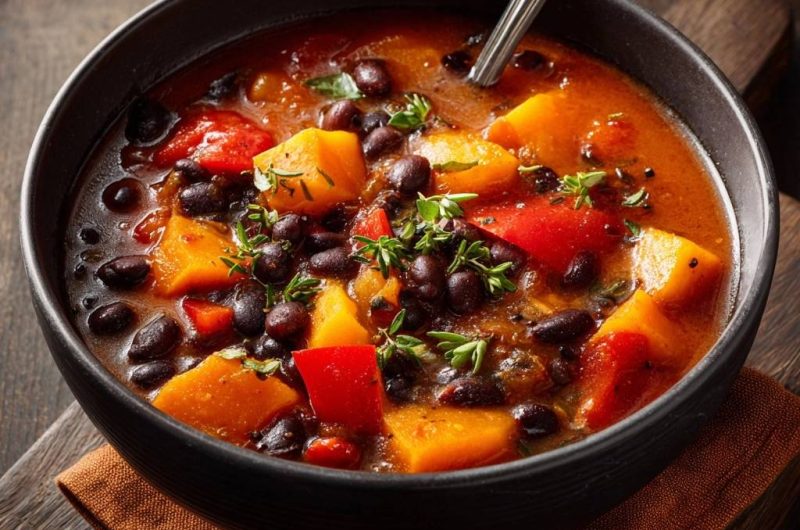
Black Bean Butternut Squash Soup
Course: SoupCuisine: AmericanDifficulty: medium6
servings20
minutes45
minutes250
kcal65
MinutesTired of squash soups that turn out thin and bland? Roasting the butternut first caramelizes its natural sugars, evaporates excess moisture, and infuses deep flavor for a thick, velvety broth every time.
Ingredients
1 medium butternut squash (about 2 pounds), peeled, seeded, and cut into 1-inch cubes
2 red bell peppers, seeded and diced
2 (15-ounce) cans black beans, drained and rinsed
4 cups vegetable broth
2 tablespoons olive oil
1 teaspoon salt
1/2 teaspoon black pepper
4 sprigs fresh thyme, leaves stripped (plus extra for garnish)
Directions
- Preheat oven to 425 degrees F. Toss butternut squash cubes with 1 tablespoon olive oil, 1/2 teaspoon salt, and 1/4 teaspoon pepper on a baking sheet. Spread in a single layer. Roast for 25-30 minutes, stirring halfway, until golden, caramelized, and tender. This key step removes moisture from the squash, preventing watery broth while building rich flavor.
- While squash roasts, heat remaining 1 tablespoon olive oil in a large pot over medium heat. Add diced red bell peppers, thyme leaves, remaining salt, and pepper. Saute 5 minutes until peppers soften.
- Stir in roasted butternut squash, black beans, and vegetable broth. Bring to a simmer, then reduce heat and cook 10 minutes to meld flavors.
- Use an immersion blender to partially puree the soup right in the pot, leaving some chunks for texture. This locks in the thick consistency from the roasted squash. Taste and adjust seasoning.
- Ladle into bowls, garnish with fresh thyme sprigs, and serve hot. Perfect thick broth guaranteed!
Notes
- Roasting the squash is key to preventing watery broth and building rich flavor. Partially puree for perfect texture with some chunks.