Italian Anise Cookies
Bake tender Italian anise cookies with cakey centers, thick white glaze, and rainbow sprinkles, with helpful tips for shaping, doneness, and decorating.
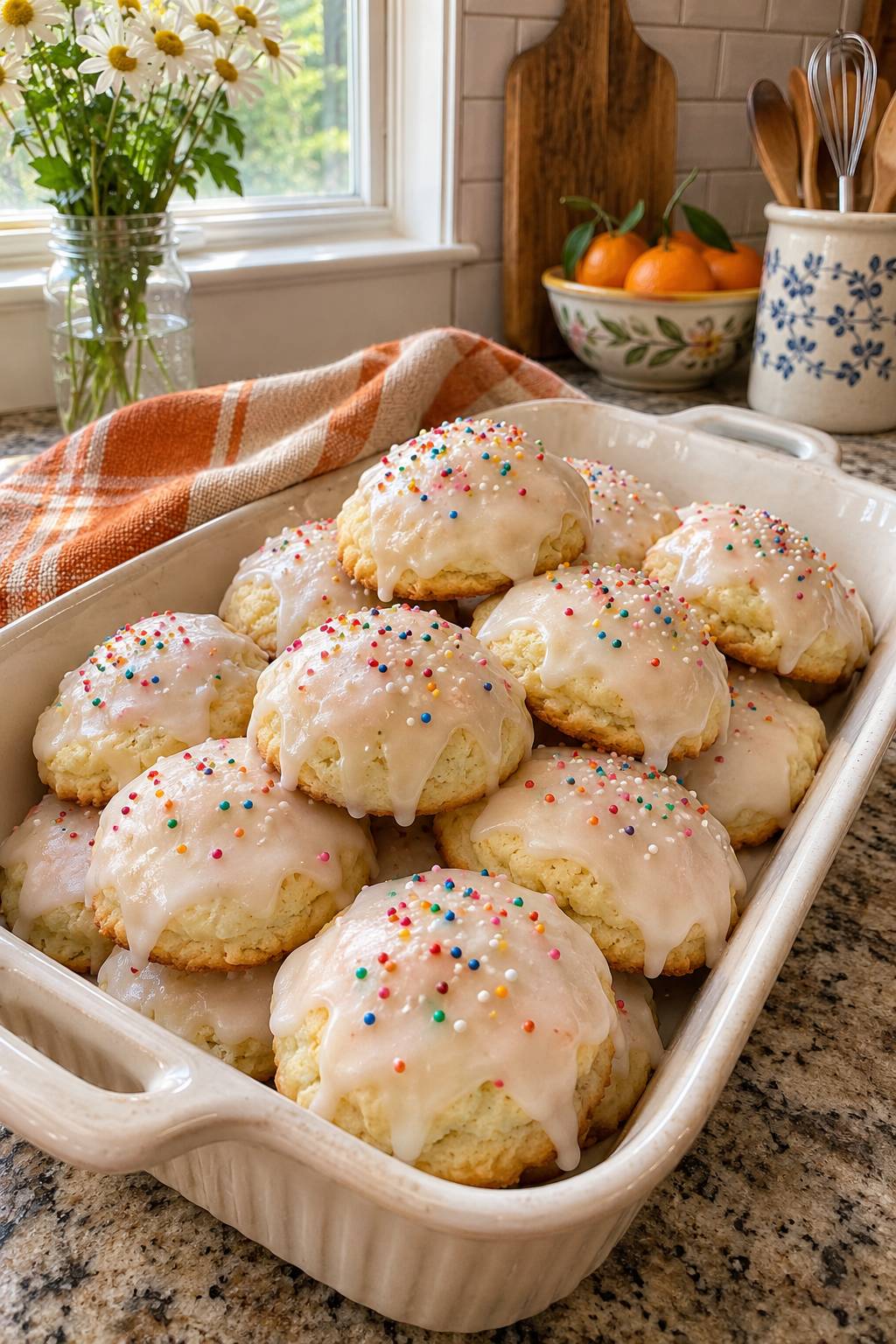
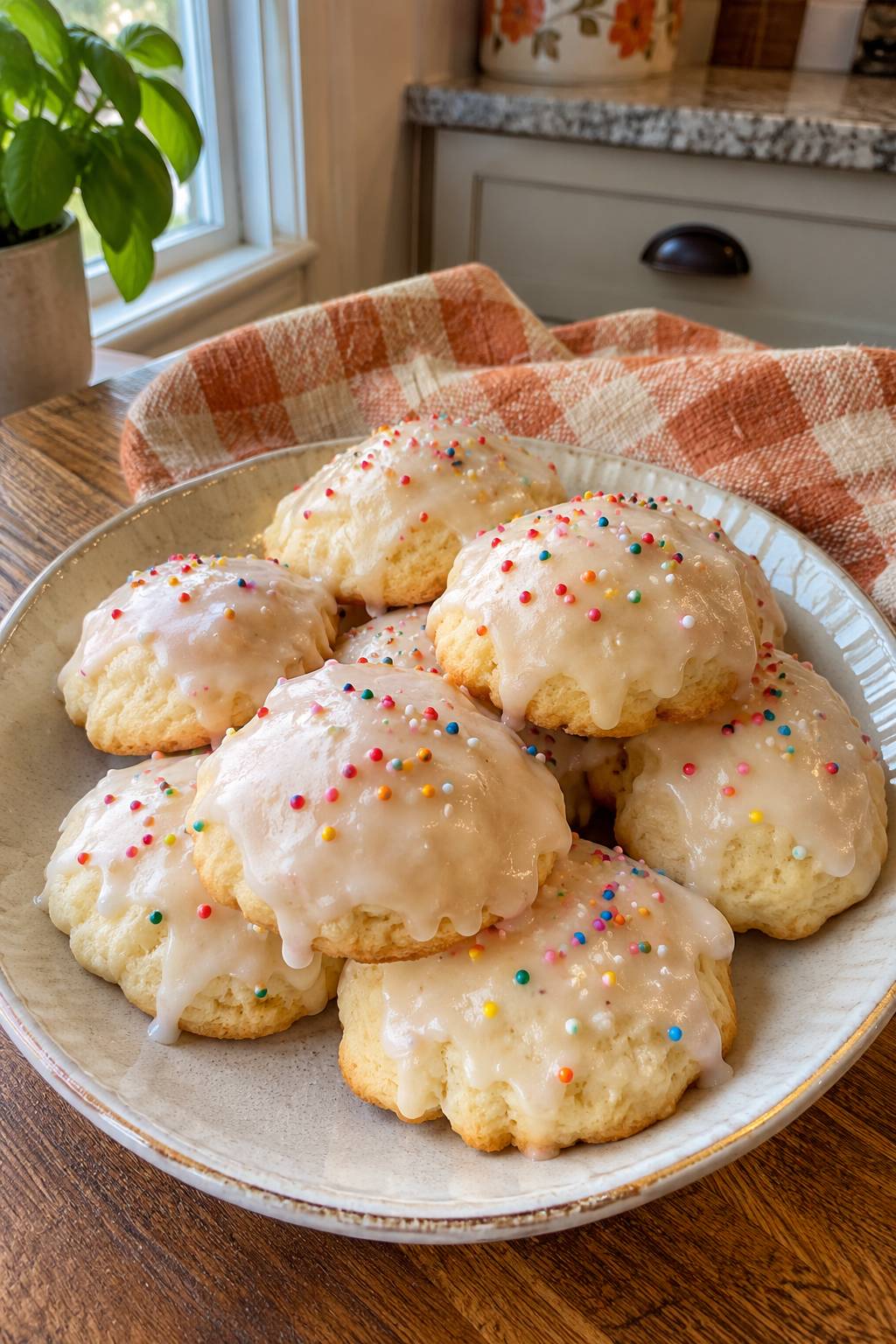
Italian anise cookies bring a cheerful finish to a Christmas cookie platter, with rounded tops, thick white glaze, and colorful nonpareils. Beneath that festive coating, you get a tender, cakey center and a lightly golden bottom. The anise flavor is gentle, giving these cookies a distinctive character without overwhelming their simple sweetness.
The details that matter most are easy to recognize: soft dough that holds a mound, mostly pale tops after baking, and glaze that drapes over the cookies. Knowing what to look for helps you avoid overmixing, overbaking, or glazing while the cookies are still warm.
Choose the Right Anise and Prepare Your Ingredients
Anise seeds give these cookies their characteristic flavor. Use anise seeds rather than star anise, and grind them finely before measuring as directed on the recipe card. A fine grind helps distribute the anise throughout the dough without leaving coarse pieces in the tender centers.
Spoon and level your all-purpose flour for measuring. Scooping it directly with the measuring cup can pack it down, making it easier to add more than the recipe intends. Start with softened unsalted butter and room-temperature eggs and whole milk so they are ready for the mixing method on the card.
Keep the Dough Soft and the Mounds Rounded
When you cream the butter and granulated sugar, look for a creamy mixture that has become lighter in color. Scrape the bowl as you incorporate the eggs so the mixture is evenly combined. Once the flour mixture and milk go in, use low speed and stop when no dry flour remains.
The finished dough should feel soft, thick, and slightly sticky. That stickiness is expected; it does not mean you need more flour. Lightly dampened fingers let you smooth the tops without dragging the dough. Keep the mounds rounded rather than pressing them flat, and aim for consistent shapes so you can judge their doneness together.
Look Underneath Before You Judge Doneness
These cookies should keep mostly pale tops, so a deeply golden surface is not the goal. Look for puffed cookies with set tops and lightly golden bottoms. A toothpick inserted into a center should come out without wet dough. Use those cues alongside the baking guidance on the recipe card.
With baking sheets on the upper and lower racks, switching their positions and rotating them front to back helps expose the cookies evenly to the oven's heat. Let the baked cookies rest on their sheets as directed before transferring them to wire racks.
Make the Glaze Thick Enough to Drape
The white glaze should fall slowly from a spoon. Add the reserved whole milk gradually, watching the consistency rather than automatically using it all. A loose glaze can run down the sides too quickly, leaving a thinner coating than you want.
Wait until the cookies are completely cool before glazing; warmth makes the coating run off. Parchment beneath the racks catches drips. Decorate each cookie with rainbow nonpareils immediately after spooning on its glaze so the sprinkles meet a wet surface.
Frequently Asked Questions
Should I add flour if the dough feels sticky?
Slight stickiness is part of the intended dough texture. Look for dough that is also soft and thick. Use lightly dampened fingers to smooth the rounded mounds instead of adding flour just to make the dough easier to touch.
Are pale cookie tops a sign that they need more baking?
Mostly pale tops are expected for these cookies. Check that the tops are set, the cookies are puffed, and the bottoms are lightly golden. A toothpick inserted into a center should come out without wet dough.
Why is my glaze sliding off the cookies?
Warm cookies or overly thin glaze can cause that problem. Let the cookies cool completely, and check that the glaze falls slowly from a spoon. Incorporate the reserved milk gradually so you can stop when the coating reaches that thick consistency.
Recipe
Italian Anise Cookies
These rounded Italian cookies have tender, cakey centers, lightly golden bottoms and a gentle anise flavor. Thick white glaze and colorful nonpareils give them a festive finish.
- Course
- Dessert
- Cuisine
- Italian
- Difficulty
- Easy
- Servings
- 24 cookies
- Prep time
- 25 mins
- Cook time
- 18 mins
- Total time
- 1 hr 33 mins
- Calories
- 170 kcal
Ingredients
Cookies
Glaze and topping
Instructions
Make the dough
Preheat the oven to 350°F with racks in the upper and lower thirds. Line two large baking sheets with parchment paper.
Whisk together the flour, baking powder, ground anise seeds and salt. In a separate large bowl, beat the butter and granulated sugar with an electric mixer on medium speed until creamy and lighter in color, about 2 minutes. Beat in the eggs one at a time, scraping the bowl as needed.
On low speed, mix in half the flour mixture, then the 1/4 cup milk, then the remaining flour mixture. Mix just until no dry flour remains. The dough should be soft, thick and slightly sticky.
Shape and bake
Divide the dough into 24 rounded mounds, about 2 tablespoons each, placing 12 on each baking sheet with at least 2 inches between them. With lightly dampened fingers, gently smooth the tops without flattening the mounds.
Bake both sheets for 18 minutes, switching their rack positions and rotating them front to back halfway through. The cookies should be puffed, set on top and lightly golden underneath, with mostly pale tops. A toothpick inserted into a center should come out without wet dough.
Cool and decorate
Let the cookies cool on the baking sheets for 5 minutes, then transfer them to wire racks to cool completely, about 25 minutes more.
Whisk the powdered sugar with 3 tablespoons of the remaining milk until smooth. Add the reserved 1 tablespoon milk a little at a time, using only enough to make a thick glaze that falls slowly from a spoon.
Set the racks over parchment paper. Spoon glaze over each cooled cookie, letting it drip down the sides. Decorate each cookie with nonpareils immediately after glazing. Let stand for 20 minutes, or until the glaze is set enough to handle, then arrange on a serving platter.
Notes
- Use anise seeds, not star anise. Grind the seeds finely in a spice grinder, then measure 2 teaspoons.
- Glaze only completely cooled cookies; warm cookies will make the glaze run off.
- Store in an airtight container at room temperature for up to 3 days. Let the glaze dry fully before stacking cookies with parchment paper between layers.
Recipe: https://naileditrecipes.co/italian-anise-cookies/