Slow-Cooked Beef Rendang with Toasted Coconut
Learn how to make tender slow-cooked beef rendang with a spiced lemongrass paste, rich coconut milk, and toasted coconut over fluffy jasmine rice.
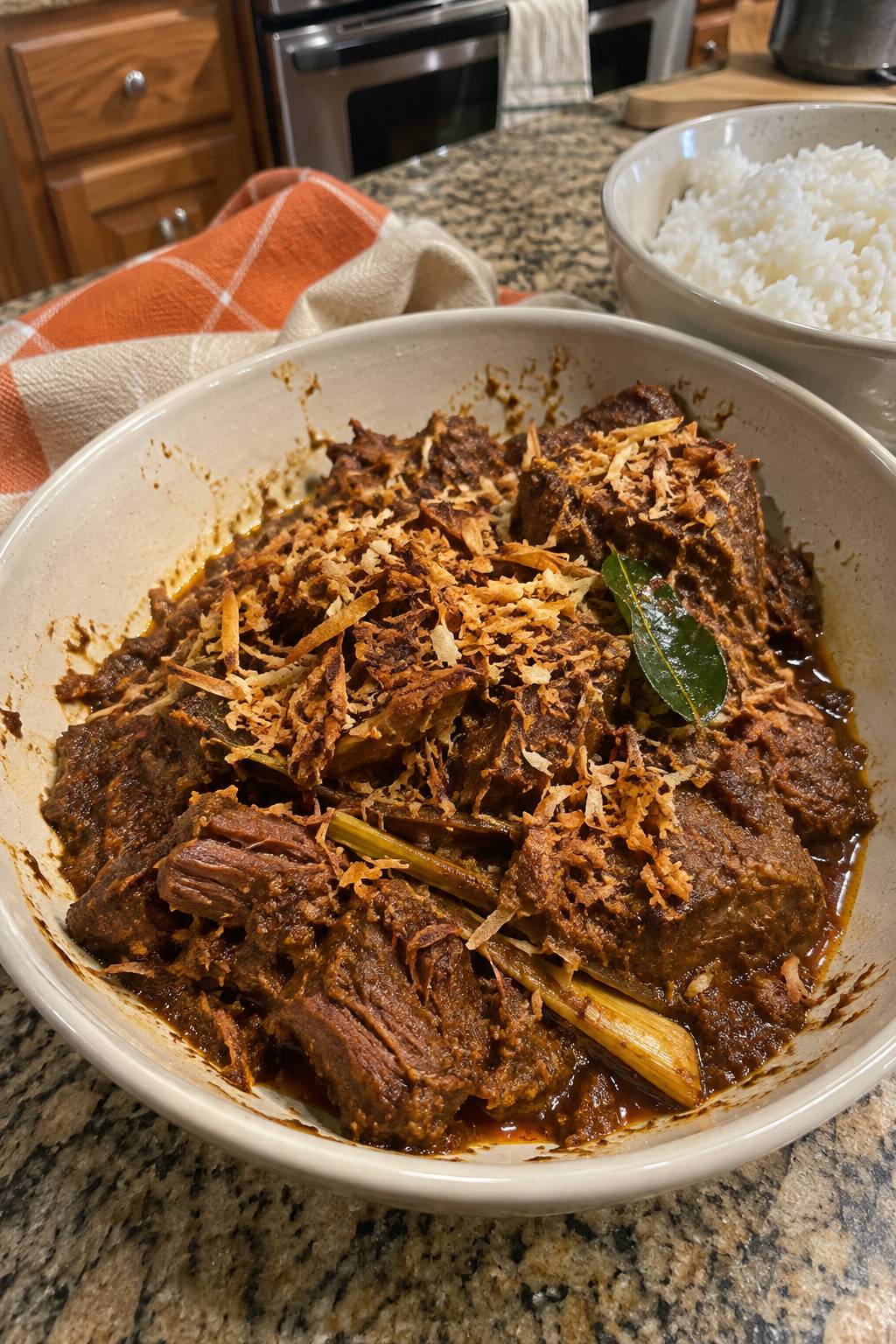
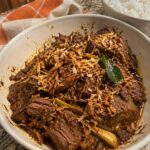
Rendang is a dish that rewards patience. Beef chuck braises slowly in a spiced paste built from lemongrass, chiles, and aromatics, then simmers in coconut milk until the meat is tender and the sauce turns thick and dark. The flavor is rich and deeply savory, with a gentle warmth from the chiles.
This version finishes with toasted coconut and is served over steamed rice, which soaks up every bit of the sauce. Below, you'll find the choices that matter most, from the beef to the browning, so your rendang turns out rich and glossy.
Choosing the Beef and Chiles
Beef chuck is the right cut for this job. It has enough connective tissue to turn silky during a long braise, so you don't need an expensive steak. Pat the cubes dry before seasoning so they brown instead of steaming in the pot.
Dried guajillo or New Mexico chiles bring deep color and a fruity, mild heat rather than a sharp burn. Soaking them until pliable makes them easy to blend smooth, and discarding the soaking water keeps the paste from tasting bitter.
Building Flavor in the Paste
The spice paste carries most of the flavor, so give the blender time. Stop to scrape the sides until the mixture is smooth and thick, with no stringy lemongrass left behind. Ginger is the aromatic called for here. Traditional rendang often features galangal, which has a sharper, citrusy edge, so ginger brings a warmer, more familiar bite.
Frying the paste is where the flavor deepens. Cook it over medium heat, stirring often, until it darkens, smells fragrant, and oil begins to separate at the edges. Scorched paste tastes bitter, so keep it moving.
Toasting Coconut and Thickening the Sauce
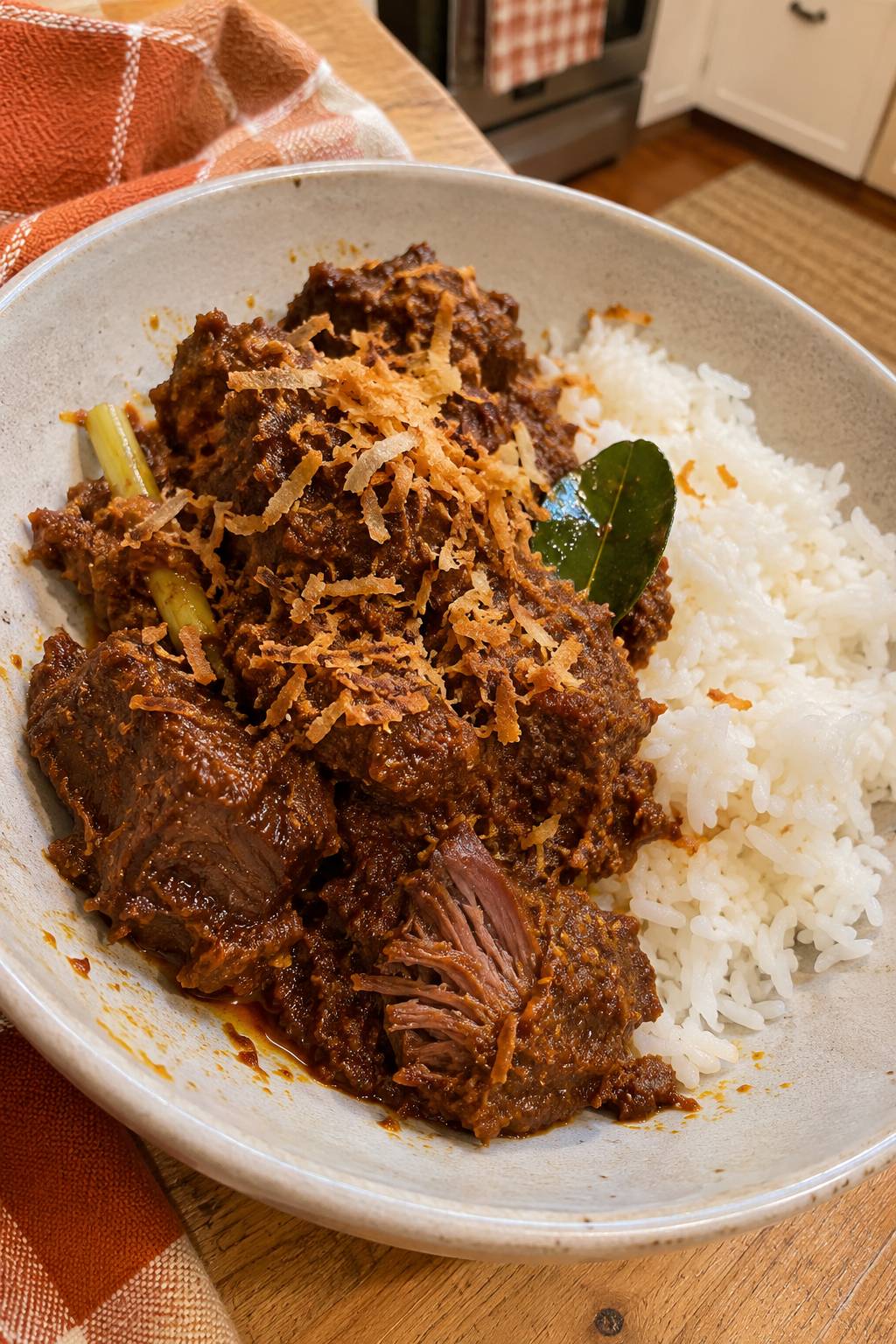
Toasted coconut is more than a garnish. Shredded coconut goes from golden to dark quickly, so stir it constantly in a dry skillet and move it to a plate the moment it turns golden. Scorched coconut will taste harsh against the rich sauce.
The sauce looks loose at first, and that's expected. The final uncovered stage lets water evaporate from the coconut milk, so the sauce thickens and clings to the beef instead of pooling. You're looking for a glossy surface where a little oil shimmers. Taste before serving, then adjust salt last, since the fish sauce and lime already add savoriness and brightness.
Avoiding Common Mistakes
The biggest mistake is crowding the pot. Browning in batches gives each piece room to develop color on all sides, and scraping up the browned bits when you add the liquids returns that flavor to the sauce.
In the oven, aim for a gentle simmer rather than a hard boil, so the beef stays intact and the sauce doesn't splatter. Test doneness with a fork instead of trusting the clock, since every piece of chuck cooks at its own pace.
Frequently Asked Questions
Why do you brown the beef in batches?
Crowding the pot traps moisture, so the beef steams instead of browning. Working in batches gives each piece room to build a deep, caramelized crust. That color adds savory depth that carries straight into the finished sauce.
Why does the sauce look thin at first?
Coconut milk and broth start out loose and need time to reduce. The uncovered final stage lets water evaporate, so the sauce thickens and clings to the beef. Keep going until the sauce coats a spoon and looks glossy.
How do I know when the beef is done?
Test it with a fork rather than relying on the clock. Fork-tender beef slides apart with little resistance, and the sauce should look thick and dark. If the meat still feels firm, keep it covered and check again, since each piece cooks at its own pace.
Recipe
Slow-Cooked Beef Rendang with Toasted Coconut
Beef chuck is braised in a spiced lemongrass and chile paste simmered with coconut milk until the meat is tender and the sauce turns thick and dark. It's finished with toasted coconut and served over steamed rice.
- Course
- Main Course
- Cuisine
- Indonesian
- Difficulty
- Easy
- Servings
- 6 servings
- Prep time
- 30 mins
- Cook time
- 3 hr 25 mins
- Total time
- 4 hr 15 mins
- Calories
- 750 kcal
Ingredients
Beef
Rendang paste
Braise
To finish
Instructions
Rendang paste
Place the dried chiles in a heatproof bowl, pour the 1 cup hot water over them, and let them soak for 20 minutes until softened. Drain the chiles and discard the soaking water.
Add the drained chiles, shallots, garlic, ginger, lemongrass, turmeric, coriander, cumin, cinnamon, and 1/4 cup water to a blender. Blend until a smooth, thick paste forms, stopping to scrape down the sides as needed. Set the paste aside.
Toasted coconut
Heat a dry large skillet over medium heat. Add the shredded coconut and cook for 5 minutes, stirring constantly, until evenly golden brown. Transfer to a plate to cool.
Braise
Preheat the oven to 325°F with a rack in the center position. Pat the beef dry and season it with the 1 tsp kosher salt.
Heat the vegetable oil in a 5.5-quart Dutch oven over medium-high heat. Brown the beef in two batches, about 6 minutes per batch, turning the pieces so they color on all sides. Transfer the beef and any juices to a bowl.
Reduce the heat to medium. Add the rendang paste and cook for 8 minutes, stirring often, until it darkens, smells fragrant, and oil begins to separate from the paste at the edges. Stir frequently so it doesn't scorch.
Stir in the coconut milk, beef broth, bay leaves, brown sugar, and fish sauce, scraping up any browned bits from the bottom of the pot. Return the beef and its juices to the pot and stir to combine. Heat over medium until the liquid just begins to simmer.
Cover the Dutch oven, transfer it to the oven, and bake for 2 hours 30 minutes, until the beef is fork-tender.
Remove the lid and bake uncovered for 30 minutes, until the sauce thickens, clings to the beef, and the oil shimmers on the surface. Discard the bay leaves.
To finish
Stir in the lime juice and add more salt to taste. Serve the beef and sauce over steamed jasmine rice and sprinkle generously with the toasted coconut.
Notes
- Galangal is traditional in rendang and has a sharper, citrusy flavor than ginger. Use ginger if galangal is hard to find.
- Shredded coconut browns quickly once it starts to color, so stir it constantly and remove it from the pan as soon as it turns golden.
- The uncovered final stage lets water evaporate from the coconut milk, which thickens the sauce so it coats the beef instead of pooling in the pot.
- Leftovers keep in the refrigerator for up to 4 days. Reheat gently over low heat with a splash of water so the sauce loosens.
Recipe: https://naileditrecipes.co/slow-cooked-beef-rendang-with-toasted-coconut/