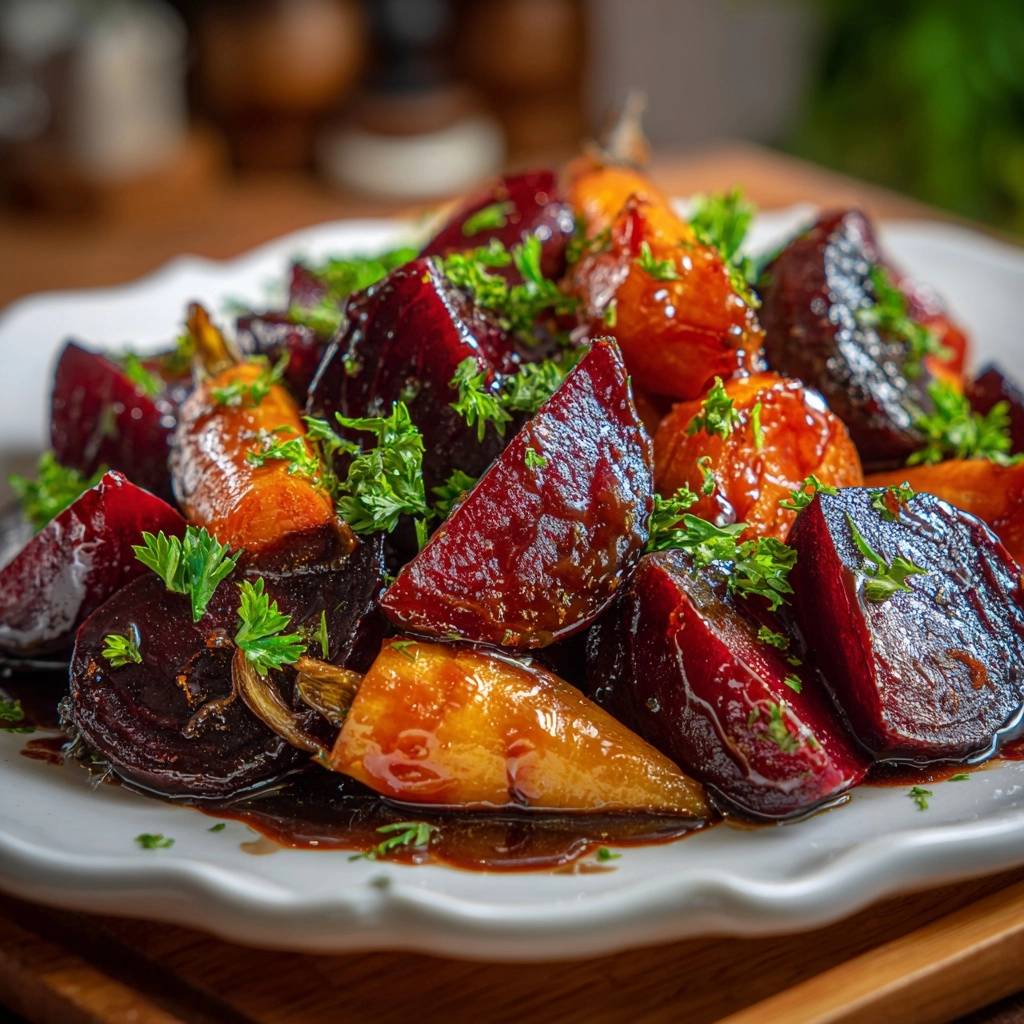
Balsamic Glazed Beets and Carrots
Why This Glazing Method Transforms Root Vegetables
Ever bitten into roasted beets or carrots that feel like chewing rocks? Most folks crank up the oven and hope for the best, but they end up tough and chewy. This balsamic glazed beets and carrots recipe fixes that with a smart two-stage roast.
Therefore, you start covered to steam-tenderize the roots from the inside out. Then, you uncover for that glossy caramelization. In addition, the balsamic glaze elevates their earthy flavors into something irresistible.
Beets pack antioxidants that fight inflammation, and carrots bring beta-carotene for eye health. The secret here is the tight foil seal in phase one. It traps moisture so the veggies soften deeply without drying out or boiling.
Key Ingredients for Balsamic Glazed Beets and Carrots
Fresh beets and carrots form the base. Beets offer that deep earthiness, while carrots add natural sweetness. However, the two-stage method ensures they turn tender instead of fibrous.
Olive oil conducts heat evenly and prevents sticking. Balsamic vinegar brings tangy brightness, and honey balances it with subtle sweetness for a glossy reduction. In addition, salt and pepper enhance every bite, and parsley adds fresh contrast at the end.
Go for good-quality balsamic, not the super-cheap stuff, since it reduces without bitterness. Raw honey works best for its floral notes that play off the roots. These quantities serve six as a side.
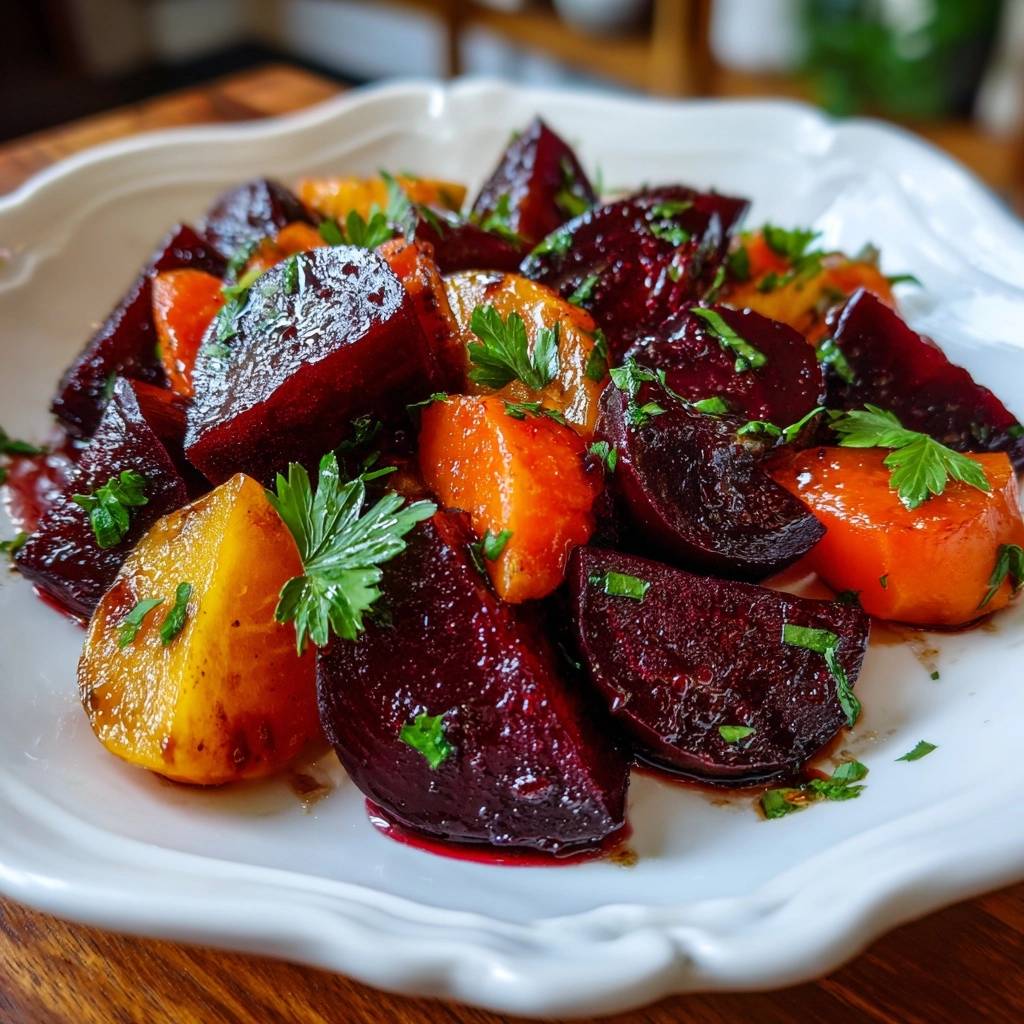
Beets and Carrots: Choosing the Best Roots
Pick medium-sized beets, firm to the touch, either red or golden for variety. Slender carrots cook evenly without woody cores. Therefore, peel them smoothly and cut beets into wedges, carrots into sticks, about the same size.
Even cuts matter because the two-stage roast relies on uniform cooking. Smaller pieces soften faster, avoiding tough spots.
Balsamic Vinegar and Honey Balance
Aged balsamic reduces to a syrupy shine without harsh acidity. Pair it with honey in a 2:1 ratio to the vinegar for perfect glaze chemistry. However, cheap balsamic can turn bitter, so taste it first.
Honey’s sugars caramelize beautifully. For vegans, swap in agave, but keep the ratio tight to avoid overpowering the veggies.
Two-Stage Roasting for Tender Balsamic Glazed Beets and Carrots
Preheat your oven to 400°F and line a half-sheet pan with parchment. It prevents sticking and makes cleanup easy. Toss the prepped beets and carrots with two tablespoons olive oil, salt, and pepper right in a big bowl.
If you enjoy roasting root vegetables with bold glazes, try this rosemary glazed sweet potatoes with pineapple for a similar caramelized finish.
Spread them evenly, no overcrowding, or they’ll steam instead of roast. Cover tightly with foil. Roast for 25 minutes; you’ll smell sweet earthiness wafting out.
Phase 1: Covered Steam-Tenderizing Roots
The foil traps steam, breaking down tough fibers inside the roots. After 25 minutes, they soften deeply but stay firm. Peek for a translucent, soft look, not browned yet.
Don’t skip this; single roasting leaves chewy centers. Pro tip: press a carrot with a fork; it should yield slightly.
Phase 2: Uncovered Balsamic Glaze Application
Whisk the remaining oil, balsamic, and honey into a shiny emulsion. Drizzle and toss gently on the hot pan. Roast uncovered 20 more minutes, stirring halfway for even caramelization.
Sugars reduce into glossy edges via Maillard reaction. Test with a fork; they pierce easily when done. In addition, watch for golden-brown tips, not burnt.
Finishing with Fresh Parsley
Chop parsley fine and sprinkle right after roasting. It adds bright green color and herbaceous pop. Serve warm to savor the glaze at its stickiest.
Science of Steaming Then Glazing Root Vegetables
Root veggies like beets and carrots have pectin in their cell walls, making them tough. Steam from the covered phase breaks it down gently, tenderizing without waterlogging. Therefore, you get soft insides.
Uncovery triggers Maillard reaction as balsamic sugars brown the edges. Vinegar’s acidity lowers pH, speeding pectin release. Single roasts fail because dry heat toughens exteriors before interiors soften.
Think of it like a jacket potato: steam first for fluff, then crisp the skin. This method guarantees no tough bites every time.
Equipment Essentials for Perfect Glazed Beets and Carrots
A rimmed half-sheet pan ensures even heat and catches glazes. Parchment paper non-sticks everything. Heavy-duty foil seals steam tight; flimsy stuff lets moisture escape.
That same caramelization technique works beautifully on these golden-crisp cranberry Brussels sprouts.
Grab a sharp peeler for quick work and a whisk for smooth glaze. However, calibrate your oven thermometer; 400°F runs hot in some. No fancy gear needed, just basics you likely own.
Avoiding Pitfalls in Balsamic Glazed Beets and Carrots
Overcrowd the pan, and veggies steam soggily instead of caramelizing. Use two pans if needed. Weak foil seals dry out edges, so crimp tightly.
Too much glaze burns bitter; drizzle sparingly. Red beets bleed color, so cook separately if color matters. Taste the glaze pre-roast and adjust honey for balance.
Pro tip: if roots seem underdone after phase two, add five minutes. Batch roast for crowds to keep heat even.
Flavor Twists on Balsamic Glazed Beets and Carrots
Add minced garlic before phase one for savory depth. Toss in chopped walnuts post-roast for crunch. Therefore, it elevates to a salad topper.
Swap honey for maple syrup. Use pomegranate molasses instead of balsamic for tart fruitiness. Golden beets taste milder, less staining.
Try thyme over parsley, or add fennel slices for anise notes. Keep the two-stage core; just mix-ins boost variety.
Pairing Balsamic Glazed Beets and Carrots with Mains
Grilled chicken loves the earthy tang. Baked salmon pairs perfectly as the glaze cuts richness. Quinoa bowls get a vibrant sidekick.
However, green salads or cheese plates shine with this. For holidays, serve with roast turkey. Portions fit four to six generously.
Sparkling cranberry juice complements the sweetness. The balsamic bridges proteins and veggies seamlessly.
What to Serve with Balsamic Glazed Beets and Carrots
These sweet-tart roasted vegetables pair well with a protein that matches their bold glaze and herb notes.
- Try the pan-seared blackberry balsamic chicken for a fruit-forward main that echoes the balsamic tang.
- The orange rosemary glazed turkey breast brings citrus brightness and savory herbs that balance the earthy beets and carrots.
Prep Ahead and Storage for Glazed Beets and Carrots
Chop veggies a day early; store in cold water to stay crisp. Cooked dish keeps in the fridge four days airtight. Reheat at 350°F for 10 minutes to revive glaze.
Freezes well up to two months; blanch first, then bag flat. Thaw overnight and re-glaze for crispness. Perfect for meal prep.
Frequently Asked Questions About Balsamic Glazed Beets and Carrots
Can I Use Baby Carrots?
No, baby carrots cook unevenly and get mushy in the steam phase. Instead, halve full-sized slender ones for consistent tenderness. Cut roast time by five minutes in phase two, checking for fork-tenderness to avoid overcooking.
Baby vs. Canned Beets Work?
Baby beets work great whole, just trim tops and halve large ones; they hold shape in the two-stage roast. Canned beets are okay drained and rinsed, but skip steaming and reduce phase two to 10 minutes. Fresh deliver way more flavor and texture.
How to Reduce Balsamic Further?
Simmer the glaze on stovetop five minutes before drizzling for thicker cling. Stir constantly to prevent sugar burn, aiming for syrup consistency. Cool slightly before tossing; it thickens more in the oven for glossy results without bitterness.
Vegan and Gluten-Free?
Yes, this recipe is naturally both. All ingredients are plant-based and gluten-free. Strict vegans swap honey for agave or maple syrup one-to-one; the glaze chemistry holds perfectly.
Scaling for Crowds?
Double ingredients for 12 servings, but use two pans to avoid steaming. Rotate racks halfway through each phase for even cooking. Total time stays the same; just watch edges don’t burn on the bottom rack.
How Do I Store Leftovers?
Store in an airtight container in the fridge up to four days. Reheat at 350°F for 10 minutes, stirring midway to refresh glaze. Freezes well for two months; blanch veggies first, cool fully, then portion in bags. Thaw overnight and re-crisp uncovered.
Why Are My Beets Still Tough?
Tough beets usually mean skipped or loose foil in phase one, so steam escapes and fibers don’t break down. Ensure a tight seal and full 25 minutes at 400°F. Test by pressing; if resistant, add five more covered minutes before glazing.
Can I Substitute Balsamic Vinegar?
Sure, pomegranate molasses or red wine vinegar plus extra honey works, but reduce simmer time to match tang. Apple cider vinegar adds fruitiness; taste and balance sweetness. Stick close to the 1/4 cup for glaze consistency.
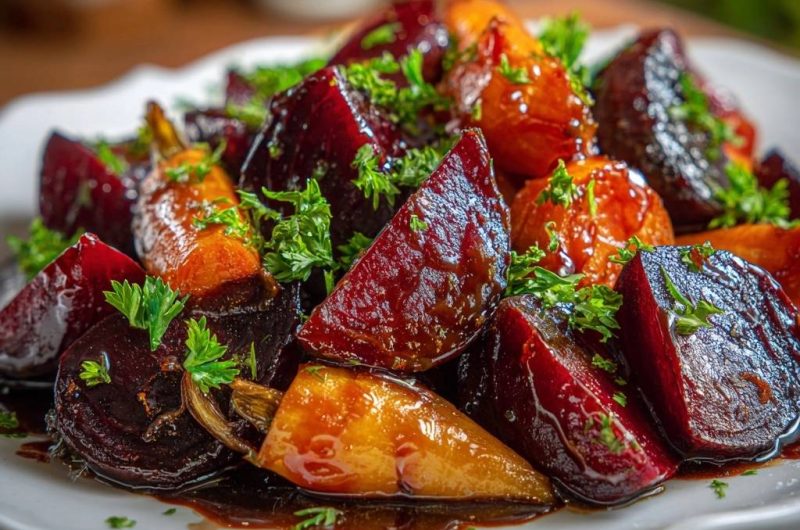
Balsamic Glazed Beets and Carrots
Course: Side DishCuisine: AmericanDifficulty: easy6
servings15
minutes45
minutes180
kcal60
MinutesTired of roasted beets and carrots that stay rock-hard? This recipe uses a simple two-stage roast: covered first to steam-tenderize from the inside, then uncovered to lock in glossy caramelization. Foolproof tenderness every time.
Ingredients
6 medium beets, peeled and cut into wedges
6 medium carrots, peeled and cut into sticks
3 tablespoons olive oil
1/4 cup balsamic vinegar
2 tablespoons honey
1 teaspoon salt
1/2 teaspoon black pepper
1/4 cup fresh parsley, chopped
Directions
- Preheat oven to 400F. Line a baking sheet with parchment.
- In a large bowl, toss beets and carrots with 2 tablespoons olive oil, salt, and pepper. Spread evenly on the baking sheet.
- Cover tightly with foil. Roast 25 minutes. This steaming step softens the roots deeply without boiling or drying out.
- Remove foil. Whisk remaining 1 tablespoon olive oil, balsamic vinegar, and honey. Drizzle over veggies and toss gently.
- Roast uncovered 20 minutes more, stirring halfway, until tender with glossy, caramelized edges. No tough bites guaranteed.
- Sprinkle with parsley and serve warm.
Notes
- For extra caramelization, broil for 1-2 minutes at the end. Pairs perfectly with roasted chicken or grilled meats.