Mastering Pan-Seared Blackberry Balsamic Chicken
Most fruit-based sauces are a disappointment because they end up as a thin, purple puddle at the bottom of your plate. You want a glaze that actually hugs the meat, but instead, you get a watery mess that dilutes the flavor of your perfectly seared chicken. This recipe changes that by focusing on a specific reduction technique that transforms simple berries into a thick, restaurant-quality lacquer.
The secret lies in the balance between the tartness of fresh blackberries and the deep, woody acidity of balsamic vinegar. When these ingredients simmer together, they create a complex profile that is savory, sweet, and incredibly vibrant. It is the kind of meal that looks like it took hours of effort, yet it comes together in a single skillet in about thirty minutes.
To ensure your sauce never turns out runny, you must use the “monter au beurre” technique. By whisking a piece of cold butter into the hot reduction at the very end, you create a glossy, opaque finish that binds the sauce together. This professional trick prevents the liquids from separating and gives the glaze a velvety mouthfeel that clings to every bite of the chicken.
The Chemistry of a Non-Watery Fruit Glaze
Creating a fruit glaze that stays thick requires a basic understanding of evaporation and natural thickeners. Blackberries are naturally high in pectin, a structural fiber found in fruit cell walls that acts as a gelling agent. However, pectin needs heat and acid to activate its thickening powers, which is why simmering the berries with balsamic vinegar is so effective.
As the mixture bubbles in your skillet, the water content in the vinegar and the berry juice evaporates into steam. This process concentrates the sugars and the pectin, slowly transforming a thin liquid into a heavy syrup. If you rush this stage, the sauce will remain watery; patience is the key to achieving that rich, jam-like consistency.
Furthermore, the honey in this recipe does more than just add sweetness. Sugar is hygroscopic, meaning it attracts and holds onto water molecules. By including honey, you are chemically stabilizing the sauce, ensuring it maintains its viscosity even after you take it off the heat and pour it over the warm chicken.
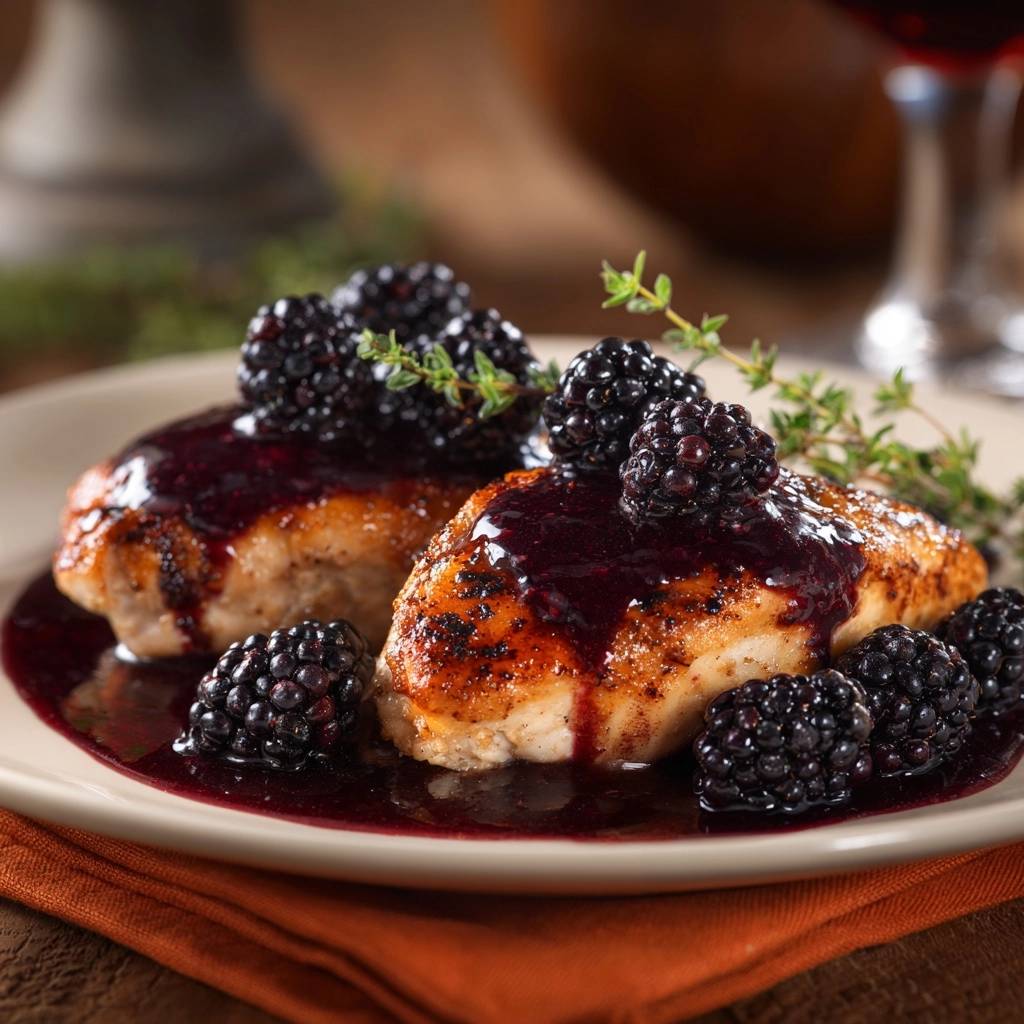
The Role of Pectin and Sugar in Reductions
Crushing exactly half of your blackberries is a deliberate move to release the maximum amount of pectin into the pan immediately. While whole berries look beautiful, they keep their thickening agents locked inside their skins. By breaking them down with the back of a spoon, you jumpstart the thickening process and create a textured base for the glaze.
The interaction between the honey and the balsamic vinegar creates a stable sugar structure. As the vinegar reduces, its sharp bite mellows out, leaving behind a complex sweetness that works in tandem with the honey to create a syrup that won’t slide off the protein. This synergy is what gives the dish its signature “cling.”
Essential Components for Pan-Seared Blackberry Balsamic Chicken
Quality ingredients are the foundation of this dish, starting with the chicken itself. I recommend using boneless, skinless chicken breasts, but you must pound them to an even thickness before they hit the pan. This ensures the edges don’t dry out while you wait for the thicker center to cook through, resulting in a juicy interior every time.
The balsamic vinegar you choose will make or break the sauce. Look for “Aceto Balsamico di Modena” on the label, which indicates a higher quality product with a natural thickness. Avoid the very cheap, watery “balsamic glazes” that are often just vinegar colored with caramel; they lack the depth of flavor and natural sugars needed for a proper reduction.
Fresh blackberries are the star here, providing a bright pop of color and a tart contrast to the savory chicken. When selecting berries, look for ones that are plump and deeply colored. If they are too firm, they might be overly tart, so you may need to add an extra teaspoon of honey to balance the acidity of the final sauce.
Why Dijon Mustard is the Secret Emulsifier
Dijon mustard is a culinary powerhouse that serves a functional purpose beyond its spicy flavor. It contains complex mucilage that acts as a natural emulsifier. In this recipe, the mustard helps the balsamic vinegar and the fats from the chicken and butter stay bonded together in a smooth, unified sauce.
Without the mustard, you might notice small droplets of oil floating on top of your purple sauce. The mustard bridges the gap between the water-based fruit juices and the fat-based butter. This results in a sauce that looks professional and uniform rather than broken or greasy.
Fresh vs. Frozen Berries: Texture Implications
You can certainly use frozen blackberries if fresh ones aren’t in season, but you need to adjust your technique. Frozen berries have a higher water content because the freezing process breaks down their cell walls. Consequently, they will release a lot of liquid as soon as they hit the hot pan.
If you go the frozen route, expect to simmer your sauce for an additional 2 to 3 minutes. You need that extra time to cook off the excess moisture. Also, be aware that frozen berries tend to lose their shape faster, so your final sauce might be a bit more rustic and less “chunky” than if you used fresh fruit.
Step-by-Step: Achieving the Perfect Golden Sear
To get a restaurant-quality sear, you need to start with dry chicken. Pat the breasts thoroughly with paper towels before applying your seasonings. Moisture is the enemy of browning; if the chicken is damp, it will steam in the pan rather than develop that beautiful, golden-brown crust that provides so much flavor.
Heat your olive oil until it is shimmering but not smoking. When you place the chicken in the skillet, you should hear a loud, immediate sizzle. Leave it alone for at least 6 minutes. Resist the urge to peek or move it around, as the chicken needs uninterrupted contact with the hot surface to develop the “fond”—those delicious browned bits stuck to the pan.
Once the chicken reaches an internal temperature of 165°F, remove it to a plate. Whatever you do, do not wash that pan! Those browned bits are concentrated flavor. When you add the balsamic vinegar in the next step, you will scrape those bits up, incorporating all that savory goodness directly into your blackberry glaze.
The Reduction Phase: Building the Balsamic Base
Deglazing the pan is where the sauce truly begins. As you pour in the balsamic vinegar, honey, and mustard, use a wooden spoon to vigorously scrape the bottom of the skillet. The liquid will bubble rapidly, lifting the caramelized chicken juices and integrating them into the sauce base for a savory backbone.
Add your blackberries and start the reduction. You are looking for a specific visual cue: the “nappe” consistency. This is a French term meaning the sauce is thick enough to coat the back of a spoon. If you run your finger through the sauce on the spoon, the trail should stay clean and not be filled in by running liquid.
Watch the bubbles as the sauce reduces. They will transition from small, watery bubbles to larger, slower-popping “heavy” bubbles. This change in bubble size indicates that the water has mostly evaporated, leaving behind the concentrated sugars and pectins that create a luxurious, velvety texture.
If you enjoy the balsamic reduction technique, try it with this blueberry thyme glazed chicken for a similar sweet-tart finish.
The Monter au Beurre Technique for Glossy Finishes
The final touch is the “monter au beurre,” which literally means “to mount with butter.” Take the pan off the heat and whisk in a tablespoon of very cold butter. It is vital that the butter is cold; if it is room temperature, it will melt too quickly and the fat will separate, making the sauce greasy.
Cold butter emulsifies slowly as it melts, creating a creamy, opaque finish that gives the sauce a professional sheen. This step adds a rich, mellow flavor that rounds out the sharp acidity of the balsamic vinegar. It transforms a simple fruit reduction into a sophisticated, silk-like glaze that looks stunning on the plate.
Troubleshooting Common Pan-Searing Obstacles
If you find that your chicken is getting very dark on the outside but remains raw in the middle, your heat is likely too high. Simply lower the flame to medium and cover the pan with a lid for two minutes. This traps the heat and helps the center cook through without burning the exterior crust.
On the other hand, if your sauce becomes too thick or “tacky”—almost like hard candy—you have reduced it a bit too far. Don’t panic! Just whisk in a teaspoon of water or chicken stock. This will loosen the sugars and bring the glaze back to a pourable, silky consistency without ruining the flavor profile.
If the sauce tastes too sour, the vinegar might have been particularly acidic. You can fix this by adding a tiny pinch of salt or another half-teaspoon of honey. Salt is excellent at neutralizing perceived acidity, while the honey will provide the necessary sweetness to balance the tart blackberries.
Optimal Side Dishes for Blackberry Balsamic Chicken
Because the blackberry balsamic glaze is quite bold and sweet, you want side dishes that offer a bit of balance. A bed of peppery arugula is a fantastic choice. The bitterness of the greens cuts through the richness of the sauce, and the heat of the chicken will slightly wilt the leaves for a perfect texture.
Earthy grains like wild rice, quinoa, or farro are also excellent partners. These grains have a nutty flavor that complements the balsamic vinegar and a sturdy texture that won’t get mushy when topped with the glaze. They act as a sponge, soaking up every drop of the sauce so none of it goes to waste.
For a more comforting meal, try serving the chicken over creamy polenta or mashed cauliflower. The mild, buttery base of these sides provides a neutral canvas that allows the vibrant purple sauce to really shine. A side of roasted asparagus or charred broccolini adds a nice crunch and a pop of green to the plate.
Storage and Reheating Without Losing Texture
If you have leftovers, store the chicken and the sauce together in an airtight container in the refrigerator for up to three days. The sauce will thicken significantly as it cools, likely turning into a jelly-like consistency. This is normal due to the high pectin and sugar content in the glaze.
When reheating, avoid the microwave if possible, as high heat can break the delicate butter emulsion and make the sauce oily. Instead, place the chicken and sauce in a small skillet over low heat. Add a splash of water or chicken broth to the pan to help loosen the glaze as it warms up.
Gently spoon the warming sauce over the chicken as it heats through. This method ensures the meat stays moist and the sauce regains its original glossy, velvety texture. If you must use a microwave, use 50% power and stop to stir the sauce every thirty seconds to keep it from separating.
Expert Tips for Professional Presentation
Presentation is all about contrast and layers. When plating, I like to place the chicken down first and then spoon the sauce over the center, letting it naturally drip down the sides. This keeps some of the golden-brown crust visible while highlighting the deep, rich color of the blackberry reduction.
Use the “layering” technique with your berries. The berries you crushed earlier have become part of the sauce, but the whole berries you folded in at the end provide a beautiful visual pop. Scatter a few extra fresh berries around the plate to signal to your guests that the dish is made with fresh fruit.
Finally, don’t skip the fresh thyme. The bright green sprigs provide a necessary color contrast against the dark purple and brown tones of the dish. The aromatic oils in the fresh thyme also provide a lovely scent that hits the diner before they even take their first bite, enhancing the overall experience.
Frequently Asked Questions
Can I use chicken thighs instead of breasts?
Yes, chicken thighs are a great alternative and are often more forgiving because they have a higher fat content. If you use bone-in thighs, you will need to increase the cook time to about 10 to 12 minutes per side. For boneless thighs, 7 to 8 minutes per side is usually sufficient. Just ensure the internal temperature reaches 165°F.
Is there a substitute for honey?
If you don’t have honey on hand, maple syrup is the best substitute. It has a similar sugar content and viscosity, though it will add a slight autumnal flavor to the dish. Agave nectar also works well. I would avoid using granulated sugar if possible, as it doesn’t provide the same “body” or silkiness to the reduction that a liquid sweetener does.
How do I know if the balsamic is “high quality”?
Check the ingredient list on the back of the bottle. High-quality balsamic vinegar should list “grape must” as the first ingredient. If the first ingredient is wine vinegar and it contains caramel color or thickeners like cornstarch, it is a lower-quality imitation. A good balsamic will naturally coat the sides of the glass when you swirl it.
Can I make the sauce ahead of time?
While the sauce is best served fresh to maintain the “monter au beurre” emulsion, you can make it up to a day in advance. Store it in a jar in the fridge. When you are ready to serve, reheat it very slowly in a saucepan over low heat, whisking constantly. You may need to add a teaspoon of water to bring it back to the right consistency.
Why did my sauce turn out bitter?
Bitterness usually happens if the garlic powder or the balsamic vinegar burns. When you are reducing the sauce, keep the heat at a steady medium. If the edges of the sauce in the pan start to look black or smell acrid, the sugars are burning. Also, ensure your blackberries are ripe; underripe berries can sometimes carry a bitter aftertaste that intensifies when cooked.
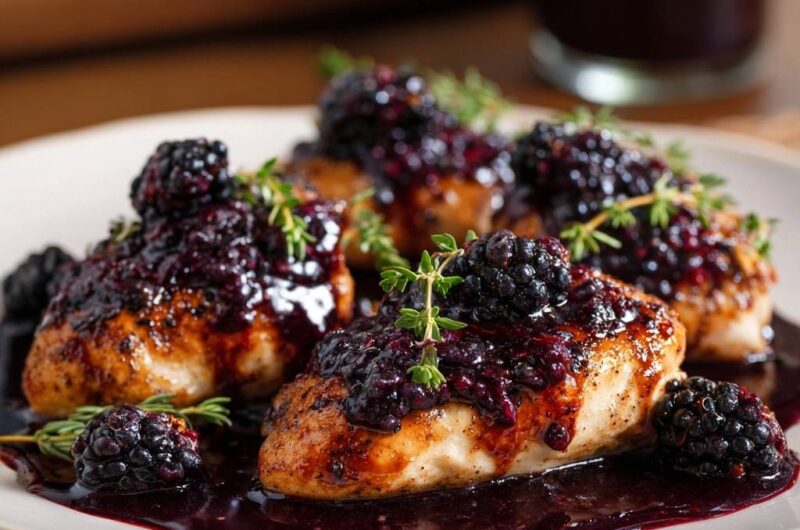
Pan-Seared Chicken
Course: Main CourseCuisine: AmericanDifficulty: easy4
servings10
minutes20
minutes365
kcal30
MinutesA sophisticated chicken dish featuring a rich, fruit-based glaze. By simmering fresh blackberries with balsamic vinegar and honey, and finishing with cold butter, you create a thick sauce that perfectly coats pan-seared chicken breasts.
Ingredients
4 boneless skinless chicken breasts (pounded to even thickness)
2 cups fresh blackberries
1/3 cup high-quality balsamic vinegar
2 tablespoons honey
1 tablespoon Dijon mustard (acts as an emulsifier for the glaze)
1 tablespoon olive oil
1 tablespoon cold unsalted butter
1 teaspoon garlic powder
1/2 teaspoon dried thyme
4-6 fresh thyme sprigs for garnish
Salt and black pepper to taste
Directions
- Season the chicken breasts generously with salt, pepper, garlic powder, and dried thyme on both sides.
- Heat olive oil in a large skillet over medium-high heat. Sear the chicken for 6 to 7 minutes per side until golden brown and the internal temperature reaches 165°F. Remove chicken from the pan and set aside on a plate to rest; do not wipe out the pan.
- Lower the heat to medium. Add the balsamic vinegar, honey, and Dijon mustard to the skillet. Use a wooden spoon to scrape up the browned bits (fond) from the bottom of the pan.
- Add 1.5 cups of the blackberries to the skillet. Use the back of a spoon to crush about half of the berries to release their juices and natural pectins.
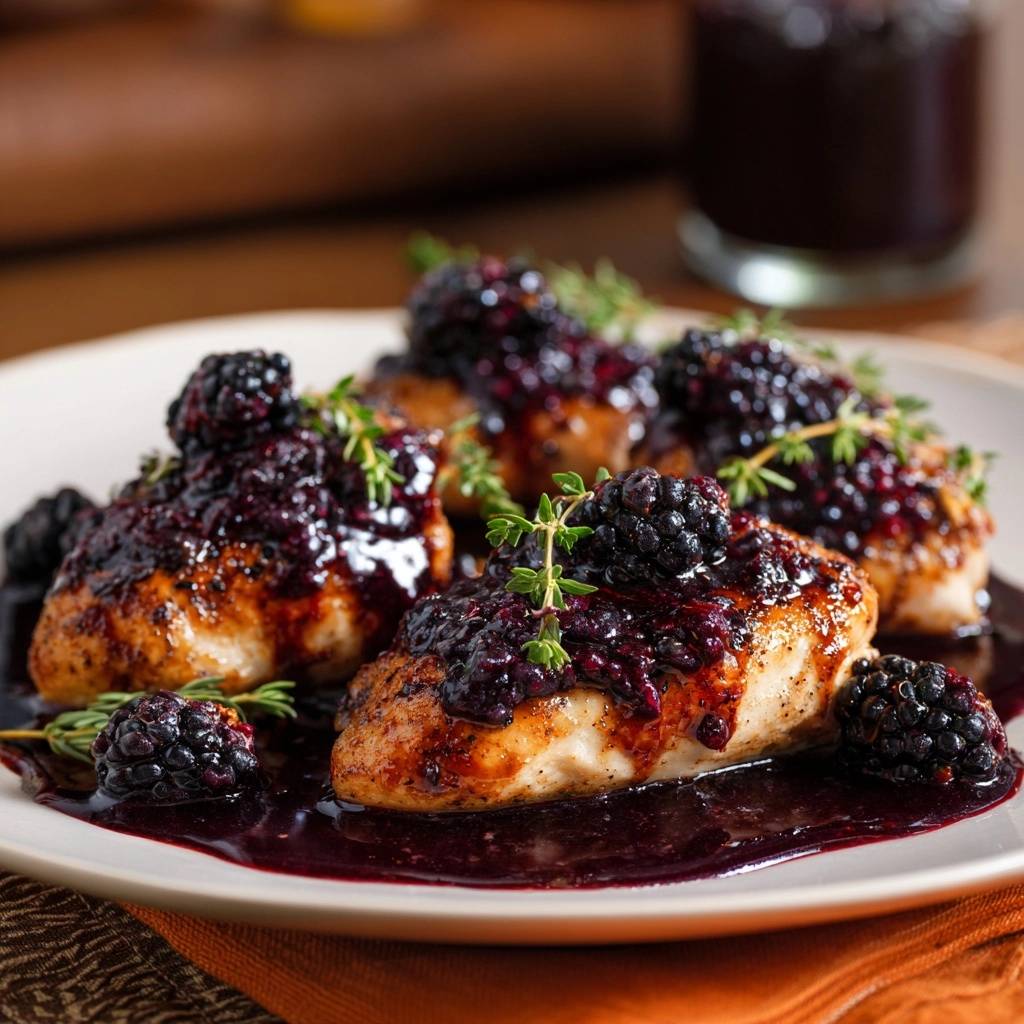
- To solve the watery sauce problem, simmer the mixture for 6 to 8 minutes. You are looking for the liquid to reduce by half. Once the sauce is thick enough to leave a trail when you run a spoon through it, whisk in the cold butter. This “monter au beurre” technique creates the glossy, opaque finish seen in the image.
- Fold in the remaining 1/2 cup of whole blackberries.
- Place the chicken back into the pan briefly to warm through, or plate the chicken first and spoon the thick glaze generously over the top.
- Garnish with fresh thyme sprigs and additional whole blackberries as shown in the image. Serve immediately.
Notes
- The secret to the thick sauce is the reduction process and the ‘monter au beurre’ technique. Ensure the balsamic mixture reduces by half before whisking in the cold butter to achieve a glossy, non-watery consistency.