Braised Lamb Shoulder with Preserved Lemon and Green Olives
Tender lamb shoulder braised with preserved lemon, onions, and green olives. Tips on searing, seasoning, and getting that easy-to-shred texture for dinner.
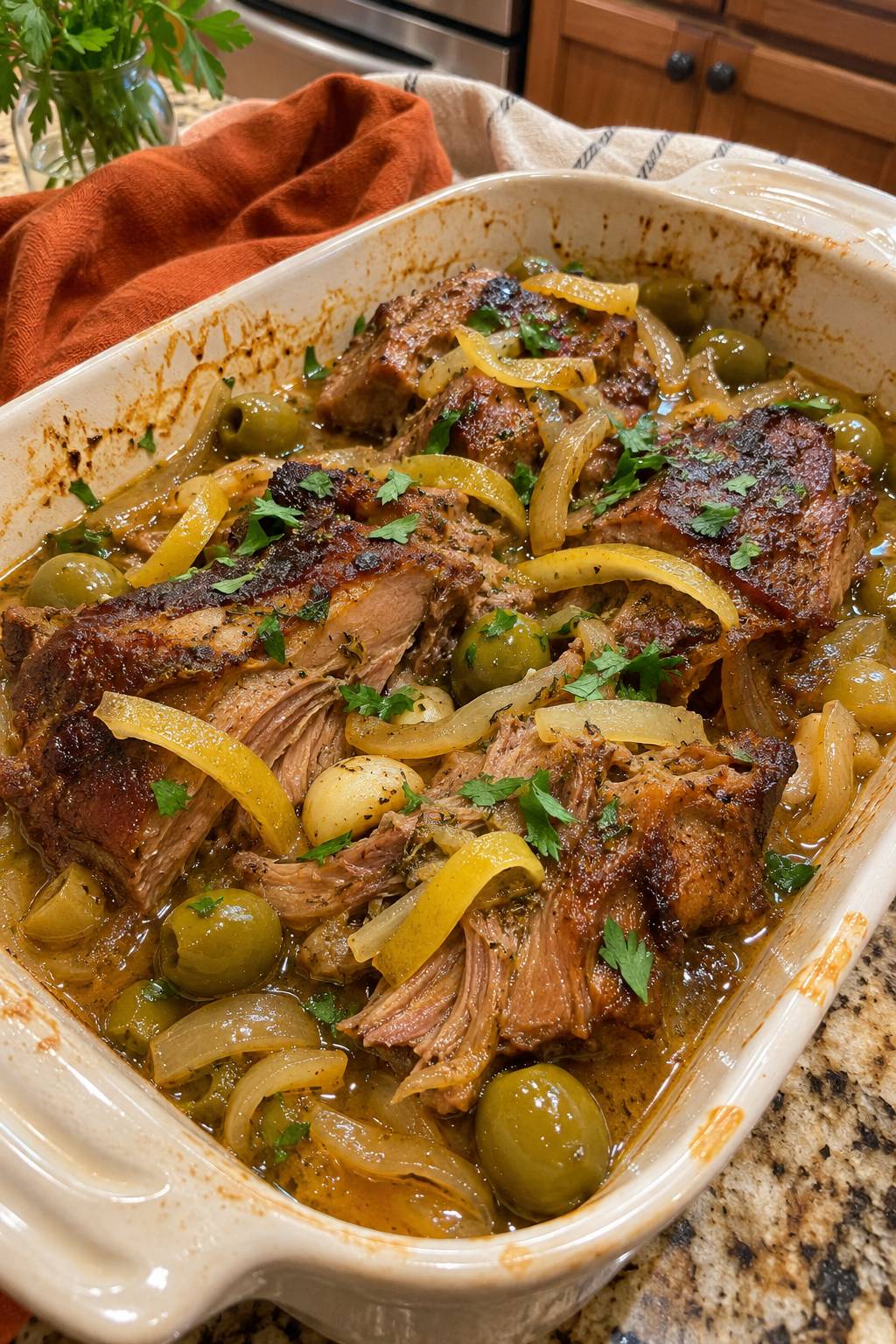
Bone-in lamb shoulder is a cut that rewards patience. A long, gentle braise softens the tough connective tissue until the meat is tender enough to pull apart with a fork. Add sliced onions, a bright splash of lemon, and the salty, floral punch of preserved lemon, and you have a dinner that feels special without fussy technique.
This is comfort food with a bright, savory twist, and it suits a relaxed weekend dinner just as well as a cozy gathering. Below, you will find notes on choosing and seasoning the meat, searing for flavor, using preserved lemon with care, and finishing the dish. The recipe card holds the exact amounts, temperatures, and timing.
Choosing and Seasoning the Lamb
Start with bone-in shoulder pieces, which hold up well to a long braise and give the sauce plenty of body. Pat each piece very dry with paper towels before seasoning. Surface moisture gets in the way of browning, and browning is where the deep, savory flavor begins. The spice rub of smoked paprika, cumin, and coriander gives the lamb a warm, earthy crust that complements the bright lemon later on. Rub it over every side, not just the top, so every bite tastes seasoned.
Searing for Deep Flavor
Give the lamb room in the pot and be patient. Crowded pieces steam instead of browning, and you lose the rich color that makes the sauce so appealing. Once the meat is deeply browned on all sides, pour off most of the fat but leave a thin layer for cooking the onions. The browned bits stuck to the bottom of the Dutch oven are packed with flavor, so scrape them up thoroughly when you add the broth and lemon juice. They become the backbone of your sauce.
Using Preserved Lemon with Care
Preserved lemons are intensely salty and aromatic, so they need a careful hand. Rinse them under cold water if they taste especially salty, and taste the sauce before adding any extra salt. Use only the rind. The pulp is soft and stringy, and it can make the sauce taste bitter or murky. Cut the rind into thin strips so it distributes evenly and softens into the onions and broth, letting its bright, floral flavor run through every spoonful.
Finishing with Olives and Serving
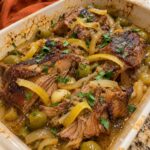
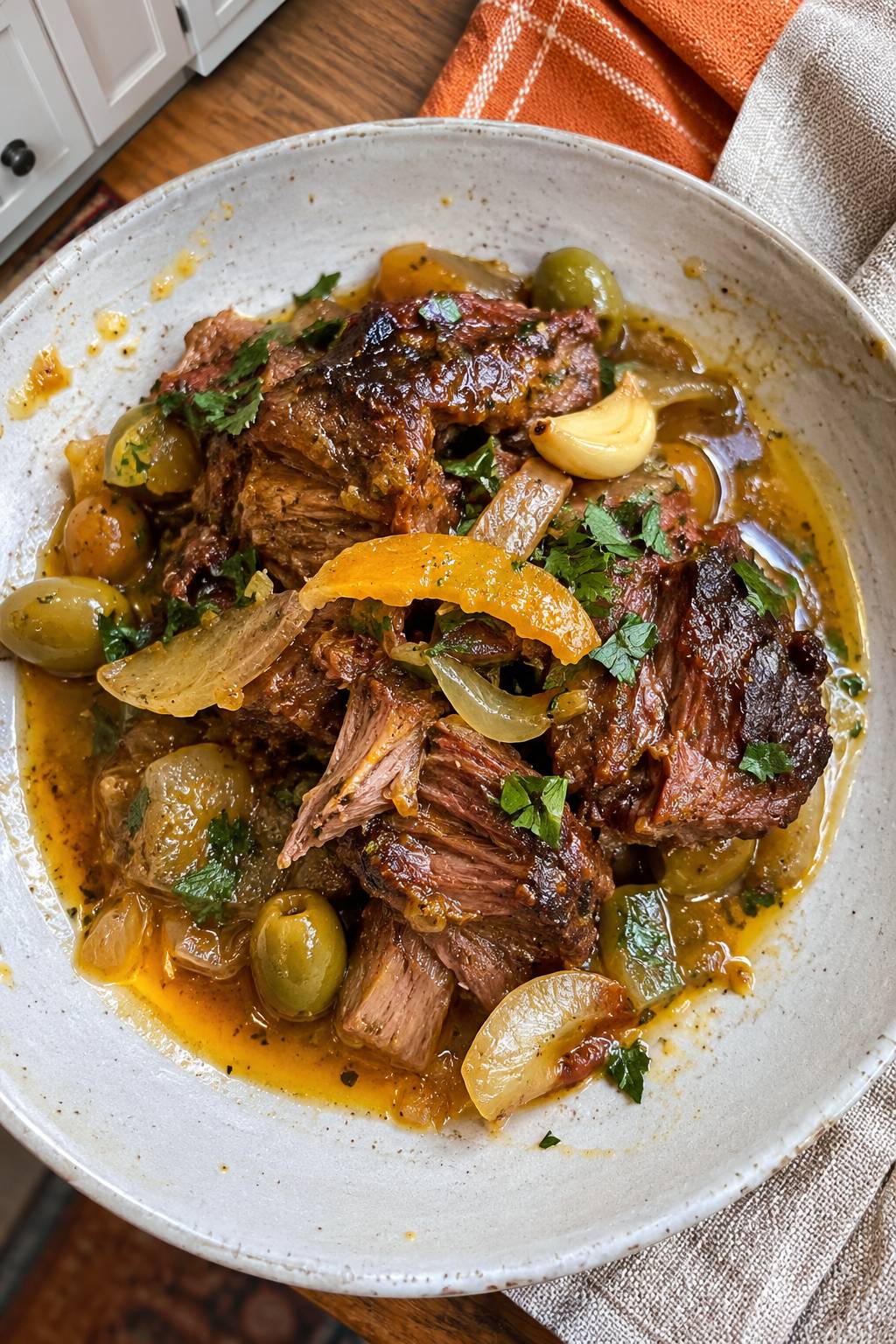
Green olives such as Castelvetrano or Picholine go in near the end so they stay briny and distinct rather than turning soft. Removing the lid for the final stretch lets the sauce thicken slightly and gives the top of the lamb a glazed finish. Let the meat rest before you pull it, then discard the bones and any large pieces of fat. Spoon the onions, olives, and sauce over the shredded lamb, add a sprinkle of chopped parsley, and serve it with couscous, rice, or crusty bread to soak up every drop.
Frequently Asked Questions
Why does the lamb need to be seared first?
Searing builds a deep brown crust and rich, savory flavor on the outside of the meat. Those browned bits left in the pot dissolve into the sauce once you add the liquid, so skipping this step makes the finished dish taste noticeably flatter. Turn the pieces until every side is well browned.
How do I know when the lamb is ready to shred?
The meat is ready when it is very tender and pulls easily away from the bone. Test it with a fork before moving to the uncovered stage. If the meat still resists, keep the pot covered and give it more time in the oven. Shredding is easiest after the resting period.
Why does my sauce taste too salty?
Preserved lemons and green olives both bring plenty of salt, so the sauce can turn sharp if you season too early. Taste it before adding any salt, and rinse the preserved lemons under cold water if they seem especially salty. Using only the rind also helps keep the flavor clean.
Recipe
Braised Lamb Shoulder with Preserved Lemon and Green Olives
Bone-in lamb shoulder is seared, then braised in a Dutch oven with onions, chicken broth, lemon, and sliced preserved lemon until the meat shreds easily. Green olives are added near the end and the dish is finished uncovered for a glazed top.
- Course
- Main Course
- Cuisine
- American
- Difficulty
- Easy
- Servings
- 6 servings
- Prep time
- 20 mins
- Cook time
- 3 hr 7 mins
- Total time
- 3 hr 42 mins
- Calories
- 410 kcal
Ingredients
Lamb
Braise
Garnish
Instructions
Lamb
Adjust an oven rack to the lower-middle position and preheat the oven to 325°F. Pat the lamb pieces dry with paper towels. In a small bowl, stir together the salt, pepper, smoked paprika, cumin, and coriander, then rub the mixture over all sides of the lamb.
Heat 2 tablespoons of the olive oil in a 6-quart Dutch oven over medium-high heat until shimmering. Sear the lamb pieces for about 10 minutes total, turning as needed, until deep brown on all sides. Transfer the lamb to a plate and pour off all but about 1 tablespoon of the fat.
Braise
Reduce the heat to medium. Add the remaining 1 tablespoon olive oil and the onions, then cook for about 11 minutes, stirring often, until golden and softened. Add the garlic, thyme, and bay leaf, and cook for 1 minute more, until fragrant.
Pour in the chicken broth and lemon juice, scraping up the browned bits from the bottom of the pot. Return the lamb to the pot, nestling it into the onions. Scatter the preserved lemon strips over the top and spoon some of the liquid over the meat.
Cover the pot with a tight-fitting lid and transfer it to the oven. Braise at 325°F for 150 minutes, until the meat is very tender and pulls easily from the bone.
Remove the lid and scatter the green olives around the lamb and in the liquid. Increase the oven temperature to 375°F and bake uncovered for 15 minutes, until the top of the lamb is glazed and the sauce has thickened slightly.
Finish
Transfer the lamb to a cutting board and let it rest for 15 minutes. Remove and discard the bay leaf. Pull the meat from the bones in large shreds, discarding the bones and any large pieces of fat.
Spoon the onions, olives, and sauce over the shredded lamb. Sprinkle with the chopped parsley and serve warm.
Notes
- Preserved lemons are very salty. Taste the sauce before adding any extra salt, and rinse the lemons under cold water if they taste especially salty.
- Only the rind of a preserved lemon is used because the pulp is soft and stringy, and it can make the sauce taste bitter or murky.
- Browning the lamb before braising adds deep, savory flavor to the sauce. Cooking the lamb low and slow in a covered pot breaks down the connective tissue, which is why the meat shreds easily.
- Serve with couscous, rice, or crusty bread to soak up the sauce.
Recipe: https://naileditrecipes.co/braised-lamb-shoulder-with-preserved-lemon-and-green-olives/