Crispy Duck Confit with Garlic and Thyme
Learn how to make tender, crispy duck confit with garlic and thyme at home, plus tips on salting, slow-baking in duck fat, and getting golden skin.
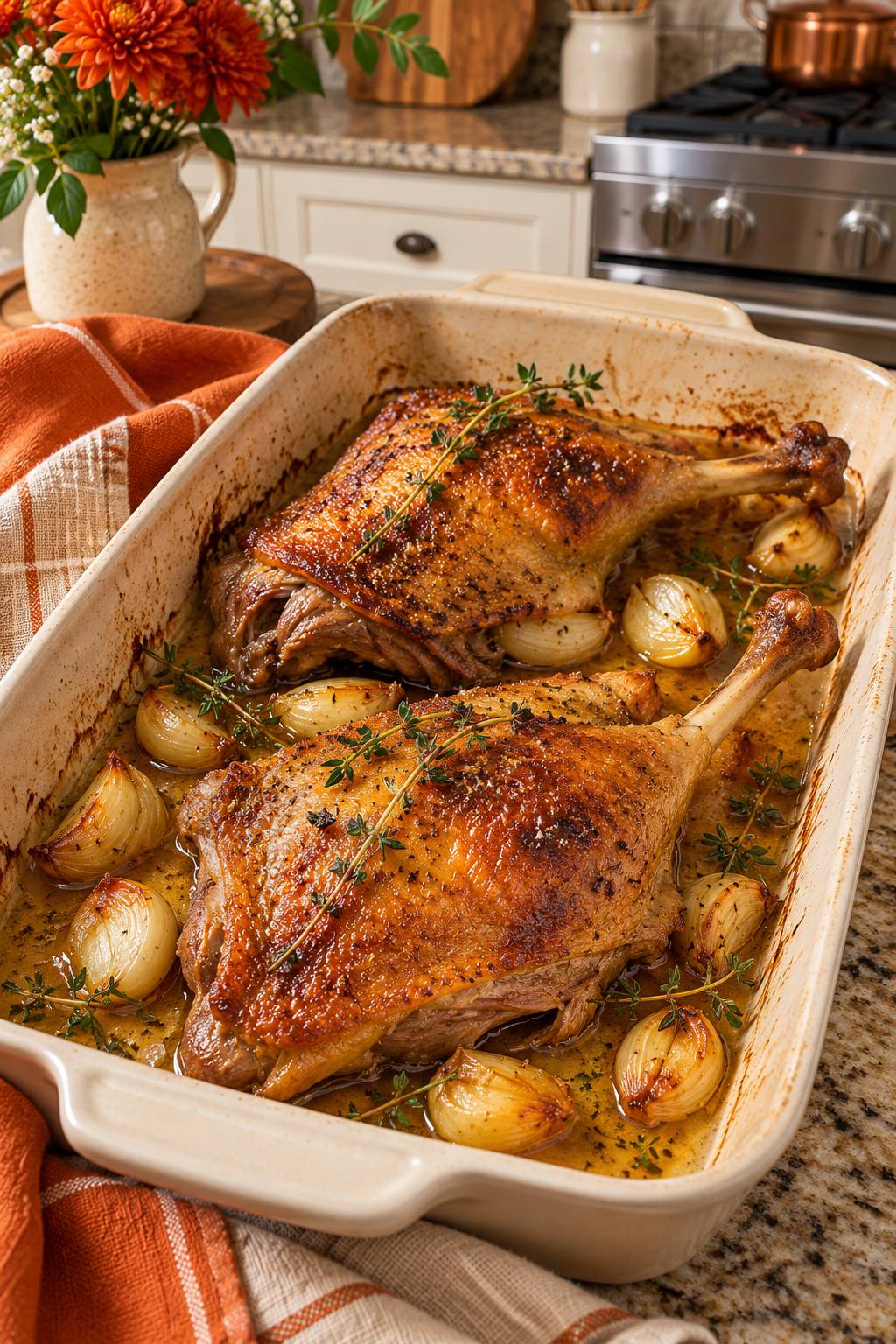
Duck confit is one of those dishes that feels like a special occasion but rewards you with a process that is more patient than complicated. Salted and peppered legs cook slowly in their own rendered fat until the meat is soft and easy to pull from the bone. A final stint in a skillet turns the skin deep golden and crisp, which is the part everyone remembers most.
This version pairs garlic, shallots, and fresh thyme with the duck, so the fat takes on savory, herbal flavor as it bakes. It is a cozy, hearty main for a chilly evening, and the aroma that fills your kitchen is part of the appeal.
Why the Salt Cure Does So Much Work
Kosher salt does more than season the duck. Rubbing it into the legs, including under the skin wherever you can reach, gives the meat a deep, even seasoning that carries through the long bake. Cracked black peppercorns add bold, visible flecks of flavor rather than the dusty heat of finely ground pepper, and they look wonderful against the golden skin.
Brand matters here. Diamond Crystal is lighter and flakier than Morton, so the same measure of Morton delivers much more salt. If you use Morton, follow the reduced amount on the recipe card rather than measuring the same way. Rinsing the cured legs before baking is the other key step, since it removes surface salt that would otherwise overwhelm the finished dish.
Gentle Cooking Keeps the Meat Tender
Confit is really about cooking in fat rather than over direct fire. The legs sit fully submerged in melted duck fat, and the foil keeps the dish covered so the heat stays steady and the meat does not dry out. Resist the urge to lift the foil and peek too often, because every opening lets heat and steam escape.
Look for texture, not just the clock. The meat should be very tender and pull easily away from the bone. If a leg still feels firm, give it more time under the foil rather than raising the oven temperature. Letting the legs cool in their fat before lifting them out is a gentle step that helps keep them moist.
Getting Skin That Shatters
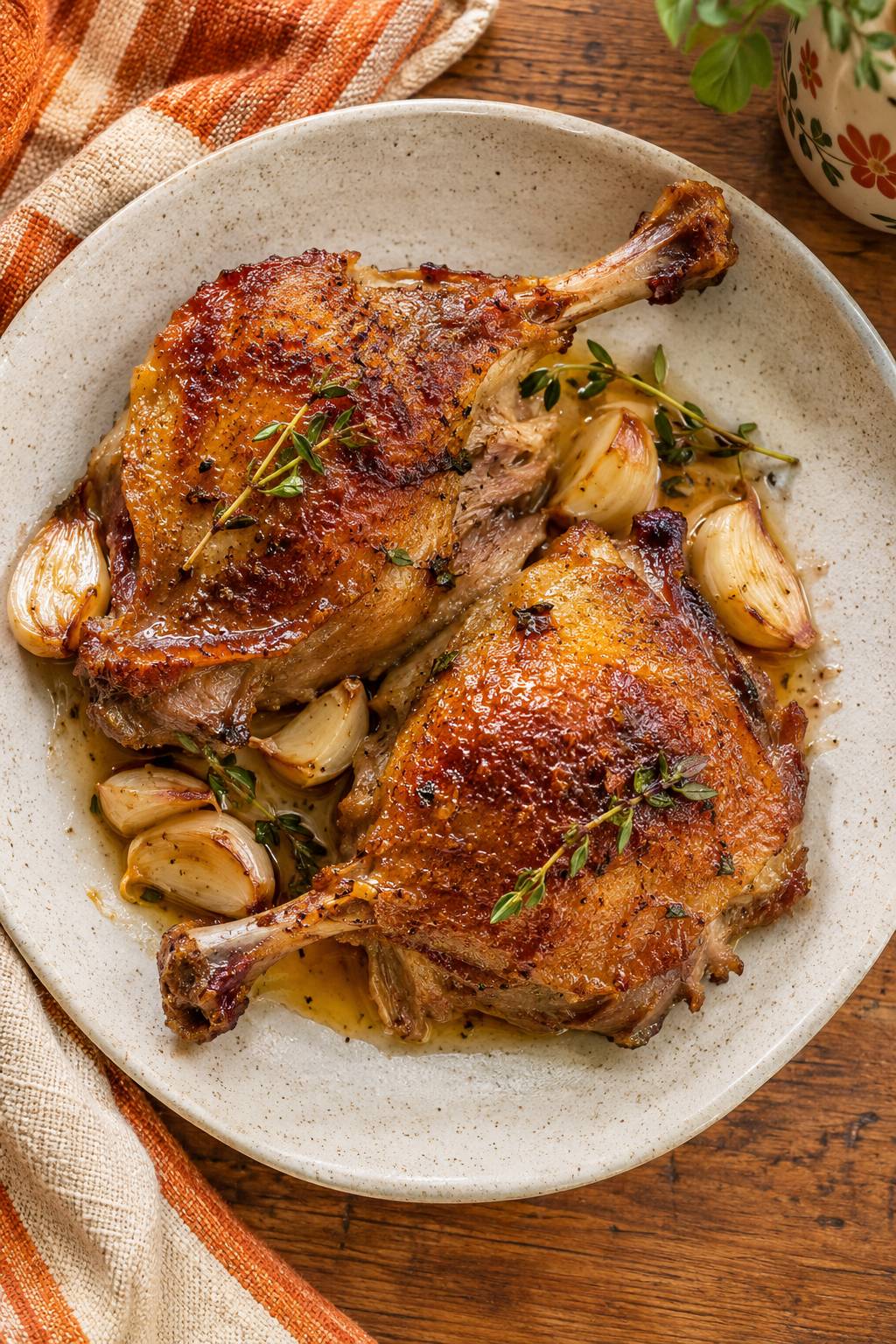
The crisp skin is the payoff, and moisture is its enemy. Before the skillet, pat the legs very dry with paper towels so there is no surface liquid to fight the browning. Start them skin-side down over medium heat rather than high heat, which can scorch the fat before the skin has time to render.
Be patient. Let the skin turn deep golden before you flip, and keep the heat steady so it browns evenly rather than in patches. Once the skin is crisp, flip the legs just long enough to heat through. Common mistakes include crowding the pan, which traps steam, and flipping too soon, which leaves pale, flabby skin.
Serving the Garlic and Shallots
The garlic cloves and shallot halves that spent time in the fat are soft, sweet, and deeply flavored, so do not treat them as a leftover afterthought. Arrange them alongside the crisp legs on the platter and garnish with the thyme sprigs so the presentation looks as inviting as it tastes.
Keep the strained duck fat covered in the refrigerator. Leftover confit legs should stay fully submerged in their fat in the refrigerator, and they crisp up again in a skillet when you are ready to serve them.
Frequently Asked Questions
Can I use Morton kosher salt instead of Diamond Crystal?
Yes, but you need to adjust the amount. Morton kosher salt is denser than Diamond Crystal, so the same measure delivers more salt. Use the reduced amount noted on the recipe card so your duck isn't overly salty.
Why does my duck skin come out pale instead of crisp?
Usually the skin was not dry enough, or the legs were flipped too early. Pat the cooked legs very dry before they go into the skillet, start them skin-side down over medium heat, and let the fat render slowly. Crisp skin needs patience and steady heat, not a high flame.
How do I know when the duck is done in the oven?
Look for meat that is very tender and pulls easily away from the bone. Rely on that texture rather than the clock alone, since ovens and dish sizes vary. Keep the legs fully submerged under the foil, and check the texture with a fork before moving on.
Recipe
Crispy Duck Confit with Garlic and Thyme
Duck leg quarters are salted and peppered overnight, then slow-baked under foil in duck fat with garlic, shallots and fresh thyme until the meat is tender. The legs are finished skin-side down in a hot skillet for a crisp, golden skin.
- Course
- Main Course
- Cuisine
- American
- Difficulty
- Medium
- Servings
- 4 servings
- Prep time
- 20 mins
- Cook time
- 3 hr 10 mins
- Total time
- 15 hr 50 mins
- Calories
- 580 kcal
Ingredients
Duck and cure
Confit
Instructions
Cure
Pat the duck leg quarters dry. Mix the kosher salt and cracked peppercorns, then rub the mixture all over the legs, including under the skin where possible. Arrange the legs in a single layer in a dish, cover, and refrigerate for 12 hours.
Confit
Heat the oven to 225°F. Rinse the cured legs under cold water to remove the surface salt, then pat them very dry with paper towels.
Arrange the legs skin-side up in a 9x13-inch baking dish. Scatter the garlic cloves, shallot halves and 6 of the thyme sprigs around the legs. Pour the melted duck fat over everything so the legs are fully submerged, adding a little more melted fat if needed.
Cover the dish tightly with foil and bake for 3 hours, until the meat is very tender and pulls easily away from the bone.
Let the legs cool in the fat for about 20 minutes. Lift the legs out and scrape off any clinging fat. Strain the remaining fat into a clean jar, reserving the garlic and shallots for serving.
Crisp
Heat 1 tablespoon of the strained duck fat in a large skillet over medium heat. Place the legs skin-side down and cook for 8 minutes, until the skin is deep golden and crisp. Flip and cook for 2 minutes more, until heated through.
Serve
Transfer the legs to a platter, arrange the reserved garlic and shallots alongside, and garnish with the remaining thyme sprigs.
Notes
- Diamond Crystal kosher salt is lighter than Morton kosher salt. If you use Morton, cut the salt to about 1 tablespoon.
- Store the strained duck fat in the refrigerator for up to several months. Confit legs kept fully submerged in their fat can be refrigerated for up to 1 month and crisped as directed.
Recipe: https://naileditrecipes.co/crispy-duck-confit-with-garlic-and-thyme/