Filipino Chicken Adobo with Garlic and Bay Leaves
Learn how to make Filipino chicken adobo with bone-in thighs and drumsticks, soy sauce, cider vinegar, and whole garlic, served over fluffy steamed rice.
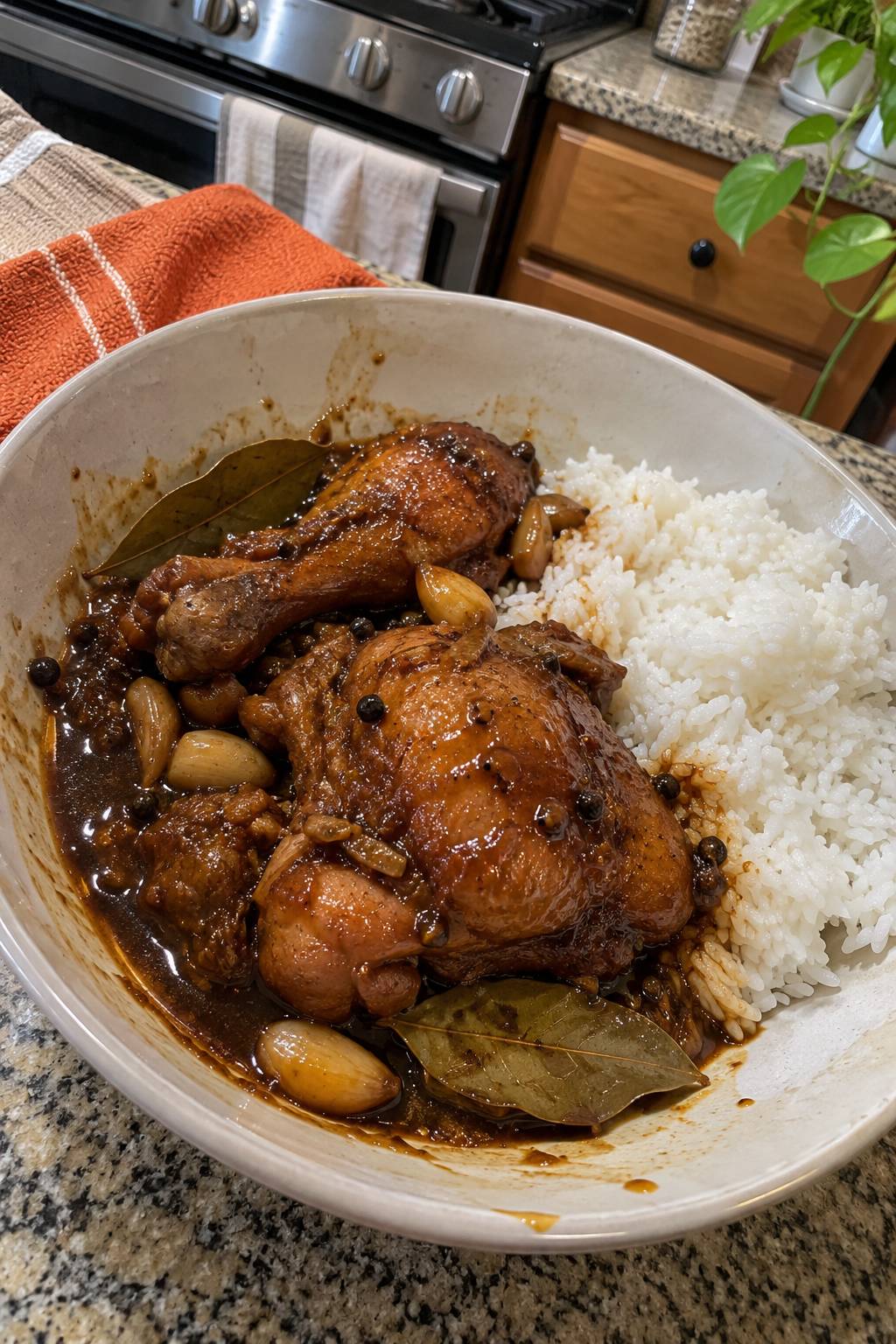
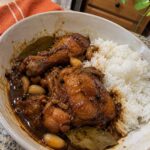
Chicken adobo is one of those dishes that rewards a little patience. This Filipino-style version braises bone-in chicken thighs and drumsticks in a savory mix of soy sauce and cider vinegar, with whole garlic, black peppercorns, and bay leaves simmering alongside. The result is tender meat in a glossy, lightly thickened sauce that is meant to be spooned over plain white rice.
This recipe needs little more than a heavy pan, a lid, and a few pantry staples. Read on for tips on browning, getting the sauce to the right texture, and a few common mistakes to avoid.
Why Bone-In Chicken Works Best Here
Bone-in thighs and drumsticks with the skin on are a good choice for adobo. The bones and skin add body to the braise as the chicken simmers, and dark meat holds up to a long, gentle cook better than lean breast meat does.
Pat the pieces dry with paper towels before they go into the pan. Surface moisture keeps the skin from browning, and you want deep golden color because that flavor carries through the entire braise.
Browning Builds the Flavor Base
Give the chicken room in the pan. Browning in batches keeps the heat steady so the skin crisps instead of steaming. After the chicken comes out, pour off most of the rendered fat but leave a little behind to cook the garlic.
Those browned bits stuck to the bottom of the pan are flavor, not a problem. When you add the soy sauce and vinegar, scrape them up with a wooden spoon so they dissolve into the sauce.
Getting the Sauce Right
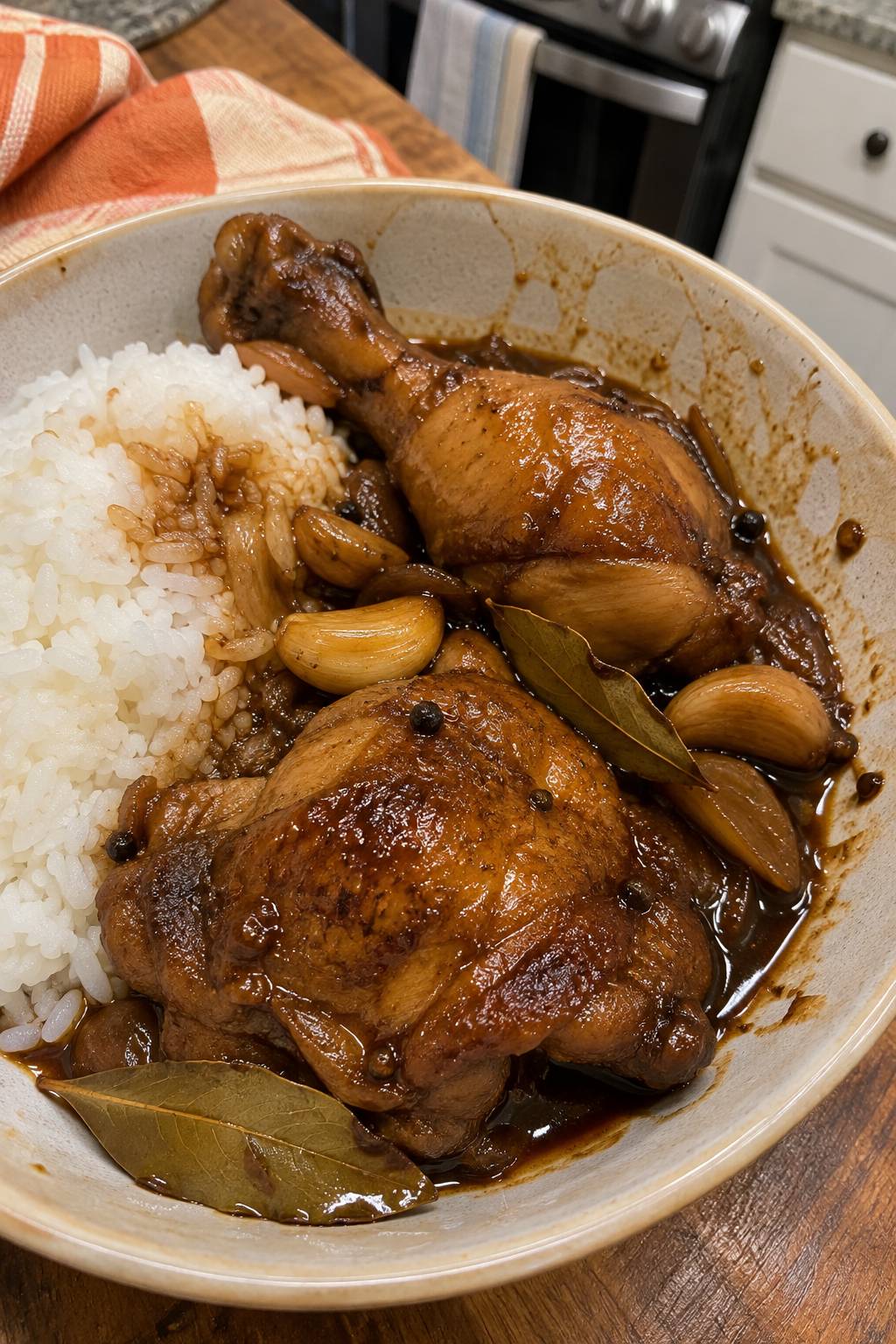
Soy sauce and cider vinegar do most of the work here. The soy brings salt and depth, while the vinegar keeps the braise bright so it does not taste flat or heavy. Brown sugar softens the sharp edges, and the peppercorns and garlic perfume the liquid gently. Taste the sauce before you season it further, since soy sauce is already salty.
The cornstarch slurry is the key to a sauce that clings to the rice. Stir the cornstarch into cold water until smooth before adding it, so it does not clump in the hot liquid. Pour it into a sauce that is simmering gently, not at a hard boil, and stir until the sauce thickens slightly. If the sauce boils hard for a long time, it can thin out again, so keep the heat low at the end.
Common Mistakes to Avoid
Do not crowd the pan, and do not rush the browning. Pale chicken makes a pale-tasting braise, and the sauce will show it. Also, do not skip removing the bay leaves. They stay stiff even after a long simmer and can be sharp, so fish them out before you serve.
Check the thickest part of a drumstick with an instant-read thermometer rather than relying on color alone. Serve the chicken and sauce right away over warm rice while the sauce is glossy, and warm leftovers gently over low heat.
Frequently Asked Questions
Why is my adobo sauce still thin?
The cornstarch needs to be mixed with cold water first, then stirred into a gently simmering sauce. Stir until it thickens slightly. A hard boil for a long time can thin the sauce again, so lower the heat if it starts to bubble vigorously.
How can I tell when the chicken is fully cooked?
Color alone can be misleading, so check the thickest part of a drumstick with an instant-read thermometer. The long, gentle simmer makes dark meat tender, and the thermometer gives you a clear answer before you serve.
Why should I remove the bay leaves before serving?
Bay leaves stay stiff even after simmering and can be sharp to bite into. Once the sauce has thickened, fish them out with tongs so everyone gets a smooth bite of chicken and sauce over the rice.
Recipe
Filipino Chicken Adobo with Garlic and Bay Leaves
Bone-in chicken thighs and drumsticks are browned, then simmered in a soy sauce and cider vinegar braise with whole garlic, black peppercorns and bay leaves until the sauce thickens slightly. It is served over steamed white rice.
- Course
- Main Course
- Cuisine
- American
- Difficulty
- Easy
- Servings
- 4 servings
- Prep time
- 15 mins
- Cook time
- 50 mins
- Total time
- 1 hr 5 mins
- Calories
- 900 kcal
Ingredients
For the chicken
For the sauce
For serving
Instructions
Prep
Pat the chicken pieces dry with paper towels. Peel the garlic, leaving the cloves whole or only lightly smashed. Measure the soy sauce, vinegar, water, brown sugar and cornstarch slurry, and stir the cornstarch into the cold water until smooth.
Rice
Cook the jasmine rice with the water and salt according to the package directions. Start it when you cover the pan to simmer the chicken, so the rice finishes at about the same time as the sauce.
Brown the chicken
Heat the oil in a 12-inch skillet or Dutch oven over medium-high heat. Brown the chicken in 2 batches, skin side down first, for 5 minutes per batch, turning once halfway through, until deep golden. Transfer the chicken to a plate and pour off all but about 2 tablespoons of the fat.
Build the sauce
Reduce the heat to medium. Add the garlic and cook, stirring, for 2 minutes until lightly golden. Pour in the soy sauce, vinegar and water, and scrape up the browned bits from the bottom of the pan. Stir in the brown sugar, peppercorns and bay leaves.
Braise
Return the chicken to the pan, skin side up, along with any juices on the plate. Raise the heat to high and bring the liquid to a boil, about 5 minutes. Reduce the heat to low so the liquid simmers gently, cover the pan, and cook for 25 minutes, turning the chicken once halfway through.
Finish
Uncover the pan and simmer for 8 minutes, spooning the sauce over the chicken, until the liquid reduces and turns glossy. Stir the cornstarch slurry again, pour it into the simmering sauce, and stir for about 1 minute until the sauce thickens slightly. Remove and discard the bay leaves.
Serve
Spoon the chicken and sauce over the warm rice and serve right away.
Notes
- Chicken is safe at an internal temperature of 165°F, but dark meat like thighs and drumsticks becomes more tender at 175°F, which this long simmer reaches. Check the thickest part of a drumstick with an instant-read thermometer.
- Mix cornstarch with cold water before adding it to hot liquid so it does not clump. It thickens only when the sauce simmers, and it will thin out if you keep the sauce at a hard boil for a long time.
- Bay leaves stay stiff even after simmering and can be sharp, so remove them before serving. Leftover adobo keeps in the refrigerator for up to 4 days and reheats well over low heat.
Recipe: https://naileditrecipes.co/filipino-chicken-adobo-with-garlic-and-bay-leaves/