Garlic Butter Shrimp Pasta: Tender Shrimp Mastery
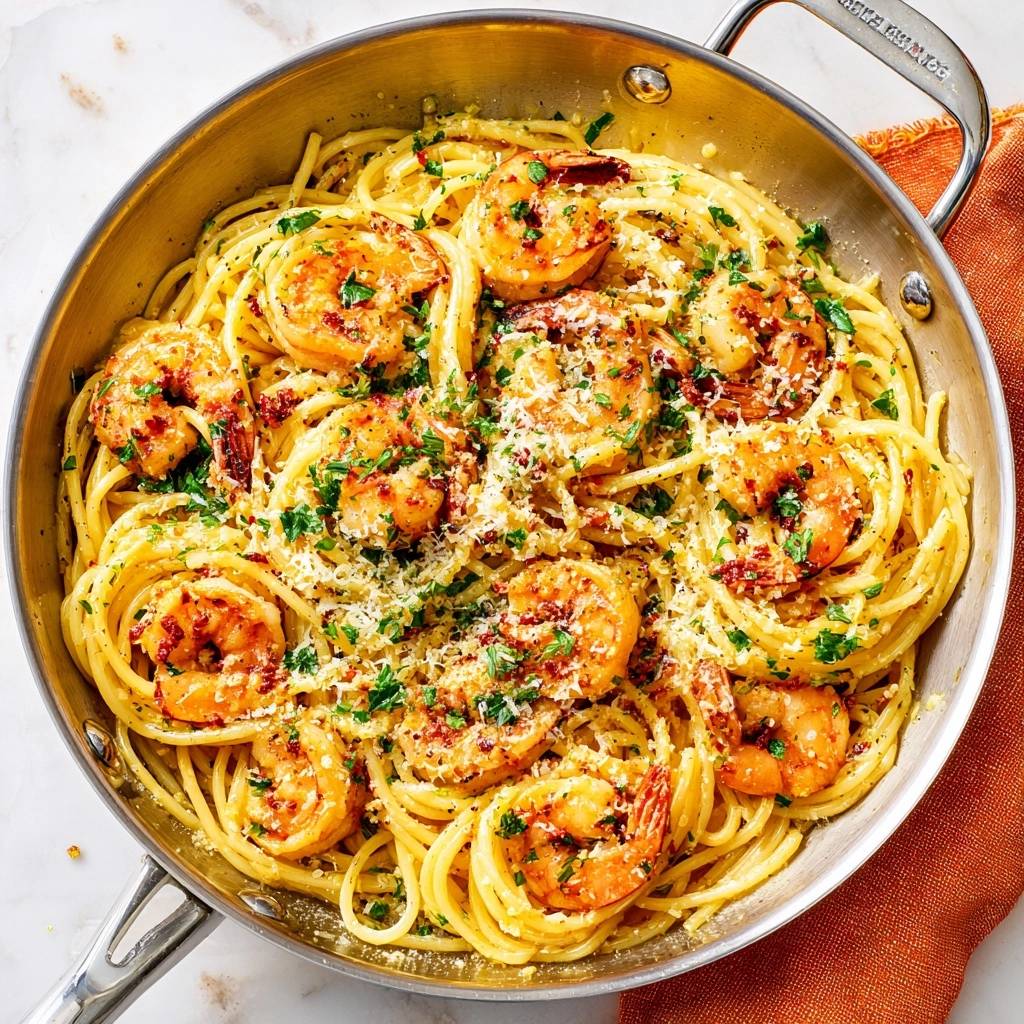
Ever bite into shrimp pasta and get that rubbery chew that kills the vibe? This garlic butter shrimp pasta fixes it fast. You’ll have dinner ready in 20 minutes for 4, around 500 calories per serving. High-heat sear locks in juicy shrimp, no more tough disasters.
Therefore, typical recipes steam shrimp low and slow, turning them chewy. But this method pats them bone-dry first, then blasts with heat for golden edges. You’ll taste the difference in every forkful.
Here’s the pro tip that seals it: watch for pink edges curling on the shrimp, about 1-2 minutes per side. Pull them off heat right then. That stops carryover cooking and keeps them plump. Beats takeout every time since you control the freshness.
Why Garlic Butter Shrimp Pasta Succeeds
Problems with Typical Shrimp Pastas
Most shrimp pastas fail because cooks use low heat. Shrimp release moisture and steam instead of searing. This leads to overcooked, rubbery texture from excess protein denaturation.
In addition, wet shrimp never brown properly. No Maillard reaction means bland flavor. However, this recipe’s dry pat and high sear create crusty outsides with moist insides.
Key to Juicy Shrimp Every Time
Pat shrimp dry with paper towels to evaporate surface water. This allows crisp browning instead of steaming. Season generously with salt and pepper for deep flavor.
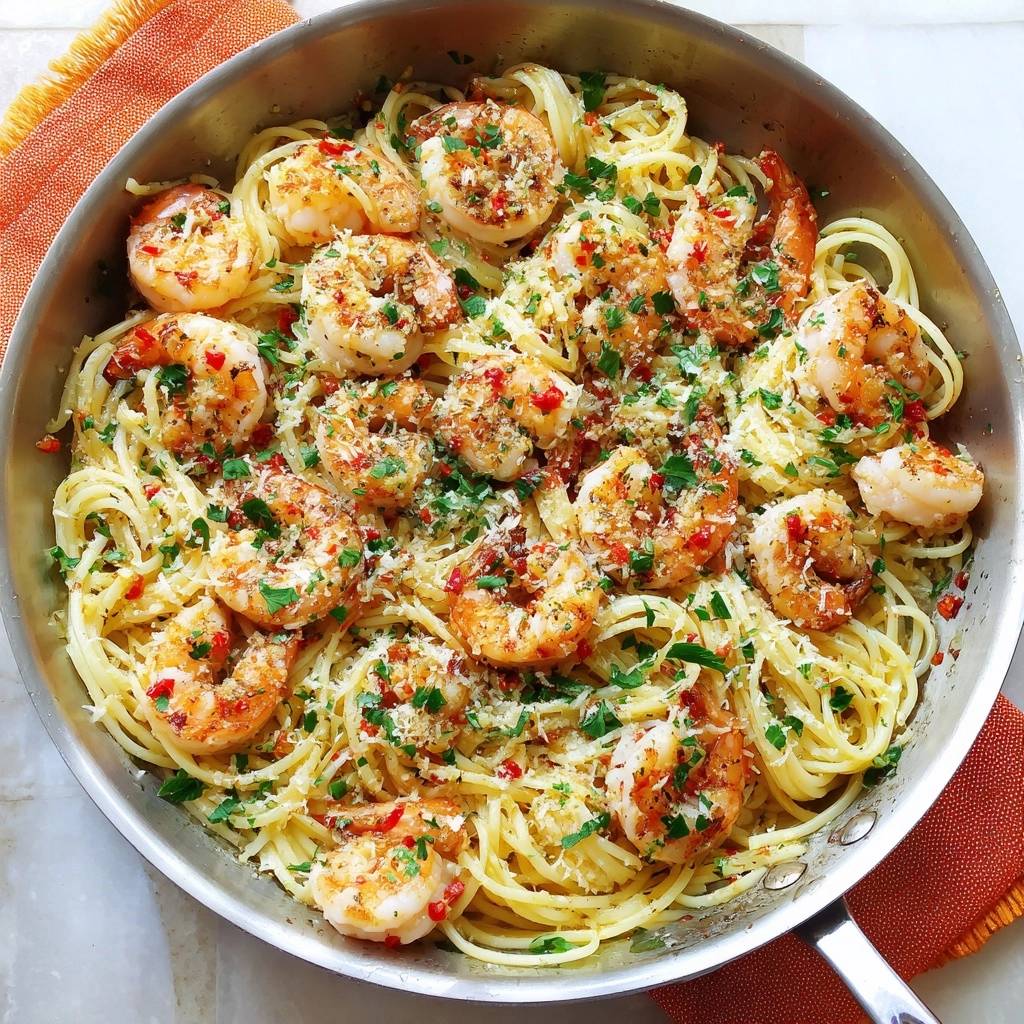
Next, heat oil until it ripples. Sear in a single layer, undisturbed. Look for golden pink edges, then flip once. Toss back in at the end to warm through gently.
Essential Ingredients for Garlic Butter Shrimp Pasta
Shrimp Selection and Prep Basics
Grab large shrimp, 16/20 count per pound. Peeled and deveined saves time. Fresh beats frozen-thawed for better snap, though wild caught offers cleaner taste over farmed.
Size ensures even cooking. Smaller ones overcook fast. Pat them dry thoroughly; moisture is the enemy of tenderness.
Garlic, Butter, and Pasta Foundations
Use unsalted butter so you control salt. It melts smoothly without overwhelming. Mince fresh garlic; it should smell punchy, not old and dull.
Thin spaghetti clings to sauce better than linguine. Red pepper flakes add just-right kick. Start with 1/4 teaspoon and adjust.
Finishing Touches: Parsley and Parmesan
Chop fresh parsley fine for even scatter and bright green color. It cuts richness perfectly. Grate Parmigiano-Reggiano fresh; it melts silkier than pre-shredded.
Pasta water acts as emulsifier thanks to starch. Add 1/2 cup reserved. Season salt and pepper at each stage for balance.
Mastering the High-Heat Shrimp Sear
Boiling Pasta to Al Dente Perfection
Salt water generously, 1 tablespoon per 4 quarts. Boil thin spaghetti 8 minutes till al dente, firm to bite. Reserve exactly 1/2 cup water before draining.
Al dente pasta holds sauce without getting mushy. Skip cold water rinse; starch helps bind everything later.
The same quick sear technique works beautifully in this shrimp fettuccine alfredo for those who love creamy pasta.
Drying and Seasoning Shrimp Thoroughly
Pat shrimp super dry with paper towels, both sides. This removes moisture for searing, not steaming. Rub in salt and pepper generously.
Single layer in skillet prevents steaming. Crowding ruins the sear every time.
Heat Oil-Butter Combo Precisely
Combine 2 tablespoons olive oil and 1 tablespoon butter over medium-high. Heat till oil shimmers and ripples, about 1 minute. Oil’s high smoke point pairs with butter’s flavor.
Don’t let it smoke. That’s your cue it’s ready for shrimp.
Searing Without Overcooking
Add shrimp in single layer. Sear undisturbed 1-2 minutes till edges pink and golden. Flip, sear 1 minute more till opaque.
Remove to plate immediately. They finish cooking off heat. Aim for 135°F internal if using thermometer. Pro tip: this halts carryover for juicy results.
Building the Garlic Butter Sauce Base
Infusing Garlic and Pepper Heat
Drop to medium heat. Melt remaining 2 tablespoons butter. Add minced garlic and red pepper flakes; stir 30 seconds till fragrant and light gold.
Don’t brown garlic or it bitters. Blooming flakes spreads heat evenly. Smell that garlicky heaven starting.
Emulsifying Pasta into Silky Sauce
Toss in drained spaghetti, pasta water, parsley, parmesan, and shrimp. Stir over low heat 1-2 minutes. Sauce thickens and clings as starch emulsifies.
Taste, adjust salt. Shrimp warm through without toughening. Glossy strands mean you nailed it.
Science of Tender Garlic Butter Shrimp Pasta
Maillard Reaction in Shrimp Searing
High heat triggers Maillard between shrimp proteins and sugars. Dry surface enables golden crust packed with nutty flavors. Wet shrimp just boil inside.
Quick sear locks moisture by denaturing proteins fast. Result: tender bite with crisp edge. Science makes it foolproof.
Butter Emulsion with Pasta Starch
Pasta water’s amylose binds butter into creamy sauce. No separation. Garlic volatiles peak at 30-second stir for max aroma.
Parmesan adds proteins for body. Low heat prevents breaking. You get restaurant glossy shine at home.
If you want a richer sauce to pair with those seared veggies, try this creamy garlic shrimp pasta instead.
Avoiding Garlic Butter Shrimp Pasta Pitfalls
Preventing Rubbery Overcooked Shrimp
Shrimp curl tight and turn milky white when overdone. Sear under, plate fast. Reheating toughens them, so eat fresh.
Off-heat finish prevents carryover dryness. Always.
Fixing Watery or Separated Sauce
Measure pasta water precisely; too much dilutes. Use low heat for toss only. Cold pasta? Warm it first.
Burnt garlic? Start over; no saving bitterness. Pro tip: fresh grate parmesan at room temp for smooth melt.
Balancing Salt and Spice Levels
Salt pasta water first, then shrimp, final toss last. Red flakes build subtle heat; taste as you go. Parmesan packs hidden salt.
Adjust flakes down if sensitive. Fresh garlic varies in punch, so sniff test it.
Flavor Variations for Garlic Butter Shrimp Pasta
Lemon Zest and white grape juice Twists
Add 1 tablespoon lemon zest and juice after garlic. Brightens the buttery richness. Or reduce 1/4 cup white grape juice for depth, sub some pasta water.
Grape juice adds acidity but needs simmering. Lemon’s quicker, no booze.
Vegetable and Protein Swaps
Stir in spinach or broccoli post-garlic, wilt 1 minute. For protein, sear chicken bites longer or scallops 90 seconds per side. Gluten-free spaghetti works; reserve extra water.
Adjust sear times to avoid dryness. Veggies bulk it up nicely.
Perfect Pairings for Garlic Butter Shrimp Pasta
Simple Green Salads and Veggies
Arugula salad with vinaigrette cuts the richness. Crisp bite contrasts creamy pasta. Steam asparagus spears; their snap pairs perfect.
Broccoli rabe adds bitter edge to balance garlic. Keep sides light.
Grape juice and Breads to Complement
Crisp sparkling grape juice refreshes the palate. Or sparkling grape juice’s acidity matches lemon twists. Garlic bread, brushed with olive oil, soaks up sauce.
Vegan? Nutritional yeast mimics parmesan. Simple and spot-on.
What’s Next?
Try these delicious pairings:
Make-Ahead Garlic Butter Shrimp Pasta Guide
Prepping Components Separately
Sear shrimp ahead, cool, fridge overnight. Par-cook pasta al dente, toss with oil to prevent sticking. Mix garlic butter base; lasts 2 days chilled.
Assemble fresh for best texture. Saves weeknight stress.
Reheating for Peak Tenderness
Gentle skillet with splash pasta water revives sauce. Low oven at 300°F works too. Skip microwave; it rubberizes shrimp.
Freeze shrimp separate up to 1 month. Thaw overnight, reheat low. Pasta freezes okay but sauce may separate.
Troubleshooting Garlic Butter Shrimp Pasta
Pasta Sticking or Sauce Not Clinging?
Add extra pasta water spoonfuls; starch binds it. Don’t oil boiling water. Toss vigorously over low heat.
Shrimp Not Browning Properly?
Pat drier next time. Ramp heat slower to ripple stage. Avoid overcrowding skillet.
Too Spicy or Bland Overall?
Tweak flakes to 1/8 teaspoon first. Fresh garlic potency swings; use less if strong-smelling. Final salt fixes bland.
Parmesan Not Melting Smoothly?
Grate fresh at room temp. Low heat only. Pre-shredded has starch coating that clumps.
FAQ
How do I store leftovers of Garlic Butter Shrimp Pasta?
Store in an airtight container in the fridge up to 3 days. Shrimp stays tender if not reheated harshly. Freezes decently up to 1 month; pack shrimp separate from pasta to avoid sogginess. Thaw overnight, reheat gently with water splash.
Why did my shrimp turn rubbery in Garlic Butter Shrimp Pasta?
Overcooking’s the culprit, often from low heat steaming or leaving in pan too long. Pat dry, sear high 1-2 minutes per side, remove immediately. Carryover cooks them more, so under-sear slightly. No reheating long; it tightens proteins fast.
Can I substitute ingredients in Garlic Butter Shrimp Pasta?
Swap thin spaghetti for angel hair or gluten-free; reserve extra water for cling. No large shrimp? Medium works but watch timing. Skip parmesan with nutritional yeast for vegan; same melt with less water. Butter to oil if dairy-free, but flavor dips slightly.
Why isn’t my sauce emulsifying properly?
Missing pasta starch usually. Reserve starchy hot water, add gradually over low heat while tossing. Cold pasta breaks emulsion; warm it first. Burnt garlic separates it, so stir just 30 seconds till fragrant.
How do I make Garlic Butter Shrimp Pasta spicier or milder?
For heat, double red pepper flakes or add chili oil post-toss. Milder? Halve flakes or omit. Taste garlic potency first; older ones pack less punch. Lemon juice amps brightness without spice.
Can I prep Garlic Butter Shrimp Pasta ahead for a party?
Yes, sear shrimp and par-cook pasta day before. Fridge separately. Warm pasta in skillet, add sauce and shrimp last minute. Serves crowds hot and juicy. Scale shrimp up, but don’t crowd sear batches.
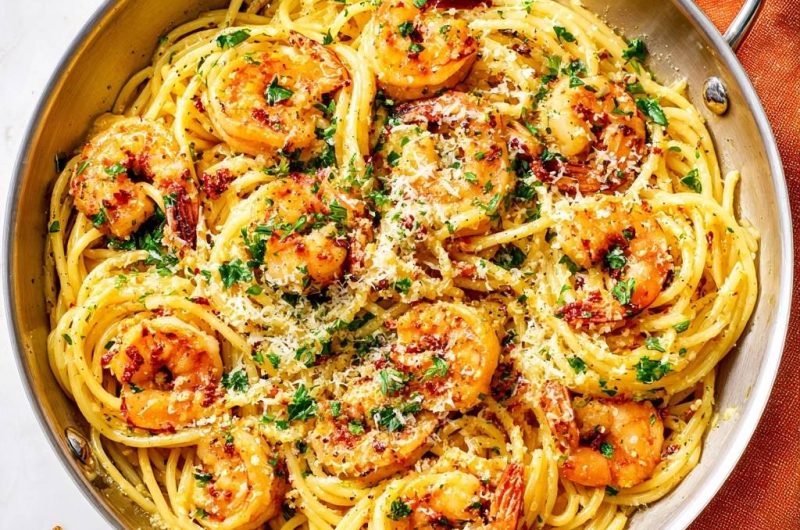
Garlic Butter Shrimp Pasta
Course: Main CourseCuisine: AmericanDifficulty: easy4
servings10
minutes15
minutes550
kcal25
MinutesTired of tough, chewy shrimp that ruin your pasta dreams? This recipe delivers juicy, tender shrimp every time with a simple high-heat sear and quick finish method that locks in moisture. Tossed in garlicky butter sauce with spaghetti, red pepper kick, fresh parsley, and parmesan.
Ingredients
8 ounces thin spaghetti
1 pound large shrimp, peeled and deveined
4 cloves garlic, minced
3 tablespoons unsalted butter, divided
2 tablespoons olive oil
1/4 teaspoon red pepper flakes
1/4 cup fresh parsley, chopped
1/2 cup grated parmesan cheese, plus more for serving
Salt and black pepper, to taste
1/2 cup reserved pasta cooking water
Directions
- Bring a large pot of salted water to a boil. Cook spaghetti according to package directions until al dente, about 8 minutes. Reserve 1/2 cup pasta water, then drain.
- While pasta cooks, pat shrimp completely dry with paper towels. This is key to prevent steaming and ensure browning. Season both sides generously with salt and black pepper.
- Heat 2 tablespoons olive oil and 1 tablespoon butter in a large skillet over medium-high heat until shimmering hot (about 1 minute; oil should ripple but not smoke). Add shrimp in a single layer. Sear undisturbed for 1-2 minutes until edges turn pink and golden. Flip and sear other side 1 minute more, just until opaque throughout. Do not overcook. Remove shrimp to a plate immediately to stop cooking and keep them juicy.
- Lower heat to medium. Add remaining 2 tablespoons butter, minced garlic, and red pepper flakes to skillet. Stir 30 seconds until garlic is fragrant and lightly golden (not browned).
- Add drained spaghetti, reserved pasta water, parsley, parmesan, and cooked shrimp. Toss 1-2 minutes over low heat until sauce clings to pasta and shrimp warm through without toughening. Taste and adjust salt.
- Serve hot with extra parmesan. Enjoy perfectly tender shrimp that stay juicy every bite.
Notes
- Pat shrimp completely dry before seasoning for the best sear and to prevent steaming. Do not overcook shrimp—remove from heat immediately after searing to keep them juicy.