Spring Ravioli with Roasted Veggies: Perfectly Tender
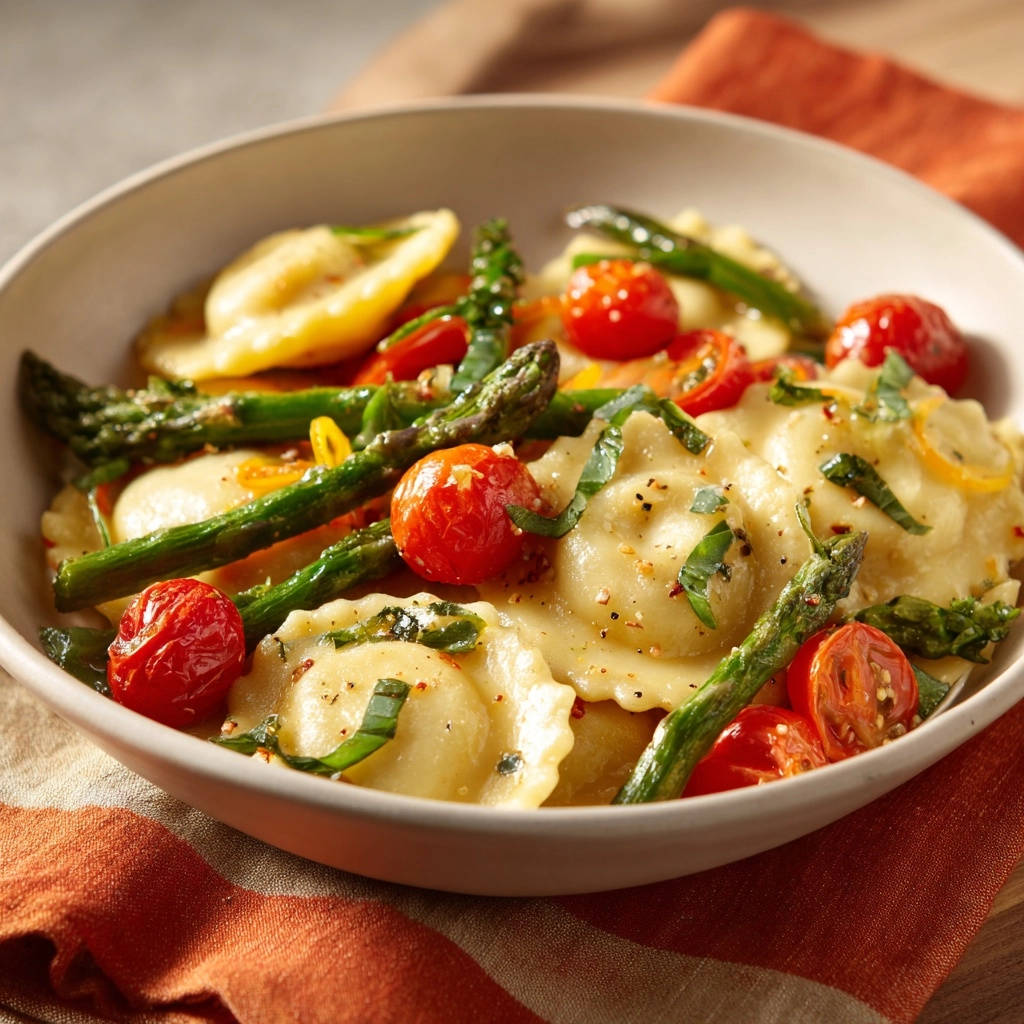
Oh, friends, few things are as disheartening as the expectation of tender, separate ravioli dissolving into a sticky, clumpy pasta blob. I’ve certainly been there, but after years of experimenting, I’ve finally cracked the code to achieving perfectly distinct, delicate pasta every single time. This delightful Spring Ravioli with Roasted Veggies recipe is my go-to for showcasing that secret, promising you a seamless and incredibly flavorful meal.
The Secret to Perfectly Tender Pasta: Why You’ll Love This Recipe
This isn’t just another pasta dish; it’s a revelation in perfectly cooked ravioli, paired with vibrant, seasonal flavors. Say goodbye to sticky, torn pasta, and hello to a dish that effortlessly impresses with its simplicity and elegance.
For a perfect pairing, try our Creamy Spinach and Tomato Ravioli: Velvety Sauce Perfection.
Beyond the flawless texture of the ravioli, this recipe shines with its balanced flavors. The sweetness of roasted cherry tomatoes, the slight bitterness of tender-crisp asparagus, and a bright, zesty lemon-garlic sauce create a symphony of fresh tastes.
It’s incredibly versatile, allowing you to easily swap vegetables or add protein. This makes it a perfect weeknight meal or a charming dish for spring entertaining, proving that gourmet flavors don’t require complex techniques.
Building Blocks of Freshness: What You’ll Need
Essential Pasta Components
Fresh or Frozen Cheese Ravioli: The star of our dish! Opt for a high-quality cheese ravioli, or another light-colored variety, as its delicate texture perfectly complements the vibrant roasted vegetables and light sauce.
Vibrant Spring Vegetables & Aromatics
Asparagus: Trimmed and cut into 1-inch pieces, asparagus brings a beautiful green hue and a tender-crisp bite, embodying the essence of spring. Choose firm, bright green spears.
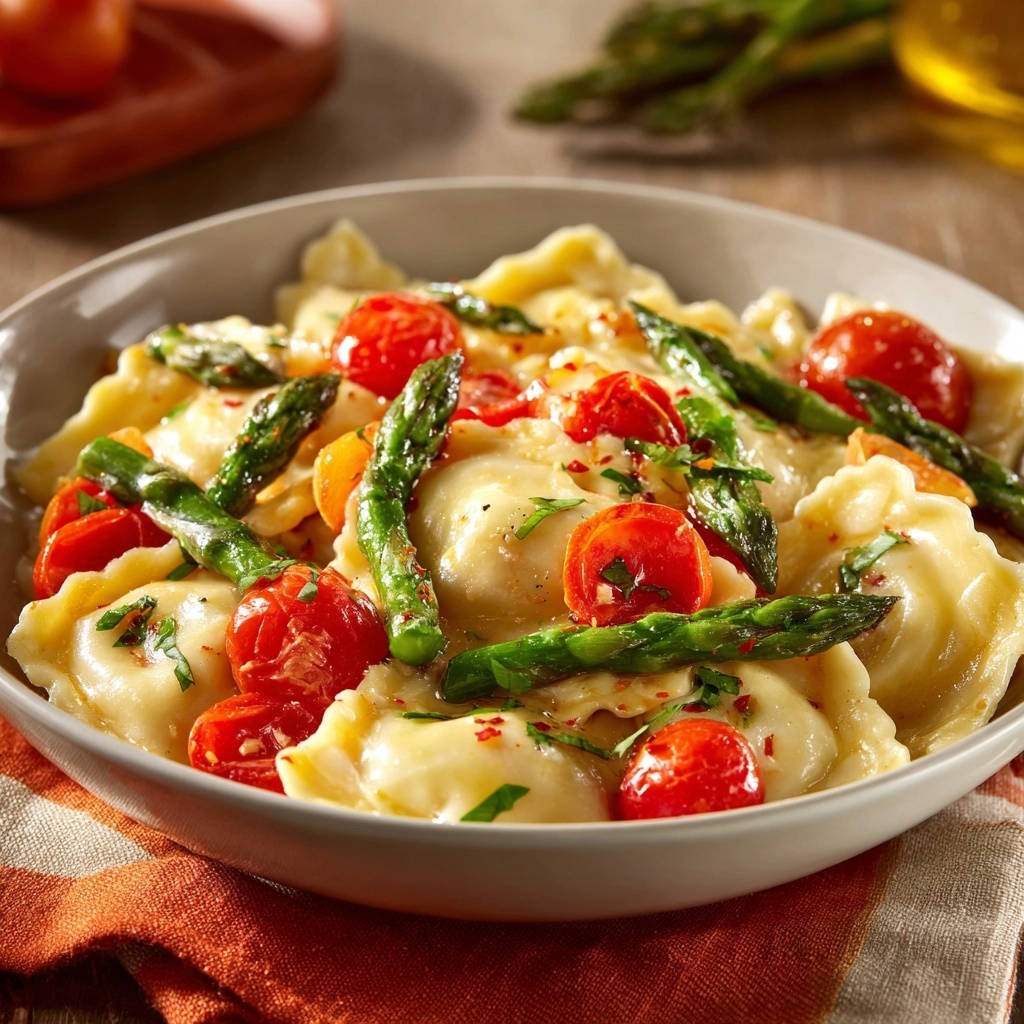
Cherry Tomatoes: These burst when roasted, releasing sweet, juicy pockets of flavor that create a natural, concentrated sauce element. Look for plump, firm tomatoes.
Garlic: Minced garlic forms the aromatic backbone of our bright sauce, infusing it with warmth and depth. Freshly minced is always best for maximum flavor.
Red Pepper Flakes (Optional): A subtle touch of heat that elevates the flavors without overwhelming them. Adjust to your preference, or omit for a milder dish.
Bright & Balanced Flavor Boosters
Olive Oil: Used for roasting the vegetables and as a base for the sauce, good quality olive oil enhances flavor and helps carry the aromatics.
Unsalted Butter: Adds richness and a silky mouthfeel to the lemon-garlic sauce, perfectly balancing the bright acidity.
Fresh Lemon Juice & Zest: The dynamic duo that brings an invigorating brightness and zing to the entire dish, cutting through the richness and highlighting the spring vegetables. Always use fresh lemons for the best results.
Fresh Basil Leaves: Chopped and added at the end, fresh basil provides a fragrant, herbaceous finish that ties all the flavors together beautifully. Its peppery, sweet notes are quintessential spring.
Salt & Freshly Ground Black Pepper: Essential for seasoning at every stage, from roasting vegetables to perfecting the final sauce. Taste as you go and adjust to your liking.
Essential Tools for Your Seamless Pasta Experience
Large Baking Sheet: Essential for roasting vegetables in a single layer for even cooking, ensuring they caramelize rather than steam.
Very Large Pot: Absolutely critical for preventing ravioli from sticking. Emphasize size and ample water volume to allow the pasta to move freely.
Slotted Spoon or Spider: For gently transferring cooked ravioli without rinsing, preserving their essential starches for the sauce.
Small Saucepan or Skillet: Perfect for quickly whisking together the fragrant lemon-garlic sauce.
Large Serving Bowl: To accommodate all ingredients comfortably and allow for gentle tossing without damaging the delicate ravioli.
Your Step-by-Step Guide to Flawless Spring Ravioli
Prepping Your Spring Harvest
Preheat & Prepare Veggies: Preheat your oven to a robust 400°F (200°C). This temperature is ideal for roasting, ensuring your vegetables achieve a perfect texture.
On a large baking sheet, toss the trimmed asparagus pieces and whole cherry tomatoes with 2 tablespoons of olive oil, a generous pinch of salt, and freshly ground black pepper. Spread them in a single, even layer across the sheet. This crucial step ensures they roast properly, developing beautiful caramelization and tender-crispness, rather than steaming.
Roast for 15 to 20 minutes, or until the asparagus is vibrant green and tender-crisp, and the cherry tomatoes have visibly softened and are slightly burst, releasing their sweet juices. Keep a close eye on them to prevent overcooking.
The Art of Cooking Non-Stick Ravioli
Boil Water Liberally: While your vegetables roast, bring a very large pot of generously salted water to a rolling boil. The generous amount of water is paramount; it helps maintain a consistent high temperature when the ravioli are added and provides ample space, directly preventing the ravioli from clumping together. The water should taste noticeably salty, like the ocean, to properly season the pasta from within.
Add Ravioli Gently: Carefully add the ravioli to the vigorously boiling water. Immediately stir them gently with a wooden spoon to ensure they don’t stick to the bottom of the pot or to each other. If you are cooking a large amount of ravioli, consider cooking them in two smaller batches. Overcrowding can significantly drop the water temperature and make sticking inevitable.
Cook to Perfection: Cook the ravioli strictly according to your package directions. This is typically 3 to 5 minutes for fresh ravioli and 4 to 7 minutes for frozen. Look for them to float gracefully to the surface and be tender yet still possess a slight bite-this is the coveted “al dente” texture. Continue to stir occasionally and very gently throughout the cooking process to ensure even cooking and prevent sticking.
Reserve Pasta Water: Before draining your perfectly cooked ravioli, make sure to reserve about 1/2 cup of that starchy pasta cooking water. This liquid is culinary gold; it’s essential for creating a silky, emulsified sauce that clings beautifully to the pasta, uniting all the dish’s flavors.
Drain, Don’t Rinse: Drain the ravioli using a slotted spoon or a pasta spider, transferring them directly into a large serving bowl. Do not rinse the ravioli! Rinsing washes away the essential starches on the pasta’s surface that are needed for the sauce to adhere properly. Rinsing leads to a bland, watery dish where the sauce slides right off.
Crafting the Bright Lemon-Garlic Sauce
Aromatic Base: In a small saucepan or skillet, melt the unsalted butter over medium heat. Add the remaining 1 tablespoon of olive oil, along with your minced garlic and red pepper flakes (if you’re using them). Cook for just about 1 minute, stirring constantly, until the garlic becomes fragrant. Be very careful not to brown or burn the garlic, as this will impart a bitter flavor.
Build the Sauce: Stir in the fresh lemon juice, the bright lemon zest, and 1/4 cup of the reserved starchy pasta cooking water. Whisk briefly but vigorously to combine these ingredients into a light, glossy, and wonderfully aromatic sauce. This will form the bright and cohesive element of your Spring Ravioli with Roasted Veggies.
Bringing It All Together
Combine & Toss Gently: Pour the freshly prepared lemon-garlic sauce over the drained ravioli in your large serving bowl. Carefully add the roasted asparagus and the burst cherry tomatoes to the bowl.
Using large serving spoons or a very gentle tossing motion, combine everything together. The key here is to be exceedingly gentle to avoid breaking the delicate ravioli. The goal is to evenly coat every piece of pasta and vegetable with the luscious sauce.
Garnish generously with the fresh chopped basil, which adds a burst of freshness and aroma. Taste the dish and adjust the seasoning with additional salt and pepper if needed. Serve immediately for the best flavor and texture; this dish truly shines when fresh.
Mastering the Art: Key Tips for Flawless Ravioli
The Critical Water-to-Ravioli Ratio
As highlighted in this recipe, using a very large pot with ample, generously salted water is the absolute, non-negotiable secret to preventing ravioli from sticking. This ensures the water temperature remains consistently high when the pasta is added and provides enough space for each delicate ravioli to move freely, guaranteeing individual and perfect cooking.
Gentle Handling & Stirring Secrets
Ravioli are inherently delicate! When you add them to the boiling water and stir them during the cooking process, do so with an incredibly light touch using a wooden spoon or a gentle silicone spatula. This mindful handling prevents tearing and helps keep each ravioli intact, contributing significantly to that sought-after “seamless pasta experience.”
Why You MUST NOT Rinse Your Cooked Ravioli
Rinsing cooked pasta is a common mistake that actively strips away the essential starches from the pasta’s surface. These very starches are precisely what allow your beautiful lemon-garlic sauce to cling lovingly to the ravioli, creating a cohesive, flavorful, and satisfying dish. Always drain using a slotted spoon or spider directly into your serving bowl, never under running water.
Adjusting Your Sauce Consistency
The reserved pasta water is your ultimate secret weapon for achieving the perfect sauce consistency. If your sauce appears too thick or if you desire a looser, more fluid texture, gradually add more of the reserved starchy pasta water, just one tablespoon at a time. Whisk it in until your sauce reaches your desired, beautifully clinging consistency. This starchy water helps to emulsify and bind the sauce, ensuring it coats every bit of your Spring Ravioli with Roasted Veggies.
Don’t Overcook Your Veggies
The goal for your asparagus and cherry tomatoes is tender-crispness for the asparagus and slightly burst for the tomatoes. Overcooking them will unfortunately result in a mushy texture and a significant loss of their vibrant, fresh spring flavor. Keep a close eye on them during their roasting time and remove them as soon as they reach the desired doneness.
Common Challenges & Quick Fixes for Your Ravioli
Ravioli Clumping Together?
This frustrating issue is almost always due to using insufficient water, overcrowding your cooking pot, or not stirring gently enough. To fix this, ensure you’re using a very large pot with an abundance of generously salted water (it should taste like the ocean!). If you have a lot of ravioli, cook them in smaller batches, and make sure to stir very gently but consistently during the cooking process to prevent them from settling at the bottom or sticking to each other.
Vegetables Not Tender or Too Mushy?
If your roasted vegetables are still too firm, they likely need a few more minutes in the oven; double-check that they are spread in a single layer for even heat exposure. Conversely, if they’ve turned mushy, they were probably overcooked. Adjust your roasting time based on the specifics of your oven and the thickness of your vegetables, always aiming for that perfect tender-crisp texture.
Sauce Not Clinging to Ravioli?
The most frequent reason for a sauce that won’t cling is rinsing the ravioli after cooking, which unfortunately strips away their beneficial starches. To ensure optimal cling, always drain your ravioli directly into the serving bowl using a slotted spoon and never rinse them. Additionally, confirm that you’ve incorporated some of the starchy reserved pasta water into your sauce; this is crucial for its ability to emulsify and coat the pasta beautifully.
Your Spring Ravioli Questions Answered
Can I Use Different Vegetables?
Absolutely! While asparagus and cherry tomatoes provide that perfect spring touch to this Spring Ravioli with Roasted Veggies recipe, it’s incredibly adaptable. Feel free to experiment with other vegetables that roast well, such as broccoli florets, sliced bell peppers, zucchini, or even mushrooms. Just be sure to adjust the roasting times as needed to accommodate the specific cooking requirements of different vegetables. For inspiration on perfect roasting, check out our guide on Crispy Baked Asparagus.
What About Gluten-Free Ravioli?
Yes, you can certainly use gluten-free ravioli in this recipe! The core cooking principles remain consistent: use generous amounts of water, stir gently, and absolutely do not rinse the pasta. Always adhere to the specific cooking directions provided on your gluten-free pasta package, as their cooking times and requirements can sometimes differ slightly from traditional wheat pasta.
Can I Make This Ahead of Time?
This dish truly shines when served immediately, as ravioli can tend to become softer if left sitting in the sauce for too long. However, you can certainly prepare components in advance. Roast the vegetables and make the lemon-garlic sauce, storing them separately in airtight containers. When you’re ready to enjoy, simply cook the ravioli fresh, gently warm the sauce, combine everything, and toss.
How Can I Add Protein to This Dish?
To enhance the protein content of this delightful dish, consider incorporating grilled chicken breast, sautéed shrimp, or even some savory crumbled Italian sausage once the dish is assembled. For a delicious plant-based protein boost, a sprinkle of toasted pine nuts or a handful of cannellini beans (white kidney beans) would also complement the flavors wonderfully. For a fantastic chicken addition, consider our Pan-Seared Chicken Rice Bowl as inspiration for perfectly cooked chicken.
Elevating Your Dish: Serving & Pairing Suggestions
This vibrant Spring Ravioli with Roasted Veggies is a satisfying and complete meal on its own, but you can effortlessly elevate the dining experience with a few thoughtful additions. A crisp, refreshing side salad, dressed with a light vinaigrette, provides a wonderful contrast and cuts through the richness of the pasta, adding another layer of freshness.
For an extra layer of savory depth, consider finishing your plate with a light sprinkle of freshly grated Parmesan or Pecorino Romano cheese. A warm, crusty baguette or some homemade garlic bread is perfect for soaking up every last bit of that exquisite lemon-garlic sauce. To complement the bright lemon and fresh vegetables, a light-bodied white grape juice like a crisp sparkling grape juice would be an excellent choice.
Keeping It Fresh: Storage & Reheating Tips
While this Spring Ravioli with Roasted Veggies recipe is undeniably best enjoyed immediately, any delicious leftovers can be stored in an airtight container in the refrigerator for up to 2-3 days. Please note that the ravioli may become slightly softer upon storage, which is natural.
To gently reheat, transfer individual portions to a skillet and warm over low heat, adding a splash of water or vegetable broth. This helps to loosen the sauce and prevent the ravioli from sticking or drying out. Alternatively, you can use a microwave, but be careful not to overcook, as excessive heat can cause the delicate ravioli to become rubbery.
Ready to Impress? Share Your Spring Ravioli Masterpiece!
You are now equipped with all the essential secrets to creating perfectly tender, non-sticky Spring Ravioli with Roasted Veggies every single time. This recipe beautifully demonstrates how simple, expert tweaks in your cooking technique can make a world of difference in your pasta dishes, transforming potential culinary frustration into undeniable triumph.
We truly encourage you to try this vibrant, satisfying dish and experience the sheer joy of a truly seamless, delicious pasta experience firsthand. Don’t forget to share your culinary creations with us – we absolutely love seeing your delicious results!
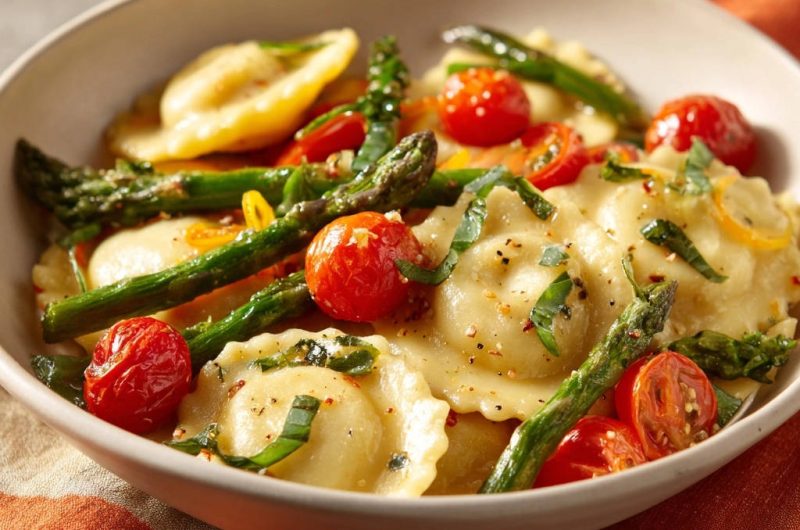
Ravioli
Course: Main CourseCuisine: ItalianDifficulty: easy4
servings15
minutes20
minutes550
kcal35
minutesDiscover the secret to non-clumping ravioli with this vibrant and easy recipe. Tender cheese ravioli are tossed with roasted asparagus and cherry tomatoes, then coated in a zesty lemon-garlic butter sauce. A delightful and seamless pasta experience!
Ingredients
18 ounces fresh or frozen cheese ravioli (or similar light-colored ravioli)
1 pound asparagus, trimmed and cut into 1-inch pieces
1 pint cherry tomatoes
3 tablespoons olive oil, divided
2 cloves garlic, minced
1/4 teaspoon red pepper flakes (optional)
1/4 cup reserved pasta cooking water
2 tablespoons unsalted butter
1 tablespoon fresh lemon juice
1 teaspoon lemon zest
1/4 cup fresh basil leaves, chopped
Salt to taste
Freshly ground black pepper to taste
Directions
- Preheat your oven to 400 degrees F (200 degrees C). On a large baking sheet, toss the asparagus and cherry tomatoes with 2 tablespoons of olive oil, salt, and black pepper. Spread them in a single layer. Roast for 15 to 20 minutes, or until the asparagus is tender-crisp and the tomatoes are slightly burst.
- While the vegetables roast, bring a very large pot of generously salted water to a rolling boil. It is crucial to use a large pot with ample water to prevent the ravioli from sticking. The water should be salty enough to taste like the ocean.
- Carefully add the ravioli to the boiling water, stirring gently with a wooden spoon to ensure they don’t stick to the bottom or to each other. Do not overcrowd the pot; if cooking a large amount, consider cooking in two batches.
- Cook the ravioli according to package directions, typically 3 to 5 minutes for fresh and 4 to 7 minutes for frozen, or until they float to the surface and are tender yet still have a slight bite (al dente). Continue to stir occasionally and very gently throughout the cooking process.
- Before draining, reserve about 1/2 cup of the pasta cooking water.
- Drain the ravioli using a slotted spoon or spider, transferring them directly into a large serving bowl. Do not rinse the ravioli, as this removes starches needed for the sauce to cling.
- In a small saucepan or skillet, melt the butter over medium heat. Add the remaining 1 tablespoon of olive oil, minced garlic, and red pepper flakes (if using). Cook for 1 minute until fragrant.
- Stir in the lemon juice, lemon zest, and 1/4 cup of the reserved pasta cooking water. Whisk briefly to combine.
- Pour the sauce over the drained ravioli in the serving bowl. Add the roasted asparagus and cherry tomatoes.
- Gently toss everything together, being careful not to break the ravioli. Garnish with the fresh chopped basil. Taste and adjust seasoning with additional salt and pepper if needed. Serve immediately.
Notes
- Use a very large pot with ample, salted water to prevent ravioli from sticking and cook in batches if needed.