Lemon Crinkle Cookies
Make thick lemon crinkle cookies with tender centers and snowy sugar tops. Learn how chilled dough and a generous coating help create their signature cracks.
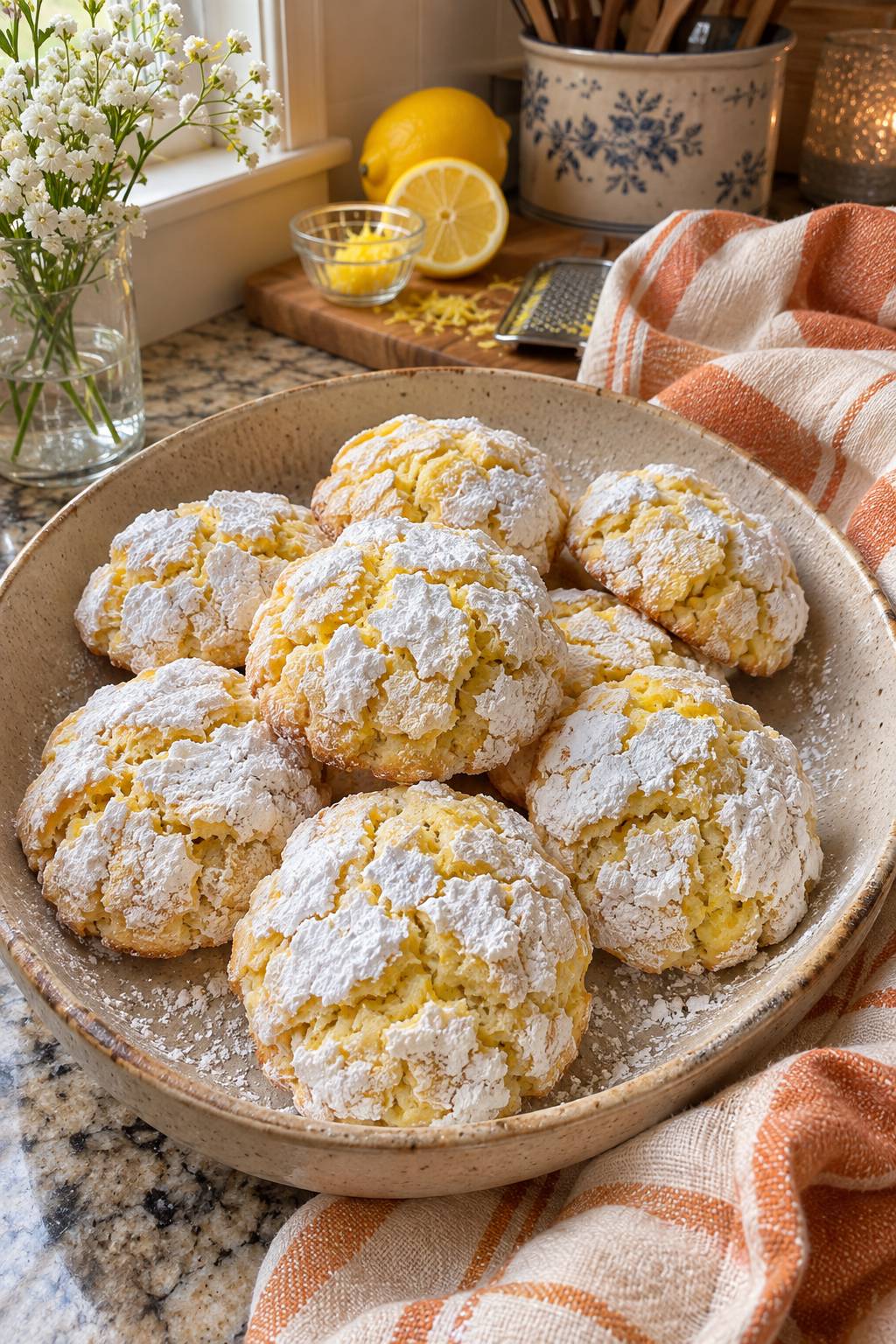
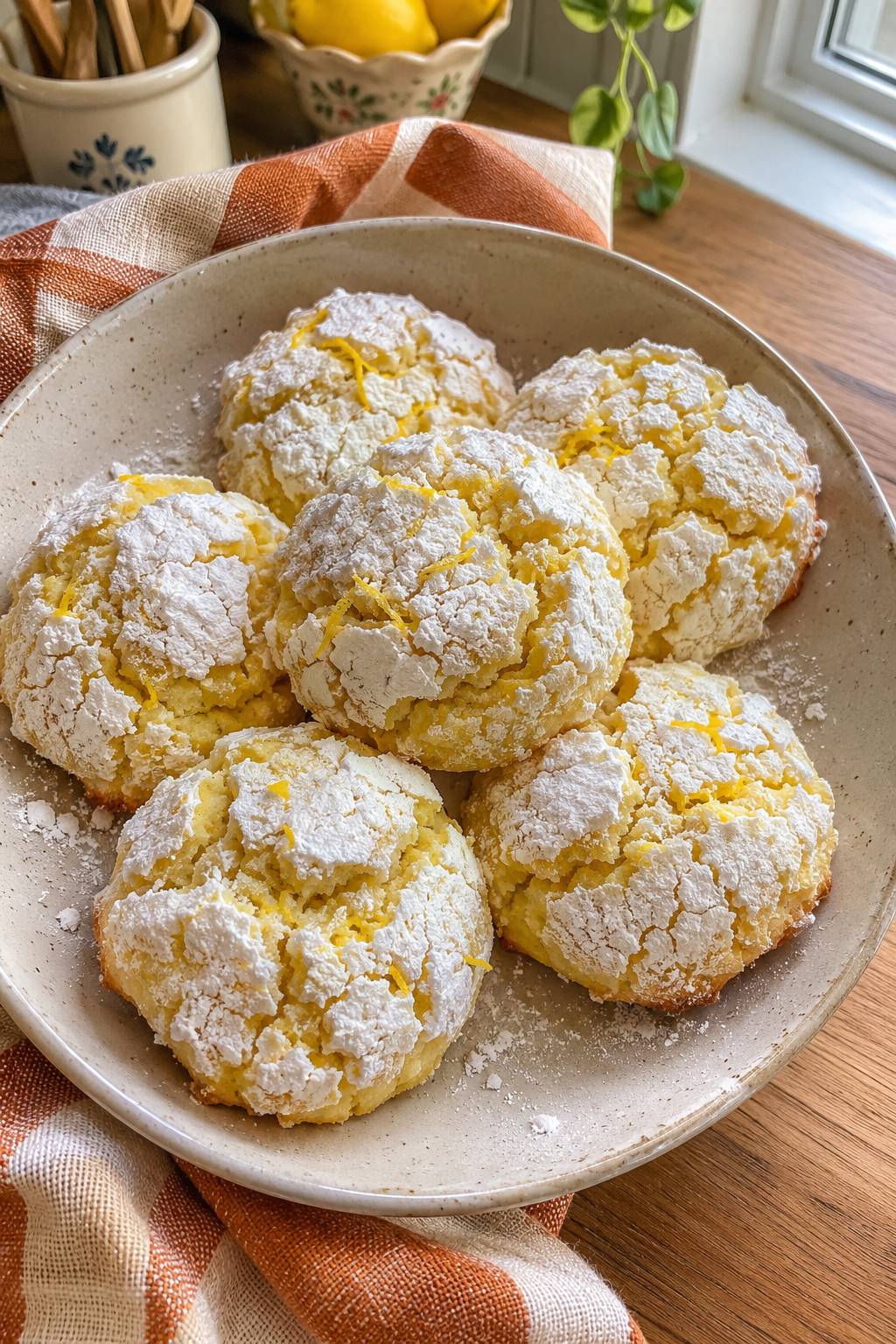
Lemon crinkle cookies bring a bright citrus flavor to a cozy cookie plate, with thick shapes, tender centers, and a snowy coating that cracks in the oven. Their bottoms turn lightly golden while the tops stay pale beneath the powdered sugar. You’re looking for that balance of a set exterior and a soft middle, rather than an evenly browned cookie.
The details that matter most are easy to overlook: fragrant lemon sugar, properly softened butter, chilled dough, and a generous coating. Paying attention to those textures helps you recognize what’s right as you bake, without relying on color alone.
Build lemon flavor into the sugar
Finely grated lemon zest and fresh lemon juice each have a place in this dough. Rub the zest into the granulated sugar with your fingertips until the mixture smells fragrant. That aroma is your cue to move on; don’t simply stir the zest through and skip the rubbing.
Softened unsalted butter should beat readily into the lemon sugar. Look for a light, fluffy mixture, following the recipe card’s mixing guidance. Scrape down the bowl when incorporating the egg and egg yolk so you don’t leave unmixed butter and sugar clinging to the sides.
Keep the dough soft without overmixing
Spoon the all-purpose flour into your measuring cup and level it, as specified on the card. Scooping directly from the flour container can pack the cup, making it harder to measure consistently. Whisking the flour with the baking powder and salt also helps distribute those ingredients before they meet the wet mixture.
Once the flour mixture goes in, use low speed and stop when the dry streaks disappear. The finished dough should feel soft and slightly sticky. Don’t treat that stickiness as a reason to keep adding flour; chilling is already part of the recipe’s handling plan.
Give the crinkle coating a strong start
Keep the dough chilled until you’re ready to shape it. Cold dough spreads more slowly, helping these cookies hold their thick shape. Roll the portions into balls and leave them rounded rather than pressing them flat.
The coating sugars do different jobs. A light layer of granulated sugar helps the powdered sugar coating stay distinct. The powdered sugar should then cover each ball generously, until the surface looks completely white. A sparse dusting won’t give you the same snowy contrast around the cracks. Leave even space between the cookies so they have room to spread.
Read the centers as well as the edges
Puffed, cracked tops are part of the picture, but check the edges and centers, too. The edges should be set, the bottoms very lightly golden, and the centers soft-looking without appearing wet. Waiting for deeply browned tops would take these cookies past the appearance described on the recipe card.
Switching rack positions and rotating the baking sheets helps you manage uneven oven exposure. Follow the card’s guidance for that adjustment and for cooling. Give the cookies their specified rest on the baking sheets before transferring them to wire racks.
Frequently Asked Questions
Should I add flour if the dough feels sticky?
Soft, slightly sticky dough is expected here. Check that you measured the flour as directed, then follow the recipe’s chilling guidance. Keep the dough cold until shaping instead of adding extra flour to make it feel dry.
Why does the coating use granulated sugar first?
The granulated sugar layer helps keep the powdered sugar distinct. Keep that initial coating light, then be generous with the powdered sugar. Before baking, the dough balls should look completely white, giving the cracks a clear contrast against the snowy surface.
How can I tell when the cookies are done?
Look for puffed cookies with cracked tops, set edges, and very lightly golden bottoms. The centers should still look soft, but they shouldn’t look wet. Use those cues alongside the recipe card’s baking guidance rather than waiting for browned tops.
Recipe
Lemon Crinkle Cookies
These thick lemon cookies have tender centers, lightly golden bottoms, and a snowy powdered sugar coating that cracks as they bake.
- Course
- Dessert
- Cuisine
- American
- Difficulty
- Easy
- Servings
- 18 cookies
- Prep time
- 25 mins
- Cook time
- 16 mins
- Total time
- 2 hr 1 mins
- Calories
- 175 kcal
Ingredients
Cookie Dough
Sugar Coating
Instructions
Whisk the flour, baking powder, and salt together in a medium bowl.
In a large bowl, rub the granulated sugar and lemon zest together with your fingertips until fragrant. Add the softened butter and beat with an electric mixer on medium speed for 2 to 3 minutes, until light and fluffy.
Beat in the egg and egg yolk until combined, scraping down the bowl. Mix in the lemon juice. Add the flour mixture and mix on low speed just until no dry streaks remain. The dough will be soft and slightly sticky.
Cover and refrigerate the dough for 60 minutes. Near the end of chilling, preheat the oven to 350°F with racks in the upper and lower thirds. Line two baking sheets with parchment paper.
Place the coating sugars in separate small bowls. Divide the chilled dough into 18 portions, approximately 2 tablespoons each, and roll into balls. Roll each ball lightly in granulated sugar, then generously in powdered sugar until completely white. Arrange 9 cookies on each baking sheet, leaving at least 2 inches between them. Do not flatten.
Bake both sheets for 14 to 16 minutes, switching their rack positions and rotating them front to back after 8 minutes. The cookies should be puffed and cracked, with set edges and very lightly golden bottoms. The centers should look soft but no longer wet.
Let the cookies cool on the baking sheets for 5 minutes, then transfer to wire racks to cool for another 15 minutes before serving.
Notes
- Keep the dough chilled until shaping; cold dough spreads more slowly and helps the cookies stay thick.
- The granulated sugar layer helps keep the powdered sugar coating distinct. Apply the powdered sugar generously for visible white cracks.
- Store completely cooled cookies in an airtight container at room temperature for up to 4 days.
- Calories are estimated per cookie and include all of the coating sugars; some sugar may remain in the bowls.
Recipe: https://naileditrecipes.co/lemon-crinkle-cookies/