Lemon Pound Cake with Glaze
Bake a buttery lemon pound cake with a golden crust, a dense, tender crumb, and thick lemon glaze. Get helpful tips for mixing, doneness, and glazing.

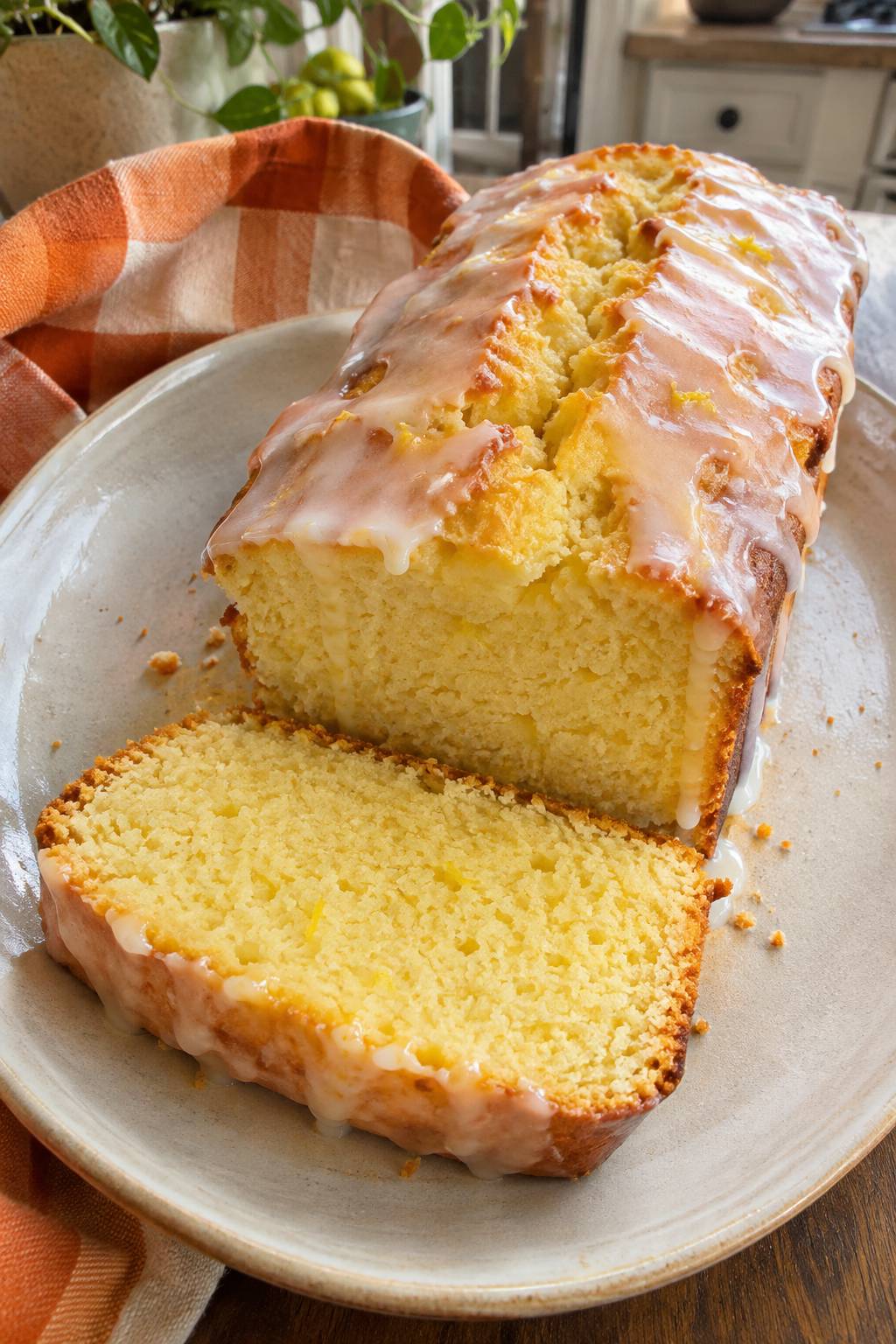
This lemon pound cake has the buttery richness you want from a classic loaf, with fresh lemon zest in the batter and a thick lemon glaze over the top. The crust turns golden while the inside stays dense and tender. A finishing sprinkle of zest gives the glazed surface a fresh lemon accent.
The appeal is in that balance: a substantial crumb that slices neatly, a buttery flavor, and a bright glaze that drips down the sides. As you bake, paying attention to the butter, the mixing, and the cake’s doneness helps you protect that texture.
Build lemon flavor into the buttery batter
Fresh lemon appears in several parts of this cake, each with a distinct role. Finely grated zest flavors the batter, lemon juice joins the sour cream, and more juice gives the powdered sugar glaze its lemon flavor. The zest scattered over the finished loaf carries that flavor through to the top.
Rub the zest into the granulated sugar until the mixture smells fragrant. This is a useful sensory cue before you add the softened unsalted butter. When beating them together, look for a pale, fluffy mixture, and scrape the bowl so everything mixes evenly.
Mix for a dense, tender crumb
Pound cake should feel substantial without seeming dry or packed. Start with softened butter and room-temperature eggs and sour cream, as specified on the recipe card. Incorporate each egg fully, scraping the bowl as needed so the batter stays evenly mixed.
Measure all-purpose flour by spooning it into the measuring cup and leveling the surface. Scooping or packing it can leave you with excess flour and a dry cake. When alternating the whisked dry ingredients with the sour cream mixture, keep the mixer on low and stop once combined. A brief fold with a spatula catches flour hiding at the bottom without prolonged mixing.
Read the crust and check the center
The golden crust is part of this loaf’s character, and a split along the center is normal as the cake rises and its surface sets. That crack alone does not tell you whether the inside has finished baking. Follow the recipe card’s baking guidance, including the loose foil tent.
Check the center with a wooden skewer. A clean skewer or a few moist crumbs indicates doneness; wet batter means the cake needs further baking. Pay attention to that distinction rather than relying on crust color alone.
Keep the lemon glaze thick on the loaf
The glaze should be smooth and thick but pourable, with enough body to sit on the surface while dripping down the sides. Whisk the powdered sugar and fresh lemon juice thoroughly, using the recipe card’s amounts.
A completely cool loaf is essential here. Glazing a warm cake can keep the coating from staying thick on top. Finish with the reserved lemon zest, then follow the recipe card’s guidance for letting the glaze set slightly before slicing.
Frequently Asked Questions
Is the crack on top a problem?
A center split is normal for this pound cake as the loaf rises and the surface sets. You should still check the middle with a wooden skewer, because the crack does not establish whether the batter underneath is baked.
How can I avoid a dry pound cake?
Pay close attention to how you measure the flour: spoon it into the cup and level it instead of packing it down. Keep the final mixing brief, and use the skewer test alongside the recipe card’s baking guidance.
Why did my glaze run off the cake?
Check that your loaf was completely cool and that the glaze was thick but pourable. Warm cake can prevent the glaze from staying thick on the surface. Follow the powdered sugar and lemon juice amounts on the recipe card.
Recipe
Lemon Pound Cake with Glaze
This buttery lemon pound cake has a golden crust, a dense, tender crumb and a thick lemon glaze that drips down the sides. Fresh lemon zest flavors the batter and finishes the top.
- Course
- Dessert
- Cuisine
- American
- Difficulty
- Easy
- Servings
- 12 slices
- Prep time
- 25 mins
- Cook time
- 1 hr 5 mins
- Total time
- 3 hr 35 mins
- Calories
- 395 kcal
Ingredients
Lemon Pound Cake
Lemon Glaze
Instructions
Lemon Pound Cake
Preheat the oven to 350°F with a rack in the center. Grease a 9x5-inch loaf pan with 1 tsp butter. Line the bottom and two long sides with parchment paper, leaving an overhang for lifting.
Combine the granulated sugar and 2 tbsp lemon zest in a large bowl. Rub them together with your fingertips until fragrant. Add the softened butter and beat with an electric mixer on medium speed for 4 minutes, until pale and fluffy. Scrape down the bowl.
Beat in the eggs one at a time, mixing until incorporated after each addition and scraping down the bowl as needed.
Whisk the flour, baking powder and salt together in a separate bowl. Stir the sour cream and 2 tbsp lemon juice together in a small bowl. On low speed, add the flour mixture in three additions, alternating with the sour cream mixture in two additions. Begin and end with the flour mixture, mixing just until combined. Fold the batter briefly with a spatula to incorporate any flour at the bottom.
Spread the batter evenly in the prepared pan. Bake for 45 minutes, then loosely tent the top with foil. Bake for another 20 minutes, for a total of 65 minutes, until the top is golden and a wooden skewer inserted into the center comes out clean or with a few moist crumbs. If wet batter remains, continue baking as needed.
Cool the cake in the pan for 15 minutes. Lift it out using the parchment, remove the paper and set the cake on a wire rack. Cool for another 90 minutes, or until completely cool.
Lemon Glaze
Whisk the powdered sugar and 2 tbsp lemon juice until smooth and thick but pourable. Place the cooled loaf on a serving platter and spoon the glaze over the top, letting it drip down the sides. Sprinkle with 1 tsp lemon zest. Let stand for 20 minutes to allow the glaze to set slightly before slicing.
Notes
- Measure the flour by spooning it into the measuring cup and leveling the top; packing it into the cup can make the cake dry.
- A split down the center is normal as the loaf rises and its surface sets.
- Glaze the cake only after it has cooled completely so the glaze stays thick on the surface.
- Store covered at room temperature for up to 3 days. Freeze unglazed slices, tightly wrapped, for up to 2 months.
Recipe: https://naileditrecipes.co/lemon-pound-cake-with-glaze/