Mastering Glazed Pecan Salmon and Zucchini
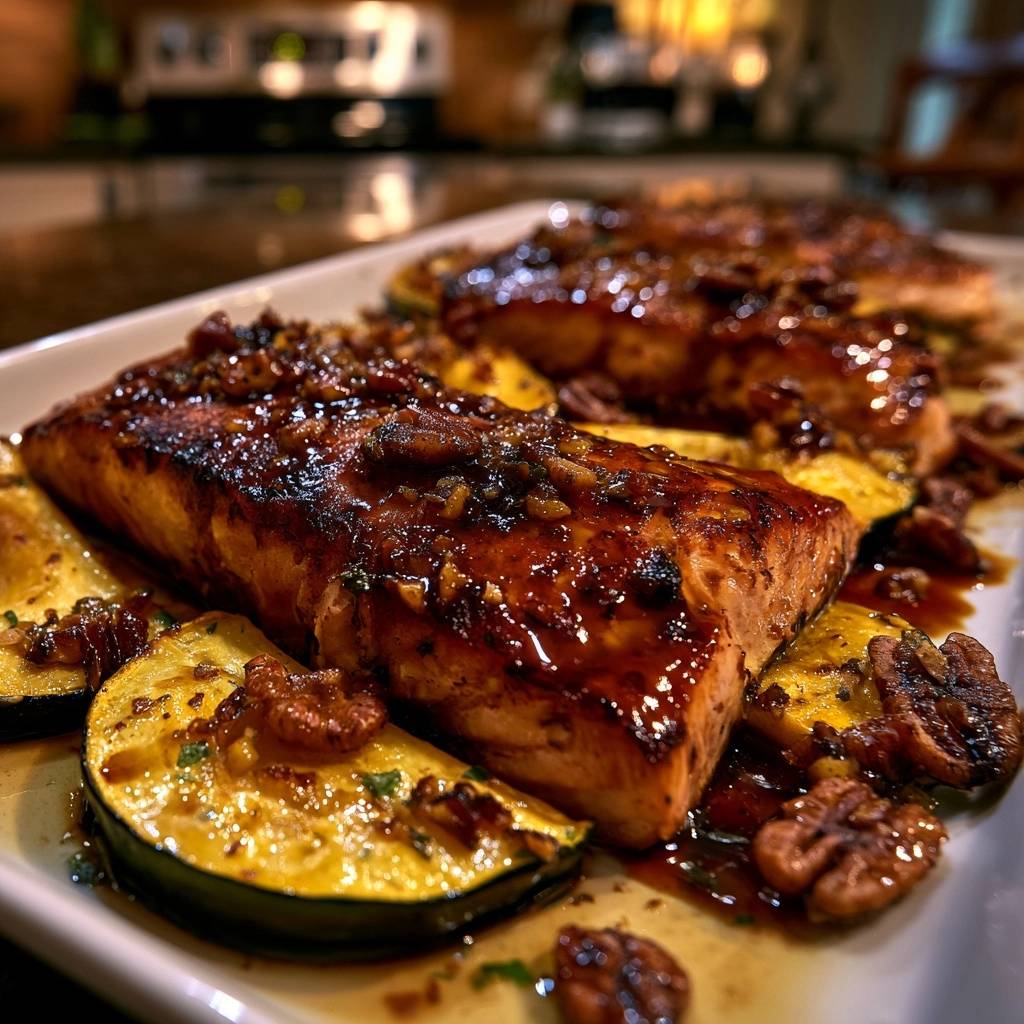
Stop settling for chalky, overcooked salmon that feels like a chore to eat. Most home cooks struggle with fish because the window between “perfectly translucent” and “dry as a bone” is incredibly small. This recipe changes the game by using the “Glaze-Sear” method, a professional technique that creates a moisture-locking barrier around the protein.
By searing the salmon with a thick honey-soy reduction and finishing it atop a bed of zucchini, you create a protective environment for the fish. The zucchini acts as a thermal buffer, preventing the bottom of the fillets from toughening while they absorb the savory drippings. You get a beautiful contrast between the earthy crunch of toasted pecans and the buttery, tender flakes of the salmon.
The secret to this dish’s success is the initial skillet sear. You aren’t trying to cook the fish through at this stage; you’re simply building a foundation of flavor through the Maillard reaction. This quick blast of heat, followed by a gentle oven finish, ensures the center remains succulent while the exterior develops a rich, mahogany glaze that clings to every bite.
The Science of Thermal Buffering with Zucchini
Placing your salmon directly on a metal baking sheet often leads to overcooked bottoms before the top is caramelized. Using zucchini rounds as a “rack” is a functional culinary choice that transforms the texture of the meal. As the zucchini roasts, it releases a small amount of steam that keeps the underside of the fish moist and delicate.
Furthermore, the zucchini rounds act as a sponge for the honey-soy glaze and the natural fats dripping from the salmon. Instead of the juices burning on a hot pan, they season the vegetables from the inside out. This creates a cohesive flavor profile where the side dish is just as delicious as the main protein.
Essential Components for Glazed Pecan Salmon and Zucchini
For this recipe, you’ll want four 6-ounce salmon fillets. While wild-caught salmon offers a robust, lean flavor, farmed Atlantic salmon provides a higher fat content that is very forgiving for beginners. I recommend using skinless fillets here so the glaze can penetrate the fish from all sides, creating a more uniform flavor experience.
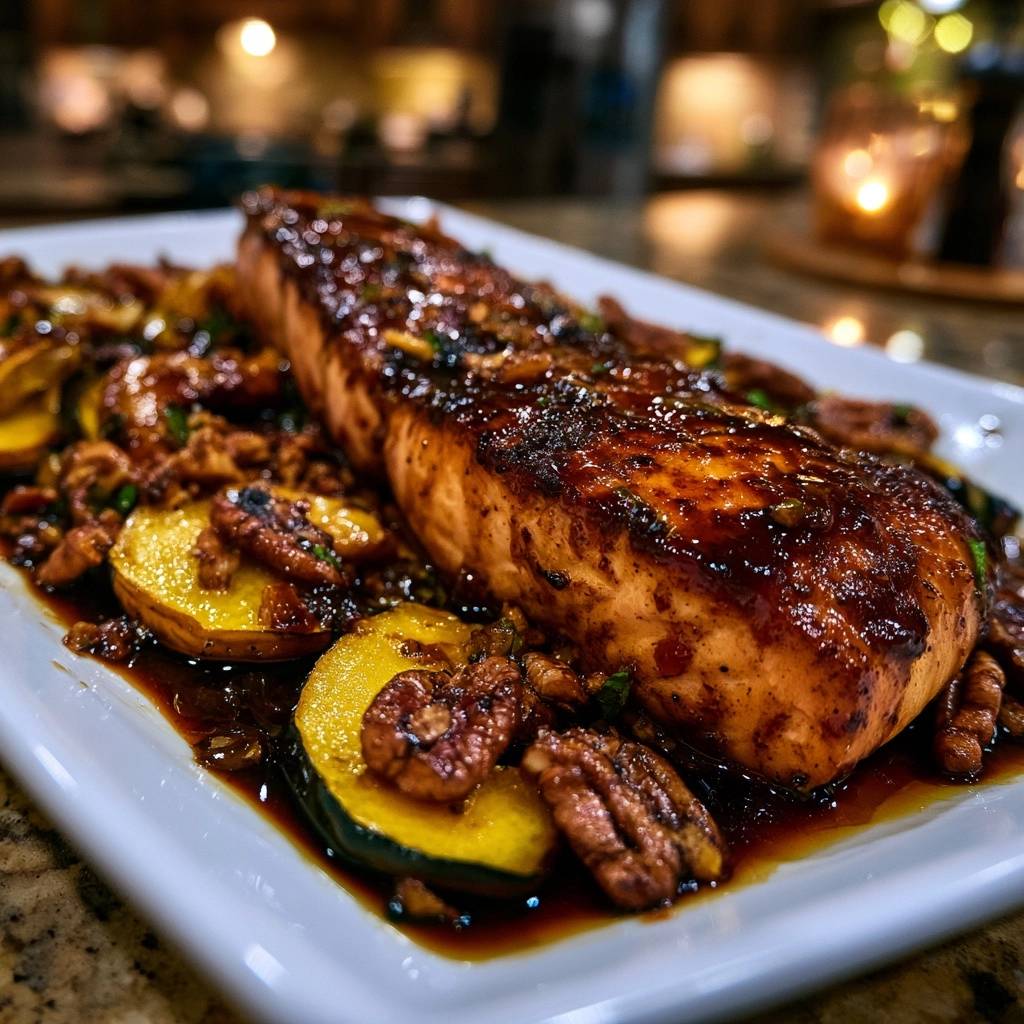
If you choose wild-caught varieties like Sockeye or Coho, keep in mind they cook faster due to their lower fat levels. Regardless of the variety, ensure the fillets are of uniform thickness. This prevents the thinner tail pieces from drying out while the thicker center-cuts are still reaching the ideal temperature.
Selecting and Prepping Fresh Zucchini
Look for medium-sized zucchini that feel heavy for their size and have a vibrant, unblemished skin. Avoid the massive, “baseball bat” sized zucchini often found at farmers’ markets; these tend to be watery and have large, tough seeds. Smaller zucchini have a tighter cell structure that holds up better under heat.
Slicing the zucchini into 1/2-inch rounds is the “sweet spot” for timing. If you slice them too thin, they will turn into mush before the salmon is finished. At half an inch, they maintain a slight bite—what chefs call al dente—providing a fresh, green contrast to the rich pecan crust.
The Anatomy of the Honey-Soy Glaze
This glaze is a masterclass in balanced flavor chemistry. The honey provides the necessary sugars for rapid caramelization, while the soy sauce brings deep umami and saltiness. Dijon mustard acts as an emulsifier, binding the oil and honey together so the sauce doesn’t break or slide off the fish.
In addition to the base, smoked paprika adds a subtle wood-fired depth without requiring a grill. If you prefer a bit of a kick, the red pepper flakes provide a gentle hum of heat that cuts through the sweetness of the honey. It’s a complex, syrupy reduction that thickens quickly in the pan to coat the salmon perfectly.
Why Pecan Texture Matters
Texture is the hallmark of a great dish, and pecans provide the perfect “shatter” against the soft fish. Using a mix of roughly chopped pecans and a few whole halves creates visual appeal and varied mouthfeel. The natural oils in the pecans toast as the salmon finishes in the oven, releasing a nutty aroma that complements the honey.
Think of this pecan layer as a grain-free alternative to breadcrumbs. It provides a satisfying “crust” that mimics a traditional breading but with much more flavor and healthy fats. Pressing them firmly into the wet glaze is the key to making sure they stay put during the transition from skillet to oven.
Step-by-Step: Executing the Glaze-Sear Method
Start by preheating your oven to 400°F. You want a hot environment so the zucchini begins to soften immediately. Tossing the zucchini in olive oil, salt, and pepper before the 5-minute “head start” roast ensures the vegetables are seasoned and partially cooked before the salmon joins them.
While the zucchini is in the oven, focus on the salmon. Use paper towels to pat the fillets bone-dry. If there is moisture on the surface of the fish, it will steam in the pan rather than sear, and you’ll miss out on that golden-brown crust that holds the glaze in place.
Achieving the Perfect Skillet Sear
Heat your olive oil until it is shimmering but not smoking. When you place the salmon in the pan, you should hear a loud, immediate sizzle. If the pan isn’t hot enough, the fish will stick. Resist the urge to move the fillets for at least two minutes; this allows the crust to form and naturally release from the pan.
Once you add the first half of the glaze, the sugar in the honey will start to bubble and thicken almost instantly. Turn the fillets quickly to coat them. This 30-second window is where the flavor is locked in. Remove the pan from the heat immediately to prevent the honey from scorching and becoming bitter.
Applying the Glaze and Nut Crust
Carefully transfer the seared salmon onto the pre-roasted zucchini rounds. Spoon the remaining glaze from the skillet over the top of each fillet. This extra layer of sauce acts as the “glue” for your pecans. It’s important to do this while the glaze is still warm and tacky.
Take your chopped pecans and press them into the top of the fish with the back of a spoon or clean fingers. You want them to be embedded in the glaze. If you just sprinkle them on, they will likely fall off when you try to plate the dish later. The goal is a solid, crunchy canopy over the tender salmon.
The Final Oven Finish and Resting Period
Slide the pan back into the oven for 6 to 8 minutes. During this time, the glaze will transform into a dark, rich mahogany shell. Watch for the pecans to turn a shade darker; this indicates the oils have been released and the nuts are toasted. The salmon should feel firm to the touch but still have a slight give.
Once out of the oven, let the salmon rest for at least 2 minutes. This is a non-negotiable step. Resting allows the muscle fibers to relax and the juices to redistribute. If you cut into it immediately, the moisture will run out onto the plate, leaving you with the dry texture we worked so hard to avoid.
Avoiding Common Salmon Preparation Mistakes
Have you ever seen white, cloudy gunk seeping out of your salmon? That’s albumin, a protein that pushed to the surface because the fish was cooked too fast or at too high a temperature. While it’s safe to eat, it’s a sign of moisture loss. The zucchini buffer and the glaze-sear method significantly reduce the appearance of albumin.
Another common pitfall is over-crowding the skillet during the searing phase. If the fillets are touching, the temperature of the pan drops, and the fish will release water. This results in a grey, boiled appearance rather than a crisp sear. Work in batches if your skillet isn’t large enough to give each fillet an inch of space.
Flavor Variations and Ingredient Swaps
If you don’t have pecans on hand, walnuts make an excellent substitute as they have a similar fat content and crunch. Sliced almonds also work well, though they provide a more delicate texture. For those who prefer a different sweetness profile, maple syrup can replace the honey, offering a more “woodsy” flavor that pairs beautifully with the smoked paprika.
To add a bright, citrusy note, you can whisk a teaspoon of orange zest into the glaze. If you want more heat, freshly grated ginger added to the honey-soy mixture provides a sharp, spicy undertone that cuts through the richness of the salmon. These small tweaks allow you to customize the dish to your specific palate.
Optimal Side Dish Pairings
Since the zucchini provides a built-in vegetable side, you only need a light starch to complete the meal. A wild rice pilaf or a simple quinoa tossed with lemon zest and fresh herbs works beautifully. The grains help soak up any extra honey-soy glaze that pools at the bottom of the plate.
If you want to keep the meal low-carb, a bitter arugula salad with a light lemon vinaigrette is a fantastic choice. The peppery bite of the arugula cuts through the sweetness of the glaze and the richness of the pecans, refreshing your palate between bites. A few sprigs of fresh parsley over the top of the salmon also add a necessary pop of brightness.
Troubleshooting Your Glazed Pecan Salmon and Zucchini
Can I use frozen salmon fillets for this recipe?
Yes, you can use frozen salmon, but you must thaw it completely in the refrigerator overnight before cooking. Once thawed, it is vital to pat the fillets extremely dry with paper towels. Frozen fish often releases more moisture than fresh, so if you don’t dry it thoroughly, the glaze won’t stick and the sear will be unsuccessful.
How do I prevent the honey glaze from burning in the skillet?
Honey has a high sugar content and can burn quickly over high heat. To prevent this, only add the glaze to the skillet after the initial sear is done and you have reduced the heat or are ready to remove the pan. The glaze only needs about 30 seconds in the hot pan to thicken; any longer and it may start to smoke and turn bitter.
My pecans are falling off the fish; what did I do wrong?
This usually happens if the glaze is too thin or if the pecans weren’t pressed firmly enough into the fish. Ensure your glaze has a syrupy consistency before spooning it over the salmon. If it seems too watery, simmer it in the skillet for an extra minute to reduce it further. Always press the nuts into the glaze while it is still warm and sticky.
Can I make this recipe in an air fryer?
You can certainly adapt this for an air fryer. Air fry the seasoned zucchini at 400°F for 5 minutes first. Then, place the glazed and pecan-crusted salmon (skip the skillet sear if you prefer) on top of the zucchini and air fry at 380°F for 8-10 minutes. Note that you won’t get the same deep Maillard crust as the skillet sear, but it is a great time-saving alternative.
How do I store and reheat leftovers without drying out the fish?
Store leftovers in an airtight container in the refrigerator for up to 2 days. To reheat, avoid the microwave, which will turn the salmon rubbery. Instead, place the salmon and zucchini in a baking dish, add a splash of water or broth to the bottom, cover tightly with foil, and warm in a 275°F oven for about 10-15 minutes until just heated through.
Storage and Meal Prep Guidelines
This dish is best enjoyed fresh because the pecans are at their crispiest and the zucchini is perfectly tender. However, it can be used for meal prep if handled correctly. If you plan to eat it the next day, store the salmon and zucchini together so the vegetables stay moist. I do not recommend freezing this dish; zucchini has a very high water content and will become mushy and unappealing once thawed.
When reheating, the goal is to preserve the internal moisture of the fish. If you must use a microwave, use the 50% power setting and heat in short 30-second bursts. Adding a damp paper towel over the container can also help create a small steam chamber, preventing the honey glaze from becoming too hard or the fish from drying out.
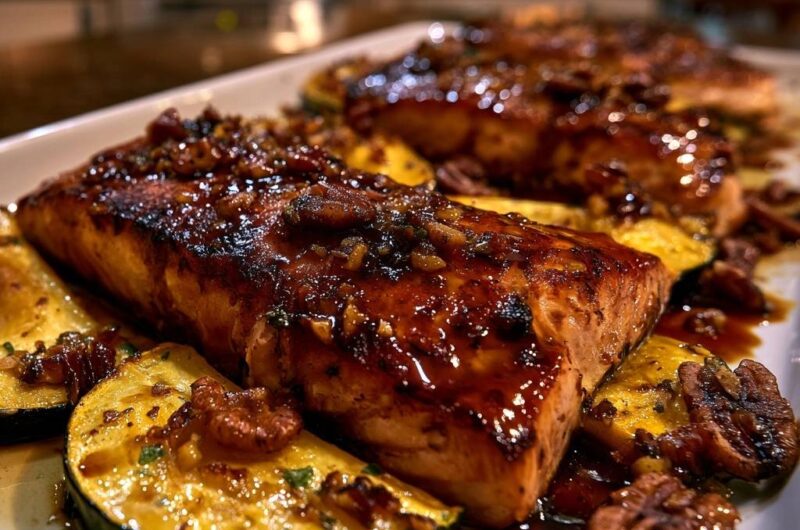
Glazed Pecan Salmon and Zucchini
Course: Main CourseCuisine: AmericanDifficulty: easy4
servings10
minutes15
minutes25
Minutes435
kcalAmerican
Ingredients
4 salmon fillets (6 oz each), skin removed
2 medium zucchini, sliced into 1/2-inch thick rounds
3/4 cup pecans, roughly chopped (reserve some halves for garnish)
1/3 cup honey
3 tablespoons soy sauce
1 tablespoon Dijon mustard
3 cloves garlic, minced
2 tablespoons olive oil, divided
1/2 teaspoon smoked paprika
1/4 teaspoon red pepper flakes (optional)
Salt and black pepper to taste
Fresh parsley, finely chopped for garnish
Directions
- Preheat your oven to 400°F (200°C). In a small bowl, whisk together the honey, soy sauce, Dijon mustard, minced garlic, smoked paprika, and red pepper flakes.
- In a large bowl, toss the zucchini rounds with 1 tablespoon of olive oil, salt, and pepper. Arrange them in a single layer on a large rimmed baking sheet or in a large oven-safe skillet. Roast the zucchini alone for 5 minutes to give them a head start.
- While zucchini roasts, pat the salmon fillets completely dry with paper towels. Season both sides lightly with salt and pepper.
- Heat the remaining 1 tablespoon of olive oil in a large non-stick skillet over medium-high heat. Once the pan is shimmering, place the salmon fillets in the pan. Sear for 2 minutes until a light golden crust forms.
- Pour half of the honey-soy glaze into the skillet with the salmon. Turn the fillets to coat them thoroughly in the bubbling sauce for 30 seconds. Remove from heat.
- Remove the baking sheet from the oven. Place the seared salmon fillets directly on top of the zucchini rounds. Spoon the remaining glaze from the skillet over the fish.
- Press the chopped pecans and pecan halves firmly into the glaze on top of each fillet.
- Return the pan to the oven and bake for 6 to 8 minutes. The glaze will caramelize into a dark, rich mahogany shell, and the pecans will toast in the honey.
- Remove from the oven when the salmon is just opaque and flakes with a fork. Let rest for 2 minutes. Garnish with fresh parsley and serve the salmon and zucchini together, drizzling any extra pan juices over the top.
Notes
- The zucchini acts as a thermal buffer to prevent the bottom of the fish from toughening while absorbing savory drippings.