Mastering Savory Braised Beef Rice Bowls
There is nothing quite as disappointing as a rice bowl that turns into a soggy, unappealing mess halfway through your meal. You want that perfect contrast between deeply caramelized, savory beef and fluffy, individual grains of rice that hold their own under a rich glaze. Most home cooks struggle with moisture control, resulting in a dish where the sauce drowns the rice instead of coating the meat.
The secret to a restaurant-quality bowl lies in the specific moisture management of the beef and the preparation of the rice base. By controlling the viscosity of your sauce and the hydration of your grains, you can create a dish that feels indulgent yet structurally sound. It’s about building layers of umami that sit on top of the rice rather than soaking through it.
I’ve found that the absolute best way to ensure success is to treat your rice as a foundation rather than an afterthought. If you use freshly steamed, wet rice, it will act like a sponge and lose its bite immediately. Instead, we use a drying technique that prepares the starch to handle the heavy, jam-like braised beef without collapsing into mush.
The Science of Moisture Management in Rice Bowls
Understanding how rice interacts with liquid is the first step toward a better bowl. Rice is primarily composed of starch granules that expand and soften when hydrated. When you pour a thin sauce over hot, freshly cooked rice, the grains continue to absorb moisture, leading to a bloated and soft texture known as “texture collapse.”
Short-grain and medium-grain rice varieties contain a higher ratio of amylopectin, which makes them naturally stickier. While this stickiness is desirable for eating with chopsticks, it also makes the rice more prone to becoming gummy if excess liquid is introduced. To combat this, we focus on the surface tension of the sauce.
A well-executed braise should have enough viscosity to cling to the protein. By creating a thick glaze, you ensure the sauce stays suspended on the surface of the rice grains. This prevents the liquid from weeping into the center of the bowl, preserving the structural integrity of the meal from the first bite to the last.
Why Day-Old Rice Prevents Texture Collapse
Using day-old rice isn’t just a convenience; it’s a culinary necessity for the perfect bowl. As rice cools, it undergoes a process called retrogradation, where the starch molecules realign into a more rigid structure. This process effectively creates a protective “skin” on each grain.
This hardened exterior is much more resistant to liquid penetration. When the hot, savory beef is spooned over chilled or room-temperature rice, the grains stay distinct. If you don’t have day-old rice, spreading fresh rice on a baking sheet to let the steam escape for 20 minutes is a vital workaround.
The Role of Cornstarch in Sauce Viscosity
A cornstarch slurry is the ultimate tool for moisture management in this recipe. Unlike a flour roux, cornstarch creates a translucent, glossy finish that doesn’t dull the vibrant colors of the dark soy and oyster sauce. It acts as a stabilizer, trapping the beef broth and fats in a suspended state.
This prevents the “weeping” effect where water separates from the solids in a sauce. By simmering the slurry for a full two minutes, you cook out the starchy taste and achieve a “glaze-style” consistency. This ensures the flavor stays on the beef where it belongs.
Essential Components for Savory Braised Beef Rice Bowls
Every ingredient in this dish serves a specific functional purpose beyond just adding flavor. When you’re building a bowl with such concentrated flavors, the quality of your aromatics and the fat content of your meat will dictate the final mouthfeel. You want a balance of salt, sugar, and fat that feels cohesive.
Don’t skip the green onions or the eggs, as they provide the necessary textural contrast. The onions offer a sharp, fresh crunch that cuts through the richness of the beef, while the hard-boiled eggs add a creamy, mild element. Together, these components create a complete sensory experience.
Selecting the Right Beef Fat Ratio
For this braise, an 80/20 ground beef blend is the gold standard. You need that 20% fat content to properly fry the garlic and ginger, as the fat carries those fat-soluble flavor compounds throughout the meat. Leaner blends often result in “rubbery” beef crumbles that feel dry in the mouth.
However, the trick is to render that fat out during the initial searing phase and then drain it. This leaves you with beef that is deeply infused with flavor but isn’t greasy. Draining the excess liquid at this stage is the most important step in preventing a watery sauce later on.
The Umami Trinity: Dark Soy, Oyster Sauce, and Ginger
The deep, mahogany color of this dish comes specifically from dark soy sauce, which is thicker and less salty than standard soy sauce. It provides a molasses-like depth that is essential for that “braised” look. Oyster sauce complements this by adding a savory, slightly sweet funk and natural thickness.
While fresh ginger is great, ground ginger works exceptionally well here because it distributes evenly into the meat fibers. It provides a consistent, warm heat that doesn’t overwhelm the palate. This combination creates a “jam-like” coating that makes the beef incredibly addictive.
Step-by-Step: Achieving the Perfect Beef Sear
Start by heating your oil until it’s shimmering but not smoking. When you add the ground beef, resist the urge to break it up immediately. Let it sit for at least two minutes to develop a deep, brown crust. This is the Maillard reaction in action, creating complex flavors you can’t get from simmering alone.
Once you have a good sear, break the meat into small, uniform crumbles. You are looking for the edges to become slightly crispy. This texture is vital because it provides a “bite” that stands up against the soft rice. If the meat looks grey instead of brown, your pan wasn’t hot enough.
After the beef is browned, you must drain the pan. Even if it seems like you’re pouring away flavor, you’re actually removing excess moisture and grease that would prevent the sauce from emulsifying. A clean pan ensures the braising liquid can coat the meat perfectly without separating.
Developing the Deep Umami Braising Liquid
Once the beef is prepped, add your diced onions and garlic. You want to sauté them in the small amount of residual fat until they are translucent. Be careful not to burn the garlic; it should smell sweet and fragrant, not bitter. This creates the aromatic base for your liquid ingredients.
Stir in the soy sauce, oyster sauce, sugar, ginger, and broth. Lower the heat to a gentle simmer. It is crucial to leave the pan uncovered during this 15-minute window. This allows the steam to escape, which naturally concentrates the flavors and reduces the volume of the liquid.
As the liquid reduces, the beef will begin to absorb the dark pigments and savory notes of the sauce. You’ll notice the aroma changing from sharp and salty to mellow and rich. This slow simmer is what transforms simple ground beef into a luxurious, braised topping.
The Glazing Technique for Restaurant-Quality Gloss
The final transformation happens when you introduce the cornstarch slurry. Before adding it, give the slurry a quick stir to ensure the starch hasn’t settled at the bottom. Pour it into the simmering beef and stir constantly. You will see the sauce turn from a thin liquid into a thick, glossy glaze almost instantly.
Continue to simmer for another two minutes. This “sets” the glaze and ensures it has a dark, jam-like appearance. The sauce should be thick enough that when you pull a spoon through the pan, it leaves a clear trail for a second. This is the sign that your Savory Braised Beef Rice Bowls will have the perfect consistency.
Assembling the Bowl for Maximum Visual Impact
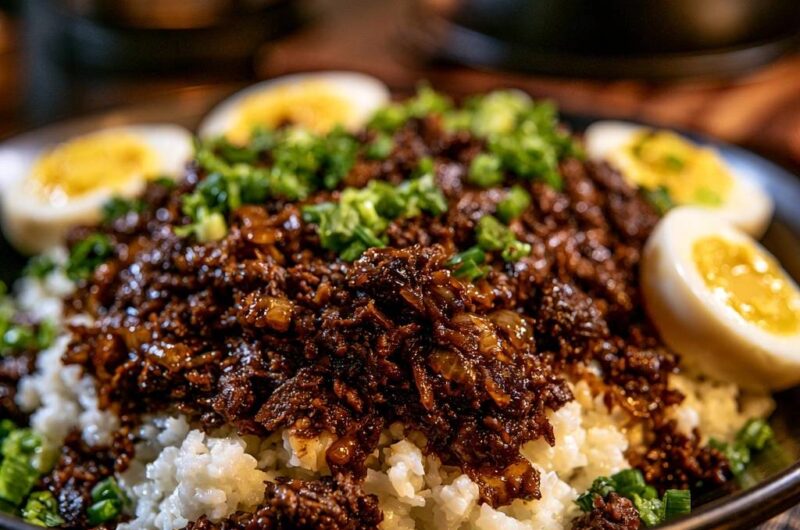
Plating is where you ensure the moisture management pays off. Start by mounding your fluffed rice in the center of the bowl. This creates a “hill” that allows the beef to sit prominently on top. If you spread the rice flat, the sauce has more surface area to soak in, which we want to avoid.
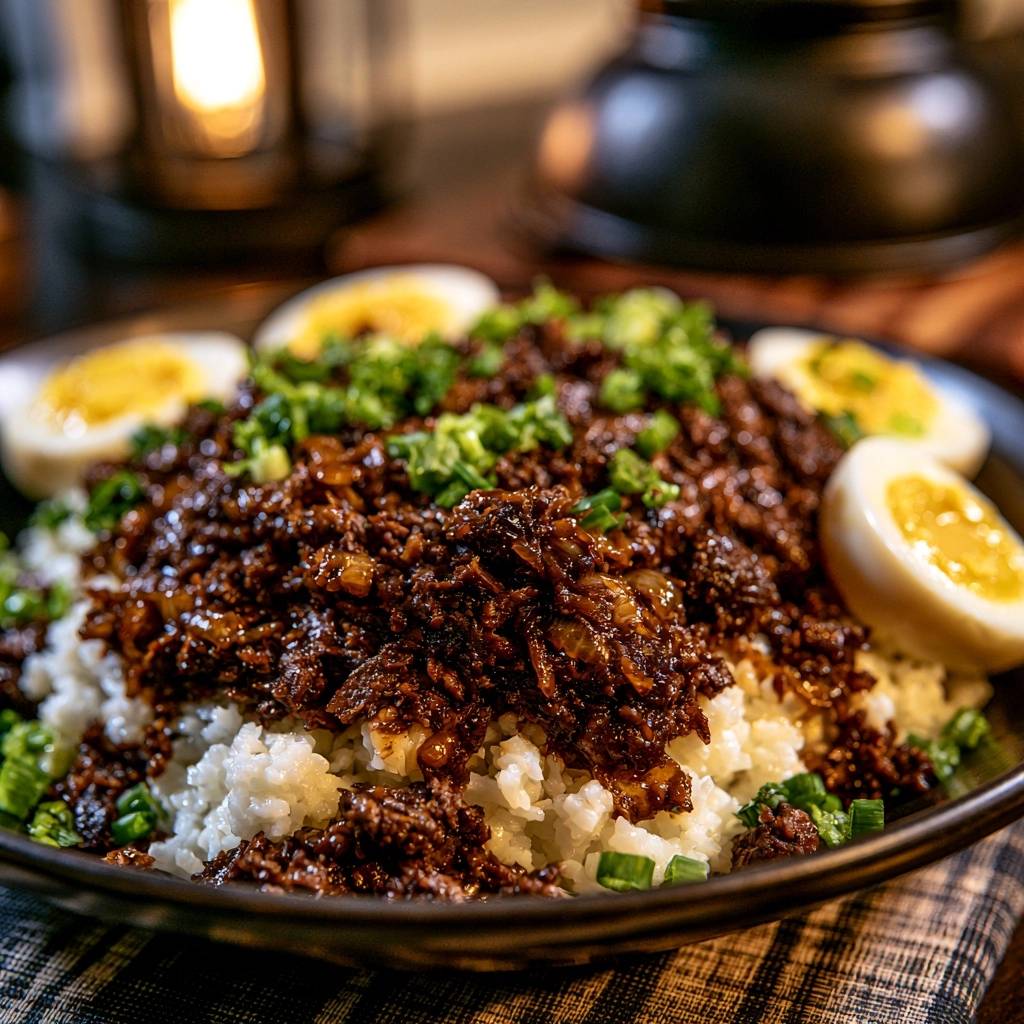
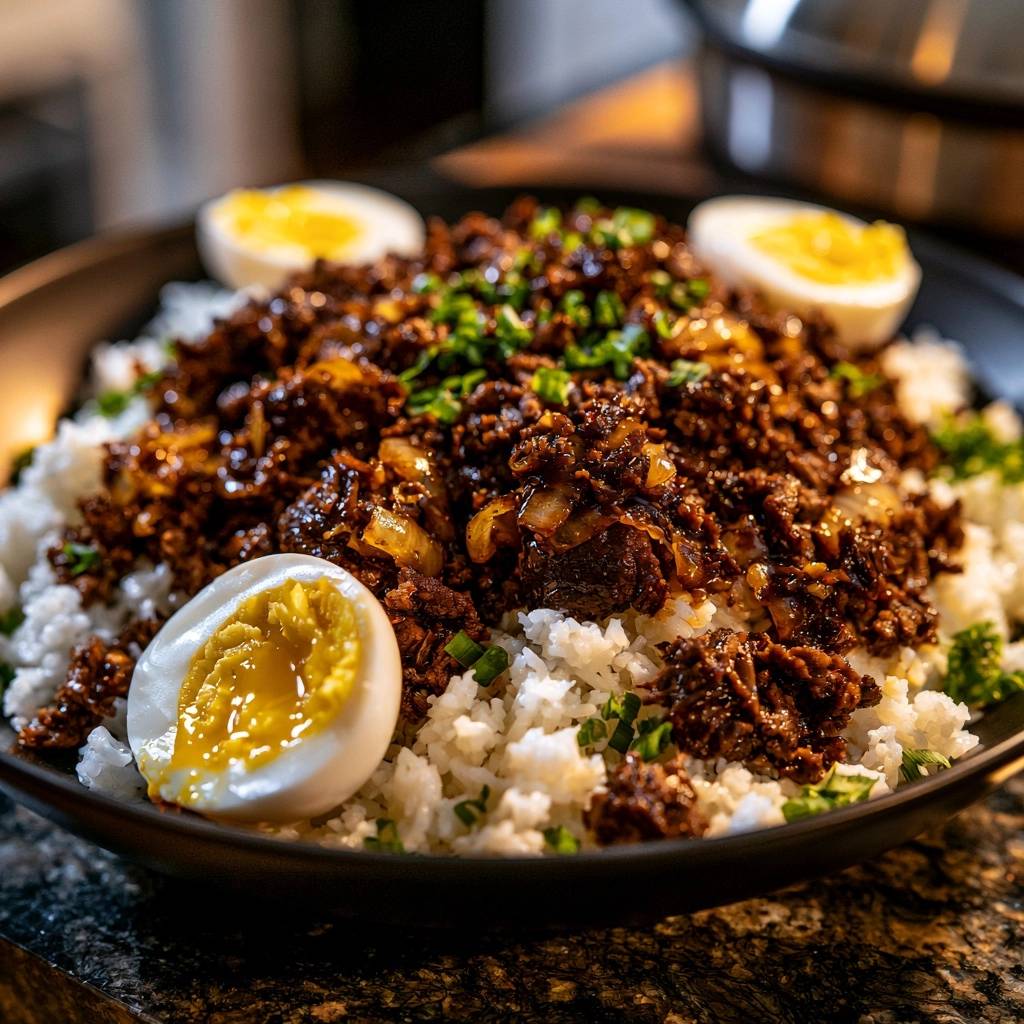
Spoon the beef mixture generously over the peak of the rice. The thick glaze should sit beautifully on the grains. Place your halved hard-boiled eggs around the perimeter, which adds a bright pop of color against the dark beef. The white and yellow of the eggs make the dish look professionally prepared.
Finally, go heavy on the green onions. Don’t just sprinkle a few; create a vibrant green ring around the base of the beef. The freshness of the onions provides a necessary acidic counterpoint to the heavy, savory beef. It brightens the entire dish and adds a final layer of crunch.
Avoiding Common Braised Beef Mistakes
If you find your sauce has become too salty, don’t panic. You can balance it by adding a small splash of water and an extra pinch of brown sugar. The sugar helps mellow the saltiness of the soy sauce without thinning the glaze too much. A tiny squeeze of lime juice can also help brighten a sauce that feels too heavy.
If your rice is still too soft despite your best efforts, try the “oven-drying hack.” Spread the cooked rice on a tray and pop it into a 300°F oven for about 5 to 7 minutes. This will dry out the surface of the grains quickly without cooking the interior further, giving you that desired “firm” base.
A “broken” sauce, where the oil separates from the liquid, usually happens if the heat was too high after adding the slurry. To fix this, whisk in a teaspoon of warm water very vigorously. This can often help re-emulsify the glaze and bring back that smooth, glossy finish you’re looking for.
Flavor Variations and Regional Swaps
While the classic version is hard to beat, you can easily pivot the flavor profile. For a spicy kick, stir in a tablespoon of chili crisp or sriracha during the simmering phase. This adds heat and a lovely red tint to the sauce that pairs perfectly with the savory beef.
If you prefer a “sweet-heat” profile, increase the brown sugar to three tablespoons and add a generous amount of white pepper. This creates a flavor reminiscent of certain Taiwanese street foods. You can also add star anise to the braise for a more traditional, aromatic Chinese five-spice vibe.
To make the bowl more vegetable-forward, sauté some baby bok choy or sliced bell peppers in the pan before adding the beef back in. The vegetables will pick up the dark glaze and provide a nice textural contrast. Just be sure to cook them quickly so they retain their snap.
Make-Ahead Strategies and Storage Logistics
This is an excellent recipe for meal prep, but storage is key. Always store the braised beef and the rice in separate airtight containers. If you store them together, the rice will inevitably absorb the moisture from the beef overnight, resulting in the very sogginess we worked so hard to avoid.
The beef will stay fresh in the refrigerator for up to four days. When reheating, the glaze will likely have thickened into a gelatinous state. Add a tablespoon of water or broth before microwaving or heating on the stovetop to loosen the sauce back into its glossy, pourable form.
For the rice, reheating with a damp paper towel over the top helps “steam” the grains back to life without making them wet. If you are freezing the beef, it holds up remarkably well for up to two months. Just thaw it in the fridge overnight before reheating for the best texture.
Expert Troubleshooting for Rice Bowl Success
Can I use brown rice instead of white?
Yes, you can use brown rice, but keep in mind that it has a much nuttier flavor and a chewier texture. Brown rice actually handles sauce very well because the outer bran layer acts as a natural barrier against moisture. You won’t need to dry it out as much as white rice, but the overall dish will feel “heavier” and more fibrous.
My sauce didn’t thicken; what happened?
This usually happens if the cornstarch slurry wasn’t mixed correctly or if the sauce didn’t reach a high enough temperature. Cornstarch needs to reach a simmer to “activate” its thickening properties. If it’s still thin, mix another half-tablespoon of cornstarch with a tiny bit of water and stir it into the boiling sauce, then let it cook for another minute.
How do I get the eggs perfectly jammy?
For a “jammy” yolk rather than a fully hard-boiled one, lower your eggs into boiling water and cook them for exactly 6 and a half to 7 minutes. Immediately plunge them into an ice bath to stop the cooking. This creates a custard-like center that flows slightly into the beef, adding an extra layer of richness to your bowl.
Is there a substitute for oyster sauce?
If you don’t have oyster sauce, a vegetarian mushroom sauce is the best 1:1 substitute as it provides the same umami and thickness. Alternatively, you can mix one tablespoon of hoisin sauce with one teaspoon of soy sauce. This will be slightly sweeter than the original, so you might want to reduce the added brown sugar slightly.
Why is my beef dry even with the sauce?
This typically occurs if the beef was overcooked during the initial browning phase or if the heat was too high during the 15-minute simmer. You want a gentle bubble, not a rolling boil. If the beef feels dry, ensure you are using an 80/20 fat blend, as the fat is what provides the “juicy” mouthfeel in ground meat preparations.
Optimal Side Dishes for Beef Rice Bowls
Because the braised beef is so rich and savory, you need side dishes that offer acidity and freshness to balance the palate. A simple smashed cucumber salad with rice vinegar and sesame oil is a classic pairing. The cool, crisp cucumbers act as a “reset” for your taste buds between bites of the heavy beef.
Pickled vegetables are another fantastic option. Quick-pickled daikon radish or carrots provide a sharp tang that cuts right through the fat of the 80/20 beef. The crunch of the pickles also complements the soft rice and tender meat, making every mouthful more interesting.
If you want something warm, a light miso broth or a clear ginger soup works wonders. These liquids help cleanse the palate without adding more “weight” to the meal. Serving a side of steamed greens, like gai lan or broccoli with a squeeze of lemon, is also a great way to round out the nutrition of the bowl.
Savory Braised Beef Rice Bowls
Course: Main CourseCuisine: Asian FusionDifficulty: easy4
servings15
minutes45
minutes60
Minutes520
kcalAsian Fusion
Ingredients
1 pound ground beef (80/20 blend for texture)
4 cups cooked short-grain or medium-grain white rice (chilled or room temperature)
4 large eggs, hard-boiled and halved
1 cup green onions, finely chopped (for heavy garnishing)
3 cloves garlic, minced
1 small yellow onion, finely diced
1/4 cup dark soy sauce (for the deep color shown in the image)
2 tablespoons oyster sauce
2 tablespoons brown sugar
1 teaspoon ground ginger
1 tablespoon vegetable oil
1/2 cup beef broth
1 tablespoon cornstarch mixed with 1 tablespoon water (slurry)
Directions
- The key to preventing soggy rice is using rice that has been slightly dried out. Use day-old rice or spread freshly cooked rice on a baking sheet for 20 minutes to let excess steam escape before plating. This creates a firm base that won’t collapse under the beef.
- Heat the vegetable oil in a large skillet over medium-high heat. Add the ground beef and cook until deeply browned and slightly crispy at the edges. Cook until no pink remains and it reaches 160°F (71°C).
- To solve the “watery sauce” problem, drain all excess fat and liquid from the pan once the beef is browned. This ensures the sauce clings to the meat rather than pooling at the bottom of your bowl.
- Add the diced onion and garlic to the beef. Saute for 3 to 4 minutes until the onions are translucent and softened.
- Stir in the dark soy sauce, oyster sauce, brown sugar, ginger, and beef broth. Reduce the heat to low and simmer uncovered for 15 minutes.
- To achieve the thick, glossy glaze seen in the image, stir in the cornstarch slurry. Simmer for an additional 2 minutes until the sauce is thick enough to coat the back of a spoon and looks dark and jam-like.
- Fluff your prepared rice and divide it into four bowls, mounding it slightly in the center.
- Spoon the concentrated beef mixture generously over the top of the rice, allowing the thick glaze to sit on the grains without soaking through.
- Arrange the halved hard-boiled eggs around the edges of the beef. Garnish very generously with the chopped green onions, concentrating them in the center and around the base as shown in the visual.
Notes
- The secret to the anti-soggy rice is moisture management: drying the rice slightly and draining the beef fat before adding the sauce components.