Peanut Butter Fudge
This peanut butter fudge has smooth centers, lightly crumbly edges, and rich peanut flavor. Learn which ingredients and techniques help you get the texture right.
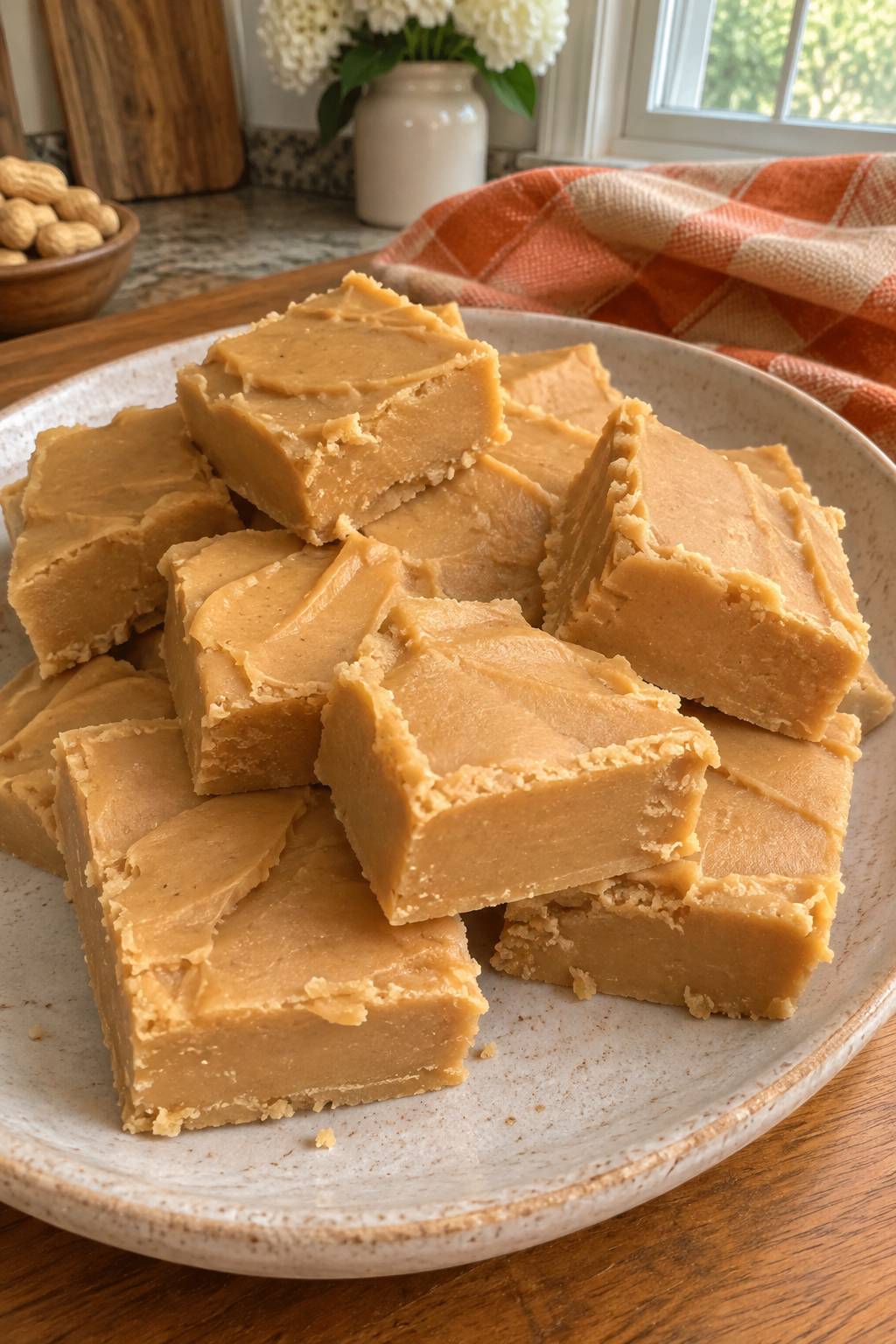
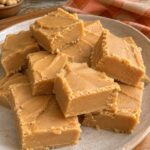
Peanut butter fudge should feel rich and substantial, with a smooth center and edges that crumble lightly when you take a bite. This version brings that balance to a simple stovetop dessert, letting the peanut flavor lead while vanilla bean powder and salt round out the sweetness.
The mixture gets thick, so a little preparation makes it easier to handle. Your biggest advantages are choosing the right peanut butter, sifting the powdered sugar, and having the lined pan ready before you start cooking. Those details help you move comfortably from a warm mixture to an evenly pressed slab.
Choose peanut butter that stays blended
Regular creamy peanut butter is the right choice here. Its uniform consistency helps you start with a smooth mixture. Natural peanut butter that separates can leave the fudge oily or change how firmly it sets, even if you stir the jar before measuring.
Unsalted butter lets the recipe’s added salt control the seasoning. Vanilla bean powder supports the peanut flavor, while salt balances the sweetness. Follow the ingredient forms on the card; this fudge relies on a short list, so each choice matters.
Sift the sugar for a smoother center
Measure the powdered sugar before sifting it, as directed on the recipe card. Sifting breaks up lumps before the sugar meets the warm peanut butter mixture. That preparation matters because the fudge thickens as you stir, making stubborn clumps harder to work out later.
Use a large bowl and a sturdy spoon so you have room and enough leverage to mix firmly. Look for an evenly blended mixture without dry pockets, especially along the bottom and sides of the bowl. Thickness is expected; it does not mean you should add anything to loosen the fudge.
Keep the heat gentle and the pan ready
The stovetop stage is about melting and combining the butter and peanut butter. Keep the heat gentle, stir frequently, and watch for a mixture that is smooth and warm throughout. It should never come to a boil. Use the recipe card’s guidance rather than pushing the heat to hurry things along.
Having your parchment-lined pan ready matters because the thickened mixture needs to be transferred immediately. An overhang gives you something to grip when the fudge is firm. Pressing the mixture into the corners creates an even slab; smoothing only the surface can leave the edges uneven.
Let the texture guide your cuts
The finished fudge should be firm throughout before you try to lift or slice it. Follow both the room-temperature cooling and refrigerator setting stages on the card. A surface that looks set does not necessarily tell you whether the center is ready.
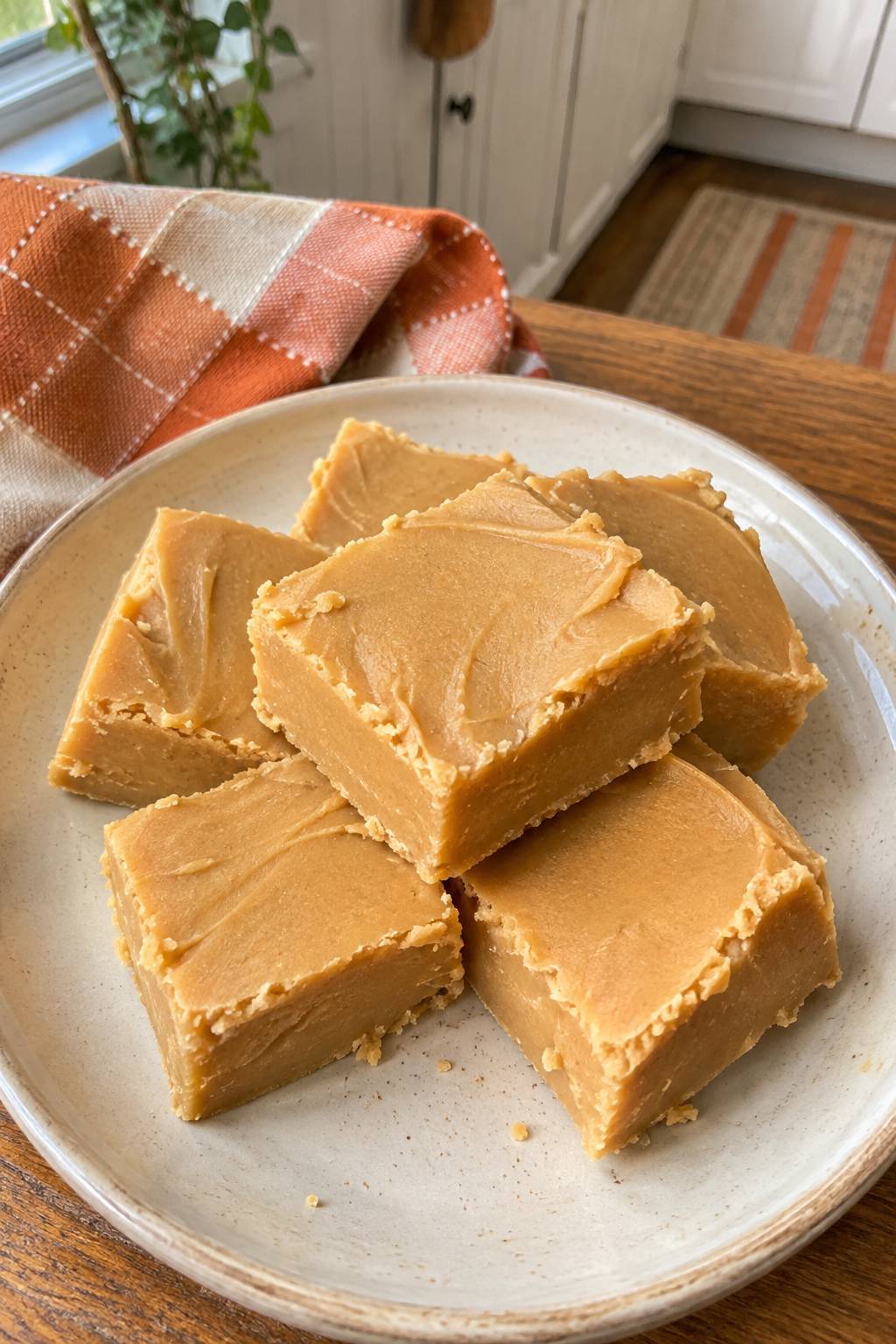
Once firm, the fudge should cut into thick squares with smooth centers and lightly crumbly edges. A sharp knife helps make neat cuts, and wiping the blade between cuts keeps residue from dragging across the next piece.
Frequently Asked Questions
Why did my peanut butter fudge turn out oily?
Check the peanut butter you used. Natural varieties that separate can make this fudge oily and affect its firmness. Regular creamy peanut butter is the recommended choice because it starts with a consistent texture.
Is the fudge mixture supposed to be hard to stir?
Yes, the mixture becomes thick when the warm butter and peanut butter meet the powdered sugar. Use a sturdy spoon and stir firmly, checking for dry patches. Have the prepared pan nearby so you can transfer it immediately.
How can I get cleaner edges when slicing?
Wait until the fudge is firm throughout, then lift it out with the parchment overhang. Use a sharp knife and wipe the blade between cuts. Lightly crumbly edges are part of the intended texture, even with careful slicing.
Recipe
Peanut Butter Fudge
Thick squares of peanut butter fudge have smooth centers, lightly crumbly edges and a rich peanut flavor. A simple stovetop mixture sets in an 8x8-inch pan.
- Course
- Dessert
- Cuisine
- American
- Difficulty
- Easy
- Servings
- 36 pieces
- Prep time
- 10 mins
- Cook time
- 5 mins
- Total time
- 2 hr 15 mins
- Calories
- 140 kcal
Ingredients
Instructions
Line an 8x8-inch baking pan with parchment paper, leaving an overhang on two sides. Sift the powdered sugar into a large bowl.
Combine the butter and peanut butter in a medium saucepan over medium-low heat. Cook, stirring frequently, for 5 minutes, or until melted, smooth and warm throughout. Do not bring to a boil.
Remove from the heat and stir in the vanilla bean powder and salt. Pour over the powdered sugar and stir firmly with a sturdy spoon until no dry pockets remain. The mixture will become thick.
Immediately transfer the mixture to the prepared pan. Press it evenly into the corners and smooth the top with a spatula.
Let cool at room temperature for 30 minutes, then refrigerate for 90 minutes, or until firm throughout.
Lift the fudge out using the parchment overhang. Cut into 36 squares with a sharp knife, wiping the blade between cuts.
Notes
- Use regular creamy peanut butter. Natural peanut butter that separates can make the fudge oily or affect how firmly it sets.
- Sifting the powdered sugar helps it blend evenly into the warm mixture without leaving lumps.
- Store in an airtight container in the refrigerator for up to 2 weeks. Let individual pieces sit at room temperature briefly before serving for a softer texture.
Recipe: https://naileditrecipes.co/peanut-butter-fudge/