Shrimp Pad Thai: Sticky-Free Noodles Recipe
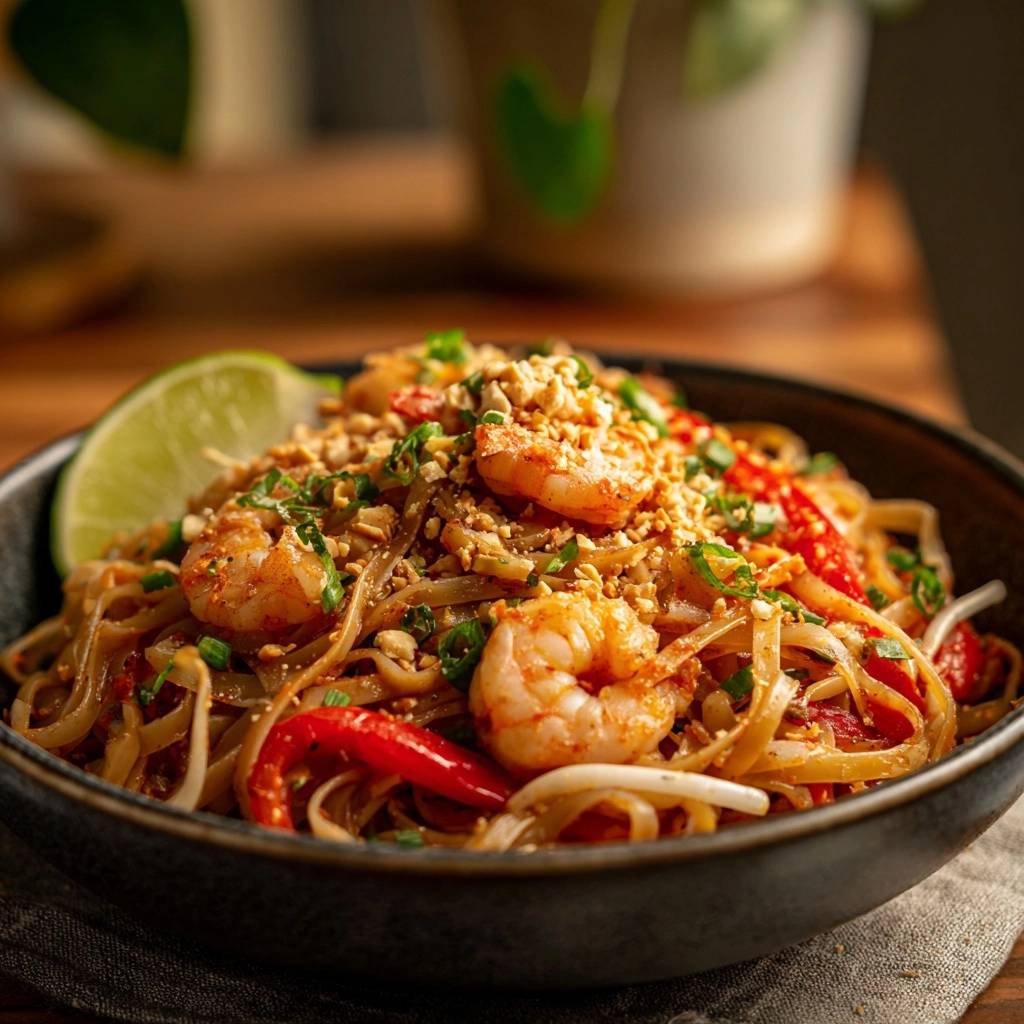
Clumpy, glued-together noodles ruining your Pad Thai attempts? You’re not alone. This Shrimp Pad Thai recipe ends that nightmare with a simple room-temperature soak and oil toss that delivers glossy, separate strands every time. In just 30 minutes, you get restaurant-quality results for 4 servings at about 450 calories each.
However, it’s the juicy shrimp, crisp red peppers, and that perfect sweet-sour-salty-spicy sauce that make it better than takeout. You control the freshness and flavors right in your kitchen. No more soggy disappointments.
Therefore, the real secret lies in prepping those rice noodles just right. Soak them in room-temp water until flexible but firm, then rinse cold and toss with oil. That one move prevents all clumping and locks in the chewy texture you crave.
Shrimp Pad Thai Essential Ingredients Breakdown
Flat Rice Noodles for Perfect Texture
Grab 8 oz of flat rice noodles, the wide ones that mimic authentic Thai chew without snapping. They hold up better than thin varieties during tossing. Dried work great; fresh can get too soft if you’re not careful.
In addition, these noodles release starch that causes stickiness. That’s why our prep beats it every time. Store extras in a cool, dry spot to avoid brittleness.
Juicy Shrimp Selection and Prep
Pick 1 lb of large shrimp, around 16/20 count per pound for plump bites. Peel and devein them yourself for even cooking; pre-peeled often shrinks unevenly. Fresh tastes best, but frozen thaws quickly in cold water.
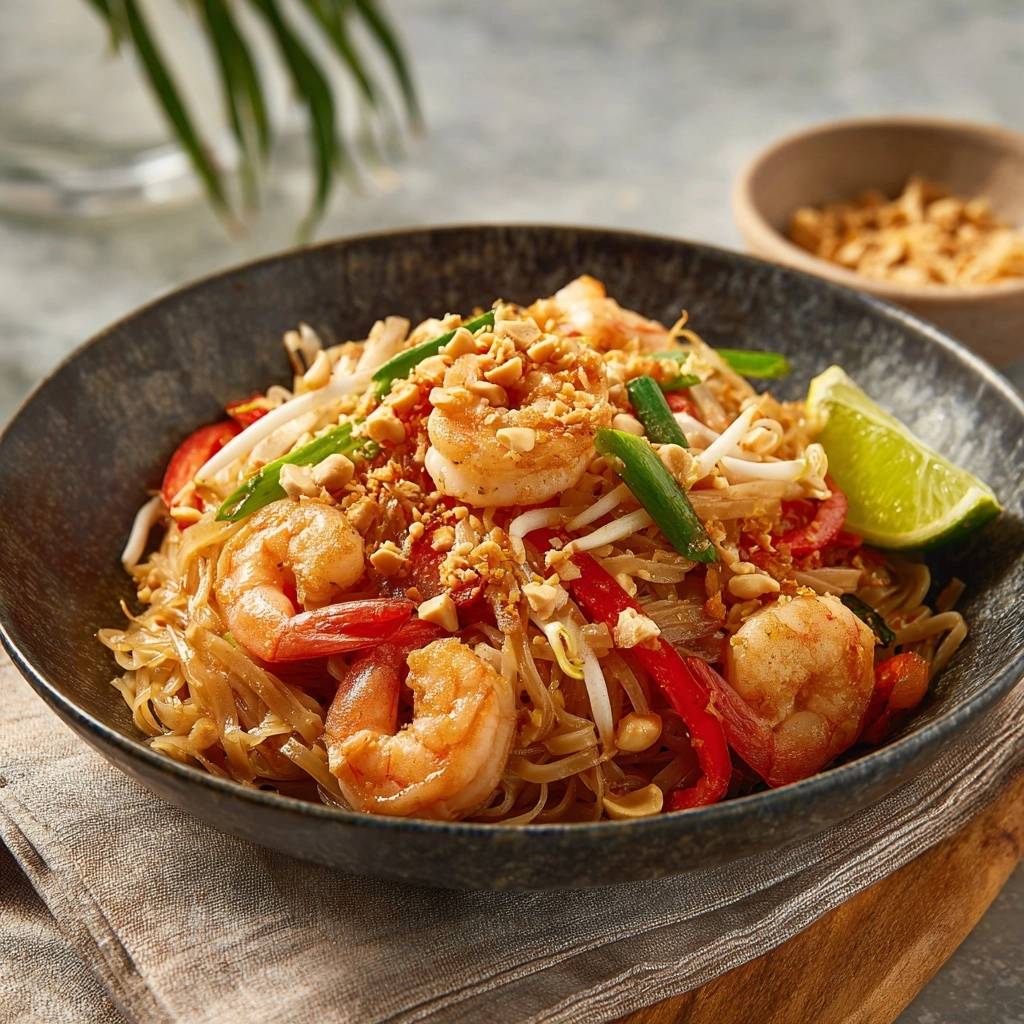
Therefore, pat them dry before cooking. That ensures a quick sear instead of steaming. You’ll love the curl and pink hue signaling perfection.
Crisp Vegetables and Fresh Garnishes
Slice 2 red bell peppers thin for vibrant crunch that cuts through the sauce. Chop 1/2 cup roasted peanuts roughly to add nutty texture. Toss in 1/4 cup cilantro, 4 sliced green onions, and lime wedges for bright, fresh zing.
These elevate your Shrimp Pad Thai to street-food status. The colors pop, and the contrast keeps every bite exciting. Don’t skip the lime squeeze; it wakes up all the flavors.
Balanced Pad Thai Sauce Components
Whisk 3 tbsp fish sauce for umami depth, 2 tbsp tamarind paste for tangy sour (or lime juice), 2 tbsp brown sugar for caramel sweetness, 1 tbsp soy sauce for salt, and 1 tsp chili paste for heat. This ratio nails sweet-sour-salty-spicy harmony.
However, taste as you go and tweak incrementally. The sauce thickens beautifully on hot noodles, coating everything glossy. Pro tip: jarred tamarind dissolves easiest.
Mastering Non-Sticky Shrimp Pad Thai Noodles
Room-Temperature Soak Technique
Start with a large bowl of room-temp water, not hot. Submerge 8 oz rice noodles and soak 20 minutes until flexible but firm, like al dente pasta. Hot water gelatinizes starch too fast, leading to mush.
This hydrates evenly without over-softening. You’ll see them plump up gracefully. It’s the foundation for separate strands.
Cold Rinse and Oil Toss Method
Drain well, then rinse under cold water to wash away surface starch, the real clump villain. Toss with 1 tsp vegetable oil to coat each strand. Spread on a plate to air-dry 5 minutes.
Without this, noodles glue together in the wok. The oil prevents sticking, and cold rinse halts cooking. Visual check: they should glisten separately.
Crafting Authentic Shrimp Pad Thai Sauce
Whisk all sauce ingredients in a small bowl until the brown sugar fully dissolves. Use jarred tamarind for convenience; if pods, soak and strain first. Adjust chili paste for your heat preference.
Taste for balance, adding a pinch more sugar or fish sauce if needed. When poured on hot noodles, the starch helps it thicken into a silky coat. That’s your glossy magic right there.
High-Heat Wok Steps for Shrimp Pad Thai
Shrimp Searing in Single Layer
Heat 1 tbsp vegetable oil in a wok over high until shimmering. Add shrimp in a single layer; cook 1-2 minutes per side until pink and curled. Don’t crowd, or they’ll steam instead of sear.
Remove to a plate. Internal temp hits 140°F for juicy results. Overcrowding is the top pitfall here.
Quick Bell Pepper Stir-Fry
Add another 1 tbsp oil to the hot wok. Stir-fry sliced peppers 2 minutes until crisp-tender and vibrant. Push to the side to keep heat high.
This builds wok hei, that smoky essence. High heat preserves snap and color beautifully.
Noodle Sauce Toss for Glossy Coating
Add drained noodles to the wok center. Pour in sauce and toss vigorously 1-2 minutes on high heat. Watch the sauce thicken as noodle starch activates.
Your prep ensures strands stay separate and glossy. It’s quick, but keep moving to avoid uneven coating.
Final Toss with Garnishes
Return shrimp to the wok. Add peanuts, cilantro, and green onions; toss 30 seconds to warm through. Serve immediately with lime wedges.
Squeeze lime over top for zing. Plate family-style for that street-food vibe. Freshness shines here.
If you enjoy the fresh crunch of peanuts and cilantro here, these caramel apple nachos offer a similar crisp contrast.
Origins of Classic Shrimp Pad Thai
Pad Thai emerged in 1930s-1940s Bangkok as Thai street food amid rice shortages post-WWII. Kitchens stretched noodles with sauce for affordability. The government promoted it as a national dish in the 1940s.
Shrimp versions evolved for coastal flair. Tamarind provides authentic tang; ketchup myths came from tourist adaptations. Traditionally, it’s wok-tossed hot and served with lime, peanuts, and fresh herbs for balance.
Street vendors still sling it daily. That high-heat energy infuses every bite with flavor. Your home version captures it perfectly.
Equipment Choices for Shrimp Pad Thai Success
Why Wok Beats Skillet
A carbon steel wok retains heat like a champ and its sloped sides make tossing easy. Season it lightly if new for non-stick power. A large skillet works but lacks that toss freedom.
High sides prevent spills during vigorous action. It’s built for this dish.
Other Key Tools
Use a whisk for smooth sauce, a large bowl for soaking, tongs or a spatula for tossing without breaking noodles, and a strainer for rinsing. These keep things efficient and mess-free.
Spatula flex helps separate strands gently. You’ll breeze through prep.
Avoiding Shrimp Pad Thai Pitfalls
Preventing Overcooked Shrimp
Watch for the curl and pink edges; pull them off heat fast. They finish cooking in residual heat. Reheating toughens them, so eat fresh when possible.
Fixing Mushy or Clumpy Noodles
Hot soaks or skipping rinse cause mush or clumps. Mid-cook salvage: add a splash of water and toss hard. But follow prep to avoid it entirely.
Sauce Imbalance Troubleshooting
Too salty? Add lime or sugar. Too sweet? More fish sauce or chili. Taste before tossing and adjust small amounts.
Flavor Twists on Shrimp Pad Thai
Protein Swaps and Adds
Swap shrimp for chicken strips or firm tofu cubes; cook similarly. Add scrambled egg during veggie step for classic richness. For vegan, use mushroom sauce instead of fish sauce. Noodle prep stays the same.
These keep the dish speedy and balanced. Tofu soaks up sauce beautifully.
Veggie and Spice Variations
Toss in bean sprouts or shredded carrots with peppers for extra crunch. Dial up chili paste for fire or omit for kids. Mild versions still pack flavor.
Freshness rules these tweaks. You’ll crave the custom heat.
Pairing Sides with Shrimp Pad Thai
Balance the bold flavors with cool cucumber salad or fresh spring rolls. Mango sticky rice adds sweet contrast for dessert. Thai iced tea or ginger beer cuts through the spice perfectly.
These sides refresh the palate. Light and tangy picks enhance the main event without overwhelming.
Shrimp Pad Thai FAQ
Can I Use Dried Tamarind Paste?
Yes, soak 2 tbsp dried tamarind in 3 tbsp hot water for 10 minutes, then strain and use the liquid. It matches jarred paste’s tang. Lime juice subs well if you skip it entirely, keeping sour notes bright.
How to Store Leftover Shrimp Pad Thai?
Store in an airtight container in the fridge for up to 2 days. Reheat gently in a skillet with a splash of water to revive sauce without mush. Don’t freeze full dish; noodles get grainy. Freeze plain cooked noodles separately up to 1 month, thaw and toss fresh.
Gluten-Free Shrimp Pad Thai Options?
Swap soy sauce for tamari and check rice noodle labels for gluten-free certification. Everything else is naturally GF. Fish sauce and tamarind stay safe.
Scaling for Bigger Batches?
Double all ingredients, but cook shrimp and noodles in separate batches to avoid crowding. Use a larger wok if possible. Sauce scales evenly; whisk extra first.
Why Rinse Noodles After Soaking?
Rinsing removes excess surface starch that causes clumping during tossing. Cold water also stops softening for perfect chew. Skip it, and you’ll fight glued strands the whole time.
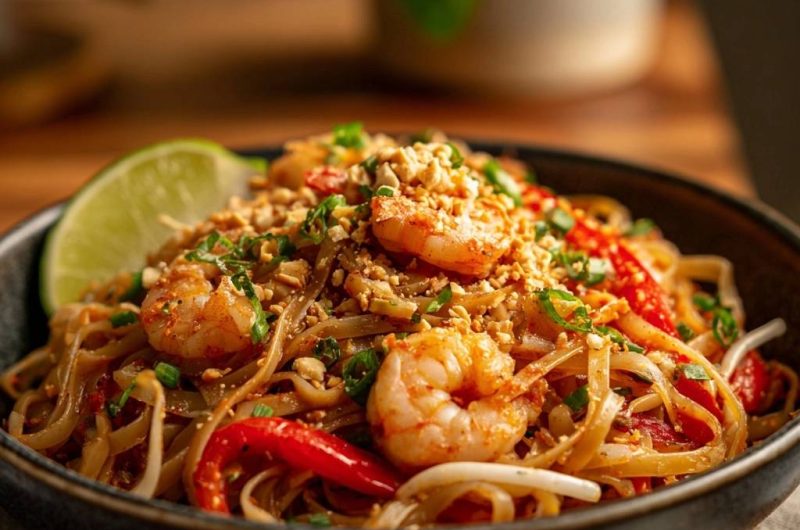
Shrimp Pad Thai
Course: Main CourseCuisine: ThaiDifficulty: easy4
servings25
minutes10
minutes450
kcal35
MinutesPad Thai nights ruined by clumpy noodles? This recipe fixes it with a soaking and tossing trick for separate, glossy strands. Features juicy shrimp, crisp peppers, and peanuts.
Ingredients
8 oz flat rice noodles
1 lb large shrimp, peeled and deveined
2 red bell peppers, thinly sliced
1/2 cup roasted peanuts, roughly chopped
1/4 cup fresh cilantro, chopped
4 green onions, sliced
2 limes, cut into wedges
3 tbsp vegetable oil, divided
For the sauce:
3 tbsp fish sauce
2 tbsp tamarind paste (or lime juice)
2 tbsp brown sugar
1 tbsp soy sauce
1 tsp chili paste
Directions
- Solve sticky noodles first: Place rice noodles in a large bowl of room-temperature water (not hot or boiling). Soak for 20 minutes until flexible but still firm to the touch, like al dente pasta. Drain well, rinse under cold water to stop cooking and remove excess starch, then toss with 1 tsp vegetable oil. Spread on a plate to air-dry 5 minutes. This locks in perfect texture, no clumping ever.
- Mix sauce: Whisk fish sauce, tamarind paste, brown sugar, soy sauce, and chili paste in a small bowl until sugar dissolves. Set aside.
- Heat 1 tbsp oil in a wok or large skillet over high heat until shimmering. Add shrimp in a single layer. Cook 1-2 minutes per side until pink and curled. Remove to a plate.
- Add remaining 1 tbsp oil to wok. Stir-fry bell peppers 2 minutes until crisp-tender. Push to side.
- Add drained noodles to center of wok. Pour sauce over noodles and toss vigorously 1-2 minutes on high heat until coated and sauce thickens slightly. Noodles stay separate thanks to the prep.
- Return shrimp to wok. Toss with peanuts, cilantro, and green onions 30 seconds to warm through.
- Serve immediately with lime wedges. Squeeze lime for zing. Enjoy sticky-free perfection!
Notes
- Key to success: Soak noodles in room-temperature water, rinse cold, oil, and air-dry. Tamarind paste can be substituted with lime juice.