Sponge Candy
Make old-fashioned sponge candy with a deep amber shell and a crisp, bubbly center. Learn what to watch for at hard crack and how to keep the foam airy.
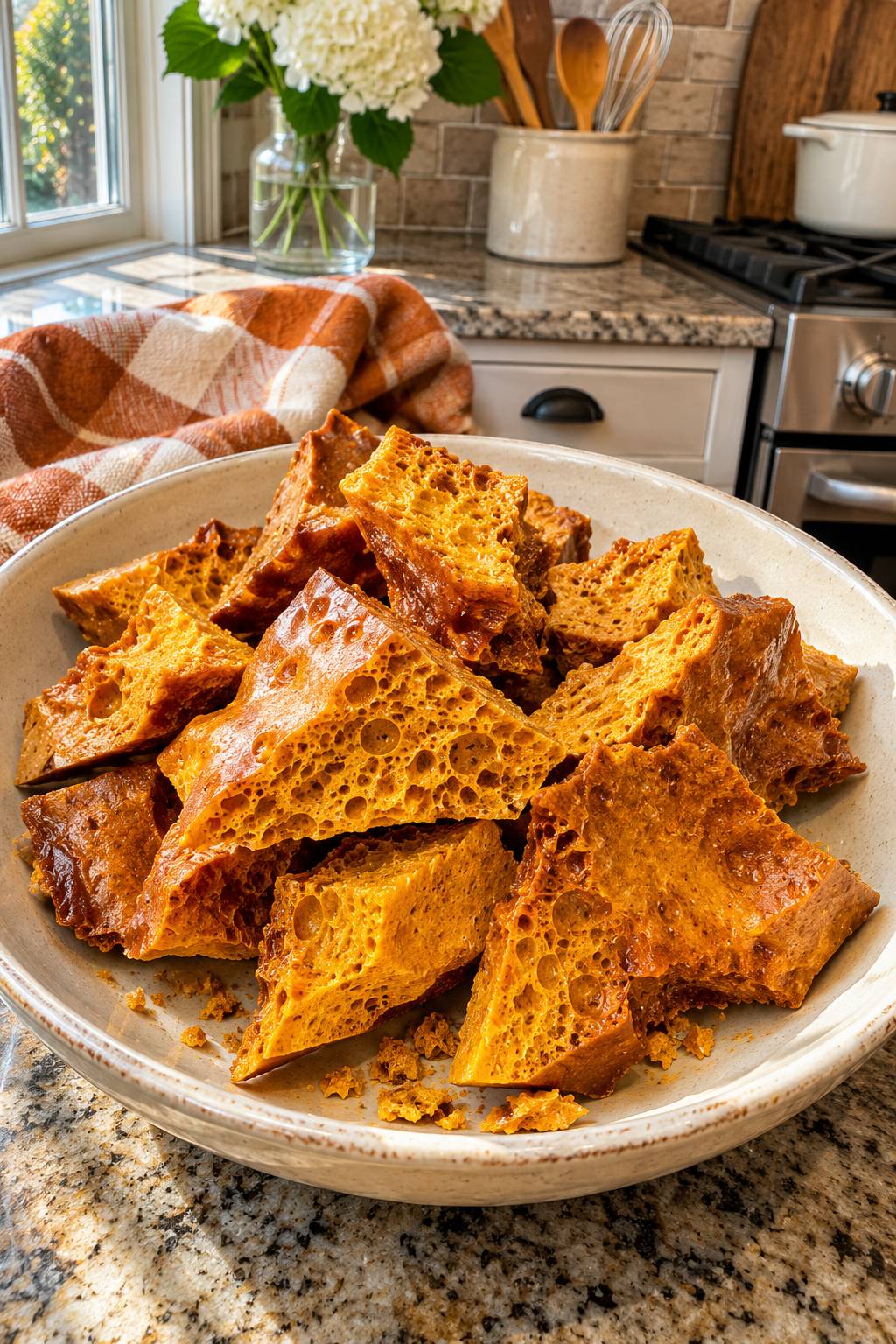
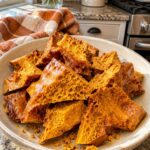
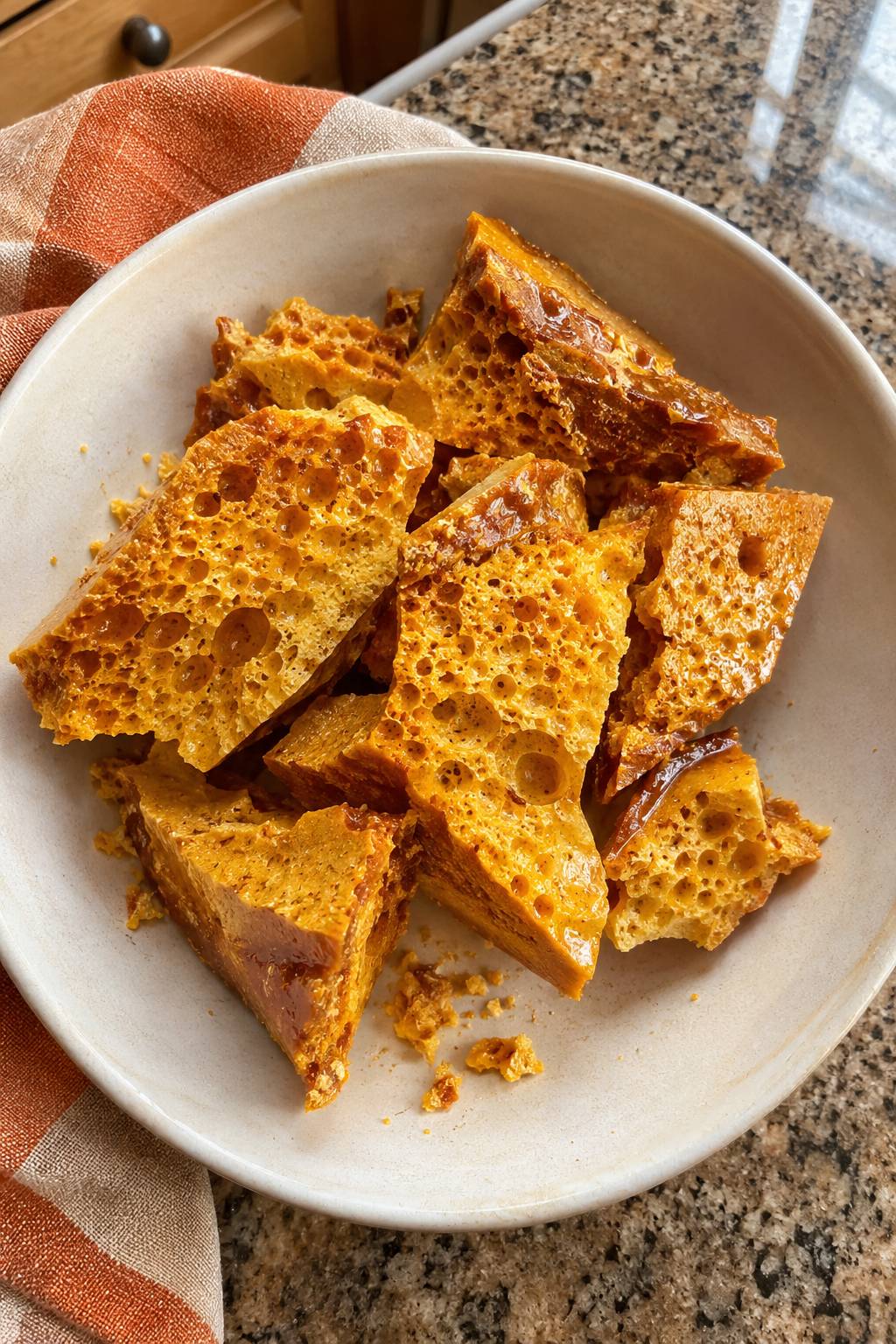
Sponge candy has a deep amber shell that snaps to reveal a golden center full of tiny bubbles. The inside looks delicate, but it’s crisp all the way through. When you break the candy apart, you get chunky, irregular shards with a different pattern of bubbles on every broken edge.
The part that takes you by surprise is how quickly the syrup foams once the baking soda goes in. Having your tools within reach lets you focus on what’s happening in the pan. The thermometer tells you when the syrup is ready, and the whisk tells you when you’re ready to pour.
Set Up for the Foam
Granulated sugar, light corn syrup, and apple cider vinegar go into the saucepan together to form the syrup. Keep the sifted baking soda beside the stove with a dry whisk. Sifting takes care of any lumps before the soda goes in, when you’ll have little opportunity to work them out.
Use a deep saucepan so there’s room above the syrup when it expands. In the square baking pan, parchment should cover the bottom and sides, with enough overhang to give you a grip when the candy is ready to lift.
Read the Thermometer at Hard Crack
The right cue for putting down your spoon is a boil after the sugar has dissolved. Gentle stirring helps you through that first part. Once the syrup is boiling, leave it undisturbed and follow the candy thermometer to the hard-crack stage.
Check where the tip sits after you clip the thermometer to the saucepan. It belongs below the surface of the syrup and clear of the bottom so the reading reflects the syrup. The amber color is part of the candy’s look, while the thermometer gives you the cue to take the pan off the heat.
Let the Foam Spread on Its Own
When the baking soda hits the hot syrup, the mixture rises rapidly. Watch for the white streaks to disappear as you whisk. That’s your cue to put down the whisk and pour the foam into the lined pan.
The surface can look uneven as the foam settles. Smoothing it with a spatula or tapping the pan can collapse the bubbles that give the candy its open center. Let the foam find its own level, then leave it undisturbed at room temperature until it’s completely hard. The parchment overhang gives you a way to lift the slab before you break it into rough pieces.
Frequently Asked Questions
Why can the candy thermometer clip to the pan but its tip can’t touch the bottom?
The clip holds the thermometer steady while you watch the syrup. If the tip rests against the bottom, the hot pan can affect the reading. Position the tip in the syrup with a gap between it and the bottom of the saucepan.
How can you tell when the baking soda is mixed in?
Look for the last white streaks to disappear. The foam will rise quickly, so keep your eye on those streaks as you whisk. Once they’re gone, the mixture is ready to pour into the parchment-lined pan.
When is sponge candy ready to break apart?
Wait until the slab has cooled at room temperature and is completely hard. Use the parchment overhang to lift it out of the pan, then break it apart. The chunky, irregular pieces are part of the candy’s old-fashioned look.
Recipe
Sponge Candy
This old-fashioned candy has a deep amber shell and a crisp, golden center full of tiny bubbles. Once cool, it breaks into chunky, irregular shards.
- Course
- Dessert
- Cuisine
- American
- Difficulty
- Easy
- Servings
- 16 servings
- Prep time
- 10 mins
- Cook time
- 15 mins
- Total time
- 1 hr 55 mins
- Calories
- 78 kcal
Ingredients
Instructions
Line the bottom and sides of an 8-inch square baking pan with parchment paper, leaving an overhang for lifting the candy out. Set the sifted baking soda and a dry whisk beside the stove.
Combine the sugar, corn syrup and vinegar in a deep 3-quart saucepan. Cook over medium heat, stirring gently until the sugar dissolves and the syrup comes to a boil. Clip on a candy thermometer with the tip submerged in the syrup and clear of the pan bottom. Continue cooking without stirring until the syrup reaches 300°F, the hard-crack stage, about 15 minutes of cooking in all.
Remove the pan from the heat and immediately add the baking soda. Whisk briefly, just until no white streaks remain. The syrup will foam up rapidly. Pour it into the lined pan right away and let it spread on its own.
Let the candy cool undisturbed at room temperature until completely hard, about 90 minutes. Lift it out by the parchment and break it into 16 rough pieces.
Notes
- Leave the foam undisturbed after pouring. Spreading it with a spatula or tapping the pan can collapse the bubbles.
- Store the cooled candy in an airtight container at room temperature. Humid air can make the surface sticky and soften the crunch.
Recipe: https://naileditrecipes.co/sponge-candy/