Toasted Sunflower Rye Bread
Learn how to make a hearty sunflower rye bread with dark rye, bread flour, molasses, and toasted seeds for a deep brown crust and moist crumb at home.
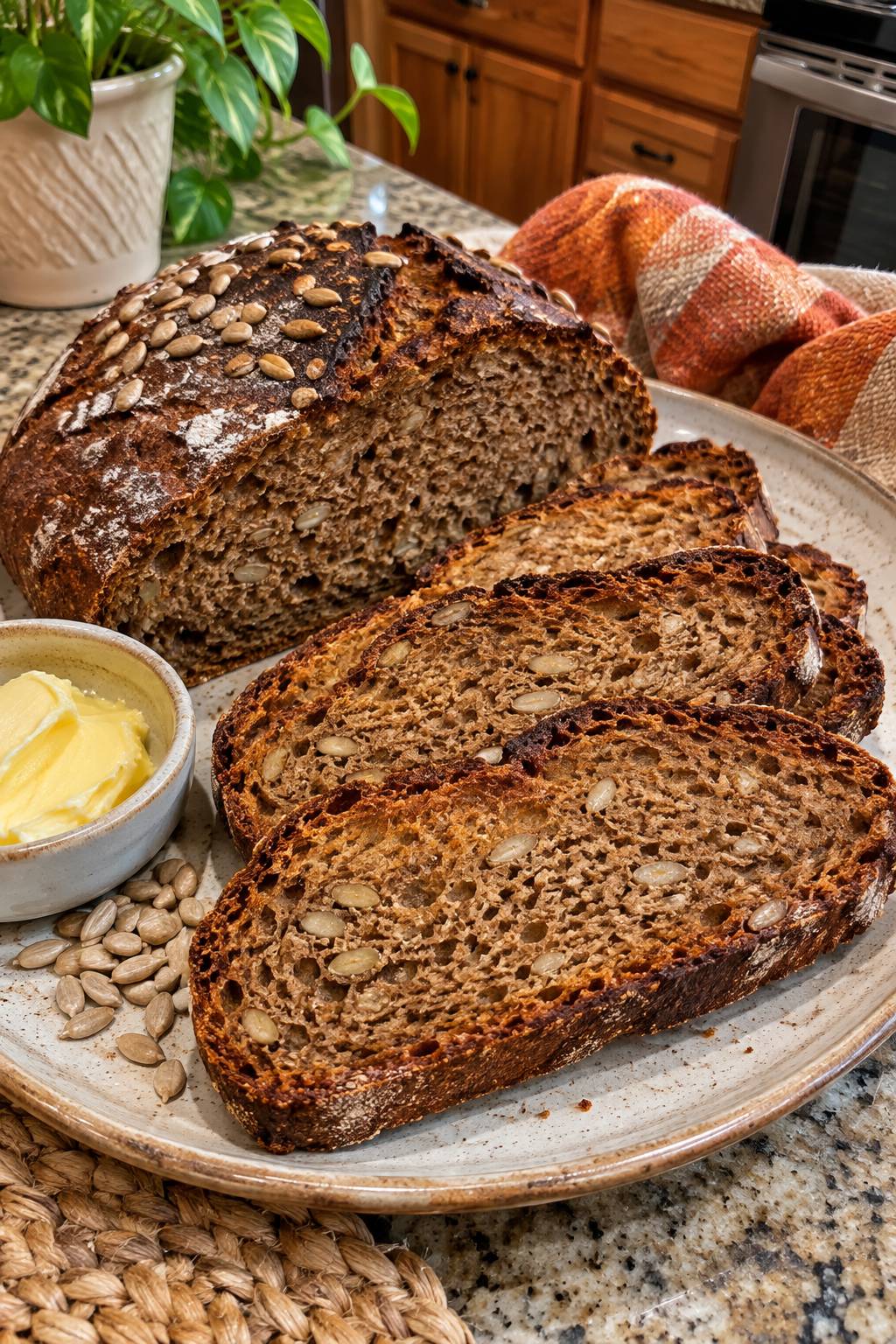
There is something satisfying about a loaf that fills the kitchen with the smell of toasted seeds and molasses. This sunflower rye bread is a sturdy, cozy bake that rewards a little patience. It has the earthy character of dark rye, softened by bread flour and a gentle sweetness, and it finishes with a deep brown crust and a moist, tight crumb that slices cleanly.
The ingredients are simple, but several techniques make a real difference. Here is what to know about toasting the seeds, handling rye dough, and getting a crust you will be proud of.
Why Toasting the Sunflower Seeds Matters
Toasting is the step that gives this bread its nutty, roasted flavor, and it is worth the extra attention at the stove. Raw sunflower seeds taste mild and a little grassy, but a dry skillet brings out their natural richness and deepens their color. Watch them closely, because they can move from golden to bitter in a matter of moments. Once they smell nutty, pour them onto a plate right away and let them cool completely.
You will divide the seeds between the dough and the top of the loaf. Toasting them all at once keeps the flavor consistent, and pressing them into the crust gives you a bit of crunch in every slice.
Balancing Rye and Bread Flour
Rye flour contains less gluten than bread flour, so the bread flour provides most of the structure in this loaf. That is why the proportion matters. Keep the dark rye at or below the amount on the recipe card. A heavier share of rye tends to produce a denser crumb, while a balanced blend gives you better lift and a softer bite.
Molasses adds gentle sweetness and color, and it dissolves best when whisked into the warm water along with the yeast. Expect the dough to feel softer and stickier than a wheat dough. Instead of reaching for lots of flour, oil your hands and work gently.
Shaping, Rising, and Getting a Deep Crust
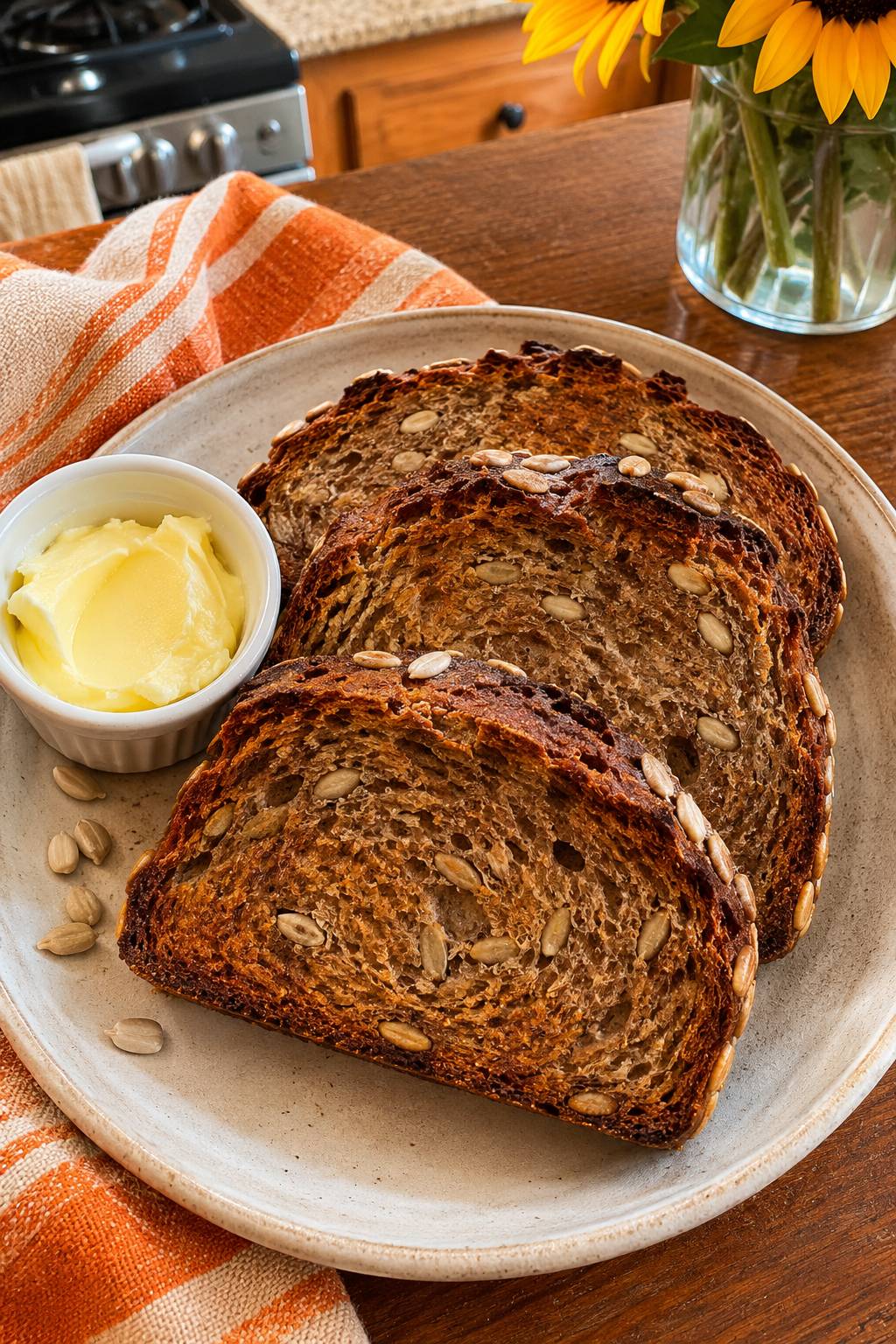
Roll it up tightly from a short end, pinch the seam closed, and set it seam side down so the loaf rises evenly. Rely on the look of the dough rather than the clock. You want it to nearly reach the top of the pan before it goes in the oven. A brush of water and a sprinkle of toasted seeds help the topping stick and encourage a rich, even color.
Keep an eye on the crust while the loaf bakes. If the top darkens faster than the inside is cooking, a loose tent of foil protects it. An instant-read thermometer is the most reliable way to check the center, since color alone can be misleading in a loaf this dark.
Cooling and Serving Your Loaf
Cutting into a hot loaf can leave the crumb gummy, because the starches are still setting as the bread cools. Let it rest on a wire rack until it is fully cool and holds together cleanly when sliced.
Use unsalted butter to grease the pan, then save the salted butter for the table. Spread it on a thick slice to complement the nutty seeds and earthy rye.
Frequently Asked Questions
Can I skip toasting the sunflower seeds?
You can, but you will lose much of the roasted, nutty flavor that defines this loaf. Toast them in a dry skillet over medium heat until they are golden and fragrant, then cool them completely before adding them to the dough.
Why does my rye dough feel so sticky?
Rye dough is naturally softer and stickier than wheat dough, so this is expected. Resist the urge to add lots of flour, which can make the finished loaf dry. Oil your hands and knead until the dough feels smooth and elastic.
How do I know when the loaf is fully baked?
Look for a deep brown crust, then check the center with an instant-read thermometer. The reading should reach the range listed on the recipe card. Tapping the bottom is less reliable than a thermometer, so trust the probe over color alone.
Recipe
Toasted Sunflower Rye Bread
A hearty yeasted loaf made with dark rye and bread flour, sweetened lightly with molasses and studded with toasted sunflower seeds inside and on top. It bakes in a loaf pan to a deep brown crust and a tight, moist crumb.
- Course
- Bread
- Cuisine
- American
- Difficulty
- Easy
- Servings
- 12 servings
- Prep time
- 20 mins
- Cook time
- 44 mins
- Total time
- 3 hr 49 mins
- Calories
- 210 kcal
Ingredients
Seeds
Dough
Pan and topping
To serve
Instructions
Toast the seeds
Place 3/4 cup sunflower seeds in a dry skillet over medium heat. Stir often for about 4 minutes, until the seeds are golden and smell nutty. Pour them onto a plate right away so they stop darkening, and let them cool completely.
Make the dough
In a large bowl, whisk the warm water, molasses and instant yeast until the molasses dissolves. Add the dark rye flour, bread flour, salt, 1/2 cup of the toasted seeds and 2 tbsp olive oil. Stir with a wooden spoon or spatula until a shaggy, sticky dough forms.
Turn the dough onto a lightly oiled surface and knead for about 8 minutes, until smooth and elastic. Rye dough is softer and stickier than wheat dough, so oil your hands rather than adding a lot of flour.
Lightly oil the bowl with 1 tsp olive oil, add the dough and turn it to coat. Cover with plastic wrap or a clean towel and let it rise in a warm spot for 60 minutes, until puffy and about 1 1/2 times its original size.
Shape and bake
Grease a 9x5-inch loaf pan with the softened butter. Press the dough into a rectangle, roll it up tightly from a short end and pinch the seam closed. Place it seam side down in the pan, cover and let rise for 45 minutes, until it nearly reaches the top of the pan.
While the loaf rises, preheat the oven to 375°F with a rack in the lower-middle position. Brush the top of the loaf with 1 tbsp water and sprinkle the remaining 1/4 cup toasted seeds over it, pressing them in gently.
Bake for 40 minutes, until the crust is deep brown and the center reads 200°F to 205°F on an instant-read thermometer. If the top darkens too quickly after 25 minutes, tent it loosely with foil.
Cool
Remove the loaf from the pan and set it on a wire rack. Let it cool for at least 60 minutes before slicing. Serve with softened salted butter.
Notes
- Rye flour contains less gluten than bread flour, so the bread flour gives this loaf most of its structure. Keeping the rye at 1 1/2 cups or less helps the crumb stay lighter, since a higher rye share relative to the bread flour tends to produce a denser loaf.
- Cutting into the loaf while it is hot can leave the crumb gummy, because the starches are still setting as the bread cools. Waiting an hour lets the slices hold together cleanly.
- Store the cooled loaf wrapped in a clean towel or in a zip-top bag at room temperature for up to 3 days. For longer storage, slice it and freeze the slices in a sealed bag.
Recipe: https://naileditrecipes.co/toasted-sunflower-rye-bread/