Vanilla Bundt Cake
This buttery vanilla bean Bundt cake has a tender, fine crumb and a deep golden crust. Learn how to prep the pan so every ridge looks its best.
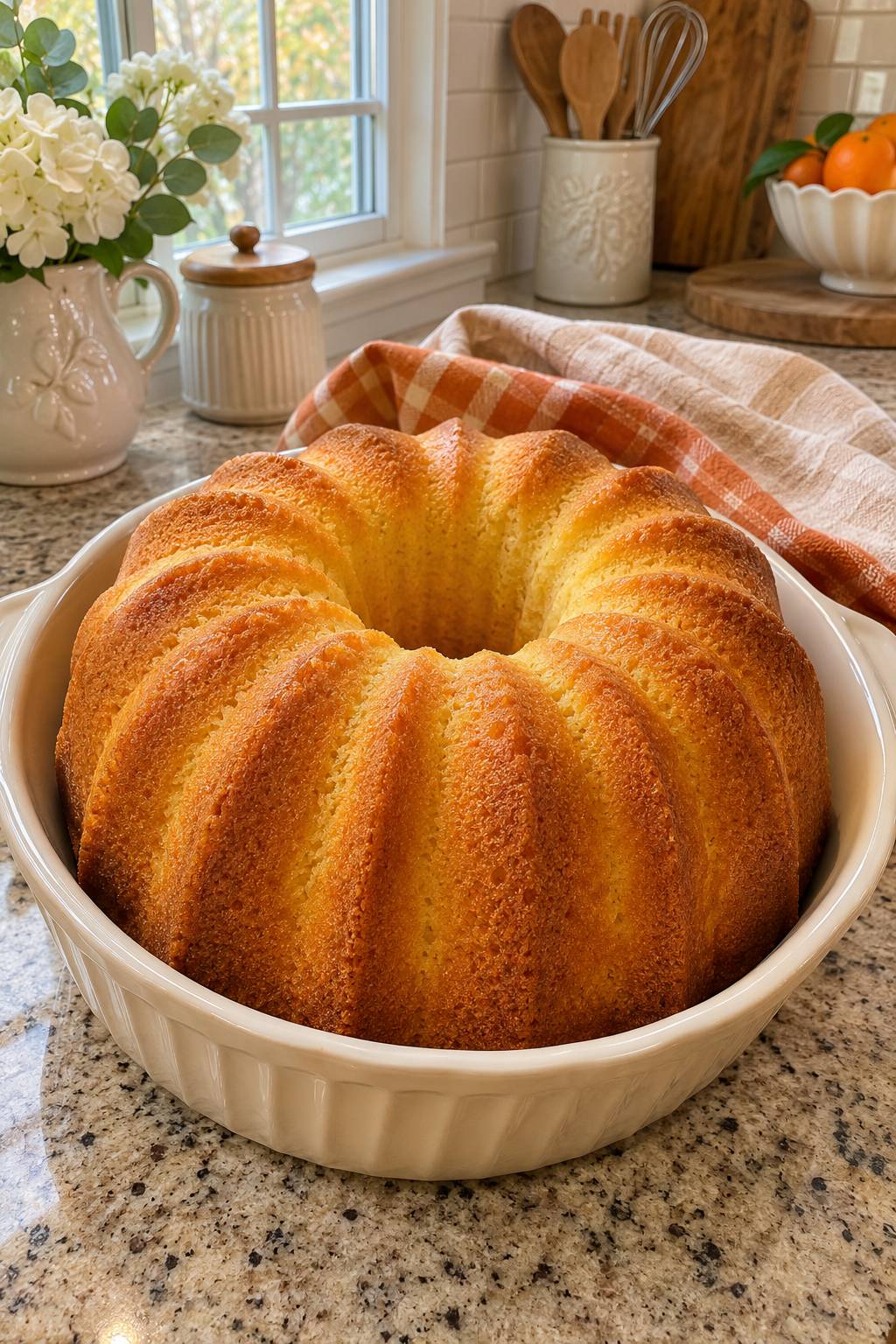
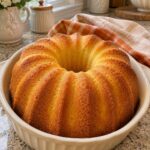
This vanilla Bundt cake has a buttery, tender crumb and a deep golden crust that follows the curves of the pan. Cut a slice and you’ll see tiny vanilla bean flecks against the pale interior. It’s a cake worth serving plain: without anything covering the surface, you can see the crisp outline of the ridges and taste the contrast between the crust and the soft crumb.
What the vanilla bean and dairy bring to the cake
The scraped vanilla bean seeds go into the bowl with the softened unsalted butter and granulated sugar. Beating them together spreads the seeds through the butter mixture, so the flecks you see in a slice aren’t concentrated in patches. The butter gives the cake its rich flavor, while full-fat sour cream adds a gentle tang that keeps the sweetness from dominating the vanilla.
The recipe calls for room-temperature eggs, sour cream, and whole milk. That detail is especially helpful when you’re working with softened butter: cold eggs can make the creamed mixture look curdled. Stirring the sour cream and milk together separately gives you a smooth mixture, without thick pockets of sour cream to work out once the flour is in the bowl.
Use the batter’s appearance as a mixing guide
For a fine crumb, pay attention to how the butter and sugar look as they cream. You’re aiming for a mixture that’s pale and fluffy, not just blended. Scrape the bowl as you incorporate the eggs so butter clinging to the sides doesn’t get left behind.
Once you start alternating the dry ingredients with the sour cream mixture, the goal changes. You’re no longer trying to make the batter fluffier; you’re just bringing it together. Use low speed and stop when the last flour streaks disappear. How you measure the flour matters here, too: spoon it into the measuring cup and level it off. Scooping straight from the bag can pack in extra flour and leave the cake dry even if you mix it gently.
Give the ridges and center tube extra attention
A pastry brush helps you see and reach the spots that are easy to miss, especially the narrow grooves and the base of the center tube. Look for a thin, even coat of shortening rather than thick smears. When you dust the pan, tap out the excess flour so it doesn’t collect in the grooves you worked to coat.
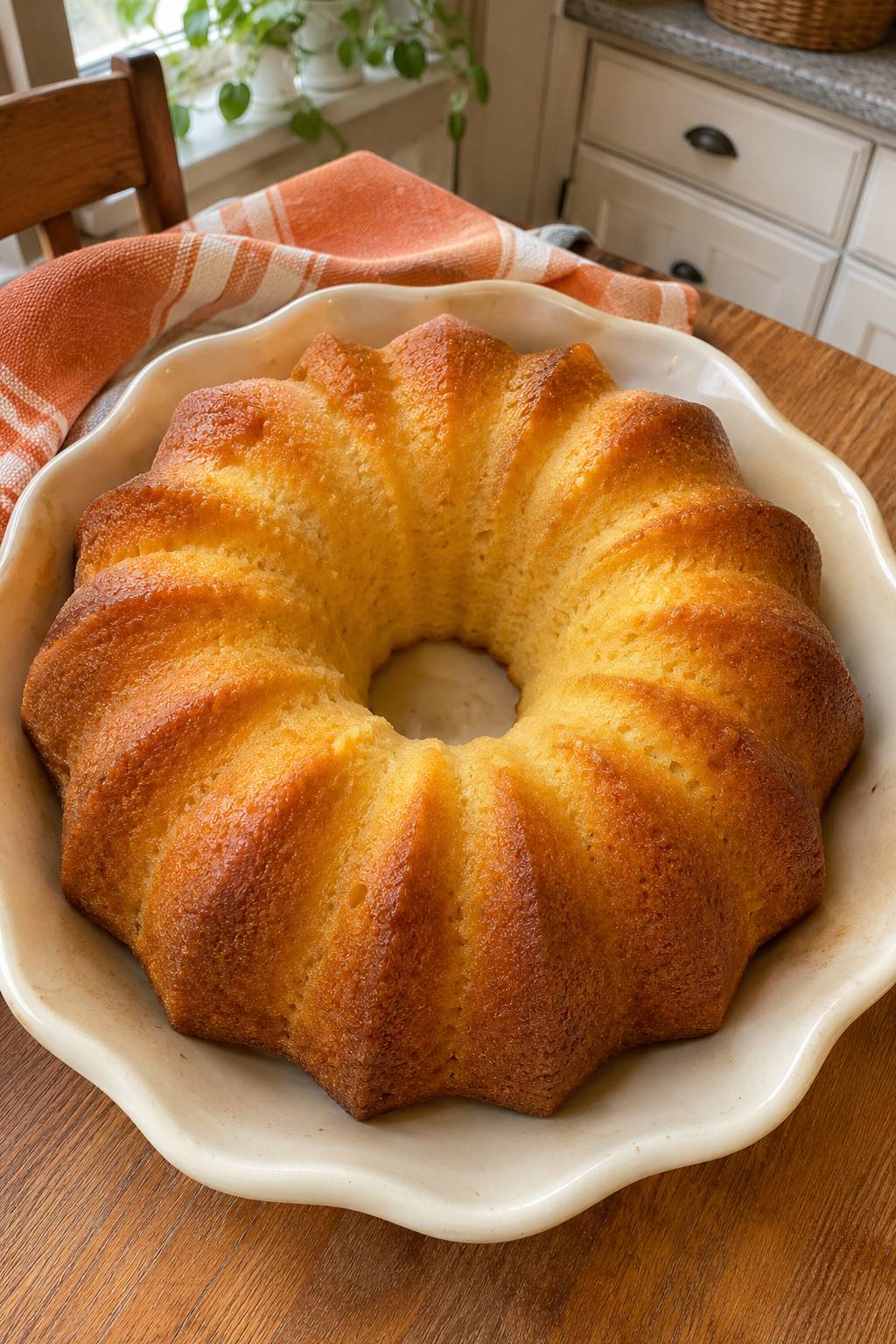
Use the exposed surface as your first clue to doneness, but don’t rely on color alone. A skewer tells you what’s happening beneath that golden surface. After baking, give the cake its rest in the pan as directed on the recipe card. Holding the rack against the pan while you turn them together gives the cake a surface to land on when you gently lift the pan away.
Frequently Asked Questions
Where should I insert the skewer to check for doneness?
Aim halfway between the center tube and the outer edge, rather than right beside either wall of the pan. The exposed surface should be golden, and the skewer should come out clean or with a few moist crumbs.
Why can parts of the cake stick even if I greased the pan?
The broad surfaces are easy to coat, but a groove can still have a bare patch. Use a pastry brush to work shortening into the narrow recesses and around the base of the tube, then check those spots before dusting with flour.
Can I slice the cake as soon as it comes out of the pan?
Let it cool completely on the wire rack before slicing. The cake can be ready to release from the pan while the center is still warm. Waiting for it to cool helps you cut neat slices that show off the fine crumb.
Recipe
Vanilla Bundt Cake
This buttery vanilla bean Bundt cake has a tender, fine crumb and a deep golden crust. Serve it plain to show off the ridges.
- Course
- Dessert
- Cuisine
- American
- Difficulty
- Easy
- Servings
- 12 servings
- Prep time
- 20 mins
- Cook time
- 55 mins
- Total time
- 3 hr
- Calories
- 450 kcal
Ingredients
For the pan
Cake
Instructions
Set a rack in the middle of the oven and preheat to 350°F. Brush a thin, even layer of shortening inside a 10-inch (12-cup) Bundt pan, coating every ridge and the center tube. Dust with the 1 tbsp flour and tap out the excess.
Whisk together the 3 cups flour, baking powder, baking soda, and salt. In a separate bowl, stir the sour cream and milk until smooth.
Split the vanilla bean lengthwise and scrape the seeds into a large mixing bowl. Add the butter and sugar and beat with an electric mixer on medium speed until pale and fluffy, 3 to 4 minutes. Beat in the eggs one at a time, scraping the bowl as needed.
On low speed, add the flour mixture in three additions, alternating with the sour cream mixture in two additions. Stop mixing as soon as the last streaks of flour disappear. Spoon the batter into the prepared pan and smooth the top.
Bake for 50 to 60 minutes, until the exposed surface is golden and a wooden skewer inserted halfway between the center tube and the outer edge comes out clean or with a few moist crumbs.
Cool the cake in the pan on a wire rack for 15 minutes. Place the rack over the pan, flip them together, and gently lift off the pan. Cool completely on the rack, about 90 minutes, before slicing.
Notes
- Spoon the flour into the measuring cups and level it off. Scooping directly from the bag can pack in extra flour and make the cake dry.
- Use a pastry brush to coat the narrow grooves and the base of the center tube, where the cake is most likely to stick.
Recipe: https://naileditrecipes.co/vanilla-bundt-cake/