Blood Orange Dill Salmon: Moist, Flavorful Perfection
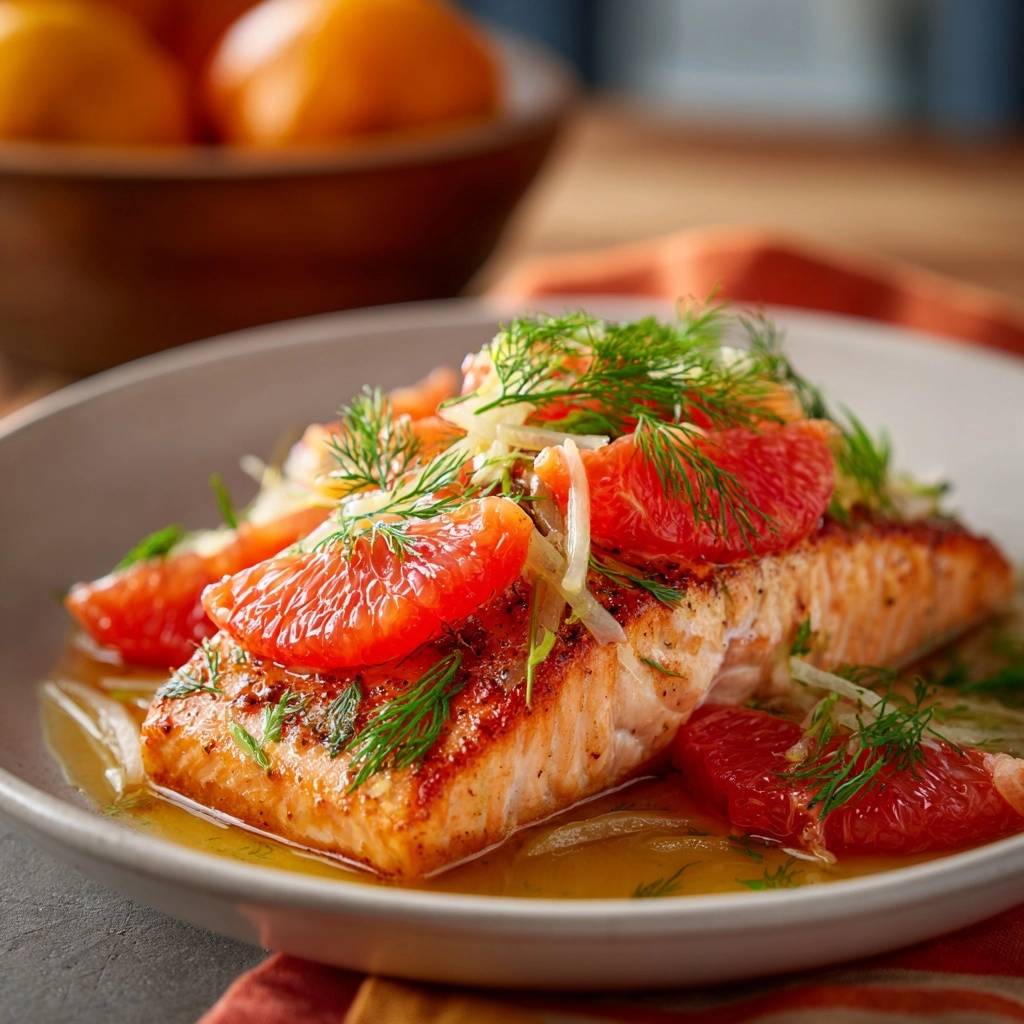
Ever pull a beautiful salmon fillet from the pan only to find it chalky and dry inside? That frustrating texture ruins the whole meal. This blood orange dill salmon fixes it with a quick sear that creates a golden crust, followed by a gentle citrus simmer. You’ll get moist, flaky perfection every time.
Here’s why it works so well. The high-heat sear locks in juices through a crispy barrier, while blood orange juice bastes the fish with bright flavor. In addition, fresh dill and crunchy fennel slaw add contrast that elevates the dish. Therefore, you avoid the common poaching fails that leave salmon steaming and pale.
The real secret lies in patting the fillets completely dry first. This removes surface moisture so the pan gets that deep golden sear instead of boiling the fish. Oh man, one bite and you’ll crave this citrus dill salmon all winter long. It serves 2, takes just 25 minutes, and packs omega-3s plus vitamin C for a healthy win.
Why Blood Orange Dill Salmon Succeeds
Unlocking Juicy Texture Secrets
The sear-first method builds a moisture barrier via the Maillard reaction. Proteins brown and tighten, trapping juices inside. That’s why blood orange dill salmon stays so tender.
Most folks skip patting dry, so their salmon steams instead of searing. However, dry fillets hit 350F+ oil and form a crust in 4 minutes flat. Therefore, you get flaky blood orange dill salmon, not dry disappointment.
Poaching alone fails because it lacks that crust. In contrast, this technique contrasts crispy outside with juicy inside. You’ll taste the difference immediately.
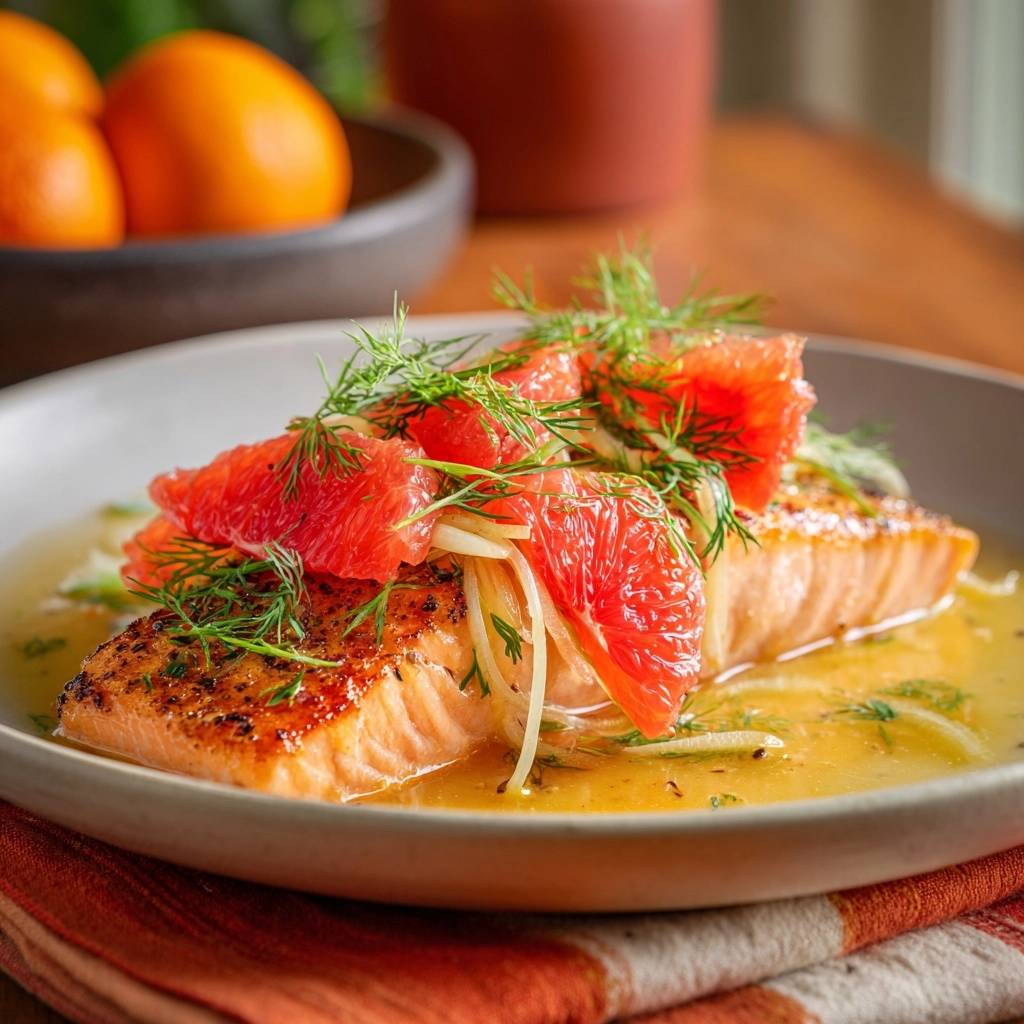
Blood Orange and Dill Pairing Magic
Blood oranges bring tart brightness that cuts through salmon’s richness. Their ruby flesh adds visual pop too. Dill’s fresh, anise-like notes pair perfectly with fennel’s earthiness.
If you enjoy this high-heat searing method, try it with seared salmon with green herb sauce for a similarly crisp crust.
Compared to regular navels, blood oranges offer deeper color and sweeter tartness. Therefore, they make dill-infused blood orange salmon unforgettable. In addition, the combo feels light yet satisfying.
Key Ingredients for Blood Orange Dill Salmon
Choosing Prime Salmon Fillets
Grab skinless 6-oz center-cut fillets for even cooking. Wild salmon tastes cleaner, but farmed works if it’s firm and smells like the ocean, not fishy. Therefore, avoid thin tail ends that overcook fast.
Freshness matters, so press the flesh; it should spring back. In addition, bright color signals quality. These choices ensure your blood orange dill salmon shines.
Prepping Blood Oranges Perfectly
Segment two blood oranges by slicing off peels, then cutting between membranes for supremes. Juice the third for about 1/2 cup liquid. This gives sweet-tart balance without bitterness.
However, remove all white pith to avoid puckering. Therefore, your sauce stays vibrant. Blood oranges’ unique hue makes the dish pop.
Fennel and Fresh Dill Essentials
Shave fennel super thin with a mandoline for crisp texture. Use feathery dill fronds only; chop them roughly. A good extra-virgin olive oil ensures a nonstick sear.
Salt the slaw lightly to draw out water and boost flavor. Pepper freshly cracked keeps it punchy. These details make blood orange dill salmon crave-worthy.
Science of Searing Blood Orange Dill Salmon
High-Heat Crust Formation
Shimmering oil at medium-high hits the Maillard sweet spot. Proteins denature and brown in 4 undisturbed minutes. This seals juices for moist blood orange dill salmon.
Don’t poke or move the fillets; let the crust build. Therefore, flipping reveals perfect color. In addition, the aroma hits savory peaks right then.
If you enjoy the citrus kick from the blood orange, you will love the bright butter finish of this pan-seared lemon butter salmon.
Pro tip: Test heat by flicking water; it should dance. This prevents pale, steamy results every time.
Gentle Simmer Basting Process
Drop to medium-low and add juice; it creates steam that bastes gently. Spoon sauce over fillets every 30 seconds for even infusion. Target 125F internal for medium flakes.
Overcooking dries it out, so pull early. However, carryover heat finishes the job. Therefore, your blood orange dill salmon stays juicy.
Step-by-Step: Mastering Blood Orange Dill Salmon
Drying and Seasoning Fillets
Pat salmon bone-dry with paper towels; press firmly. Season both sides with salt and pepper. For extra flavor, salt 30 minutes ahead to draw out then reabsorb moisture.
Segmenting Oranges and Shaving Fennel
Supreme the oranges over a bowl to catch juice. Shave fennel paper-thin, then toss with half the chopped dill and salt. It softens slightly, releasing sweet crunch.
Searing for Golden Crust
Heat oil till shimmering in nonstick skillet. Add salmon presentation-side down; set timer for 4 minutes. It releases easily when ready to flip, with a deep crust forming.
Simmering in Citrus Dill Sauce
Lower heat, pour in all juice. Baste rhythmically for 4-5 minutes; sauce thickens and aromas bloom. Check temp to hit 125F perfectly.
Plating with Fennel-Orange Slaw
Rest salmon on plates, spoon sauce over. Mound slaw high with extra dill. Let sit 1 minute; flavors meld beautifully.
Avoiding Dry Blood Orange Dill Salmon Pitfalls
Skipping the Dry Pat
Wet fillets steam, yielding pale, soggy results. Paper towels absorb better than cloths, which can harbor bacteria. Therefore, double-pat for insurance.
In addition, this step crisps the sear fast. Skip it, and your blood orange dill salmon suffers.
Overcrowding the Skillet
Too many fillets trap steam, preventing crust. Cook in batches if needed. Single layer ensures even browning.
High Heat Throughout Cooking
Constant high heat evaporates juices. Switch to low for simmering. Use a thermometer; 125F looks opaque with a pearl sheen.
Flavor Twists on Blood Orange Dill Salmon
Herb Swaps and Citrus Alternatives
Swap dill for tarragon’s licorice edge, or use grapefruit juice for sharper tang. Both keep salmon with blood orange dill vibes alive. However, stick close to originals for balance.
In addition, lemon works in a pinch but lacks blood orange depth.
Spice and Veggie Enhancements
Add chili flakes for heat, or radish slices to slaw for peppery bite. For vegan, press and sear firm tofu the same way. These tweaks excite without overpowering.
Ideal Pairings for Blood Orange Dill Salmon
Grain and Vegetable Sides
Quinoa pilaf soaks up sauce perfectly, while roasted asparagus echoes the citrus. Drizzle a quick vinaigrette to tie it together. Therefore, the plate feels complete and fresh.
What’s Next?
Try these delicious pairings:
In addition, steamed green beans add snap.
Grape juice and Simple Starches
Crisp sparkling grape juice mirrors the brightness. Herbed couscous fluffs up fast as a base. Both enhance without stealing the show.
Make-Ahead Blood Orange Dill Salmon Guide
Prepping Components Early
Make slaw up to 2 days ahead; it improves. Don’t sear from frozen; thaw first for best crust. Therefore, weeknight dinners speed up.
Storage and Reheating Methods
Fridge leftovers in airtight containers up to 3 days. Reheat gently in a low 250F oven with foil to retain moisture. Freezes well for 1 month; thaw overnight before warming.
Troubleshooting Blood Orange Dill Salmon
Sauce Too Thin or Bitter?
Simmer longer to reduce, or remove pith scrupulously during segmenting. Add a pinch of sugar if overly tart. Therefore, it thickens to glossy perfection.
Salmon Sticking or Uneven?
Ensure oil shimmers and pan’s nonstick. Pat extra dry if needed. Heat evens out with patience.
Slaw Too Soggy?
Salt and let sit 10 minutes, then drain. Don’t overdress early. Keeps crunch intact.
Overcooked Flaky Results
Pull at 120F; carryover adds 5 degrees. Visual cue: center still slightly translucent. Stays moist this way.
FAQ
How do I store leftovers of blood orange dill salmon?
Place cooled salmon and slaw in an airtight container. Refrigerate up to 3 days. For freezing, wrap tightly; it holds quality for 1 month. Thaw in fridge overnight, then reheat in a 250F oven covered with foil for 10 minutes to avoid drying. Avoid microwaving, as it toughens the flakes.
Why did my blood orange dill salmon turn out dry?
The top culprit is skipping the dry pat or high heat all the way through. Wet fillets steam instead of searing, and constant high temps evaporate juices. Pat thoroughly, sear undisturbed for 4 minutes, then simmer low while basting. Check internal temp at 125F for juicy results every time.
Can I substitute ingredients in blood orange dill salmon?
No blood oranges? Use navel oranges or tangerines for juice and segments; they’ll work but lack the ruby color and tart edge. Swap dill for tarragon or basil if needed, though dill’s anise pairs best with fennel. Skin-on salmon is fine; just sear skin-side down first for extra crisp. Gluten-free? It’s naturally so, no changes required.
What’s the best way to know when the salmon is perfectly cooked?
Aim for 125F internal for medium-rare flakes that stay moist. Use an instant-read thermometer in the thickest part. It should flake easily but hold shape, with a pearl-like sheen. Pull early to account for carryover cooking, which adds 5 degrees while resting.
How thin should I shave the fennel for the slaw?
Paper-thin, about 1/16-inch, using a mandoline for safety with a guard. Thick slices stay tough and overpower the dish. After shaving, toss with salt 10 minutes ahead to soften slightly and release sweetness without sogginess. Rinse and dry if it’s too strong-tasting.
Can I make blood orange dill salmon ahead for meal prep?
Prep slaw up to 2 days early; flavors deepen. Cook salmon fresh for best texture, but fully cooked leftovers reheat well. Portion into meal containers with sauce to keep moist. Avoid freezing slaw, as fennel wilts; make fresh each time for crunch.
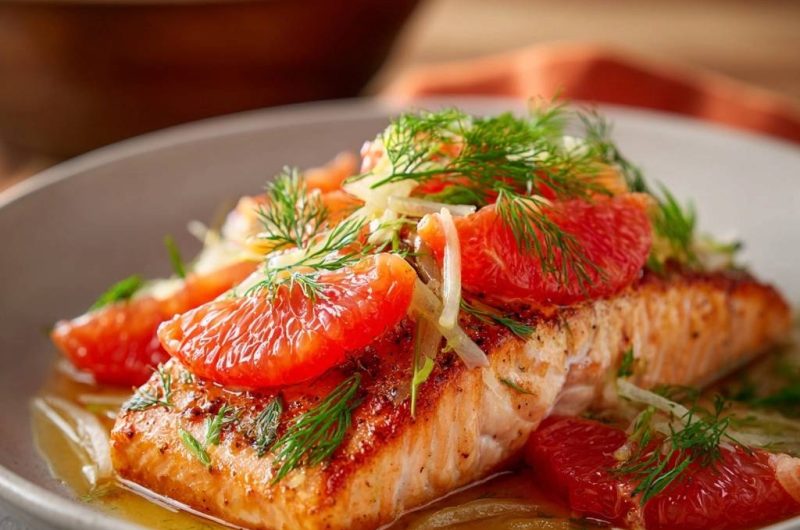
Blood Orange Dill Salmon
Course: Main CourseCuisine: AmericanDifficulty: easy2
servings15
minutes10
minutes450
kcal25
MinutesTired of salmon turning dry and chalky? This foolproof sear-and-simmer technique locks in juices with a hot crust first, then gentle citrus braise for perfect moist flakes every time.
Ingredients
2 salmon fillets (6 oz each, skinless)
3 blood oranges (2 segmented, 1 juiced)
1 small fennel bulb, thinly shaved
1/4 cup fresh dill fronds, chopped (plus extra for garnish)
2 tablespoons olive oil
Salt and black pepper to taste
Directions
- Pat salmon fillets completely dry with paper towels. This is key: removes surface moisture for crispy sear without steaming. Season both sides generously with salt and pepper.
- Segment 2 blood oranges: Cut off peel, slice between membranes to release supremes. Reserve any juice. Thinly shave fennel bulb. Toss with half the dill and a pinch of salt. Set aside.
- Heat olive oil in a nonstick skillet over medium-high heat until shimmering (about 2 minutes). Add salmon presentation-side down. Sear undisturbed for 4 minutes until deep golden crust forms. This high-heat lock-in prevents dryness by creating a moisture barrier. Flip fillets.
- Reduce heat to medium-low. Add blood orange juice (from segmented oranges plus juice from third orange). Simmer gently 4-5 minutes, spooning sauce over salmon repeatedly. Sauce steams and bastes, infusing flavor while keeping fish juicy (internal temp 125F for medium).
- Remove salmon to plates. Spoon pan sauce over top. Pile fennel-orange slaw and remaining dill on salmon. Serve immediately for flaky, never-dry perfection.
Notes
- Pat salmon completely dry for crispy sear. Internal temp 125F for medium doneness.