Mastering the Creamy Dill Shrimp and Cucumber Salad
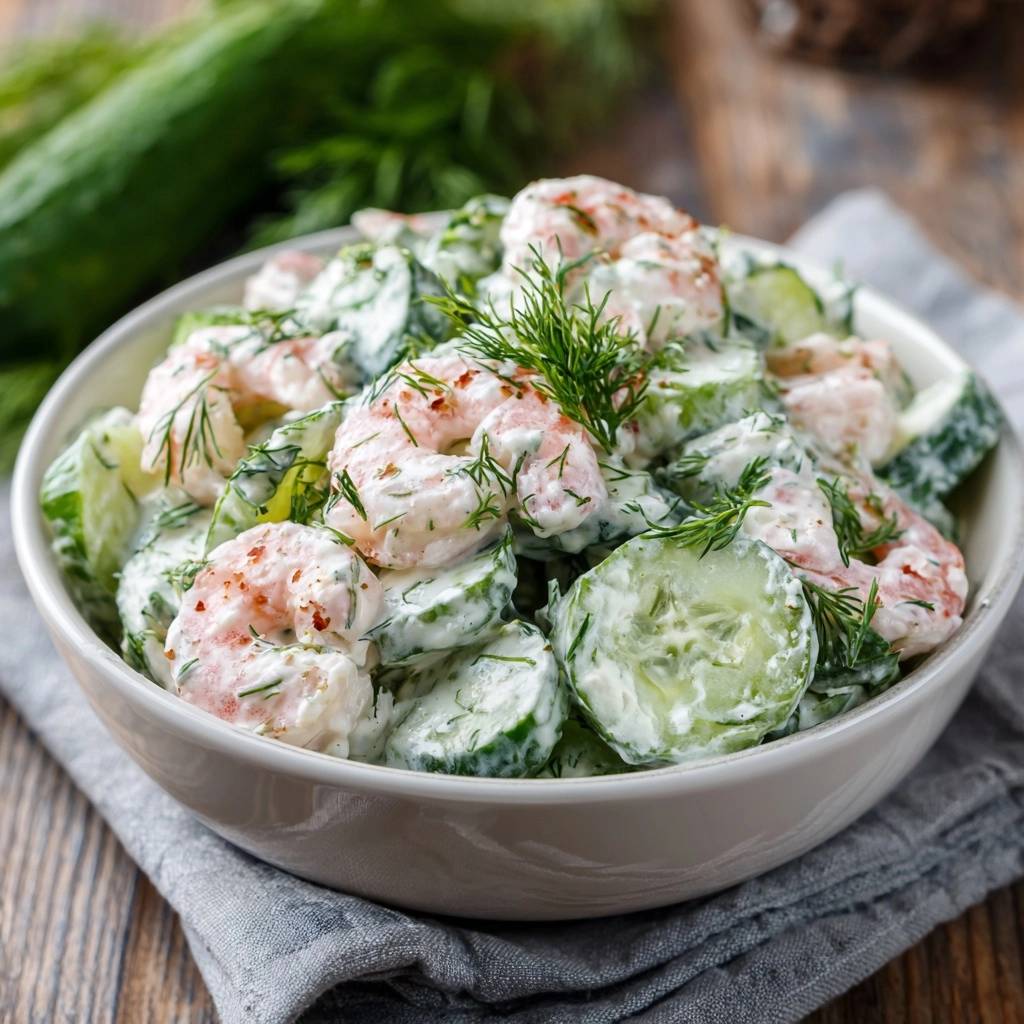
Imagine biting into a succulent, perfectly poached shrimp that’s been chilled to perfection, paired with the refreshing, audible snap of a crisp cucumber. This Creamy Dill Shrimp and Cucumber Salad offers a sophisticated play on textures, balancing the richness of a velvety dressing with the bright, herbaceous punch of fresh dill. It’s the kind of dish that feels light enough for a summer lunch but decadent enough to serve as a starter at a high-end dinner party.
However, many home cooks struggle with the dreaded “watery salad syndrome,” where the cucumbers release their juices and turn a beautiful dressing into a thin, soupy mess within minutes. This recipe solves that problem entirely by utilizing a professional salt-sweating technique. By drawing out the excess moisture before the assembly begins, you ensure that every bite remains bold, creamy, and structurally sound.
The secret to this salad’s success lies in the preparation of the cucumbers. While most recipes just toss everything together, we treat the vegetables with a bit of culinary science to lock in that crunch. When you master this moisture-control method, you’ll find that the dressing clings to the shrimp and cucumbers with a luxurious consistency that lasts until the very last forkful.
The Science of Preventing Watery Cucumber Salads
Cucumbers are composed of about 95% water, which is why they are so refreshing, but that high water content is the enemy of a creamy dressing. When you slice a cucumber and mix it with salt or acidic dressings, the cell walls begin to break down. This process, known as osmosis, causes the cucumber to dump its internal liquid into your bowl, diluting your flavors and ruining the texture.
To prevent this, we use a proactive salt-sweating step. By tossing the slices in kosher salt and letting them sit in a colander, we force that excess water out before it ever touches the yogurt or mayonnaise. This doesn’t just keep the salad thick; it actually seasons the cucumber from the inside out and improves its physical snap. You’ll notice the slices become slightly more flexible but significantly crunchier once they hit the dressing.
This step is non-negotiable if you want a professional-grade result. Skipping it means your salad will likely be sitting in a pool of gray liquid after just twenty minutes on the table. By taking the extra time to sweat the vegetables, you create a stable emulsion that stays rich and vibrant, even if you decide to chill the salad for a bit before serving.
Why English Cucumbers Outperform Standard Varieties
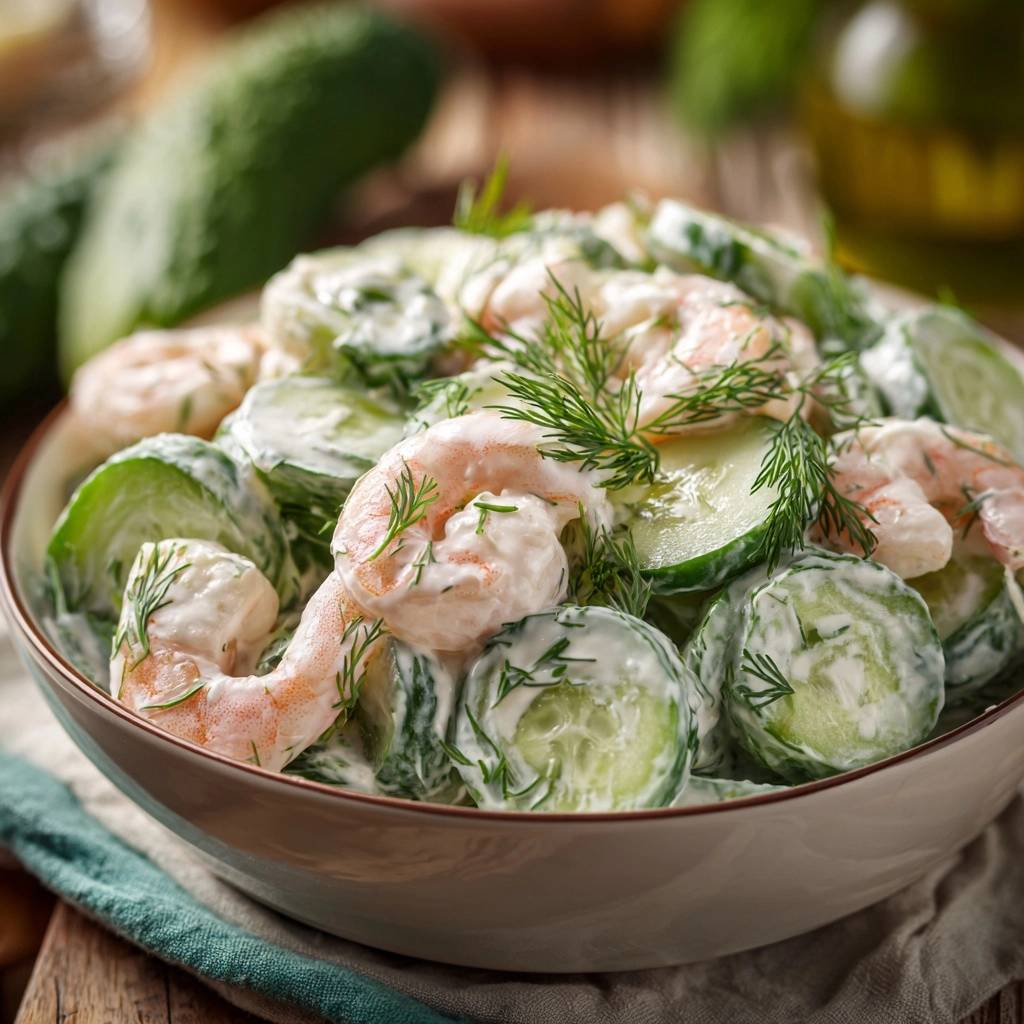
I always recommend using English cucumbers, often sold wrapped in plastic as “hothouse” cucumbers, for this specific salad. Unlike standard slicing cucumbers, English varieties have much thinner skins and tiny, almost non-existent seeds. This means you don’t have to peel them, which adds a beautiful dark green border to every round in your bowl.
Standard cucumbers often have a thick, waxy skin and large, watery seed pockets that contribute to sogginess. The English variety has a lower overall water content and a more consistent, firm flesh. This structural integrity is essential when you’re tossing them with heavier ingredients like poached shrimp and a thick Greek yogurt base.
The Role of Osmosis in Texture Retention
The 20-minute salt-sweat window is the “sweet spot” for achieving the perfect texture. During this time, the salt pulls the water through the semi-permeable membranes of the cucumber cells. You’ll actually see the liquid dripping into the bowl beneath your colander, which is incredibly satisfying because you know that water isn’t ending up in your salad.
Once that internal water is removed, the cucumber acts like a dense sponge, ready to hold onto the creamy dill dressing. Instead of the dressing sliding off a wet surface, it grips the “sweated” cucumber. This results in a much more cohesive mouthfeel where the flavors of lemon and garlic are front and center rather than watered down.
Essential Components for the Creamy Dill Dressing
The dressing for this Creamy Dill Shrimp and Cucumber Salad is all about the balance of fat, acid, and aromatics. We use a combination of Greek yogurt and a touch of mayonnaise to create a base that is both tangy and rich. The mayonnaise provides a necessary silkiness and helps the dressing emulsify, while the yogurt keeps things feeling light and bright.
Freshness is the most important factor here, especially regarding the dill. You really can’t substitute dried dill in this application; the dried version lacks the grassy, citrus-like notes that make this salad sing. When you chop the fresh dill, you release essential oils that permeate the entire dressing, creating a fragrant experience that hits you the moment you open the container.
Garlic powder is used instead of fresh minced garlic to ensure a smooth texture and a more even flavor distribution. Fresh garlic can sometimes be too sharp or “hot” in a cold salad, whereas the powder provides a savory backbone that supports the lemon and dill without overpowering the delicate sweetness of the shrimp.
Greek Yogurt vs. Sour Cream Bases
You have a choice between Greek yogurt and sour cream for your base, and both work beautifully depending on your preference. Greek yogurt offers a higher protein content and a sharper tang that cuts through the richness of the shrimp. It’s a great choice if you want a slightly “cleaner” finish on the palate.
On the other hand, sour cream provides a more traditional, mellow richness that many people find nostalgic. It’s a bit thicker and less acidic than yogurt, which can make the salad feel a bit more indulgent. Whichever you choose, make sure it’s full-fat for the best mouthfeel; low-fat versions tend to be more watery and won’t cling as well.
The Impact of Fresh Lemon Zest and Juice
Lemon plays a dual role in this recipe, and you really need both the zest and the juice to get the full effect. The zest contains the lemon’s essential oils, providing an intense floral aroma that you just can’t get from the juice alone. It makes the salad smell incredibly fresh and inviting.
The juice provides the necessary acidity to balance the fats in the yogurt and mayo. It also helps to “cook” the flavors together, brightening the dill and making the shrimp taste even sweeter. Always zest your lemon before you juice it—it’s much easier that way, and you’ll get every bit of that golden flavor.
Selecting and Preparing the Perfect Shrimp
For a salad like this, the quality of your shrimp is paramount. I prefer using large shrimp, typically in the 21/30 size range, which means there are 21 to 30 shrimp per pound. This size is large enough to feel substantial and “meaty” but small enough that you can get a bit of shrimp and cucumber in a single bite.
Buying “peeled and deveined” shrimp is a massive time-saver and keeps the prep work under twenty minutes. If you can find tail-off shrimp, that’s even better for a salad, as it allows your guests to eat without having to pick through the bowl to remove shells. If you buy frozen shrimp, just make sure they are completely thawed in the refrigerator before you start poaching.
The Poaching Technique for Maximum Succulence
The biggest mistake people make with shrimp is boiling them too hard for too long. High heat turns shrimp rubbery and tough. Instead, we use a gentle poaching method. By adding a slice of lemon and a pinch of salt to the water, you’re seasoning the shrimp as they cook, which builds layers of flavor.
Watch the shrimp closely; they only need about 2 to 3 minutes. You’re looking for them to turn from translucent gray to a vibrant pink and opaque white. As soon as they curl into a “C” shape, they are done. If they curl tightly into an “O” shape, they are overcooked, so stay vigilant at the stove!
The Critical Importance of the Ice Bath
As soon as those shrimp are done, you must plunge them into an ice bath. This isn’t just to cool them down for the salad; it’s to stop the “carry-over cooking” immediately. If you leave them in a warm colander, the residual heat will continue to cook the centers, leading to a dry, chewy texture.
Once they are ice-cold, drain them and pat them bone-dry with paper towels. This is a crucial step that many people overlook. If the shrimp are still wet when you add them to the dressing, that moisture will break the emulsion and make the dressing slide right off. Dry shrimp equals a creamy, perfectly coated salad.
Step-by-Step: Constructing the Salad
Building this salad is a rhythmic process that rewards patience. You’ll start with the cucumbers, move to the shrimp, and finish with the dressing. By the time your shrimp are chilled and dried, your cucumbers will have finished their salt-sweat, making the final assembly quick and easy.
The goal is to keep the ingredients as cold as possible throughout the process. Cold ingredients hold the dressing better and provide that refreshing temperature contrast that makes this dish so enjoyable. When you’re ready to mix, use a large bowl to give yourself plenty of room to toss without crushing the delicate cucumber rounds.
Phase 1: The Cucumber Salt-Sweat and Rinse
After the cucumbers have sat for 20 minutes, you’ll see a significant amount of liquid in the bowl. Give them a very quick rinse under cold running water. This removes the excess surface salt so the salad isn’t overly salty, but don’t worry—the interior is already perfectly seasoned.
Now comes the “towel-roll” trick. Spread the rinsed cucumbers on a clean, lint-free kitchen towel. Roll the towel up like a sleeping bag and give it a gentle squeeze. This wicks away every last drop of surface moisture, ensuring the cucumbers are tacky and ready to grab onto that creamy dill base.
Phase 2: Emulsifying the Creamy Dill Base
In your mixing bowl, whisk together the yogurt, mayonnaise, lemon juice, zest, and spices. You want to whisk until the mixture is completely smooth and slightly aerated. It should look thick and glossy, with the flecks of black pepper and garlic powder evenly distributed.
Fold in most of your chopped dill at this stage. By mixing the dill into the base first, you ensure that its flavor is infused into every millimeter of the dressing. The aroma should be bright and punchy. If the dressing feels too thick, don’t worry—the cucumbers will still release a tiny bit of moisture as they sit, which will thin it to the perfect consistency.
Phase 3: The Final Fold and Garnish
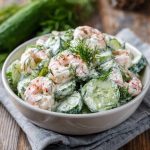
Add your dried cucumbers and chilled shrimp to the bowl. Use a large rubber spatula to gently fold the ingredients together. You aren’t looking to beat them; you just want to coat every surface. The dressing should look thick and rich, clinging to the curves of the shrimp and the flat sides of the cucumbers.
Transfer the mixture to a chilled serving bowl. For the final touch, sprinkle the remaining fresh dill over the top along with the red pepper flakes. The red flakes add a beautiful pop of color and a very subtle “visual heat” that makes the dish look professionally plated. A final crack of black pepper adds one last layer of savory depth.
Flavor Variations and Ingredient Swaps
While this recipe is a classic, there is always room for a little bit of customization. If you want to change the flavor profile slightly, you can experiment with different herbs or added vegetables. The key is to ensure that any additions don’t introduce too much extra moisture into the bowl.
If you enjoy the crisp texture from drying cucumbers, you’ll love the golden crunch of these crispy hasselback potatoes.
If you’re looking for a bit more “bite,” you can add very thinly sliced radishes. They provide a peppery crunch that complements the cool cucumber perfectly. Just like the cucumbers, you might want to give the radishes a quick pat-dry before adding them to ensure the dressing stays thick and creamy.
Dairy-Free and Vegan-Base Alternatives
If you need to avoid dairy, you can still enjoy this Creamy Dill Shrimp and Cucumber Salad. There are some fantastic cashew-based “sour creams” on the market today that have the exact tang and thickness needed for this dressing. Alternatively, a high-quality avocado oil mayonnaise can serve as the entire base.
If using only mayonnaise, I recommend adding an extra teaspoon of lemon juice to mimic the natural tang of the yogurt. The structural integrity of the salad remains the same as long as you follow the salt-sweating and drying steps for the cucumbers and shrimp.
Adding Complexity with Radishes or Red Onion
For those who love a bit of sharp contrast, red onions are a fantastic addition. To keep the onion flavor from being too aggressive, slice them paper-thin and soak them in ice water for 10 minutes before adding them to the salad. This removes the “sulfury” bite and leaves you with a crisp, sweet onion flavor.
The visual appeal of the purple onion against the green dill and pink shrimp is stunning. It adds a third dimension of flavor that elevates the dish from a simple side salad to a complex, restaurant-quality appetizer. Just remember to drain and dry the onions thoroughly before folding them in!
Troubleshooting Common Preparation Issues
Even with the best techniques, things can sometimes go slightly awry in the kitchen. The most common issue is the dressing feeling a bit too thin if the cucumbers weren’t dried enough. If this happens, don’t panic; there are easy ways to fix the consistency without starting over.
Another common concern is over-salting. If you forget to rinse the cucumbers after the sweating process, the salad might taste too salty once the dressing is added. Understanding how to balance these flavors is what separates a good cook from a great one.
What to Do if the Salad Becomes Thin
If you find your dressing is looking a little runny, the best fix is to whisk in an extra tablespoon of Greek yogurt or sour cream. This adds instant body. You can also place the salad in the refrigerator for 30 minutes; the fats in the mayonnaise and yogurt will firm up as they chill, naturally thickening the sauce.
In the future, ensure you are using a heavy-duty kitchen towel to squeeze the cucumbers. It’s often surprising how much water stays on the surface even after they look dry. The more moisture you remove at the start, the more stable your final product will be.
Correcting Over-Salted Cucumbers
If you accidentally left the salt on the cucumbers for too long or forgot to rinse them, the salad might be a bit salt-forward. To fix this, you can add a tiny pinch of sugar to the dressing. The sweetness will help neutralize the perception of salt on your tongue.
Alternatively, adding a bit more lemon juice can help. The acid cuts through the saltiness and brightens the overall flavor profile. If it’s still too salty, adding more unsalted shrimp or another half of a (properly sweated and rinsed) cucumber will help distribute the salt across more volume.
Optimal Serving and Pairing Suggestions
This salad is best served slightly chilled, but not ice-cold, as extreme cold can mute the delicate flavors of the dill and shrimp. I like to let it sit in the fridge for about 15 to 30 minutes after mixing. This gives the flavors a chance to meld together while keeping the cucumbers at their peak crunchiness.
Presentation-wise, this dish looks beautiful in a shallow glass bowl where you can see the vibrant colors. It’s a very “clean” looking dish, so keeping the garnishes simple and fresh is the way to go. It works equally well as a light main course for a summer lunch or a sophisticated side dish for a weekend brunch.
Plating for Visual Appeal
To make this look like a chef-prepared meal, try serving it on a bed of butter lettuce or bibb lettuce leaves. The soft, pale green leaves provide a beautiful frame for the creamy salad. You can also serve it in individual martini glasses for a retro-chic appetizer vibe at a cocktail party.
Don’t forget that final sprinkle of red pepper flakes. It’s not just for the heat; the tiny flecks of red against the white dressing and green dill make the dish visually pop. It signals to your guests that the dish is well-seasoned and thoughtfully prepared.
Complementary Side Dishes
If you’re turning this into a full meal, it pairs wonderfully with a piece of crusty sourdough bread to soak up any extra dressing. For something heartier, serve it alongside roasted baby potatoes seasoned with lemon and garlic. The warm potatoes provide a great temperature contrast to the chilled salad.
A light quinoa pilaf or a simple wild rice blend also works well, providing a nutty base that doesn’t compete with the creamy dill flavors. Because the salad is quite rich, avoid serving it with other heavy, cream-based sides. Stick to bright, acidic, or roasted accompaniments.
Storage and Make-Ahead Guidelines
While the salt-sweating technique makes this salad much more stable than others, it is still best enjoyed within 24 hours. Over time, even the most well-prepped cucumbers will eventually release some moisture, and the fresh dill will begin to lose its vibrant green color and punchy aroma.
Store any leftovers in an airtight container in the back of the refrigerator, which is usually the coldest spot. Do not attempt to freeze this salad. The freezing and thawing process will destroy the cellular structure of the cucumbers, leaving them mushy, and the creamy dressing will break and separate into an unappealing texture.
Frequently Asked Questions
How long can I store this salad in the fridge?
This salad is best served immediately or within a few hours of making it. However, thanks to the salt-sweating technique, it will hold up reasonably well in an airtight container for up to 24 hours. Beyond that, the cucumbers will start to lose their snap and the dressing may begin to thin out slightly.
Why is my shrimp rubbery?
Rubbery shrimp is almost always a result of overcooking.
Shrimp and Cucumber Salad
Course: SaladCuisine: AmericanDifficulty: easy4
servings20
minutes5
minutes215
kcal25
MinutesThis vibrant salad combines succulent poached shrimp with crisp English cucumbers in a zesty lemon-dill dressing. By pre-salting the cucumbers to remove excess moisture, the salad maintains a perfect creamy consistency.
Ingredients
1 pound large shrimp, peeled and deveined
2 large English cucumbers, sliced into 1/2-inch thick rounds
1/2 cup Greek yogurt or sour cream
2 tablespoons mayonnaise
1/4 cup fresh dill, finely chopped (plus extra for garnish)
1 tablespoon lemon juice
1 teaspoon lemon zest
1 teaspoon garlic powder
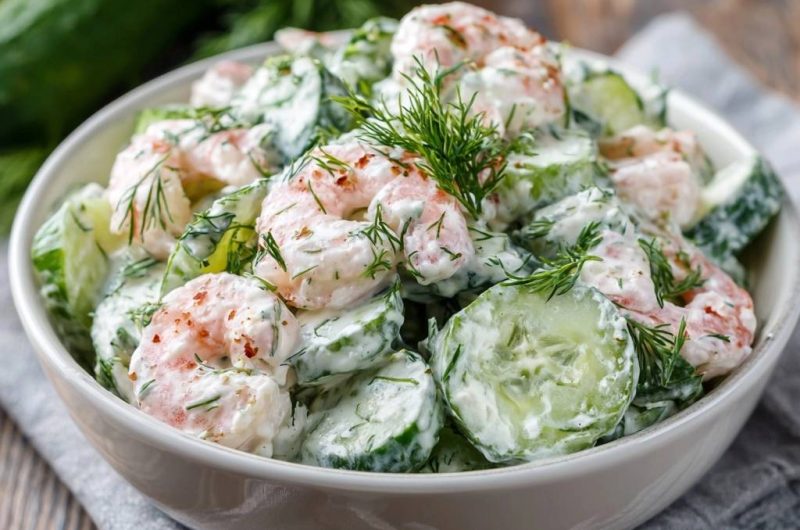
1/2 teaspoon red pepper flakes (for the visual heat shown in the image)
1 teaspoon kosher salt (for sweating cucumbers)
1/2 teaspoon cracked black pepper
Directions
- Place the sliced cucumbers in a colander set over a bowl. Sprinkle with 1 teaspoon of kosher salt and toss to coat. Let them sit for 20 minutes. This is the essential step to prevent a watery salad.
- While cucumbers sit, bring a pot of water to a boil with a pinch of salt and a slice of lemon. Add the shrimp and poach for 2 to 3 minutes until pink and opaque.
- Immediately drain the shrimp and plunge them into an ice bath for 2 minutes to stop the cooking process. Drain again and pat the shrimp completely dry with paper towels.
- Return to the cucumbers. Rinse them quickly under cold water to remove excess surface salt, then spread them on a clean kitchen towel. Roll the towel up and squeeze gently to remove as much extracted water as possible.
- In a large mixing bowl, whisk together the Greek yogurt, mayonnaise, lemon juice, lemon zest, garlic powder, and black pepper. Fold in most of the fresh dill.
- Add the dried cucumbers and chilled shrimp to the bowl. Toss gently until everything is thoroughly coated in the thick dressing.
- Transfer to a serving bowl. Garnish with the remaining fresh dill and a sprinkle of red pepper flakes and cracked black pepper to match the visual finish. Serve immediately or chill for 30 minutes. Because the cucumbers were properly sweated, the dressing will remain creamy and bold.
Notes
- The salt-sweating technique is the essential step to prevent the dressing from becoming diluted. Ensure shrimp are patted completely dry before mixing.