Chicken Piccata: Juicy Chicken Mastery

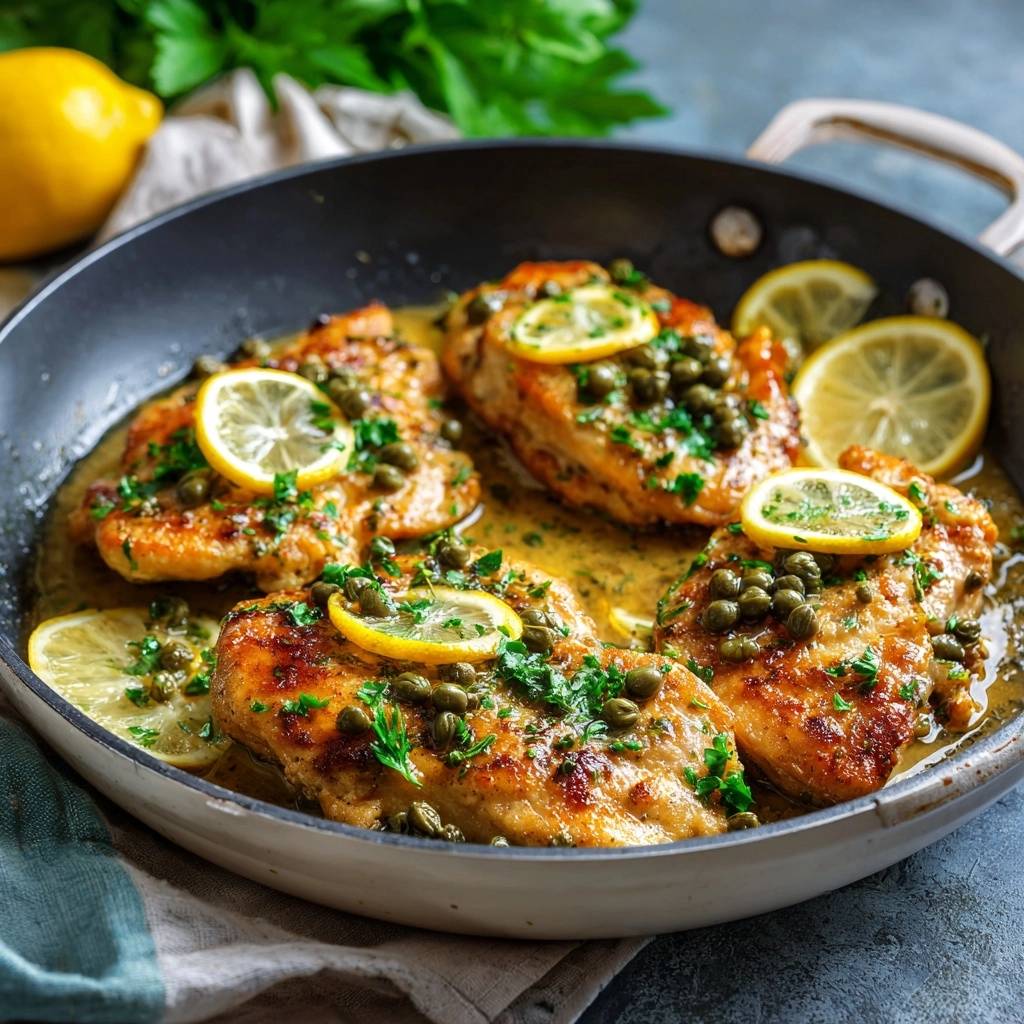
Ever bitten into chicken piccata where the meat turns out dry and tough? You’re not alone. Most home cooks skip pounding the breasts thin, so they cook unevenly and lose all their juices. But this Chicken Piccata changes that. You’ll have dinner ready in 30 minutes with golden, tender bites swimming in bright lemon-caper sauce.
Therefore, the appeal lies in that perfect balance of tangy sauce and succulent chicken. It pulls from Italian-American roots, evolving from veal scaloppine into a quick weeknight star. Thin pounding makes it ideal for busy kitchens, unlike those thick, dry versions that disappoint.
Here’s the expertise booster: pat the chicken dry after pounding. That simple step ensures a crisp sear instead of steaming. Oh man, the difference in juiciness hits every time.
Chicken Piccata Origins and Appeal
Chicken Piccata traces back to Italian-American kitchens, adapting veal scaloppine with affordable chicken. Busy cooks love it because pounding thin cuts cooking time dramatically. In addition, the sauce’s zing from lemon and capers cuts through richness perfectly.
However, thick breasts often lead to dry results in traditional recipes. This piccata chicken dish fixes that with a fast sear. You’ll get that restaurant-quality tenderness without fuss.
Fresh ingredients shine here. The evolution keeps it simple yet elegant for home tables.
Why Pound Chicken Thin for Piccata
Pounding to 1/4-inch thickness promotes even cooking. Thick breasts take longer on one side, drying out before the center hits 165F safely. Therefore, thin ones sear fast and stay juicy.
Science backs it: uniform thickness means proteins denature evenly. No more overcooked edges. You’ll notice the difference in every bite.
Key Ingredients for Tender Chicken Piccata
Start with 4 boneless skinless chicken breasts. Pound them for tenderness. Next, 1/2 cup all-purpose flour, 1 teaspoon salt, 1/2 teaspoon black pepper form the dredge that seals juices.
3 tablespoons olive oil and 3 tablespoons unsalted butter (divided) create the sear and sauce base. Unsalted butter emulsifies smoothly without overpowering saltiness. Then, 1 cup chicken broth, 1/4 cup fresh lemon juice (from 2 lemons), 1/4 cup drained capers, 1/4 cup chopped fresh parsley, and lemon slices for garnish bring brightness.
| Ingredient | Quantity |
|---|---|
| Boneless skinless chicken breasts | 4 |
| All-purpose flour | 1/2 cup |
| Salt | 1 teaspoon |
| Black pepper | 1/2 teaspoon |
| Olive oil | 3 tablespoons |
| Unsalted butter, divided | 3 tablespoons |
| Chicken broth | 1 cup |
| Fresh lemon juice | 1/4 cup (about 2 lemons) |
| Capers, drained | 1/4 cup |
| Fresh parsley, chopped | 1/4 cup |
| Lemon slices | For garnish |
Fresh lemon beats bottled for vibrant acidity. Capers add salty pop, but rinse if you want milder brine. No chicken broth? Vegetable broth works fine.
Flour Dredge: Salt, Pepper Ratios
Light dredging with 1 teaspoon salt and 1/2 teaspoon pepper avoids gumminess. Heavy flour turns chewy after sauce contact. Therefore, shake off excess for crisp results.
Salted flour seasons evenly. It creates a moisture barrier without clumping.
Lemon Juice and Capers Balance
Fresh lemon juice provides sharp acidity that tenderizes. Use exactly 1/4 cup to avoid overpowering. Capers’ brine intensifies during simmer, so drain well first.
Balance comes from reduction. Taste and add a pinch of sugar if too tart.
Science of Juicy Chicken Piccata Sear
The high-heat sear triggers Maillard reaction for golden crust. Shimmering olive oil plus 1 tablespoon butter hits 350F-400F, locking juices via protein coagulation. Chicken reaches 165F internally without drying.
Overcrowding drops temperature, steaming instead of searing. Therefore, cook in batches. This Chicken Piccata technique guarantees tenderness.
Pro tip: rest seared chicken on a warm plate. It prevents sauce sogginess.
Pounding Technique Breakdown
Use a meat mallet for precision or rolling pin for even pressure. Place chicken between plastic wrap to prevent sticking and tearing. Aim for 1/4-inch thick across the whole breast.
Start from center, work outward with firm strokes. Plastic contains mess and juices.
Equipment Essentials for Chicken Piccata
A 12-inch stainless steel skillet excels for fond buildup. Nonstick lacks browning power. In addition, an instant-read thermometer confirms 165F doneness.
Meat mallet speeds pounding evenly. Paper towels dry surfaces for better sear.
Skillet Heat Dynamics
Heat to shimmering over medium-high, about 2 minutes. Oil ripples signal readiness. For 4 breasts, two batches fit without dropping heat below 350F.
Step-by-Step: Pounding and Dredging Chicken Piccata
Place each chicken breast between plastic wrap. Pound gently to 1/4-inch using mallet or pin. Pat dry thoroughly; moisture steams the dredge.
Mix flour, salt, pepper in a dish. Dredge lightly, shake off excess. You’ll see a thin, even coat that crisps up beautifully.
Even Thickness Achievement
Pound from middle outward in short strokes. Flip and check for uniformity. Avoid tearing by not hitting too hard on edges.
Step-by-Step: Searing Golden Chicken Piccata
Heat oil and 1 tablespoon butter until shimmering. Add chicken; sear 2-3 minutes per side till golden. Probe thickest part for 165F.
If you enjoy pan-searing chicken with lemon, try this Moroccan-inspired lemon chicken skillet for a different spice twist.
Flip when edges brown. Transfer to plate in batches. The sizzle and aroma mean juices lock in tight.
Avoiding Overcrowd in Skillet
One or two breasts max per batch in 12-inch pan. Space allows heat recovery. Warm the resting plate in low oven to keep chicken cozy.
Building Bright Piccata Sauce Base
Reduce to medium, melt 2 tablespoons butter. Pour in broth and lemon juice; scrape browned bits with wooden spoon. Those fond bits pack flavor.
Simmer 3-4 minutes till slightly thick. Bubbles slow, sauce coats spoon lightly. Smells tangy and inviting.
Reduction Timing Precision
Watch for glossy sheen after 3 minutes. Taste; add broth if too sharp. Don’t boil hard or acidity fades.
Finishing Chicken in Piccata Sauce
Stir in capers and parsley. Nestle chicken back in, spoon sauce over. Simmer 1-2 minutes to infuse without drying.
Garnish with lemon slices. Sauce clings perfectly to each tender piece. Serve hot for peak brightness.
Sauce Thickening Naturally
Flour dredge releases starch into sauce during simmer. Evaporation concentrates it further. No need for thickeners; it nappes the back of a spoon naturally.
Avoiding Dry Chicken Piccata Pitfalls
Top mistakes include thick pounding, low-heat sear, over-simmering, bottled lemon, heavy dredge. Pound thin for even cook. Sear hot and fast.
Therefore, limit final simmer to 2 minutes. Fresh lemon keeps sauce lively. Light dredge prevents gumminess in Chicken Piccata troubleshooting.
Overcooking Temperature Signs
Hit 165F exactly; carryover adds 5F resting. Press test: juicy releases clear liquid, not milky. Pull off heat early if thick.
Flavor Twists on Classic Chicken Piccata
Swap broth for white grape juice base if desired. Add minced garlic after butter for aroma. Try basil over parsley for herbal lift.
Vegan twist: pound firm tofu similarly. Core stays intact for bright results.
Spice and Citrus Variations
Mix lemon-lime juice for complex tang. Pinch chili flakes adds subtle heat without overpowering capers.
Perfect Pairings for Chicken Piccata
Angel hair pasta soaks up sauce best. Roasted asparagus adds crisp green bite. Couscous bulks it quickly.
Sparkling water with lemon echoes the dish. Nutritionally, it balances protein with veggies.
Starch Matches for Sauce
Pasta’s ridges trap sauce better than rice. Couscous absorbs fully without sogginess.
Chicken Piccata Make-Ahead Strategies
Pound and sear chicken ahead, store sauce separate. Fridge up to 2 days. Reheat by simmering together gently.
Freeze seared chicken 1 month; thaw overnight. Steam reheat keeps moisture in.
Freezing and Thawing Guide
Portion chicken flat, sauce in airtight jar. Avoid freezing together to prevent mush. Thaw in fridge, reheat low to revive texture.
Chicken Piccata FAQ
Can I Use Chicken Thighs for Piccata?
Yes, boneless skinless thighs work great. Trim excess fat; pound to 1/4-inch still. Thighs stay juicier due to higher fat, but sear skin-side first if any remains. Cooking time matches breasts at 2-3 minutes per side to 165F. Pros: more forgiving moisture. Cons: slightly less crisp dredge from fat rendering. Adjust capers up for bolder salt balance.
How to Fix Too-Sour Piccata Sauce?
Too much lemon? Simmer longer to mellow acidity, or stir in 1/2 teaspoon sugar or extra broth. Balance with a pat of butter at end for emulsion. Taste after reduction; fresh lemon varies, so start with 3 tablespoons juice next time. If over-reduced, thin with splash broth. This keeps Chicken Piccata bright without puckering.
Piccata Chicken Without Capers?
Skip capers and use chopped green olives or peppercorns for briny pop. Olives mimic texture, peppercorns add spice. Reduce salt in dredge since subs bring salinity. Flavor stays punchy; parsley lifts it. Rinse olives to control intensity, just like draining capers.
Best Pan for Chicken Piccata Searing?
12-inch stainless steel or cast iron wins for heat retention and fond scraping. Nonstick avoids sticking but misses browning depth. Stainless needs oil preheat to prevent sticking. Size matters: too small crowds, dropping temp. Clean with deglaze for easy sauce base.
Scaling Chicken Piccata for Crowds?
Double recipe for 8; use two skillets to avoid overcrowd. Pound in batches, sear sequentially. Sauce scales 1:1 but simmer extra minute for reduction. Prep all dredged chicken first. Serve family-style on platter with extra lemon. Keeps juicy if not over-simmered.
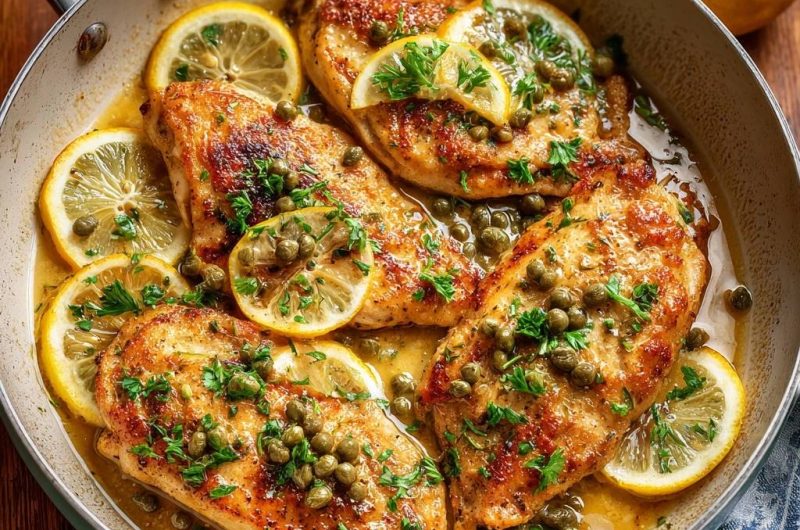
Chicken Piccata
Course: Main CourseCuisine: Italian-AmericanDifficulty: easy4
servings15
minutes15
minutes350
kcal30
MinutesSick of bland, dry chicken breasts ruining your lemon piccata? This foolproof technique pounds them thin for even cooking, sears fast to lock in juices, and finishes in the sauce for ultimate tenderness. Juicy, golden perfection every time.
Ingredients
4 boneless skinless chicken breasts
1/2 cup all-purpose flour
1 teaspoon salt
1/2 teaspoon black pepper
3 tablespoons olive oil
3 tablespoons unsalted butter, divided
1 cup chicken broth
1/4 cup fresh lemon juice (about 2 lemons)
1/4 cup capers, drained
1/4 cup fresh parsley, chopped
Lemon slices for garnish
Directions
- Place chicken breasts between two sheets of plastic wrap or parchment. Pound to 1/4-inch thickness using a meat mallet or rolling pin. This key step ensures even, quick cooking that prevents drying out. Pat dry with paper towels.
- Mix flour, salt, and pepper in a shallow dish. Dredge chicken lightly in flour mixture, shaking off excess. The thin coating creates a barrier that seals in moisture during searing.
- Heat olive oil and 1 tablespoon butter in a large skillet over medium-high heat until shimmering hot (about 2 minutes). Add chicken in batches; sear 2-3 minutes per side until golden and cooked through (internal temp 165F). Do not overcrowd. Transfer to a plate. This high-heat, quick sear locks juices inside without overcooking.
- Reduce heat to medium. In same skillet, melt remaining 2 tablespoons butter. Add chicken broth and lemon juice; scrape up browned bits. Simmer 3-4 minutes until slightly reduced.
- Stir in capers and parsley. Return chicken to skillet, spoon sauce over top, and simmer 1-2 minutes to infuse flavor without drying. Sauce thickens naturally, keeping chicken moist.
- Garnish with lemon slices and serve hot. Enjoy juicy chicken piccata that stays tender!
Notes
- Pound chicken to 1/4-inch thickness for even cooking and maximum tenderness. Sear in batches to avoid overcrowding and ensure golden crust. Internal temperature should reach 165°F.