Classic Beef Lasagna with Firm, Clean Layers
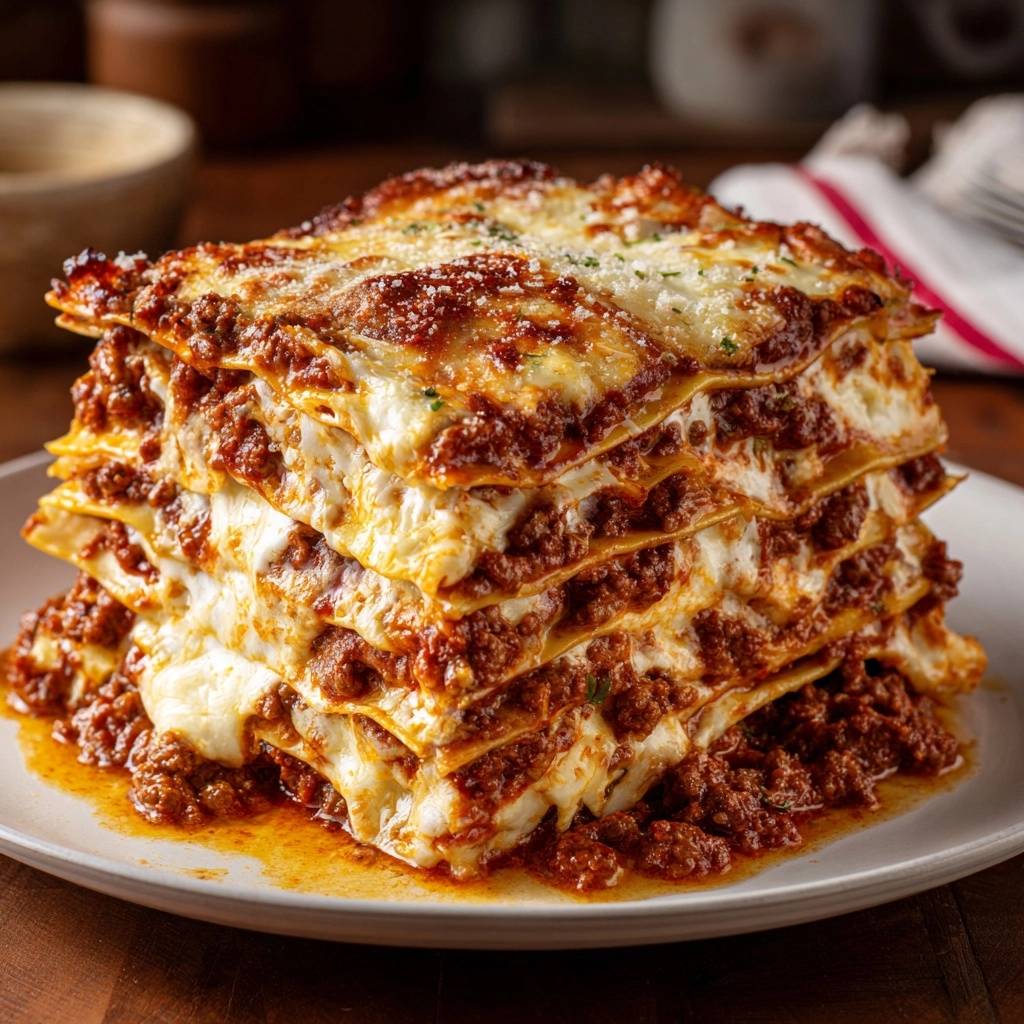
Ever slice into classic beef lasagna only to watch it slump into a watery puddle? You’re not alone. Most home cooks battle soggy layers that ruin the whole dish. But this recipe changes everything with two simple fixes: pressing the ricotta to ditch excess whey and simmering the sauce until it’s super thick.
That’s why this classic beef lasagna delivers perfect, clean slices every time. You get that satisfying structure without the mess. Families love it for weeknight dinners or gatherings because it holds up beautifully.
Here’s the expertise booster: press the ricotta for exactly 15 minutes under a weighted plate. It squeezes out whey that would otherwise pool between layers. Suddenly, your lasagna cuts like a dream.
Why Classic Beef Lasagna Demands Precision Layers
Classic beef lasagna captures that comforting pull of layered pasta perfection. It blends Italian tradition with hearty beef sauce for ultimate satisfaction. However, moisture balance makes or breaks those firm slices.
Common failures lead to soggy messes. Soggy traditional beef lasagna sheets collapse under cheese weight. Precision fixes that frustration fast.
Layered Pasta vs. Everyday Casseroles
Lasagna builds structured layers unlike loose everyday casseroles. Beef sauce weaves through for deep flavor integration. In addition, each bite stacks pasta, cheese, and sauce in harmony.
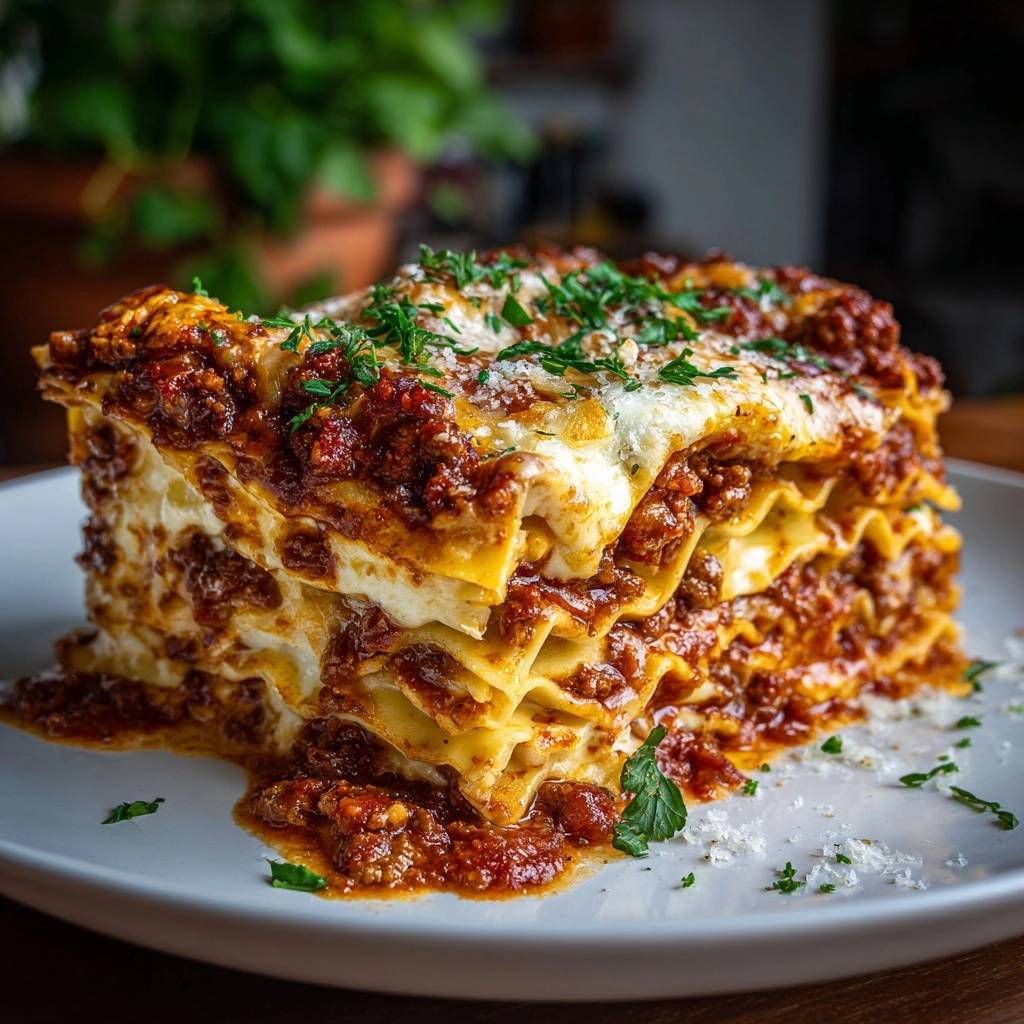
Moisture Control for Perfect Slices
Press ricotta and reduce sauce to control moisture. This previews the whey removal science. Therefore, your classic beef lasagna stays firm and sliceable.
Building Blocks for Classic Beef Lasagna Sauce
Start with 1 pound ground beef, 1 finely chopped onion, and 3 minced garlic cloves. Grass-fed beef browns richer for better flavor. Fresh onion and garlic release sweet aromatics that elevate everything.
Crushed tomatoes (28 ounces), tomato sauce (15 ounces), and 2 tablespoons tomato paste form the base. Crushed tomatoes give body without chunks. Tomato paste intensifies umami as it simmers.
Add 1 tablespoon Italian seasoning, salt, and pepper. Simmer 20 minutes on low to thicken dramatically. This evaporates water for firm classic beef lasagna layers.
Ground Beef and Aromatics Foundation
Brown beef and onion over medium heat for 8 minutes. The Maillard reaction builds savory depth. Drain fat to avoid greasiness, then add garlic for 1 minute.
Tomato Base for Thick, Rich Sauce
Crushed tomatoes beat diced for smooth texture. Tomato paste concentrates flavors. Italian seasoning (mostly oregano and basil) blooms during simmer; season late to taste.
Cheese Components in Classic Beef Lasagna
Ricotta (15 ounces) gets pressed first, then mixes with 1 egg, 1 cup shredded mozzarella, and 1/2 cup grated Parmesan. Egg binds for stability. Divide remaining 1 cup mozzarella and 1/2 cup Parmesan for layering.
Low-moisture mozzarella melts evenly. Freshly grated Parmesan adds sharp bite. Parsley garnish brings brightness at the end.
Ricotta Pressing Removes Excess Whey
Place ricotta in a fine-mesh strainer over a bowl. Top with a plate and heavy can; press 15 minutes. It firms up noticeably, ready when whey stops dripping.
Melting Mozzarella and Parmesan Duo
Shredded mozzarella browns better than blocks. Divide to prevent greasy pools. Parmesan sharpens the melt.
Science of Sauce Reduction in Beef Lasagna
Simmering evaporates about 30% liquid, concentrating flavors for viscosity. Low heat prevents scorching while beef collagen breaks down. Maillard browning from earlier unlocks nutty notes.
For the same low-and-slow technique, check out this classic beef lasagna to keep the layers firm and clean.
Stir occasionally during the 20 minutes. Sauce transforms from soupy to spoonable thick. This step ensures your classic beef lasagna layers don’t slide.
Evaporation Builds Sauce Viscosity
Before simmer, sauce is thin; after, it clings to the spoon. Stir to avoid sticking. Thickness prevents watery classic beef lasagna.
Browning Beef Unlocks Deep Flavors
Maillard reaction creates complex tastes during browning. Drain fat right after. It keeps sauce balanced.
Ricotta Draining Technique for Dry Layers
Undrained ricotta releases whey, pooling water in your lasagna. Pressing separates it via gravity and weight. Use a strainer over a bowl; mix drained ricotta with egg last for even bind.
Cheesecloth works too, but strainer’s easier. This transforms classic beef lasagna texture from sloppy to structured. Pro tip: save whey for bread dough.
Pressing Method Step Details
Set a timer for 15 minutes. Catch whey in the bowl below. Test by pressing; it should feel dry and spreadable.
Layering Sequence for Classic Beef Lasagna
Preheat oven to 375°F and grease a 9×13 dish. Spread 1 cup sauce first. Add 4 noodles, half ricotta mix, 1 cup sauce, and 1/2 cup mozzarella. Repeat once.
Top with last noodles, sauce, and cheeses. Noodles align edge-to-edge for support. Even spreads keep classic beef lasagna balanced.
First Layer: Sauce Anchor
1 cup sauce prevents noodle sticking. It anchors the build. Keeps bottom crisp.
Middle Builds: Ricotta and Noodles
No-boil noodles absorb sauce moisture. Parboil if you prefer softer texture. Use half portions exactly for even layers.
Topping for Golden Bubble
Remaining sauce and cheese create the crust. Foil tents to trap steam first. Bubbles signal doneness.
Baking and Resting Classic Beef Lasagna
Cover and bake 30 minutes to steam noodles tender. Uncover for 20 minutes until golden and bubbly. Rest 20 minutes; proteins set for clean cuts via gelatinization.
Garnish parsley post-rest. Internal temp hits 165°F safely. This timing nails firm texture.
Oven Timing for Firm Texture
Check at 165°F internally. Remove foil when edges bubble. Golden top means perfect.
Resting Locks in Structure
20 minutes firms slices without drying. Test with a knife; it glides clean. Patience pays off.
Make-Ahead and Freezing Beef Lasagna Guide
Assemble unbaked lasagna; fridge up to 2 days covered. For freezing, par-bake 30 minutes first, cool, then wrap airtight for 3 months. Thaw overnight in fridge.
If you enjoy prepping this lasagna ahead of time, the same make-ahead approach works for this rigatoni with beef and sun-dried tomato ragu.
Reheat covered at 350°F until hot. This preserves classic beef lasagna’s moisture balance. Portion into singles for easy meals.
Fridge Storage Best Practices
Cool quickly at room temp, then airtight container. Lasts 4 days. Reheat slices individually.
Freezer Thawing Without Sogginess
Double-wrap in foil. Thaw slow in fridge. Reheat foil-on to steam gently.
Avoiding Common Beef Lasagna Pitfalls
Watery layers come from skipping press or simmer. Over-sauced noodles turn mushy. Short rest cracks the top.
Fix dryness by not overbaking. These tweaks make classic beef lasagna foolproof. Watch sauce thickness closely.
Watery Layers Main Culprits
No ricotta press or short simmer causes pools. Always do both. Thick sauce first, then press 15 minutes.
Noodle and Cheese Fixes
Soggy noodles mean too much sauce; measure cups. Greasy cheese? Divide and low-moisture only.
Pairing Sides with Classic Beef Lasagna
Crisp green salad cuts richness. Garlic bread sopps up sauce perfectly. Roasted veggies add earthy contrast.
Sparkling water refreshes; herbal tea warms. Serves 8-12 generously. Balance plates smartly.
What Goes Well with Lasagna
Pairing a crisp, refreshing salad with a rich, layered beef lasagna keeps the meal balanced and satisfying.
- For a tangy, crunchy contrast to the creamy cheese and meat, try a Chopped Antipasto Salad with its briny olives and crisp vegetables.
- If you want something slightly sweet and earthy alongside the lasagna, the Crispy Roasted Butternut Squash Kale Salad brings roasted squash and hearty greens to the table.
Salad and Bread Complements
Toss arugula with vinaigrette: 2 tbsp olive oil, 1 tbsp vinegar, salt. Simple and bright. Bread toasts golden for dipping.
Classic Beef Lasagna FAQ
Can I Use No-Boil Noodles?
Yes, no-boil noodles work great in classic beef lasagna. They absorb moisture from the thick sauce during baking. If you prefer softer texture, parboil 4 minutes first. Either way, layers stay firm without extra water.
How Long Does Beef Lasagna Last?
Store classic beef lasagna in the fridge up to 4 days in an airtight container. It freezes well for 3 months if par-baked first and double-wrapped. Reheat to 165°F; avoid multiple freezes to keep texture intact.
Gluten-Free Classic Beef Lasagna?
Swap for gluten-free lasagna noodles; no-boil versions hold up best. Ensure crushed tomatoes and seasonings are certified GF. Sauce stays the same. Press ricotta as usual for firm, classic beef lasagna slices without adaptation issues.
Why Press Ricotta for Lasagna?
Pressing removes whey, the watery liquid in ricotta that pools in classic beef lasagna. After 15 minutes under weight, it firms and spreads evenly. Slices cut clean; unpressed versions turn soupy. Visual cue: whey in bowl below proves it works.
Vegetarian Beef Lasagna Adaptation?
Replace ground beef with plant-based crumbles or lentils for vegetarian classic beef lasagna. Brown them with onions for texture. Boost umami with extra tomato paste and garlic. Simmer sauce same way; layers hold perfectly with ricotta press.
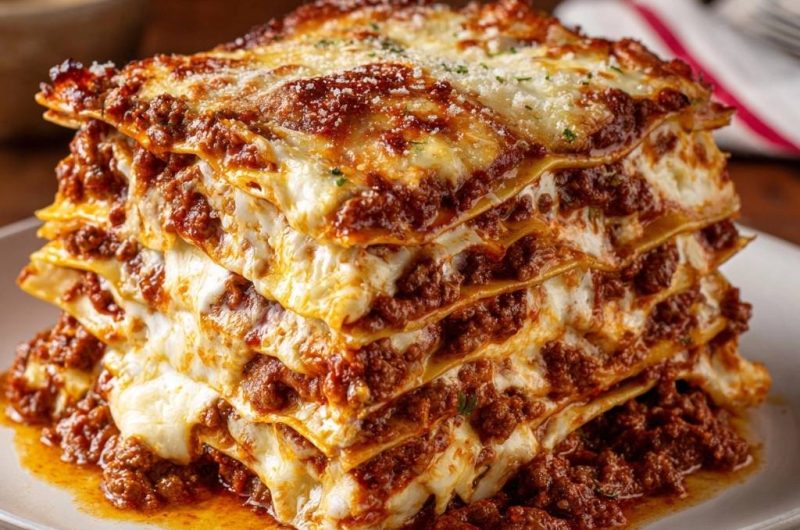
Beef Lasagna
Course: Main CourseCuisine: ItalianDifficulty: medium12
servings30
minutes1
hour450
kcal90
MinutesTired of lasagna that turns into a sloppy mess? This foolproof recipe fixes that with pressed ricotta to remove excess moisture and ultra-thick simmered sauce. Layers stay intact for clean slices and perfect bites.
Ingredients
1 pound ground beef
1 onion, finely chopped
3 garlic cloves, minced
28 ounces crushed tomatoes
15 ounces tomato sauce
2 tablespoons tomato paste
1 tablespoon Italian seasoning
Salt and pepper to taste
15 ounces ricotta cheese
1 egg
2 cups shredded mozzarella cheese, divided
1 cup grated Parmesan cheese, divided
12 lasagna noodles (no-boil or parboiled)
Fresh parsley for garnish
Directions
- Preheat oven to 375 degrees F. Grease a 9×13-inch baking dish.
- In a large skillet over medium heat, cook ground beef and onion until browned, about 8 minutes. Drain fat. Add garlic and cook 1 minute. Stir in crushed tomatoes, tomato sauce, tomato paste, Italian seasoning, salt, and pepper. Simmer on low for 20 minutes, stirring occasionally, until sauce thickens dramatically. This reduces moisture for firm layers. Cook until no pink remains and it reaches 160°F (71°C).
- Meanwhile, prepare ricotta: Place it in a fine-mesh strainer over a bowl. Top with a plate and heavy can; press 15 minutes to squeeze out whey. This is the game-changer, no watery layers! Mix drained ricotta with egg, 1 cup mozzarella, and 1/2 cup Parmesan.
- Spread 1 cup meat sauce in baking dish. Layer 4 noodles, half the ricotta mixture, 1 cup meat sauce, and 1/2 cup mozzarella. Repeat layers once. Top with remaining noodles, sauce, and cheeses.
- Cover with foil and bake 30 minutes. Uncover and bake 20 more minutes until bubbly and golden. Rest 20 minutes before slicing, this locks in structure for perfect cuts. Garnish with parsley. Serve hot.
Notes
- Pressing the ricotta and simmering the sauce thick are key tricks for firm, non-watery layers. Resting 20 minutes after baking locks in structure for perfect cuts.