Rigatoni with Beef, Sun-Dried Tomato & Sage Ragu
Why This Ragu Stays Thick and Glossy
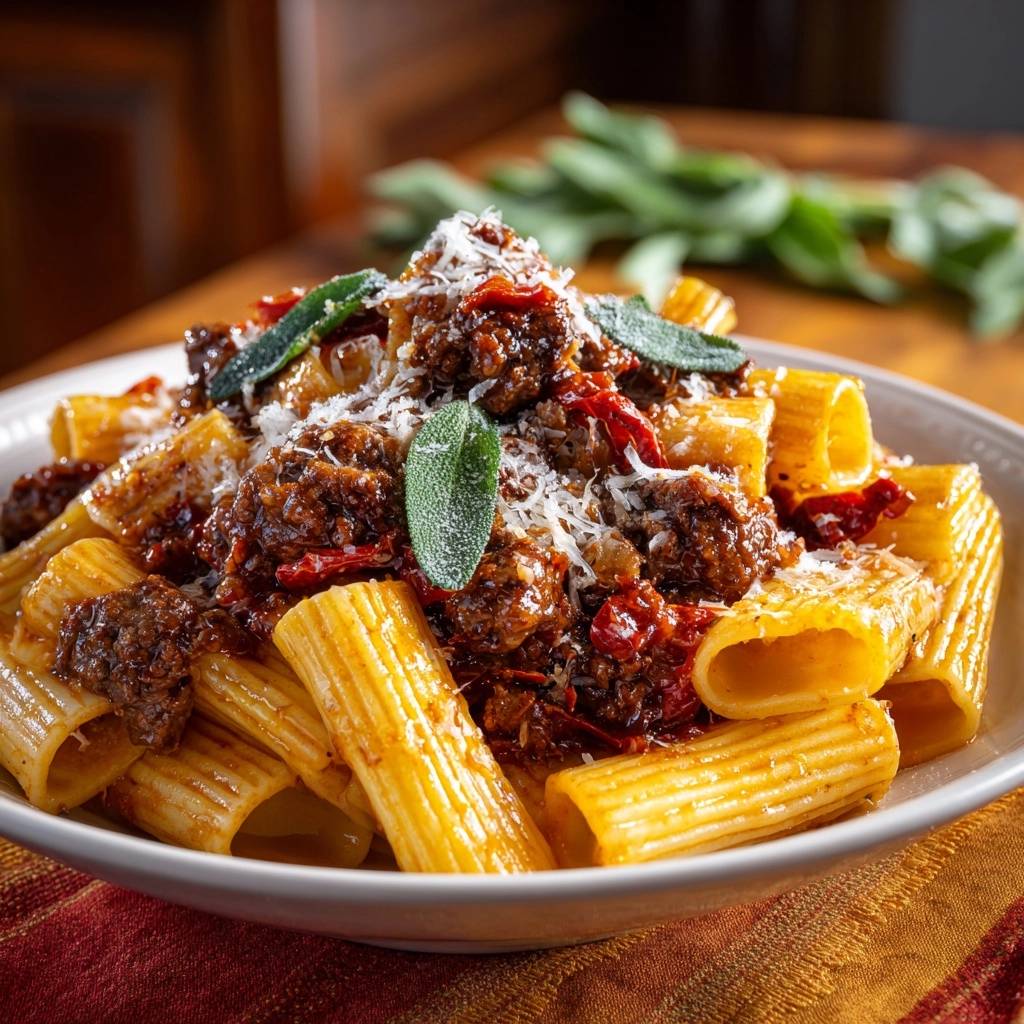
Ever stirred your ragu with pasta only to watch it turn into a watery mess? Most recipes drown the sauce with broth or tomatoes in juice. However, this rigatoni with beef, sun-dried tomato and sage ragu stays thick and glossy every time.
Therefore, you get that perfect cling to every ridge. I remember one dinner where my usual ragu pooled like soup in the bowls. Frustrating, right? This method fixes it for good.
For a perfect pairing, try our Classic Beef Lasagna with Firm, Clean Layers.
The secret lies in fully rendering the beef fat first. In addition, oil-packed sun-dried tomatoes add pure umami oils with zero liquid. A quick toss with minimal pasta water creates the emulsion. Science backs it: beef fat at 140°F separates cleanly, while sage’s aroma compounds bloom without dilution.
Key Ingredients for Concentrated Beef Ragu
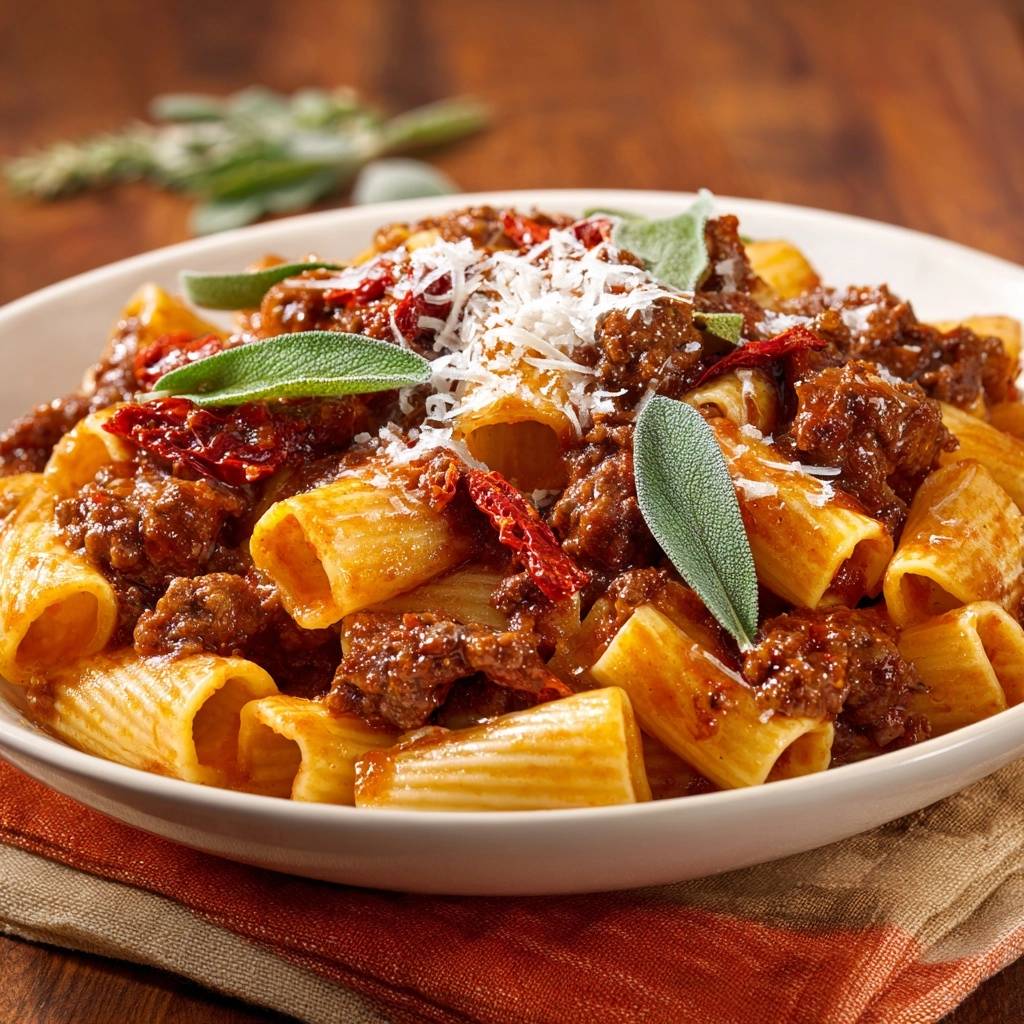
Rigatoni’s ridges trap the thick sauce perfectly. Ground beef provides the fat base for emulsification. Oil-packed sun-dried tomatoes deliver intense flavor minus water. Fresh sage releases volatile oils that meld deeply.
Parmesan cheese melts creamy without separating. Therefore, choose freshly grated over pre-shredded for smooth results. Salt enhances everything, added after rendering to avoid tough beef.
Olive oil starts the sear hot. These picks keep your ragu concentrated and glossy.
Selecting Ground Beef for Maximum Rendering
Pick 80/20 ground beef for optimal fat rendering. Lean meat stays dry and won’t emulsify well. Therefore, look for deep brown, crumbly bits with shiny fat pools as cues it’s ready.
Sun-Dried Tomatoes: Oil-Packed vs Dry
Oil-packed sun-dried tomatoes drain easily and release umami oils directly. Dry ones need rehydration, which thins sauce. Roughly chop for even infusion into the beef.
Sage Leaves: Fresh Chopped vs Whole Garnish
Chop 8 fresh sage leaves to release aroma compounds into the ragu. Save 4 whole ones for garnish; they add visual pop without bitterness. Fresh beats dried for potency.
Science of Rendering Fat in Beef Ragu
Rendering beef fat drives the Maillard reaction for deep flavor. Sear undisturbed to build crust, then stir as moisture evaporates. Proteins denature around 140°F, separating fat cleanly.
Therefore, no broth needed; the glossy base forms naturally. Skip early stirring, or you trap steam and get soup. This physics keeps sauce thick even with pasta.
Fat binds starch later for emulsion. It’s why home ragus often fail without this step.
Undisturbed Searing Phase Breakdown
Heat skillet medium-high, add beef, and leave untouched for 2 minutes. This builds crust at high temps. Then stir; you’ll smell rich beef aroma as fat renders.
Equipment Choices for Perfect Ragu Emulsion
Use a wide skillet for fast evaporation, not a Dutch oven that steams. A large pot boils pasta with control. Drain in a colander without rinsing to keep starches.
Therefore, high-sided bowls serve it right, trapping sauce. These tools prevent watery results.
Skillet Size and Material Impact
Choose a 12-inch wide stainless steel skillet. It promotes fond from sticking beef, unlike nonstick. Depth allows tossing without spill.
Step-by-Step: Building Beef and Tomato Base
Boil rigatoni in salted water until 1 minute shy of al dente. Reserve 1/4 cup water, drain well. Meanwhile, heat oil in skillet.
Add beef, break with spoon, sear undisturbed 2 minutes. Stir 8-10 minutes until crumbly and brown; fat shines, moisture gone. Salt now.
Stir in chopped sun-dried tomatoes and sage. Cook 2 minutes; tomatoes soften, oils release with sweet tang. Simmer low 3 minutes for melding. No liquids added.
Boiling Rigatoni to Al Dente Perfection
Salt water generously, like seawater. Cook 1 minute under package time for firm bite. Reserve exactly 1/4 cup starchy water; no rinse preserves cling power.
Searing and Rendering Ground Beef
Spoon-break beef into chunks. Undisturbed sear crisps edges. Stir vigorously after; evaporate all pink moisture for crumbly texture.
Infusing Sun-Dried Tomatoes and Sage
Add chopped tomatoes and sage post-render. Heat softens them fast, releasing oils. Low simmer blends flavors deeply, sauce thickens naturally.
Final Toss: Emulsifying Rigatoni with Beef Ragu
Add drained rigatoni to skillet over medium-high. Toss 1 minute; pasta heats, sauce clings. Add 1 tablespoon pasta water if needed, stir hard for silkiness.
Max 2 tablespoons total prevents dilution. Off heat, stir in Parmesan until creamy. Oh man, that glossy coat! Garnish with whole sage and extra cheese.
Sauce stays thick as it cools. Pro tip: vigorous agitation binds starch and fat.
Controlled Pasta Water for Cling
Starch in pasta water plus beef fat and tossing creates emulsion. Add 1 tablespoon at a time max. Gloss forms instantly; more ruins it.
Avoiding Common Mistakes in Beef Ragu
Don’t over-stir early; it steams beef watery. Never add broth or watery tomatoes. Rinse pasta? You’ll lose starch for emulsion.
Therefore, cook sage just right to avoid bitterness. If soupy, crank heat to reduce. These fixes save dinner.
Fixing Watery Sauce Emergencies
High-heat toss evaporates excess. Stir in extra Parmesan to bind. Works fast for glossy rescue.
Make-Ahead and Freezing Beef Ragu Guide
Store ragu and pasta separate in airtight containers up to 4 days fridge. Freezes well; portion ragu sauce alone up to 3 months. Thaw overnight.
Reheat in skillet, toss fresh pasta. Pro tip: meal prep shines here; flavors deepen.
Reheating for Glossy Leftovers
Skillet medium heat with pasta splash if dry. Toss 2 minutes; emulsion reforms perfectly.
Pairing Sides with Sun-Dried Tomato Ragu
Crisp arugula salad cuts richness. Roasted broccoli adds earthiness. Garlic bread soaks up sauce.
Chianti matches sage notes. Skip heavy starches; keep it light.
Frequently Asked Questions on Beef Ragu
Can I Use Ground Turkey Instead?
Yes, but turkey renders less fat, so add 1 tablespoon olive oil. Cook longer to brown; it dries easier. Season well; sauce still clings but less glossy than beef.
Why Oil-Packed Sun-Dried Tomatoes Only?
Dry tomatoes rehydrate with water, diluting your ragu to soup. Oil-packed drain clean, providing concentrated umami and fats for emulsion. Chop roughly for best release.
How to Scale for 6 Servings?
Double everything: 24 ounces rigatoni, 2 pounds beef. Use 14-inch skillet for evaporation. Reserve 1/2 cup pasta water; toss in batches if needed for even coating.
Substitute Dried Sage?
Use 2 teaspoons dried for 8 fresh chopped; it’s more potent. Add with tomatoes to mellow. Whole leaves won’t work; skip garnish or use fresh.
Vegetarian Version Possible?
Swap beef for crumbled mushrooms sauteed in extra oil to mimic fat. Render mushrooms dry first. Keeps thickness; sage and tomatoes shine brighter.
Rigatoni Beef Ragu
Course: Main CourseCuisine: ItalianDifficulty: easy4
servings10
minutes20
minutes650
kcal30
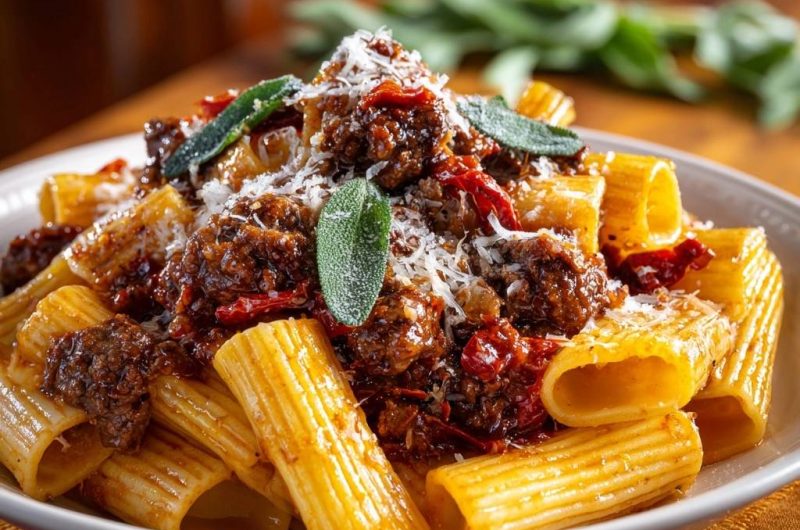
MinutesTired of ragu that thins out to soup when you mix in pasta? This recipe locks in thick, glossy sauce that clings to every ridge of rigatoni. The secret is rendering beef fat fully, using concentrated oil-packed sun-dried tomatoes with zero added liquid, and a quick high-heat toss with minimal pasta water for perfect emulsion.
Ingredients
12 ounces rigatoni pasta
1 pound ground beef
1/2 cup oil-packed sun-dried tomatoes, drained and roughly chopped
12 fresh sage leaves (8 chopped, 4 whole for garnish)
1/2 cup grated Parmesan cheese, plus more for serving
2 tablespoons olive oil
Salt to taste
Directions
- Bring a large pot of salted water to a boil. Cook rigatoni until just al dente (about 1 minute less than package directions). Reserve 1/4 cup pasta water, then drain well in a colander. Do not rinse.
- While pasta cooks, heat olive oil in a large skillet over medium-high heat. Add ground beef, breaking it up with a spoon. Cook undisturbed for 2 minutes to sear, then stir frequently for 8-10 minutes until all moisture evaporates, fat renders, and beef turns deep brown and crumbly. This renders out excess liquid for the base of your thick sauce. Season with salt. Cook until no pink remains and it reaches 160°F (71°C).
- Stir in chopped sun-dried tomatoes and chopped sage. Cook 2 minutes until tomatoes soften and release oils, infusing beef with intense flavor. No water or broth added, keeping everything ultra-concentrated. Reduce heat to low and simmer 3 minutes to meld flavors.
- Add drained rigatoni to skillet with beef. Toss over medium-high heat for 1 minute to coat pasta. If needed for silkiness, add 1 tablespoon reserved pasta water at a time (max 2 tablespoons), stirring vigorously until sauce emulsifies into a thick, glossy cling without diluting. Remove from heat.
- Stir in grated Parmesan until melted and creamy. Divide into bowls, garnish with whole sage leaves and extra cheese. Sauce stays thick even as leftovers chill. Serve hot.
Notes
- Key to thick sauce: fully render beef fat, use oil-packed sun-dried tomatoes (no added liquid), and emulsify with minimal pasta water. Sauce stays thick even as leftovers.