Cranberry Rosemary Artisan Bread
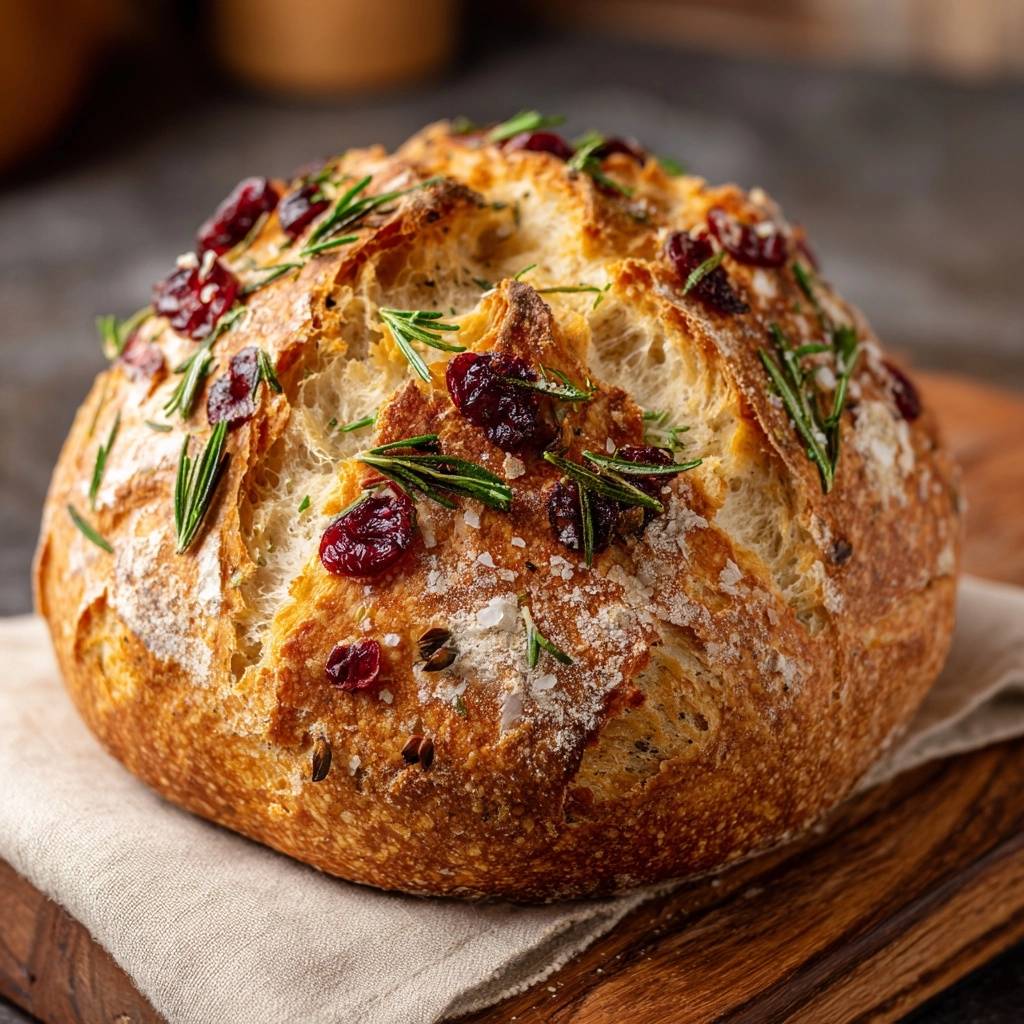
Struggling with homemade bread that comes out dense like a hockey puck? This Cranberry Rosemary Artisan Bread fixes that with a no-knead method. You’ll get that light, airy crumb everyone craves, all from a long, slow fermentation that builds strong gluten naturally. No more frustration, just bakery-quality results at home.
Therefore, this recipe shines because it skips the kneading hassle. High-hydration dough ferments slowly, trapping gas for open holes and fluffy texture. In addition, tart cranberries pop against piney rosemary, making every slice irresistible.
Here’s the expertise booster: the cold fridge ferment for 10 to 16 hours strengthens gluten strands without effort. That step alone prevents the dense crumb most home bakers fight. Get ready for Cranberry Rosemary Artisan Bread that wows.
Why Slow Fermentation Transforms Cranberry Rosemary Artisan Bread
No-knead magic happens with high-hydration dough. First, a room-temp rise builds initial bubbles. Then, the fridge takes over for slow ferment, creating deep flavor and structure.
However, kneaded bread often turns dense from overworking. This method contrasts that perfectly. Yeast works slowly, trapping gas for an open, airy crumb in your Cranberry Rosemary Artisan Bread.
Plus, the process mellows cranberries’ tartness and rosemary’s earthiness. You’ll notice bubbly dough after the fridge, signaling perfect readiness. It’s science-backed ease.
Gluten Science in No-Knead Artisan Bread
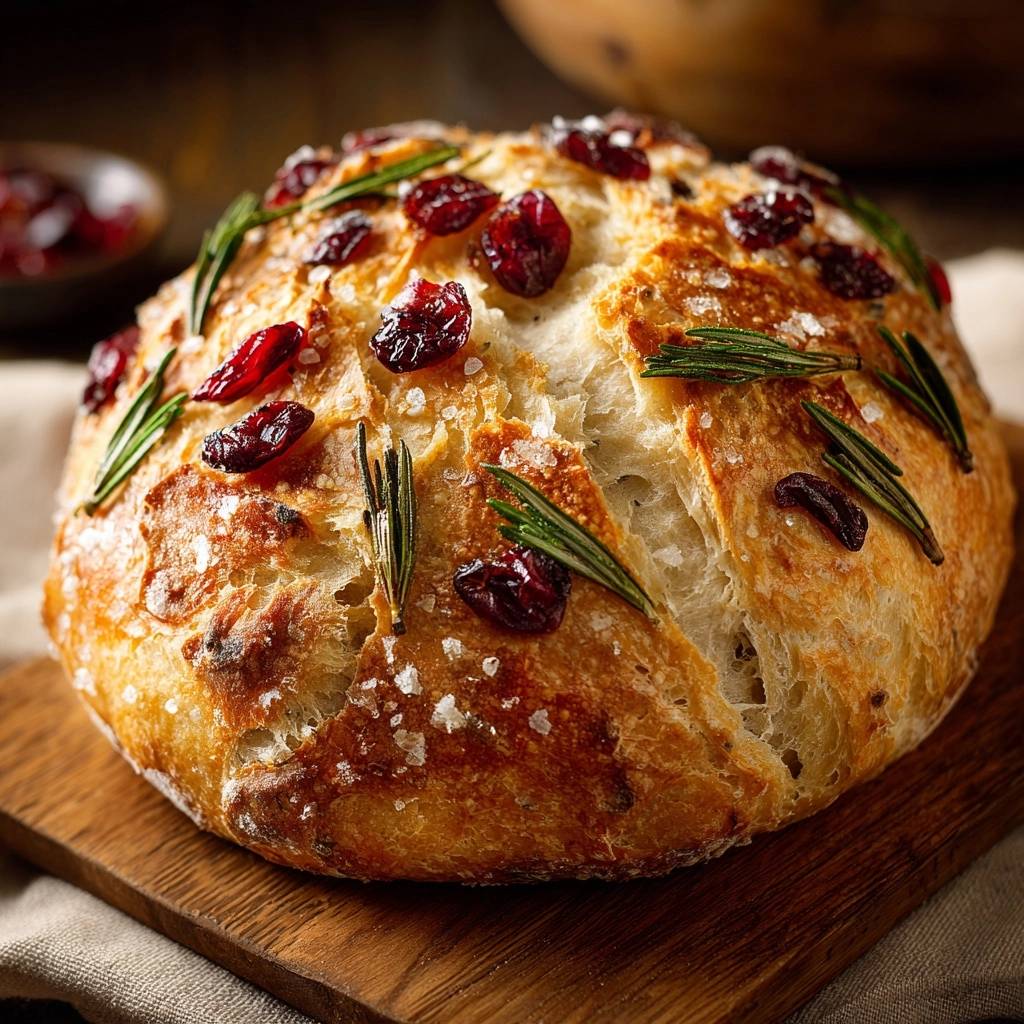
Gluten strands form naturally over 12 to 18 hours, unlike aggressive kneading that tightens them too much. Picture bubbly, stretched dough full of holes. That’s your reward.
The cold ferment prevents dense hockey pucks by slowly strengthening networks. Therefore, air bubbles stay intact for light Cranberry Rosemary Artisan Bread. No muscle required.
Cranberry and Rosemary Flavor Synergy
Tart dried cranberries balance rosemary’s herbal punch. Fermentation mellows both into harmony. It’s like rosemary cranberry bread with perfect contrast.
If you enjoy the rosemary and cranberry pairing here, you will love this rustic rosemary cranberry bread.
Chopped rosemary infuses during the rise, while cranberries add chew. However, don’t overpower; the dough carries them just right. Pure joy in every bite.
Essential Ingredients for Light Cranberry Rosemary Artisan Bread
Start with 3 1/4 cups bread flour for structure. It holds high hydration without collapsing. Then, 1 1/3 cups lukewarm water activates 1/4 teaspoon instant yeast gently.
Next, 2 teaspoons sea salt boosts flavor and controls yeast. One cup dried cranberries bring tart chew, and 3 tablespoons fresh chopped rosemary adds piney oils. Plus, extra flour for dusting and coarse salt for topping.
These create light Cranberry Rosemary Artisan Bread. Sub tip: no bread flour? All-purpose works, but expect slightly less lift. Fresh rosemary matters most.
Bread Flour vs. All-Purpose Choice
Bread flour’s high protein (12-14%) builds a strong gluten network in wet dough. All-purpose (10-12%) can work but risks denser crumb. Choose it for airy Cranberry Rosemary Artisan Bread.
Therefore, absorption differs; bread flour soaks up water during ferment for perfect texture. You’ll feel the difference in every slice.
Why Fresh Rosemary Elevates This Bread
Fresh rosemary packs potent oils that chopping releases for infusion. Dried lacks punch and can turn bitter. Cranberries temper it perfectly.
In addition, fermentation extracts those oils slowly. That’s why your Cranberry Rosemary Artisan Bread smells heavenly straight from the oven.
Equipment Needs for Perfect Cranberry Rosemary Artisan Bread
You need a Dutch oven for steam-trapped crust. Parchment eases transfer, and a proofing basket helps shape, though a bowl works. Preheat to 450°F for 45 minutes.
Wire rack cools it evenly, avoiding sogginess. Thermal shock from the hot pot expands dough for oven spring. Simple tools yield pro results in Cranberry Rosemary Artisan Bread.
Dutch Oven’s Role in Crust Development
Cast iron holds heat, and the lid traps steam for bakery crackle. It mimics pro ovens perfectly. No Dutch oven? Use a covered heavy pot.
Therefore, you get that deep golden crust on Cranberry Rosemary Artisan Bread every time. Crisp outside, airy inside.
Phase 1: Mixing Shaggy Dough for Cranberry Rosemary Artisan Bread
Whisk flour, yeast, salt, chopped rosemary, and cranberries in a large bowl. Add lukewarm water. Stir with a wooden spoon until shaggy, no dry spots.
It’s sticky high-hydration dough, key for airiness. Don’t worry about smoothness; preserve lumps for bubbles. This starts your perfect Cranberry Rosemary Artisan Bread.
Cover tightly with plastic wrap. Pro tip: wet hands help if spoon sticks.
Phase 2: Controlled Rise and Cold Ferment Technique
Let rise at room temp for 2 hours until doubled and bubbly. Bubbles mean gluten’s waking up. Then, fridge it 10 to 16 hours.
Cold slow ferment builds strong gluten and flavor depth without kneading. Dough smells tangy and looks full of holes. That’s your cue for Cranberry Rosemary Artisan Bread success.
Preserving Air Bubbles During Shaping
Flour a surface heavily. Gently fold edges under to form a ball, seam side up. No punching; keep bubbles intact.
Place in parchment-lined bowl or basket. Cover for 1-2 hours until puffy. Gentle hands ensure light Cranberry Rosemary Artisan Bread.
Phase 3: Proofing, Baking, and Cooling Mastery
Preheat oven to 450°F with Dutch oven inside for 45 minutes. Transfer dough seam side down on parchment. Top with rosemary sprigs and coarse salt.
Bake covered 30 minutes, then uncovered 15 more until deep golden. Internal temp hits 210°F. Cool on wire rack 2 hours; steam escapes for best crumb.
Pro tip: use oven mitts; it’s scorching. Your Cranberry Rosemary Artisan Bread emerges crackly and fragrant.
Oven Spring and Internal Temperature Check
Lid-on steam drives massive oven spring. Uncover for Maillard browning and crisp crust. Thermometer at 210°F prevents gummy centers.
Therefore, every loaf of Cranberry Rosemary Artisan Bread bakes perfectly. No guesswork.
The Science Behind No-Knead Cranberry Rosemary Artisan Bread
Hydration triggers autolyse, softening flour naturally. Cold ferment lets enzymes tenderize while gluten strengthens. Gas pockets form big holes.
Maillard reaction browns the crust, and cranberries’ pectin adds subtle chew. It’s why this no-knead Cranberry Rosemary Artisan Bread tastes pro.
In addition, slow yeast builds complex flavors. Bubbles you see? Trapped CO2 for lightness.
High-Hydration Dough Hydration Ratios Explained
75%+ hydration (water to flour) makes sticky dough that bakes airy. Flour absorbs slowly during ferment. Lower it, and you get density.
That’s the math for perfect Cranberry Rosemary Artisan Bread. Embrace the stickiness.
Avoiding Common Mistakes in Cranberry Rosemary Artisan Bread
Dense crumb? You overhandled or short-fermented. Gummy means underbaked; check temp. Flat loaf from deflating during shape.
Flour dust generously, test yeast freshness in water first. These fixes guarantee light Cranberry Rosemary Artisan Bread. Patience pays off.
Fixing Dense Crumb Issues
Weak gluten shows as tight, flat slices. Solution: longer fridge time builds strength. Always gentle folds.
Flavor Variations for Cranberry Rosemary Artisan Bread
Swap cranberries for cherries or raisins. Try thyme or orange zest instead of rosemary. Add walnuts for crunch.
Savory twist: olives and cheese. Keep no-knead core for variations on Cranberry Rosemary Artisan Bread. Experiment freely.
Make-Ahead and Storage Guide for Artisan Bread
Dough ferments up to 24 hours in fridge. Baked loaf stays fresh 2 days at room temp in a bag. Freeze slices 3 months.
Thaw and refresh at 350°F for 5 minutes. Perfect for Cranberry Rosemary Artisan Bread anytime.
Pairing Ideas for Cranberry Rosemary Artisan Bread
Pair with brie or goat cheese for creamy contrast. Dip in soups or add to salads. Holiday tables love it.
Compound butter with honey amps the tart rosemary vibe. Simple, delicious matches.
Frequently Asked Questions About Cranberry Rosemary Artisan Bread
Can You Knead This Artisan Bread?
No, kneading defeats the no-knead purpose. It pops bubbles and tightens gluten too fast. Stick to gentle folds for airy Cranberry Rosemary Artisan Bread.
Freezing Fully Baked Loaf?
Yes, wrap tightly in plastic and foil. Freeze up to 3 months. Thaw at room temp, refresh in 350°F oven for crisp crust.
How Do You Store Leftovers of Cranberry Rosemary Artisan Bread?
Keep in a paper-lined airtight bag at room temp for 2 days. Fridge shortens freshness, so avoid. It freezes well sliced; no sogginess after thawing.
Why Is My Cranberry Rosemary Artisan Bread Dense?
Common issue: short ferment or overhandling. Extend fridge to 16 hours for strong gluten. Check bubbly surface before baking; that’s your sign of success.
Can I Substitute Ingredients in Cranberry Rosemary Artisan Bread?
Use active dry yeast? Proof in water first. No bread flour? All-purpose, but add 1/4 cup more for lift. Fresh cranberries? Reduce to 3/4 cup; they release juice.
Why Cool Cranberry Rosemary Artisan Bread for 2 Hours?
Starch sets fully, preventing gumminess. Slicing early releases steam, making crumb dense. Patience yields that perfect, moist interior.
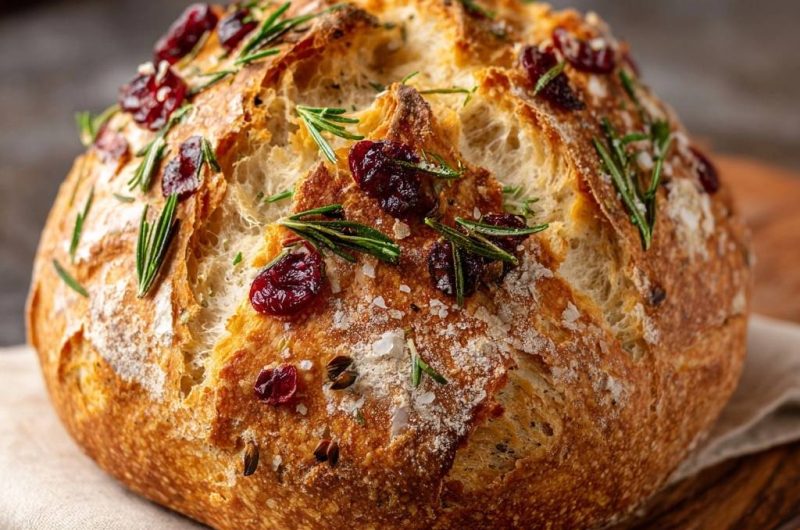
Cranberry Rosemary Bread
Course: BreadCuisine: AmericanDifficulty: medium1
loaf20
minutes45
minutes750
kcal960
MinutesHomemade bread always turns out like a hockey puck? This foolproof no-knead method uses a long, slow fermentation to build strong gluten naturally, delivering that light, airy crumb with zero kneading hassle. Cranberries and rosemary make it irresistible.
Ingredients
3 1/4 cups bread flour
1 1/3 cups lukewarm water
1/4 teaspoon instant yeast
2 teaspoons sea salt
1 cup dried cranberries
3 tablespoons fresh rosemary, finely chopped (plus 4 sprigs for topping)
Extra flour for dusting
Coarse sea salt for sprinkling
Directions
- In a large bowl, whisk together flour, yeast, salt, chopped rosemary, and cranberries. Add water and stir with a wooden spoon until a shaggy dough forms, no dry spots remain. It will be sticky, high-hydration dough, perfect for airy results.
- Cover bowl tightly with plastic wrap. Let rise at room temperature for 2 hours until doubled and bubbly. This starts gluten development.
- Transfer to fridge for 10 to 16 hours. The cold, slow ferment is the key to no dense crumb: it strengthens gluten strands slowly, trapping gas for open, fluffy texture without kneading.
- Remove dough from fridge. Turn onto heavily floured surface. Gently shape into a ball by folding edges under, preserving air bubbles. Do not punch down.
- Place on parchment-lined bowl or proofing basket, seam side up. Cover and let rest 1 to 2 hours until puffy.
- Preheat oven to 450 degrees F with Dutch oven inside for 45 minutes.
- Carefully place dough seam side down in hot Dutch oven on parchment. Top with rosemary sprigs and sprinkle coarse salt. Cover and bake 30 minutes.
- Uncover and bake 15 minutes more until deep golden with crackly crust. Internal temp should hit 210 degrees F.
- Cool on wire rack 2 hours before slicing. Enjoy bakery-style crumb that stays light, never dense.
Notes
- The cold, slow ferment in the fridge (10-16 hours) is key to developing strong gluten for an open, fluffy texture without kneading. Cool completely on wire rack for 2 hours before slicing to achieve bakery-style crumb.