Rustic Rosemary Cranberry Bread Recipe
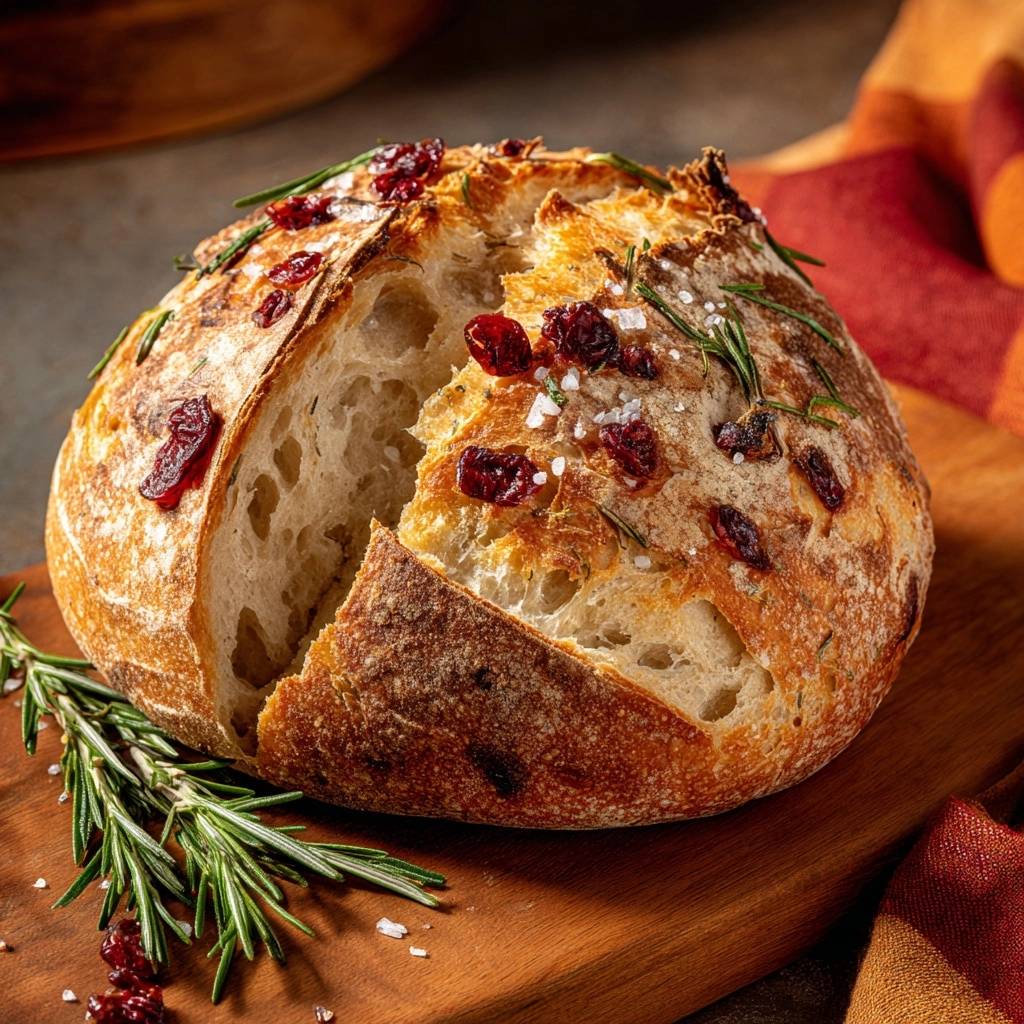
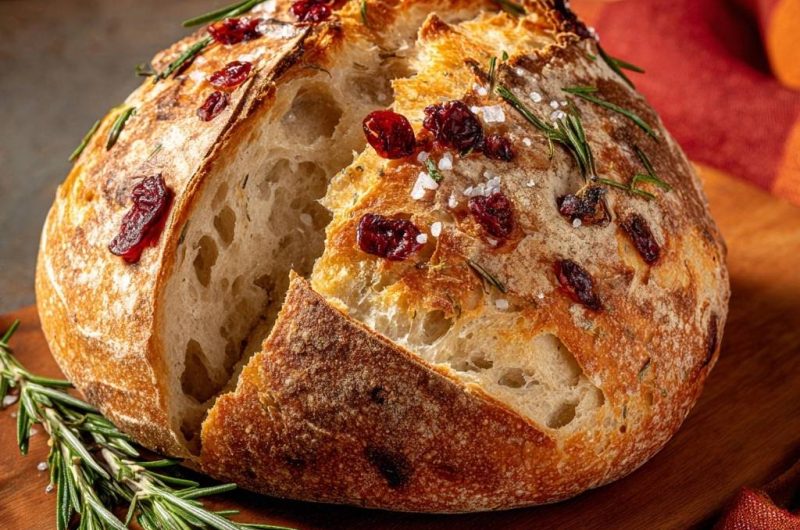
Tired of pulling dense, hockey puck loaves from your oven? This rustic rosemary cranberry bread fixes that with a no-knead, high-hydration method that delivers an open, airy crumb every time. You mix it up in minutes, then let time do the work. Dinner table bread beats takeout, and it costs pennies.
Therefore, you get that bakery-style hole structure without fancy skills or equipment. The tart cranberries pop against earthy rosemary, all wrapped in a crackly crust. Plus, the cold ferment builds flavor depth that store-bought can’t touch.
Here’s the pro tip that seals it: during the cold ferment, enzymes slowly strengthen gluten without you lifting a finger. That prevents the tough, flat results most home bakers face. Your rustic rosemary cranberry bread rises tall and stays light.
Why Rustic Rosemary Cranberry Bread Succeeds
This rustic rosemary cranberry bread shines because no-knead ease meets bold flavors. Tart dried cranberries balance the piney punch of fresh rosemary. However, the real win comes from ditching dense failures for holiday-worthy texture.
In addition, high hydration creates steam pockets for airiness. You avoid the overworked dough trap. Consequently, every slice boasts chew and openness that wows.
High-Hydration Magic for Open Crumb
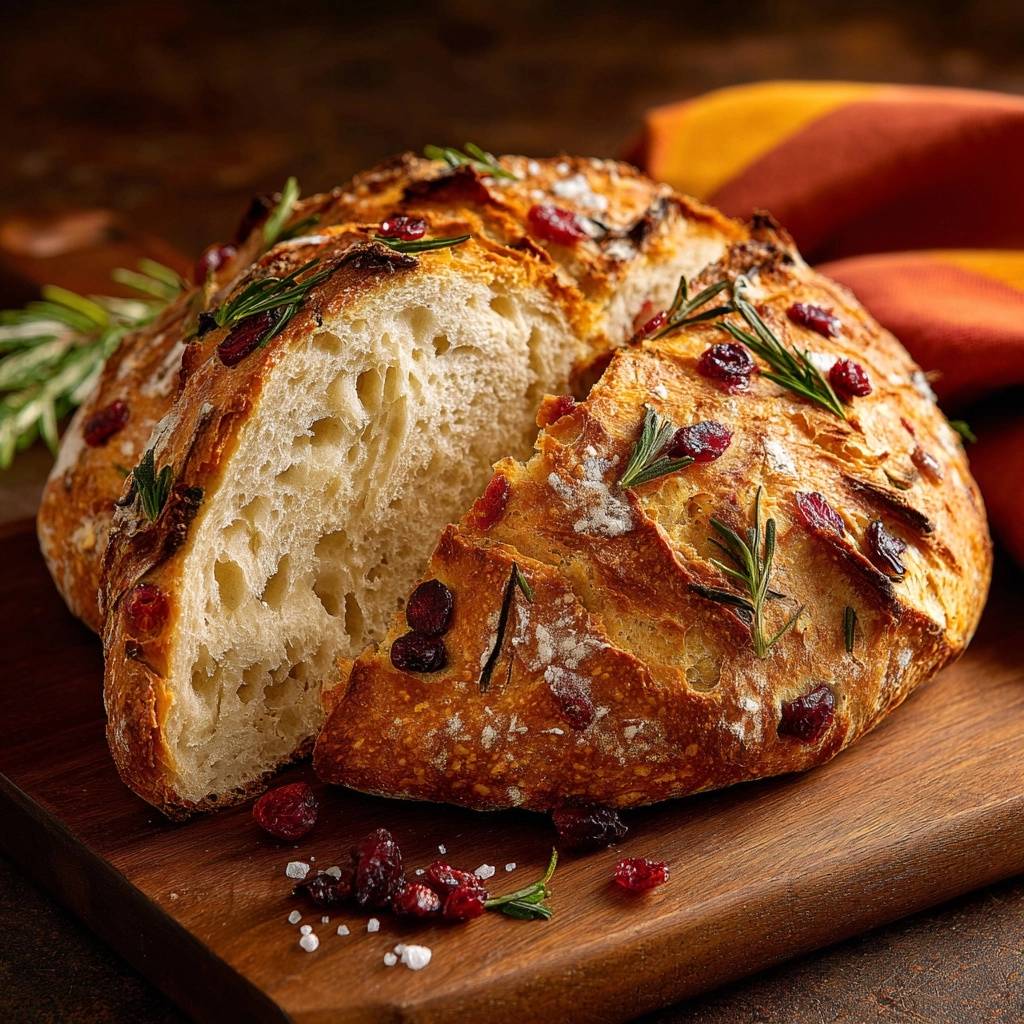
At 75% hydration, this rustic rosemary cranberry bread dough stays shaggy and wet. That wetness turns to steam in the oven, puffing up massive air bubbles. No more hockey pucks; you get that sought-after open crumb instead.
Cold Ferment Builds Rustic Flavor Depth
The 12-18 hour fridge rest lets yeast ferment slowly. Gluten develops gently, and cranberry-rosemary flavors intensify. Best of all, you need zero kneading skills for pro results.
Key Ingredients for Rustic Rosemary Cranberry Bread
Bread flour forms the backbone with its high protein content. It builds a strong gluten network during the no-knead process. Sea salt enhances flavors and controls yeast for even rise.
Dried cranberries add chew and tart bursts that cut through rosemary’s earthiness. Fresh rosemary, chopped fine, releases potent oils for aroma. Warm water activates yeast perfectly at 100-110F.
Pro tip: plump cranberries in warm water first if they’re super dry. That prevents clumping. These picks make your rustic rosemary cranberry bread foolproof.
Bread Flour vs All-Purpose Choice
Bread flour’s 12-14% protein creates superior gluten for no-knead rustic rosemary cranberry bread. All-purpose falls short, leading to slack dough and dense loaves. Stick with bread flour for success.
Fresh Rosemary and Dried Cranberries Balance
Chop fresh rosemary leaves finely to avoid woody bits. Dried cranberries’ chew contrasts the airy crumb perfectly. Together, they elevate your rustic rosemary cranberry bread’s profile.
If you enjoy pairing cranberry with cheese, you’ll love this savory cranberry brie monkey bread for a similar sweet-savory kick.
Science of No-Knead Rustic Rosemary Cranberry Bread
High hydration triggers autolyse, where flour hydrates fully for better gluten. Yeast byproducts add tang during ferment. Cold temps strengthen structure without kneading, trapping air for open crumb.
Therefore, bakers see bubbles double in size post-ferment. Steam from the Dutch oven mimics bakery ovens. Your rustic rosemary cranberry bread gets crusty Maillard browning too.
Cold Fermentation’s Gluten Transformation
Protease enzymes break down proteins slowly over 12-18 hours. This prevents toughness in high-hydration rustic rosemary cranberry bread. Gluten firms up just right for oven spring.
Steam and Maillard for Crusty Exterior
Dutch oven traps steam for initial rise. Then, uncovered baking triggers Maillard with salt and rosemary. You end up with golden, crackly crust on rustic rosemary cranberry bread.
Essential Equipment for Rustic Rosemary Cranberry Bread
A preheated Dutch oven delivers bakery steam for massive oven spring. Parchment prevents sticking during transfer. A proofing bowl keeps shape without deflating your rustic rosemary cranberry bread.
No Dutch oven? Use a covered cast iron pot or baking stone with a steam pan. However, cast iron’s heat retention wins for pro crust. Score with a sharp blade for controlled expansion.
Dutch Oven Heat Retention Explained
Cast iron holds 450F heat, creating instant steam for rustic rosemary cranberry bread’s rise. Score at a 45-degree angle to guide expansion. That ensures even, beautiful cracks.
Step-by-Step: Mixing Rustic Rosemary Cranberry Bread Dough
Whisk yeast into warm water; watch it foam in 5 minutes for live proof. Stir in flour, salt, cranberries, and rosemary. The shaggy, sticky dough feels wet, but that’s key for steam pockets.
Avoid the urge to knead. High hydration handles itself. Cover tightly; you’re set for rise.
Yeast Activation and Shaggy Dough Formation
Keep water at 100-110F to wake yeast without killing it. Fold in cranberries and rosemary evenly for bursts in every bite. Shaggy means right; smooth means overworked.
Step-by-Step: Fermenting and Shaping Technique
Let dough bubble and double at room temp for 1 hour. Refrigerate 12-18 hours; it smells tangy and yeasty. Turn out on floured surface; it holds shape loosely.
For those who prefer a sweeter twist on this bread, try the glazed cranberry orange loaf instead.
Gently fold edges to center four times. That redistributes fruit without popping bubbles. Shape into a tight ball, seam up on parchment in a bowl. Proof 1-2 hours till puffy.
Gentle Folds to Redistribute Fruit Herbs
Fold lightly to preserve air; aggressive handling kills oven spring. Surface tension from folds holds the rustic rosemary cranberry bread shape. Proof seam-up for even bake.
Step-by-Step: Baking Rustic Rosemary Cranberry Bread
Preheat oven and Dutch oven to 450F for 30 minutes. Score top deeply, add coarse salt and rosemary sprigs. Slide parchment into hot pot; cover for 30 minutes of steamy rise.
Uncover for 15 minutes; crust turns deep golden. Cool on rack 1 full hour. Steam escapes, keeping interior chewy, not gummy.
Scoring and Dutch Oven Transfer Precision
Score with a lame or sharp knife at 45 degrees for ear formation. Transfer fast to retain heat. Lid-on phase builds structure in rustic rosemary cranberry bread.
Avoiding Common Mistakes in Rustic Rosemary Cranberry Bread
Don’t skip full preheat; cold pots flatten loaves. Resist kneading the shaggy dough. Check hydration; too dry means dense crumb.
Fruit clumps? Toss in flour first. Overproofing collapses structure, so watch the clock. These fixes guarantee airy rustic rosemary cranberry bread.
Preventing Dense Crumb Pitfalls
Measure hydration precisely; short ferments weaken gluten. Handle gently post-fridge. Proper folds fix fruit distribution for even rustic rosemary cranberry bread.
Oven Spring Failures and Fixes
Use oven thermometer for true 450F. Bake straight from fridge for best spring. Weak preheat dooms rustic rosemary cranberry bread to flatness.
Flavor Variations for Rustic Rosemary Cranberry Bread
Add 1/4 cup chopped walnuts for crunch against soft crumb. Orange zest brightens cranberry tartness; use 1 tablespoon. Swap thyme for rosemary if you want milder herb.
Gluten-free? Try a 1:1 blend, but expect denser texture. These keep the rustic rosemary cranberry bread vibe intact.
What to Serve With This Bread
This rustic cranberry bread leans into tart-sweet flavors and a crumbly texture, so consider sides that echo those notes or contrast them with creamy richness.
- For a lunch option that keeps the cranberry theme going, pair slices with this Creamy Cranberry Pecan Chicken Salad – the creamy base and crunchy pecans match the bread’s texture and tang.
- If you want a dessert
Nut Additions and Citrus Twists
Fold in walnuts post-first rise for even crunch. Zest one orange; it balances without overpowering rustic rosemary cranberry bread. Taste dough; adjust salt if needed.
Make-Ahead Guide for Rustic Rosemary Cranberry Bread
Extend ferment to 24 hours for deeper tang. Freeze shaped dough on parchment; thaw overnight, then proof. Baked loaves wrap and freeze slices up to a month.
Reheat at 350F for 10 minutes to revive crust. Room temp storage lasts 3 days wrapped. Plan ahead for fresh rustic rosemary cranberry bread anytime.
Freezing Dough and Baked Loaf Tips
Wrap frozen dough tightly in parchment and plastic. Thaw in fridge, proof at room temp. Slices re-crisp faster than whole rustic rosemary cranberry bread.
Pairing Ideas for Rustic Rosemary Cranberry Bread
Slice thick for brie or goat cheese; the tartness cuts richness. Dunk in butternut squash soup for cozy meals. Toss on salads or toast for breakfast with butter.
Holiday boards love its looks and pop. Cranberry-rosemary shines with sharp cheddar too. Versatile rustic rosemary cranberry bread fits any spread.
Rustic Rosemary Cranberry Bread FAQ
Instant Yeast vs Active Dry Differences
Yes, use instant yeast without proofing; skip the 5-minute foam wait. Reduce to 3/4 teaspoon and mix directly into flour for rustic rosemary cranberry bread. It ferments faster, so check rise early.
Scaling for Larger Rustic Loaves
Double ingredients; keep 75% hydration by scaling water too. Bake 40-45 minutes total at 450F. Use a bigger Dutch oven for even cooking in bigger rustic rosemary cranberry bread.
Can I Use Fresh Cranberries Instead?
Fresh cranberries work but add 2 tablespoons sugar to counter extra tartness and moisture. Chop them small to avoid sogginess. They burst beautifully in rustic rosemary cranberry bread.
What If I Don’t Have a Dutch Oven?
Bake on a preheated stone with a pan of hot water below for steam. Or use a covered casserole dish. Both mimic the effect for crusty rustic rosemary cranberry bread.
Why Cool the Bread for a Full Hour?
Cooling lets starch retrograde, turning gummy crumb chewy. Slicing hot traps steam, making it dense. Patience rewards with perfect rustic rosemary cranberry bread texture.
How Do I Store Leftovers and Freeze?
Wrap tightly at room temp for 3 days; fridge dries it out. Freeze slices in bags up to 1 month; thaw and re-crisp at 350F. Whole loaves freeze well too, wrapped in foil first.
Rosemary Cranberry Bread
Course: BreadCuisine: AmericanDifficulty: mediumYields1
loafPrep Time20
minutesCook Time45
minutesCalories450
kcalTotal Time1080
MinutesTired of homemade bread turning out like a hockey puck? This foolproof no-knead method uses high hydration and a long cold ferment to trap air bubbles for that perfect open, airy crumb every single time. No stand mixer, no fancy skills needed.
Ingredients
3 cups bread flour
1 1/2 cups warm water
1 teaspoon active dry yeast
2 teaspoons sea salt (plus extra coarse for topping)
1/2 cup dried cranberries
3 tablespoons fresh rosemary, chopped (plus sprigs for garnish)
Directions
- In a large bowl, whisk yeast into warm water. Let sit 5 minutes until foamy. Stir in flour, 2 teaspoons sea salt, cranberries, and chopped rosemary until a shaggy dough forms. No kneading required, high hydration (75%) creates steam pockets for open crumb.
- Cover bowl with plastic wrap. Let rise at room temp 1 hour until bubbly, then refrigerate 12-18 hours. Cold ferment develops gluten slowly, preventing dense texture by building structure without overworking.
- Remove dough, turn onto floured surface. Gently fold edges to center 4 times to redistribute fruit and herbs without deflating air. Shape into tight ball, place seam-side up on parchment-lined bowl. Cover, rise 1-2 hours until puffy.
- Preheat oven to 450F with Dutch oven inside 30 minutes. Score loaf top, sprinkle coarse salt and rosemary sprigs. Place in hot Dutch oven, cover, bake 30 minutes. Uncover, bake 15 minutes more for crusty exterior.
- Cool on rack 1 hour. Slice to reveal open crumb that stays light and chewy, never dense. Store wrapped at room temp up to 3 days.
Notes
- High hydration (75%) creates steam pockets for open crumb. Cold ferment develops gluten slowly, preventing dense texture. Cool on rack 1 hour before slicing. Store wrapped at room temp up to 3 days.