Homemade Burrata Cheese
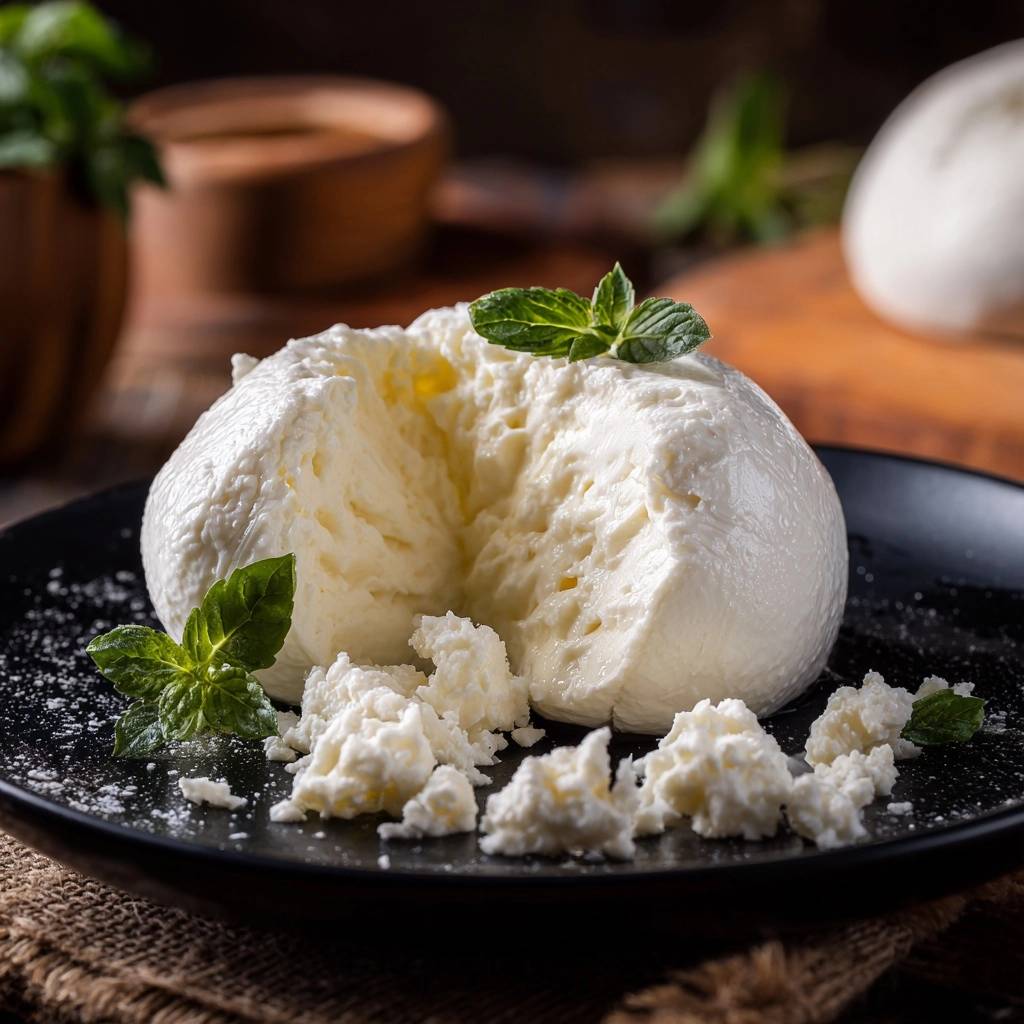
Struggling with rubbery homemade burrata cheese that squeaks like a bad tire? You’ve hit the common wall where curds turn tough instead of taffy-smooth. This recipe fixes it with precise heat bursts and a quick microwave stretch, delivering that luxurious ooze store-bought versions fake.
Therefore, you control every step for peak freshness and creaminess. In addition, it costs under $10 to make four gourmet balls, beating the $10+ price tag at fancy shops. You’ll savor the transformation from plain milk to burst-in-your-mouth bliss.
The secret lies in hitting exactly 135F during the stretch. Go over 140F, and proteins toughen up fast. However, with a thermometer and gloved hands, your curd gleams glossy and stretches like silk every time.
Why Make Homemade Burrata Cheese
Fresh homemade burrata cheese tastes worlds better than the chewy store versions packed with preservatives. You get that pillowy exterior and creamy stracciatella center that drips perfectly over tomatoes. Plus, one gallon of milk yields four balls for pennies compared to gourmet prices.
Customization shines here too. Dial in the cream ratio for extra ooze or firmer bites. And the microwave technique? It prevents the rubbery fails that plague most home attempts.
Cost and Freshness Advantages
A gallon of whole milk runs about $4, plus cheap citric acid and rennet. That makes each burrata under $2.50, versus $10+ at stores. Freshly made, it bursts with pure dairy flavor, no additives dulling the taste.
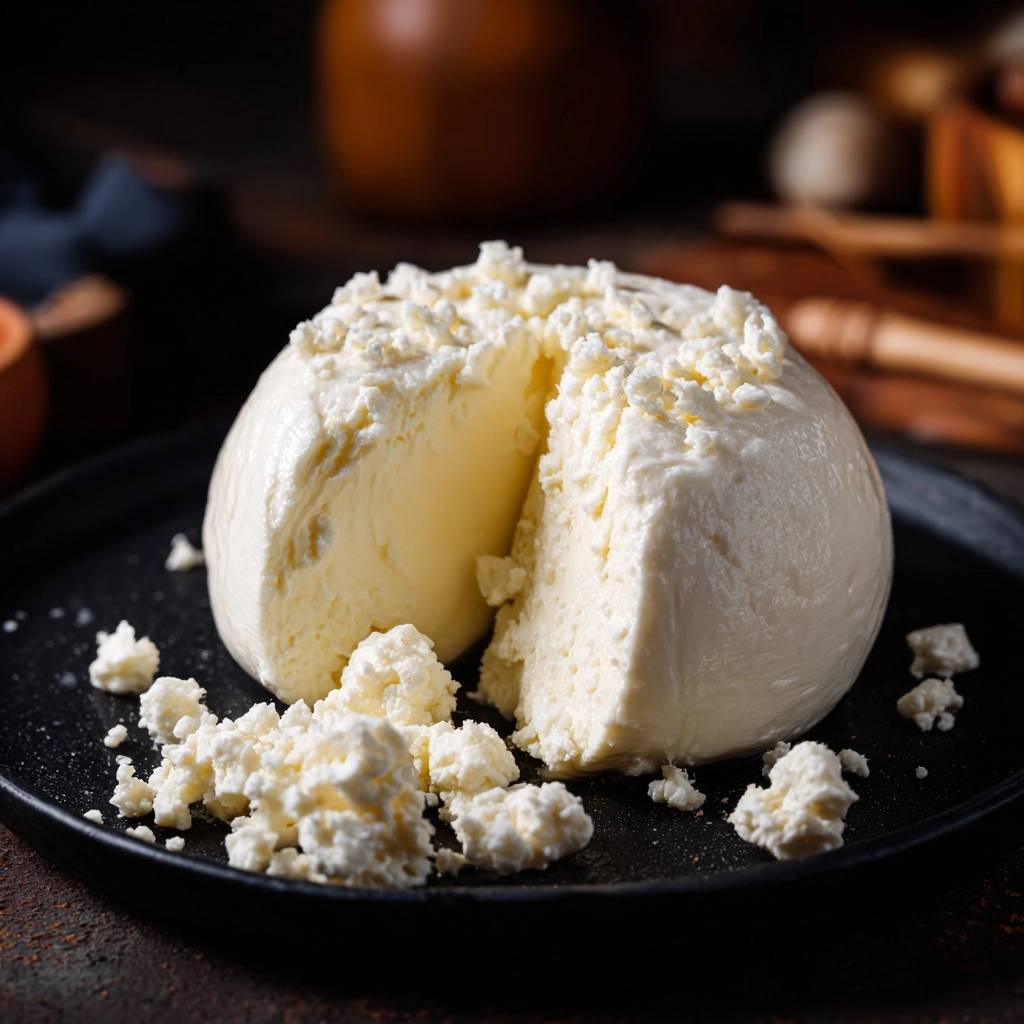
Customization for Perfect Texture
Adjust heavy cream in the filling for runnier or thicker stracciatella. The microwave stretch lets you nail silky curds without squeaks. Therefore, your homemade burrata cheese matches any restaurant quality.
Science of Silky Homemade Burrata Cheese
Citric acid drops the milk’s pH for clean coagulation, while rennet enzymes link casein proteins into firm curds. Heat to 90F unfolds those proteins just right, separating yellow whey. Then, the 135F stretch window makes curds elastic like warm taffy, avoiding toughness from over-denaturation.
Think of it like cooking an egg: too much heat scrambles it solid. Here, precise temps keep everything supple. In addition, quick mixing preserves the network for that signature pull.
Role of Citric Acid in Coagulation
Citric acid acidifies milk evenly, creating a sharp curd break without off flavors. Lemon juice works but adds bitterness and uneven results. Dissolve it first for smooth integration.
Rennet’s Enzymatic Magic
Rennet cleaves casein micelles, forming a gel in 5-10 minutes. Stir gently up-and-down to distribute, then let it rest undisturbed. Over-stirring weakens the curd structure.
For the same rich, creamy finish, try this creamy tomato burrata gnocchi using similar fresh cheese.
Heat Control for Stretchy Curds
From 90F to 135F, proteins stay pliable without squeaky toughness. Beyond 140F, they seize up. Therefore, use a thermometer religiously for glossy, stretchy homemade burrata cheese.
Key Ingredients for Homemade Burrata Cheese
Start with 1 gallon non-ultra-pasteurized whole milk for rich fat content that creams up beautifully. Dissolve 1 teaspoon citric acid in 1/4 cup cool water, and 1/4 teaspoon liquid rennet in another 1/4 cup. You’ll need 1 teaspoon kosher salt total, 1/2 cup heavy cream, and fresh mint for garnish.
Heavy cream makes the stracciatella filling ooze dreamily; it binds shredded curds into a luxurious paste. Kosher salt seasons evenly without bitterness. No subs for rennet, or curds won’t set.
Selecting Perfect Whole Milk
Grab non-ultra-pasteurized for natural proteins that coagulate well. Organic offers higher fats for creamier homemade burrata cheese. Test a small batch if unsure; it should form a clean curd.
Heavy Cream for Stracciatella Filling
1/2 cup yields 2 tablespoons per portion, perfect for four balls. Straight pour keeps it runny for burst effect; whipping firms it up. Adjust for your ooze preference.
Essential Tools for Burrata Making
A precise instant-read thermometer tracks 90F to 170F accurately. Line a colander with double-layer cheesecloth for whey drainage. Food-safe gloves protect hands during hot kneading, and a microwave-safe bowl handles bursts safely.
Skip stove-top stretching; it overheats unevenly. Budget setup? Thermometer plus cheesecloth under $30. In addition, reserve whey for dipping to loosen curds.
Precision Thermometer Breakdown
Instant-read models hit accuracy within 1F for 90F-170F. Calibrate in boiling water (adjust for altitude). Probe types work too, but check tips for curd contact.
Cheesecloth and Colander Setup
Double-layer cheesecloth catches small curds while draining whey fast. Secure over colander edges. Rinse first to remove loose fibers.
Step-by-Step: Forming Homemade Burrata Cheese
Phase 1: Acidify and Heat Milk
Pour 1 gallon whole milk into a pot, stir in citric acid solution. Heat to 90F over medium, stirring gently. You’ll smell faint sweetness as it preps for rennet.
If you enjoy the creamy texture of fresh cheese, try this creamy asparagus bake for a tender vegetable side.
Phase 2: Rennet Set and Curd Cut
Off heat, add rennet with 30 seconds up-and-down stir. Cover 5-10 minutes; curd firms, whey turns clear yellow. Cut into 1-inch cubes; it should break cleanly like custard.
Phase 3: Salted Curd Stretch Technique
Heat cubed curds to 105F, drain in cheesecloth, reserving whey and 1/2 cup bits. Salt main curds with 3/4 teaspoon, microwave in 30-second bursts to 135F. Knead with gloved hands till shiny taffy; dip in 170F whey if sticky. Stretch 4-5 times for smooth, squeak-free curd.
Phase 4: Stracciatella Filling Prep
Shred reserved curds, mix with 1/2 cup heavy cream and pinch salt. It forms a thick, spoonable paste. Test texture; add cream for runnier ooze.
Phase 5: Pouch Forming and Setting
Divide stretched curd into 4 discs, add 2 tablespoons filling per center. Pinch edges like a pouch, using whey to seal. Ice bath 10 minutes, then fridge 2 hours to set.
Avoiding Rubbery Homemade Burrata Cheese
Overheating past 140F toughens proteins instantly; stick to microwave bursts with temp checks. Ultra-pasteurized milk resists coagulation, yielding weak curds. Poor seals leak filling, so moisten with whey first.
Visual check: smooth curd stretches silently, rubbery squeaks. Knead firmly but briefly. Therefore, gloved hands prevent burns and ensure even heat.
Overheating Curd Fixes
Stop microwave at 135F; knead immediately. If tough, you’ve overshot, but next batch nails it with pauses. Cool whey dips reset stickiness.
Sealing Pouch Without Breaks
Moisten dry edges with warm whey for grip. Pinch with torque, twisting ends tight. Smooth curd seals flawlessly.
Weak Curd Troubleshooting
Use fresh rennet and non-UHT milk. Test coagulation with a small pour first. Old rennet fails to gel properly.
Flavor Variations in Homemade Burrata Cheese
Mix chopped basil into curds before stretching for herby twists. Add lemon zest to stracciatella for bright pop. A drizzle of truffle oil in filling amps luxury without overpowering.
What Goes Well with Burrata
Homemade burrata is rich and creamy, so you want sides that cut through that richness with acidity or add a warm, buttery contrast. Here are two reliable choices.
- Brighten the plate with a crisp Italian Tomato Salad – the vinegar and ripe tomatoes balance the cheese’s milky texture without making the bowl watery.
- Soak up every last bit of creamy cheese with
Get the full recipe in your inbox in seconds – perfect for shopping and cooking.
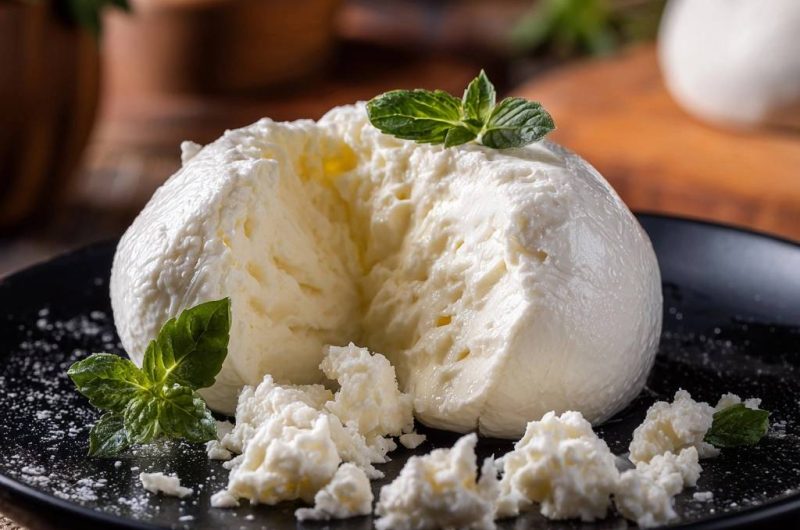
Burrata Cheese
Course: AppetizerCuisine: ItalianDifficulty: medium4
burrata cheeses30
minutes30
minutes250
kcal180
MinutesSay goodbye to tough, squeaky homemade cheese. This recipe nails silky smooth stretching with exact heat control and quick mixing for the creamiest stracciatella filling that bursts perfectly every time. Fresh mint garnish elevates it to gourmet.
Ingredients
1 gallon whole milk (not ultra-pasteurized)
1 teaspoon citric acid dissolved in 1/4 cup cool water
1/4 teaspoon liquid rennet dissolved in 1/4 cup cool water
1 teaspoon kosher salt, divided
1/2 cup heavy cream
Fresh mint leaves for garnish
Directions
- Pour milk into a large pot. Stir in citric acid solution. Heat over medium, stirring gently, to 90F (use a thermometer for precision).
- Remove from heat. Stir in rennet solution with up-and-down motion for 30 seconds. Cover and let sit undisturbed 5-10 minutes until curd forms and whey separates (clear and yellow).
- Cut curd into 1-inch cubes. Heat gently to 105F while stirring softly. Scoop curds into a colander lined with cheesecloth, reserving 1/3 cup whey and about 1/2 cup small curd pieces for stracciatella filling. Sprinkle remaining drained curds with 3/4 teaspoon kosher salt and toss gently to distribute.
- For the anti-rubbery stretch (the game-changer): Transfer salted curds to a microwave-safe bowl. Microwave in 30-second bursts, kneading with gloved hands after each until 135F exactly—shiny and stretchy like taffy (not over 140F or it toughens). Dip in hot reserved whey (heated to 170F) to loosen if needed. Stretch 4-5 times until glossy smooth, no squeak.
- Divide stretched curd into 4 portions. Flatten each into a 5-inch disc. Shred reserved curd pieces and mix with heavy cream and pinch of remaining salt for stracciatella filling.
- Place 2 tablespoons filling in center of each disc. Gather edges like a pouch, pinch tightly to seal (moisten edges with whey if dry). No breaks guaranteed with smooth curd.
- Submerge pouches in ice water 10 minutes to set shape. Refrigerate 2 hours.
- To serve: Slice open on plate, garnish with fresh mint leaves. Enjoy the perfect ooze!
Notes
- Use non-ultra-pasteurized whole milk for best results. Precise temperature control is key to avoid rubbery texture. Wear gloves when kneading hot curds.