Mastering Creamy Chicken and Dumplings: The Secret to Fluffy, Air-Light Results
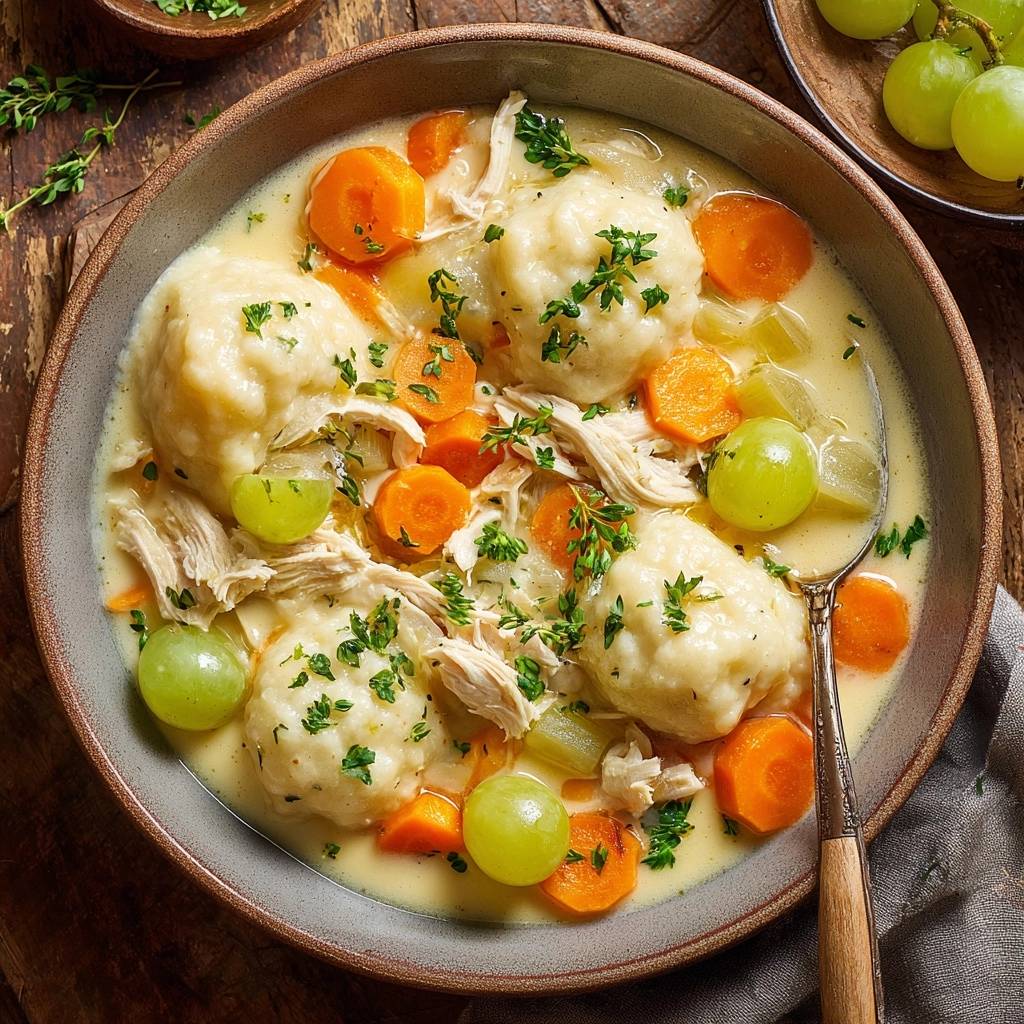
Imagine sinking your spoon into a velvety, golden broth only to lift out a dumpling so light it practically floats. The steam carries the scent of fresh thyme and rich butter, promising a bite that melts away without any of the dreaded chewiness. This isn’t just a bowl of soup; it’s a masterclass in texture where the savory chicken meets a cloud-like dough.
Most home cooks struggle with “lead sinkers”—those dense, gummy balls of dough that stay raw in the middle while the outside turns to mush. We’re moving past those frustrations by focusing on the science of the simmer. By controlling the heat and the moisture, you can achieve a professional-grade consistency that feels both indulgent and incredibly airy.
The secret to this success lies in the “steam-lock” method. You must resist the urge to peek under the lid, as that trapped steam is the only thing standing between a heavy dough and a perfect, puffed dumpling. Once you master this pressure-cook environment inside your Dutch oven, you’ll never settle for a heavy dumpling again.
The Anatomy of a Perfect Creamy Chicken and Dumplings Base
A great dish starts with a solid foundation, and here that means a classic mirepoix. Carrots, celery, and onions aren’t just filler; they provide the aromatic backbone of the entire meal. When you sauté them in butter for 5 to 7 minutes, you’re drawing out their natural sugars and softening the fibers.
You want to see the onions turn translucent and the carrots take on a slight sheen. This step ensures that the vegetables are tender by the time the dumplings finish steaming. Using a heavy-bottomed Dutch oven is vital here because it distributes heat evenly, preventing the bottom of your creamy base from scorching during the long simmer.
Thin stainless steel pots often have “hot spots” that can burn the dairy or the flour. A cast-iron or heavy ceramic pot holds onto heat, creating a steady environment for the dumplings to rise. This thermal mass is your best friend when you’re looking for a consistent, reliable cook every single time.
Selecting and Preparing the Shredded Chicken
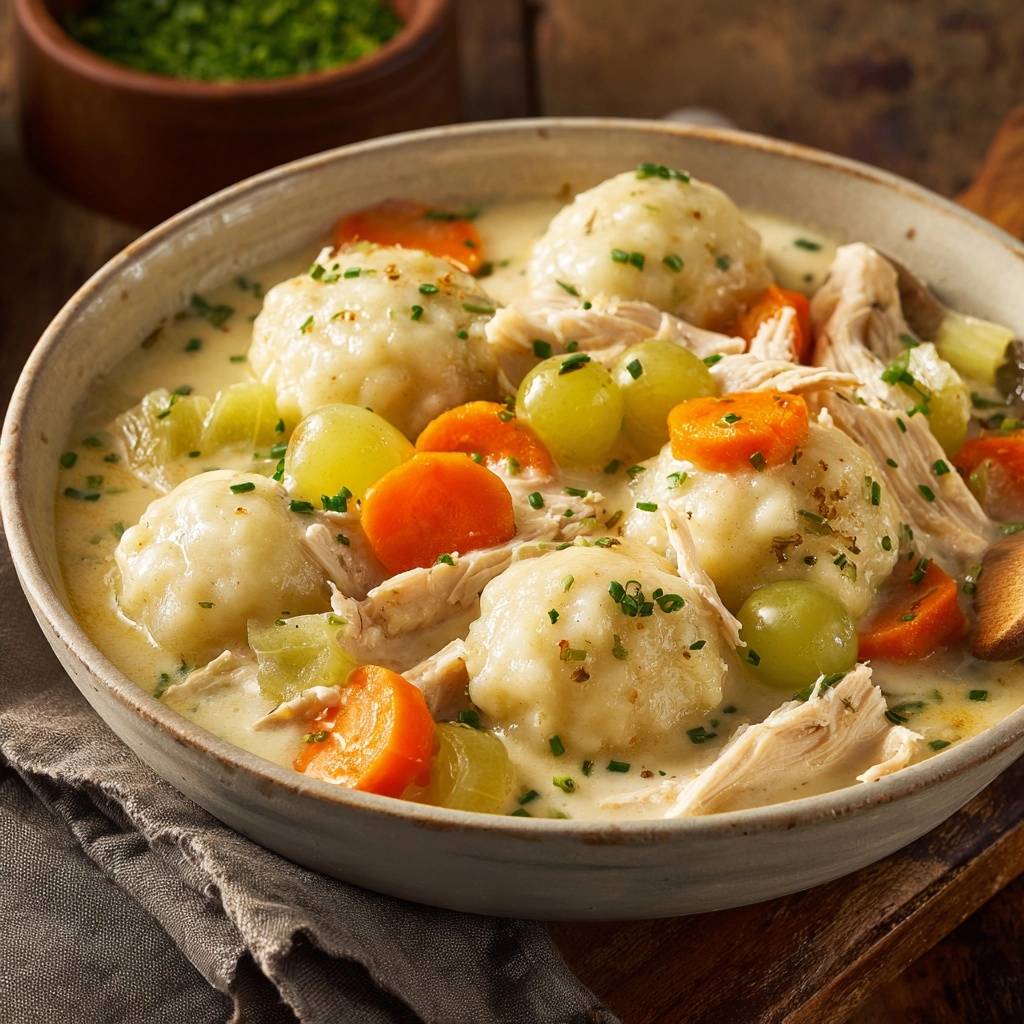
While you can certainly poach chicken breasts specifically for this recipe, using a high-quality rotisserie chicken is a fantastic shortcut. The key is to shred the meat rather than cubing it. Shredded chicken has more surface area, which allows it to “grab” onto the creamy broth, ensuring every spoonful is packed with flavor.
If you’re shredding the chicken while it’s still warm, it will pull apart into tender ribbons much easier. Avoid over-handling the meat, as you want distinct pieces rather than a mushy texture. This shredded consistency provides a beautiful contrast to the smooth, round shapes of the carrots and dumplings.
Building the Velouté: Flour, Broth, and Cream
To get that signature thickness, you’ll use a technique called “singer,” which involves sprinkling flour directly over your buttery sautéed vegetables. This creates a quick roux without needing a separate pan. You must stir this mixture for at least 60 seconds to “cook out” the raw flour taste, which can otherwise ruin the delicate flavor of the cream.
When you add the chicken broth, do it slowly. Start with a splash and whisk it into the flour-coated vegetables until a thick paste forms, then gradually pour in the rest. This prevents lumps from forming. Finally, the heavy cream adds the necessary fat to create a silky mouthfeel that coats the back of a spoon perfectly.
Essential Components for the Dumpling Dough
The dough is where the chemistry really happens. We use two cups of all-purpose flour because it has the right amount of protein to provide structure without becoming tough. Bread flour would make the dumplings too chewy, while cake flour wouldn’t have the strength to hold its shape in the hot liquid.
Precision matters when measuring your dry ingredients. Whisking the flour with the baking powder and salt before adding liquids ensures the leavening agent is evenly distributed. This prevents one dumpling from being a rock while another over-expands and falls apart.
The Role of Fat: Why Melted Butter Trumps Shortening
Many old-fashioned recipes call for shortening or shortening, but melted butter is the superior choice for flavor and texture. The four tablespoons of melted butter coat the flour proteins, which limits gluten development. This is exactly what you want for a tender, biscuit-like crumb that stays moist.
Butter also adds a rich, nutty undertone that complements the chicken broth. When you stir the melted butter and milk into the flour, do it gently. You only want to mix until the flour streaks disappear. If you keep stirring, you’ll activate the gluten, and your dumplings will lose their delicate, airy quality.
Chemical Leavening: The Science of Baking Powder and Milk
Baking powder is a double-acting leavener, meaning it reacts once when it hits the moisture of the milk and again when it hits the heat of the pot. This two-stage rise is what gives the dumplings their height. Using whole milk instead of skim is a non-negotiable for the best results.
The fat solids in whole milk contribute to a “creamy” interior within the dumpling itself. It creates a richer dough that stands up to the savory broth. If the dough feels too dry, add a teaspoon of milk at a time, but remember that a slightly sticky dough is actually easier to drop into the pot.
The Technique: Avoiding the “Lead Sinker” Disaster
The most common mistake is dropping dough into a rolling boil. A violent boil will physically tear the delicate dough apart before the outside has a chance to set. You want a gentle simmer—think small, lazy bubbles breaking the surface—which allows the dumpling to cook through evenly.
If the liquid is too hot, the outside of the dumpling will overcook and become slimy while the inside remains raw. By keeping the heat low, you allow the baking powder to do its job slowly. This results in a uniform texture from the edge of the dumpling all the way to the center.
The “No-Peek” Rule: Understanding the Steam-Lock Method
Once those dumplings are in the pot, you must put the lid on and leave it alone for 15 minutes. This is the “steam-lock” method. Every time you lift the lid to check on them, you release the pressure and the heat that the dumplings need to rise. It’s like opening an oven door while a cake is baking.
The trapped steam acts as a secondary leavening agent, pushing into the dough and making it expand. Without that constant, moist heat, the dumplings will collapse and become dense. Trust the process and keep the lid tight; the 15-minute mark is the sweet spot for a fully cooked center.
Spacing and Surface Tension: Dropping the Dough
To ensure even cooking, use a small cookie scoop to drop the dough. This keeps every dumpling the same size so they all finish at the same time. Space them out across the surface of the soup; they will expand significantly as they steam, and they need room to grow.
If you overcrowd the pot, the dumplings will fuse together into one giant mass of dough. This prevents the steam from circulating around each individual piece, leading to those dreaded raw centers. Aim for about an inch of space between each scoop of dough for the best results.
Unexpected Flavor Profiles: The Addition of Green Grapes
Adding green grapes might sound unusual, but it provides a brilliant pop of acidity that cuts through the richness of the heavy cream. They act as a bright counterpoint to the savory chicken and buttery dough. It’s a classic “secret ingredient” that elevates the dish from standard fare to something special.
You must add the grapes in the very last minute of resting. You don’t want to cook them; you just want to warm them through. If they stay in the heat too long, they will burst and lose their structural integrity. This “burst” of fresh juice in every few bites keeps the palate refreshed.
Troubleshooting Common Texture and Consistency Issues
If you find your dumplings have a gummy exterior, you likely stirred the pot after dropping the dough. Once they are in, do not touch them! If your broth feels too thin after the 15 minutes are up, you can whisk a teaspoon of cornstarch with a little cold water and stir it into the liquid around the dumplings.
If the middle of the dumpling is still doughy, it usually means the lid wasn’t tight enough or the simmer was too low. You can put the lid back on for another 3 minutes, but be careful not to overcook the chicken. For a broth that is too thick, simply temper in a half-cup of warm chicken broth to loosen it up.
Optimizing Your Kitchen Workflow and Equipment
A tight-fitting lid is your most important tool for this recipe. If your lid has a vent hole, you can cover it with a small piece of foil to keep all the steam inside. Using a silicone spatula is also helpful when you finally fold in the grapes, as it’s gentle enough not to break the delicate, freshly-steamed dumplings.
Prep all your vegetables and shred your chicken before you even turn on the stove. Because the “singer” method moves quickly, you don’t want to be chopping carrots while the butter is browning. Having everything ready to go ensures a smooth transition from sautéing to simmering.
Make-Ahead Strategies and Storage Limitations
Dumplings are notorious for not freezing well. The starch undergoes a process called retrogradation, which makes them grainy and tough once thawed. However, you can easily prep the chicken and vegetable base up to 48 hours in advance. Just store the base in the fridge and bring it to a simmer before making the fresh dough.
When reheating leftovers, the broth will likely have thickened significantly as the dumplings absorb moisture. Add a splash of broth or milk to the bowl before microwaving or heating on the stove. This restores the creamy consistency without making the chicken rubbery from over-exposure to heat.
Expert Tips for a Professional Presentation
Garnish is not just for looks; it adds a final layer of flavor. Fresh thyme and parsley should be chopped and sprinkled on at the very last second. This preserves the volatile oils in the herbs, giving you a hit of freshness that balances the cooked-down flavors of the mirepoix.
Serve this in wide, shallow bowls. This helps the dumplings stay on top of the broth rather than getting buried and soggy. The wide surface area also allows the soup to cool just enough so you can enjoy the flavors without burning your tongue on the first bite.
For a perfect pairing, try our Creamy Chicken & Dumplings: Unbelievably Light Bites.
Frequently Asked Questions
Can I use canned biscuits instead of homemade dough?
You can, but the texture will be significantly different. Canned biscuits are often much saltier and denser than this butter-enriched dough. They also tend to have a “slick” exterior that doesn’t absorb the broth as well. If you use them, cut each biscuit into quarters and increase the simmering time by about 5 minutes.
Why are my dumplings falling apart in the broth?
This almost always happens because the broth was at a rolling boil. The physical agitation of the boiling water breaks the dough apart before the proteins can set. Always ensure you have a very gentle simmer before dropping the dough. Additionally, make sure you didn’t skip the baking powder, as it provides the necessary internal structure.
Is there a substitute for heavy cream to reduce fat?
You can use half-and-half or whole milk mixed with a tablespoon of cornstarch for a lighter version. However, you will lose that specific “silky” mouthfeel that heavy cream provides. If you use a lower-fat dairy, be extra careful not to let the soup boil after adding it, as lower-fat milks curdle much more easily than heavy cream.
How do I know for sure the dumplings are cooked through?
The best visual cue is that the dumplings will look puffed, matte, and dry on the surface. If they look shiny or wet, they need more time. You can also perform a “toothpick test” by inserting a skewer into the center of the largest dumpling; it should come out clean without any wet dough clinging to it.
Can I add other vegetables like potatoes or parsnips?
Yes, but be mindful of the starch balance. Potatoes will release starch into the broth, which might make the soup too thick. If you add root vegetables, cut them into small, uniform pieces so they cook through in the same time as the carrots. You may need to add an extra half-cup of broth to compensate for the liquid the extra vegetables absorb.
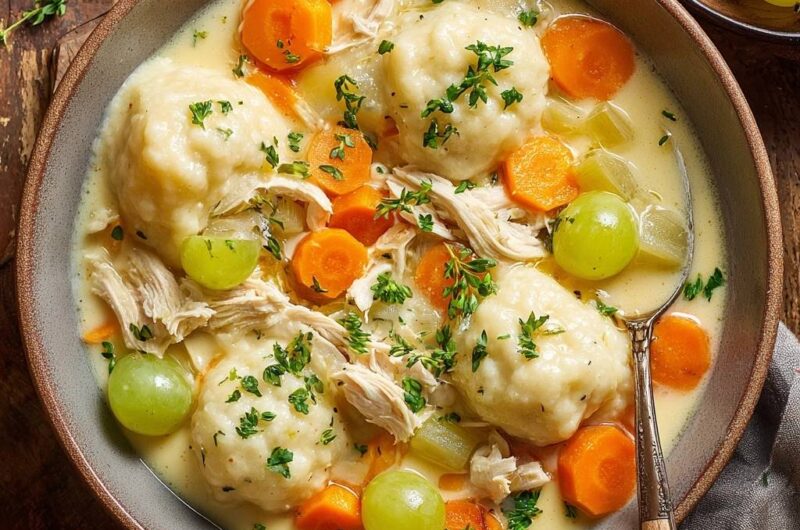
Chicken and Dumplings
Course: Main CourseCuisine: AmericanDifficulty: medium4
servings15
minutes35
minutes520
kcal50
MinutesThis comforting dish features shredded chicken, fresh vegetables, and a creamy broth topped with butter-enriched dumplings. The secret lies in a tight-seal steaming method that ensures fluffy results every time.
Ingredients
1 pound shredded cooked chicken breast
6 cups low-sodium chicken broth
3 large carrots, sliced into thick rounds
2 stalks celery, chopped
1 small onion, diced
3 tablespoons all-purpose flour (for thickening the base)
2 tablespoons butter (for sautéing)
1 cup heavy cream
2 cups all-purpose flour (for dumplings)
1 tablespoon baking powder
1 teaspoon salt
3/4 cup whole milk
4 tablespoons melted butter
1 cup green grapes, halved or whole
Fresh thyme and parsley for garnish
Directions
- In a large heavy-bottomed pot or Dutch oven, melt 2 tablespoons of butter over medium heat. Add the carrots, celery, and onion. Sauté for 5-7 minutes until the onions are translucent.
- Sprinkle 3 tablespoons of flour over the vegetables and stir for 1 minute to cook out the raw flour taste. Slowly whisk in the chicken broth to ensure no lumps form. Bring to a boil, then reduce to a simmer for 10 minutes.
- Stir in the shredded chicken and heavy cream. Keep the liquid at a very gentle simmer.
- While the soup simmers, prepare the dumpling dough. In a medium bowl, whisk together the 2 cups of flour, baking powder, and salt. Add the milk and 4 tablespoons of melted butter, stirring just until a sticky dough forms. Do not overmix; overworking the gluten is what causes toughness.
- To solve the “lead sinker” problem, ensure your soup is at a gentle simmer, not a rolling boil. Use a small cookie scoop or spoon to drop rounded tablespoons of dough directly onto the surface of the simmering liquid. Space them out so they have room to expand.
- The Critical Steam-Lock Step: Cover the pot with a tight-fitting lid and do not peek for 15 minutes. Opening the lid releases the pressure and steam necessary to cook the center of the dumplings. The trapped steam acts as the primary leavening agent, making them fluffy instead of dense.
- After 15 minutes, remove the lid. The dumplings should be puffed, white, and firm to the touch.
- Gently fold in the green grapes during the last minute of resting to warm them through without bursting them. Ladle the creamy soup and dumplings into bowls. Garnish generously with fresh thyme and parsley. Serve immediately.
Notes
- The Critical Steam-Lock Step: Do not open the lid for the full 15 minutes of cooking the dumplings to ensure they remain light and fluffy. Adding green grapes at the end provides a unique burst of sweetness and texture.