Mastering Creamy Meatball Noodle Soup Without Mushy Pasta
We have all been there. You spend an hour crafting a beautiful pot of soup, only to sit down to a bowl of bloated, gummy noodles that have sucked up every drop of broth. It is the “Soggy Noodle Syndrome,” and it turns a comforting meal into a starchy disappointment. This Creamy Meatball Noodle Soup is designed specifically to kill that problem once and for all.
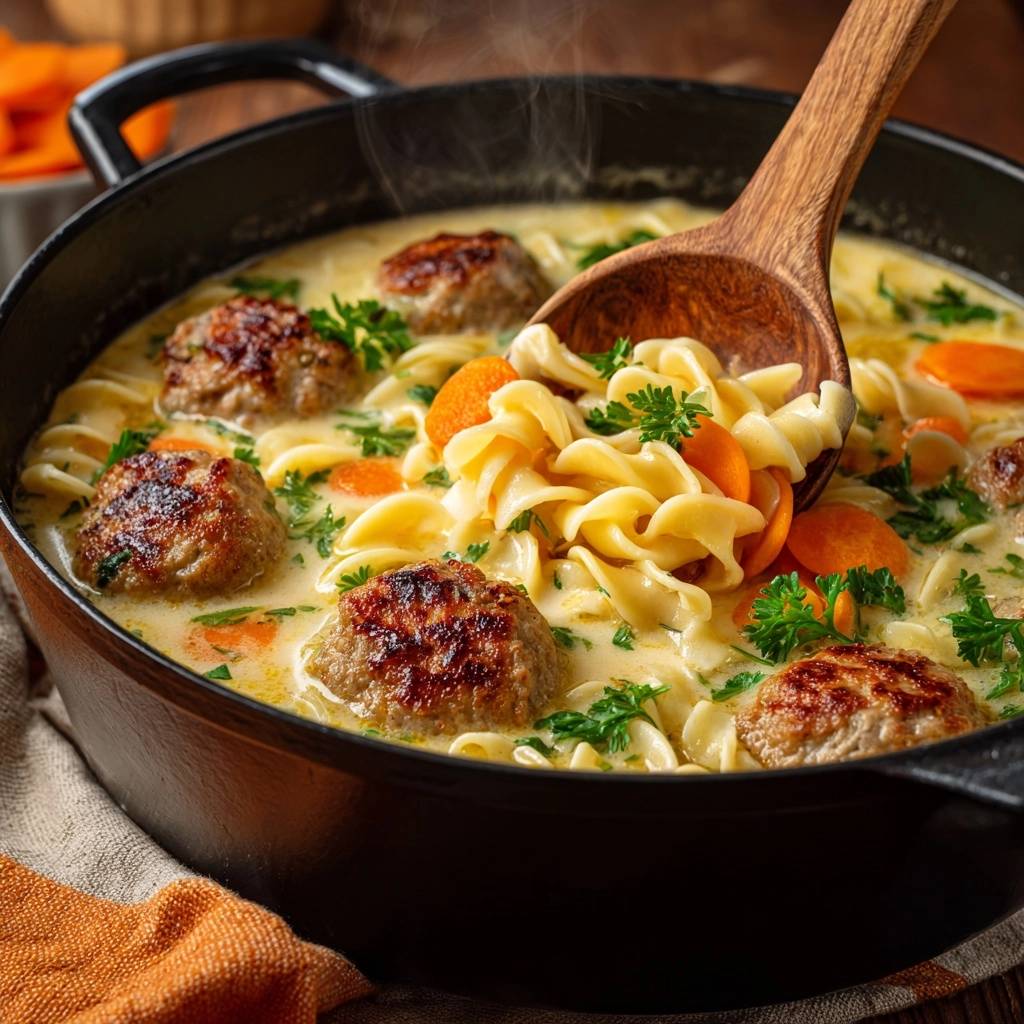
Imagine a velvety, golden broth that clings to perfectly al dente egg noodles, paired with meatballs that boast a deep, savory sear. The contrast between the rich, heavy cream and the browned beef creates a depth of flavor you just cannot get from a standard canned variety. We are using thermal control and precise timing to ensure the textures stay distinct and delicious from the first spoonful to the last.
The secret to this recipe’s success lies in the “thermal brake” method. By introducing cold heavy cream at a specific moment, we manually drop the temperature of the broth. This stops the noodles from over-expanding while the meatballs finish simmering. It is a professional kitchen trick that ensures your pasta stays firm and your broth stays plentiful.
Essential Components for a Richer Broth Base
A great soup is only as good as its foundation, so skip the plain water and reach for a high-quality chicken broth. Even though we are using beef meatballs, chicken broth provides a lighter, more versatile base that allows the cream and aromatics to shine without becoming overly heavy. It acts as a canvas for the savory drippings we will create in the pan.
If you enjoy deglazing with chicken broth for a rich base, try this same technique with a hearty beef and orzo skillet.
When it comes to the meatballs, 80/20 ground beef is the non-negotiable standard. You need that 20% fat content to ensure the meat stays juicy while it sears and later simmers. Leaner blends often result in rubbery, dry spheres that lack flavor. The fat renders out during the browning process, providing the essential “liquid gold” that flavors our vegetables.
Heavy cream is the final piece of the puzzle, providing a luxurious mouthfeel and a beautiful opaque color. Unlike a traditional roux made with flour and butter, heavy cream thickens the soup naturally as it reduces slightly. This keeps the soup gluten-light and prevents that “pasty” texture that sometimes happens with flour-thickened broths.
Selecting the Right Egg Noodle Variety
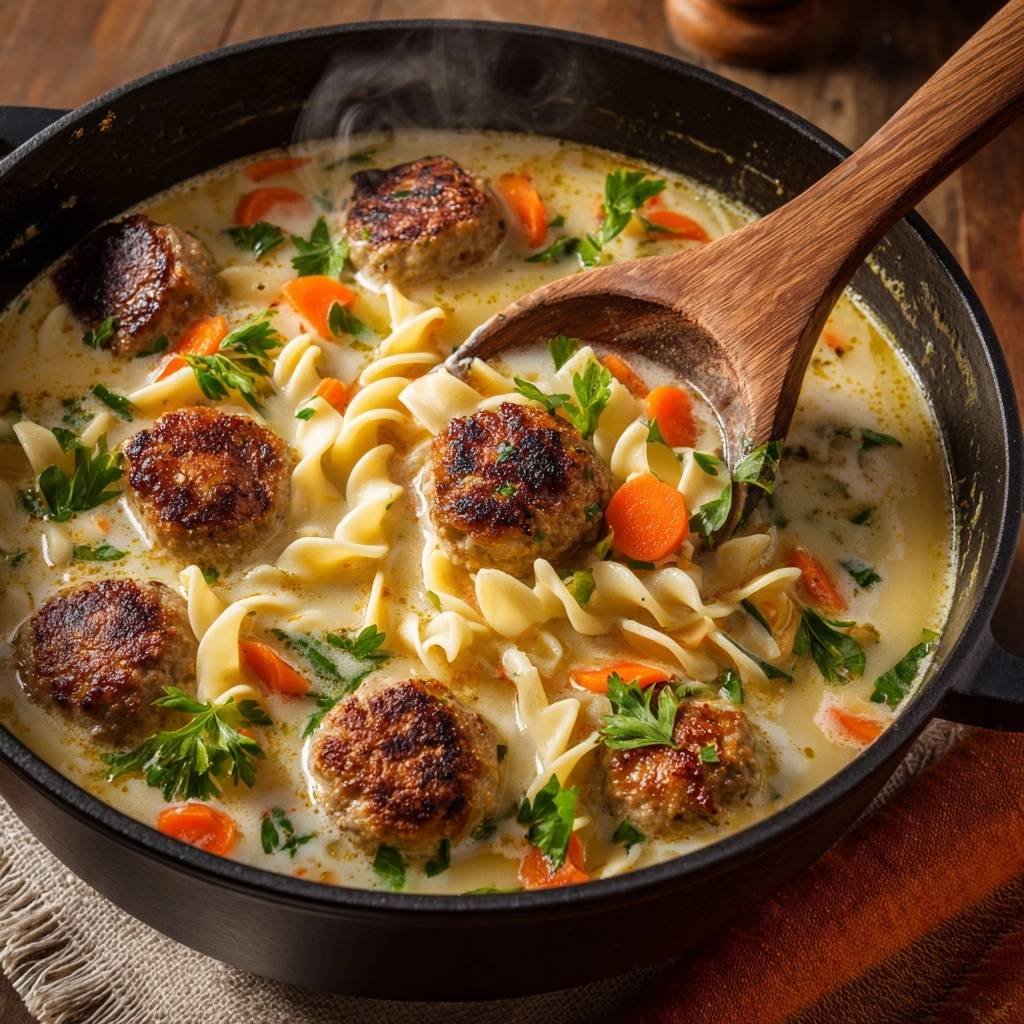
Wide egg noodles are the MVP of this dish because they are built differently than standard semolina pasta. Because they contain a higher ratio of eggs to flour, they possess a sturdier structural integrity. This allows them to withstand the heat of the broth without disintegrating into mush as quickly as a thin spaghetti or macaroni might.
I always recommend the “curly” or “spiral” varieties for this specific soup. Those twists and turns are not just for looks; they act as little traps for the creamy broth and bits of garlic. Every time you lift your spoon, the noodles carry a generous amount of sauce with them, ensuring you get the full flavor profile in every single bite.
Aromatics and Spices: Building the Flavor Profile
We are layering flavors here by using both dried and fresh aromatics. In the meatballs, garlic powder and onion powder are superior because they distribute evenly through the meat without adding excess moisture. This ensures every bite of the meatball is seasoned perfectly from the inside out without chunks of raw onion falling out during the sear.
In the soup base itself, we switch to fresh yellow onion and minced garlic. Sautéing these in the leftover beef fat creates a sweet, mellow foundation that dried spices simply cannot replicate. To finish, a heavy hand of fresh parsley is essential. It provides a bright, grassy acidity that cuts right through the richness of the heavy cream and beef fat.
Step-by-Step: Searing Meatballs for Maximum Fond
The most important step for flavor happens before the liquid even touches the pot. We are looking for the Maillard Reaction, which is the chemical reaction between amino acids and reducing sugars that gives browned food its distinctive, savory flavor. To get this, you must get your Dutch oven hot with olive oil before adding the meatballs.
When you place the meatballs in the pot, leave them alone! If you try to move them too soon, they will stick and tear. Wait until they naturally release from the surface, which indicates a crust has formed. You want a deep, dark golden-brown color on at least two or three sides. This isn’t just about the meat; it is about the “fond” or the brown bits left on the bottom of the pot.
Do not crowd the pan. If you put too many meatballs in at once, the temperature of the oil will drop, and the meat will release moisture and steam rather than sear. Work in batches if you have to. That deep brown crust is what gives the broth its rich color and meaty backbone. Once they are browned, they will still be raw in the middle, which is exactly what we want before the simmer.
The Secret to Al Dente Noodles in Soup
Noodles are like sponges; they will continue to absorb liquid until they literally fall apart. To prevent this, we use the “Half-Time” boiling method. Most egg noodles take about 8 to 10 minutes to cook fully. We are only going to boil them in the broth for exactly 4 minutes. At this stage, they will still be quite firm in the center.
This is where the physics of the kitchen comes into play. After those 4 minutes, we add the cold heavy cream. This immediate injection of cold liquid acts as a thermal brake, instantly lowering the temperature of the boiling broth. It shifts the cooking process from a violent boil to a gentle simmer, which slows down the starch expansion in the noodles significantly.
By the time the meatballs finish cooking through in that final simmer, the noodles will have reached a perfect al dente state. They will be soft on the outside but still have a pleasant “bite” in the middle. This technique ensures that even if the soup sits on the table for ten minutes, the noodles won’t turn into a soggy mess before you finish your bowl.
Integrating the Creamy Meatball Noodle Soup Elements
Once your aromatics are soft, it is time to deglaze. Pour in the chicken broth and use a wooden spoon to aggressively scrape the bottom of the pot. All those browned bits (the fond) will dissolve into the liquid, turning the broth from a pale yellow to a rich, savory tan. This is where the “soul” of the soup lives.
When you add the meatballs back into the pot, do it gently. You also want to make sure you pour in any juices that collected on the plate while the meatballs were resting. That juice is pure flavor. The meatballs should be nestled into the noodles and broth, allowing them to poach gently in the cream-infused liquid until they are tender and cooked through.
Avoiding Common Meatball Soup Mistakes
One common pitfall is boiling the soup after the heavy cream has been added. High heat can cause the dairy to break or curdle, leaving you with a grainy texture rather than a smooth, velvety broth. Always keep the heat on medium-low once the cream is in the pot. A gentle bubble is fine, but a rolling boil is the enemy of cream.
If you find your meatballs are falling apart, you likely over-handled the meat or didn’t use enough binder. When mixing the beef and breadcrumbs, use a light touch. Overworking the meat makes it tough and compact. If the mixture feels too loose, let it rest in the fridge for 10 minutes before rolling; this helps the breadcrumbs hydrate and hold everything together.
Flavor Variations and Ingredient Swaps
If you want to change the flavor profile, you can easily pivot this toward a “Swedish Meatball” style. Simply add a pinch of ground nutmeg and allspice to the meat mixture. This adds a warm, earthy undertone that pairs beautifully with the cream. You can also swap the parsley for fresh dill for a more Nordic, bright finish.
For those looking to add more greens, a few handfuls of fresh baby spinach or frozen peas can be stirred in during the last 2 minutes of simmering. They will wilt perfectly in the residual heat without losing their vibrant color. If you need a dairy-free version, full-fat coconut milk or a thick cashew cream works surprisingly well as a substitute for the heavy cream.
Make-Ahead Strategies and Storage Solutions
If you are meal prepping, I have a golden rule: store the noodles separately. If you let the noodles sit in the broth overnight in the fridge, they will absorb every drop of liquid, and you will wake up to a pot of creamy pasta mash. Cook the noodles in the broth as directed, but strain them out before storing if you aren’t eating the whole pot immediately.
When reheating, do it on the stovetop over low heat. This allows the meatballs to warm through without becoming rubbery in the microwave. If the broth has thickened too much in the fridge, simply splash in a little extra chicken broth or a tablespoon of water to loosen it up. This brings back that silky consistency without diluting the flavor too much.
Expert Tips for the Perfect Bowl
Patience is a secret ingredient. Once you turn off the heat, let the soup rest for about 2 to 3 minutes before ladling it into bowls. This short resting period allows the flavors to meld and the broth to thicken just a tiny bit more as the temperature stabilizes. It makes for a much more cohesive eating experience.
Don’t be afraid of garnishes. While fresh parsley is the classic choice, a heavy crack of fresh black pepper right before serving adds a necessary bite. If you want to get fancy, a tiny drizzle of herb-infused oil or even a squeeze of lemon juice can brighten the entire dish. The acidity of the lemon acts as a “high note” that makes the savory beef and cream flavors pop.
Troubleshooting Your Soup Consistency
Why are my meatballs tough?
Tough meatballs are almost always the result of overmixing the meat. When you work the ground beef too much, the proteins link together tightly, creating a dense, rubbery texture. Mix the ingredients until they are just barely combined. Using 80/20 beef also helps, as the fat provides lubrication between the meat fibers.
Can I use frozen meatballs for this soup?
You can use frozen meatballs in a pinch, but you will sacrifice a significant amount of flavor. The “fond” created by searing fresh meatballs is what gives the broth its deep, savory character. If you must use frozen, sear them in the pot first just like you would fresh ones to at least get some browning on the outside and in the pan.
How do I fix a broth that is too salty?
If your broth tastes like the ocean, don’t panic. You can add a peeled, halved potato to the pot and simmer it for 10 minutes; the potato will absorb some of the salt. Alternatively, adding a bit more heavy cream or a splash of water can help dilute the saltiness without ruining the texture of the soup.
Why did my cream curdle or look grainy?
Cream curdles when it is subjected to extreme heat or high acidity too quickly. If you bring the soup to a hard boil after adding the heavy cream, the proteins in the dairy will clump together. Always reduce your heat to medium-low before stirring in the cream and never let it reach a rolling boil again.
Can I use gluten-free noodles in this recipe?
Yes, you can use gluten-free egg noodles or a sturdy gluten-free rotini. However, be aware that gluten-free pasta releases more starch and tends to break down faster. I recommend cooking gluten-free noodles separately in water and adding them to individual bowls right before serving to ensure they don’t turn the soup into a thick paste.
Optimal Pairings for a Hearty Meal
This soup is incredibly rich, so it pairs best with sides that offer a bit of crunch or acidity. A thick slice of toasted sourdough bread is the perfect vessel for soaking up the last bits of creamy broth. The slight tang of the sourdough complements the savory beef beautifully.
If you want something lighter, a simple arugula salad with a lemon vinaigrette is a fantastic choice. The peppery bite of the arugula and the sharp acid of the lemon help cleanse the palate between spoonfuls of the rich, velvety soup. It balances the meal and prevents the creaminess from feeling too heavy.
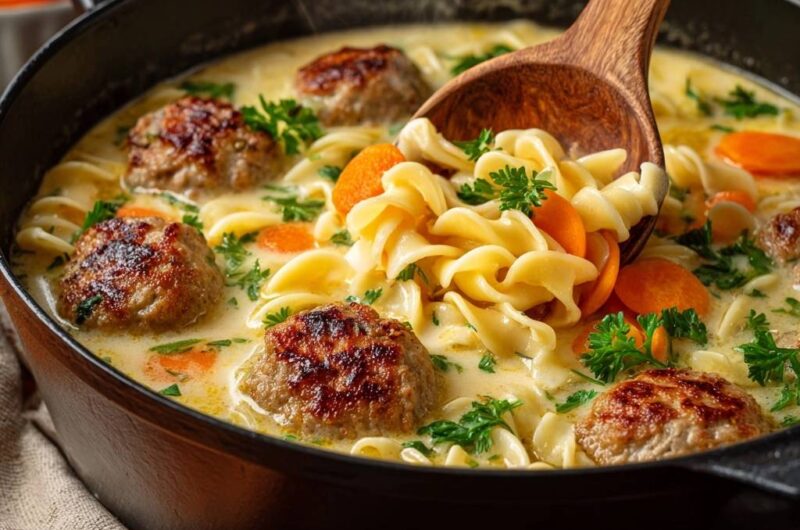
Meatball Noodle Soup
Course: Main CourseCuisine: AmericanDifficulty: easy6
servings15
minutes25
minutes440
kcal40
MinutesThis recipe features juicy seared beef meatballs in a creamy chicken broth with wide egg noodles. By par-boiling the noodles and adding heavy cream to lower the temperature, the pasta maintains a perfect texture without absorbing all the liquid.
Ingredients
1 pound ground beef (80/20 for best flavor)
1/2 cup panko breadcrumbs
1 egg, lightly beaten
2 tablespoons fresh parsley, finely chopped
1 teaspoon garlic powder
1/2 teaspoon onion powder
1 teaspoon salt
1/2 teaspoon black pepper
2 tablespoons olive oil
2 large carrots, sliced into rounds
1 small yellow onion, diced
2 cloves garlic, minced
6 cups high-quality chicken broth
1 cup heavy cream
8 ounces wide egg noodles (spiral or curly variety)
Fresh parsley for garnish
Directions
- In a large bowl, combine ground beef, breadcrumbs, egg, chopped parsley, garlic powder, onion powder, salt, and pepper. Mix until just combined and form into small, uniform meatballs (about 1 inch).
- Heat olive oil in a large Dutch oven over medium-high heat. Add the meatballs in a single layer. Brown them deeply on all sides until a dark golden crust forms. This sear is essential for the flavor and color shown in the image. Remove meatballs and set aside on a plate.
- In the same pot, add the sliced carrots and onions. Saute for 5-6 minutes in the meatball drippings until the onions are translucent and carrots begin to soften. Add the minced garlic and cook for 1 minute until fragrant.
- Pour in the chicken broth. Use a wooden spoon to scrape the bottom of the pot to release the browned bits (fond). Bring the liquid to a rolling boil.
- To solve the mushy pasta problem, add the egg noodles to the boiling broth first. Cook for 4 minutes (roughly half the package’s recommended time).
- Reduce the heat to medium-low. Gently add the browned meatballs back into the pot along with any juices from the plate.
- Pour in the heavy cream. Stir gently to combine. The addition of the cold cream will drop the temperature, preventing the noodles from overcooking.
- Simmer gently for another 3-4 minutes. This allows the meatballs to finish cooking through and the noodles to reach a perfect al dente texture while the broth thickens slightly. Cook until no pink remains and it reaches 160°F (71°C).
- Garnish heavily with fresh parsley and serve immediately. If storing leftovers, store the noodles separately from the broth to maintain the “no mush” promise.
Notes
- To maintain the no mush promise when storing leftovers, store the noodles separately from the broth. Ensure meatballs are browned deeply to develop a rich fond for the broth flavor.