Mastering the Caramelized Onion and Mushroom Tart
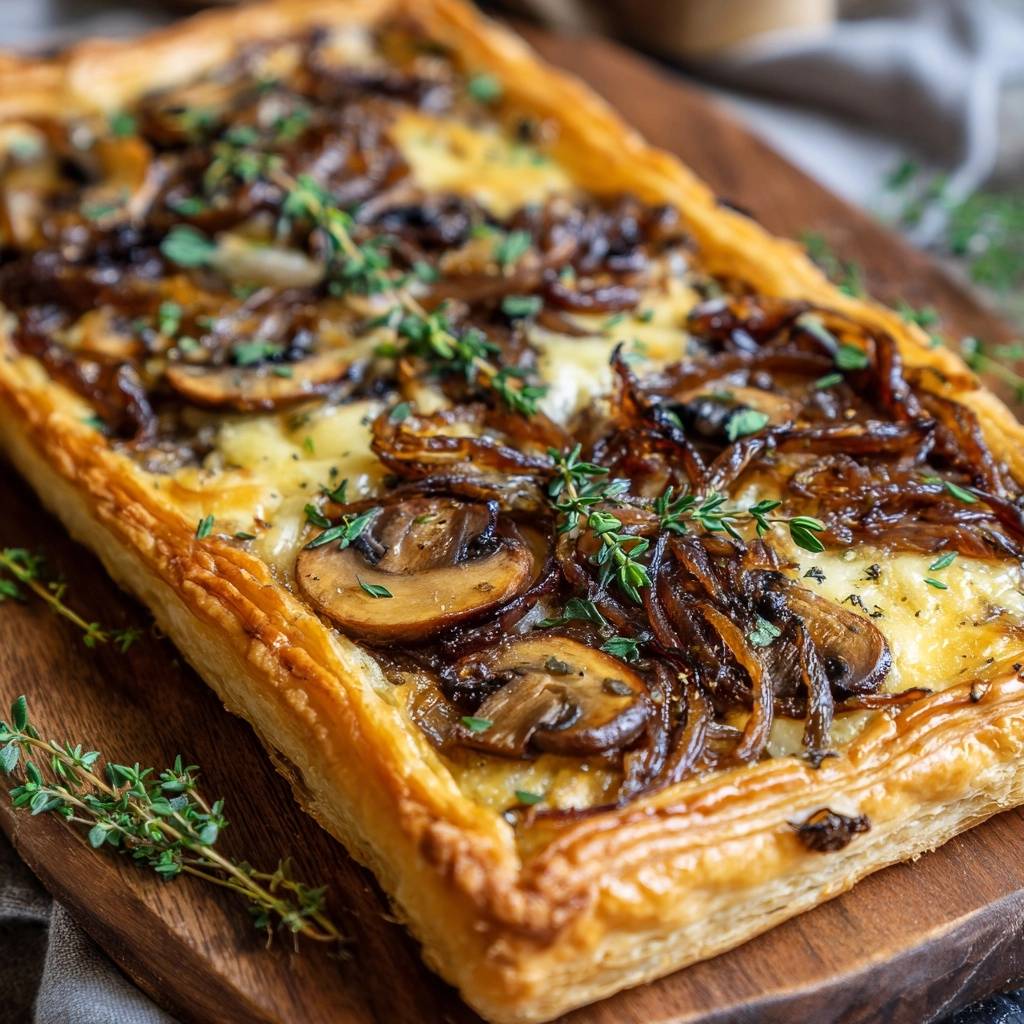
Imagine biting into a layer of pastry so crisp it practically shatters, followed by the deep, earthy richness of roasted mushrooms and jammy onions. Most people struggle with homemade tarts because the center turns into a soggy, doughy disappointment that sags under the weight of the toppings. This Caramelized Onion and Mushroom Tart solves that problem with a specific moisture-reduction strategy that ensures every bite is structurally sound and incredibly savory.
Whether you’re hosting a weekend brunch or looking for a sophisticated vegetarian dinner, this dish hits all the right notes. The contrast between the buttery, flaky crust and the sweet, concentrated flavors of the vegetables makes it a true showstopper. It looks like it came from a high-end French bakery, but the process is surprisingly approachable once you understand how to manage the ingredients.
The secret to this recipe’s success lies in the pre-roasting of the mushrooms. By roasting them on a dry sheet before they ever touch the dough, you cook off the internal water that usually leaks out in the oven and ruins your pastry. This one extra step is the difference between a professional-grade tart and a limp mess. I’ve found that this technique also intensifies the umami flavor, making the mushrooms taste twice as meaty.
The Science of Moisture Control in Pastry
Puff pastry relies on a delicate physical reaction to achieve its famous height. As the cold butter in the dough hits the hot oven, the water within that butter evaporates, creating steam. This steam pushes the thin layers of flour apart, resulting in those beautiful, flaky ridges. However, this process is easily sabotaged by external moisture coming from your toppings.
Vegetables like onions and mushrooms are packed with water. If you place raw or even lightly sautéed vegetables directly onto raw puff pastry, that liquid seeps into the dough as it bakes. Instead of the layers rising and crisping, they become saturated and heavy. This creates a “soggy bottom” where the pastry remains raw and gummy even if the edges look golden brown.
This recipe prioritizes “dry” toppings to maintain the structural integrity of the tart. By caramelizing the onions until they reach a jam-like consistency and roasting the mushrooms until they shrink and brown, we remove the water while concentrating the sugars and fats. This ensures the steam from the pastry can escape upward through the gaps in the toppings rather than getting trapped in the dough.
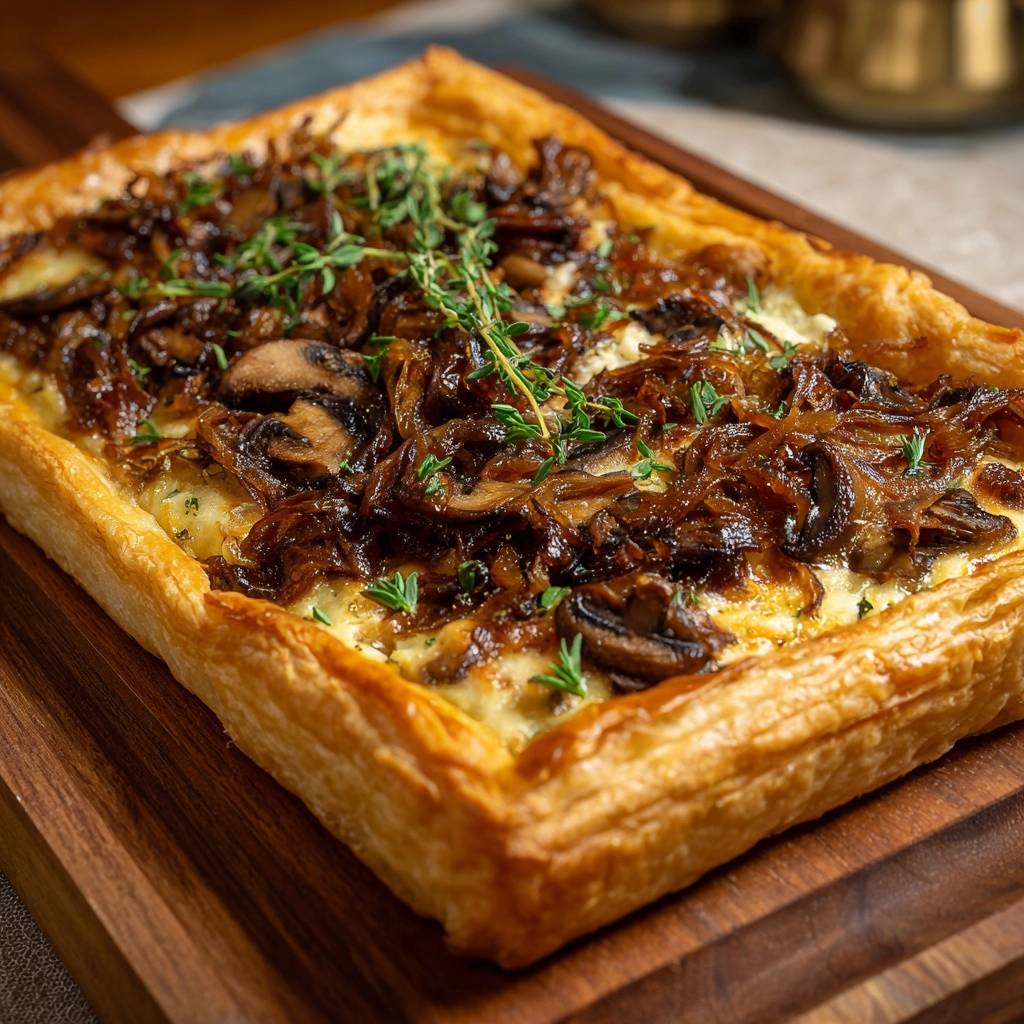
Essential Components for the Savory Base
Quality ingredients are the backbone of this tart. I always recommend using large yellow onions because they have a higher sugar content than white or red varieties. This sugar is essential for achieving that deep, mahogany caramelization without adding extra sweeteners. When they break down, they provide a luscious, jammy texture that acts as a bed for the other flavors.
Cremini mushrooms, often sold as “baby bellas,” are the preferred choice here over standard white buttons. They have a firmer texture and a more developed earthy flavor that stands up well to the high heat of the oven. To cook them, use a high-fat European-style butter if possible. These butters have less water and more milk solids, which helps the onions brown more evenly and adds a rich, nutty aroma to the entire kitchen.
Selecting the Right Puff Pastry
When shopping, look for an all-butter puff pastry rather than versions made with vegetable oils or shortening. The flavor difference is massive, and the butter provides a much better “shatter” when you bite into it. The most important rule is to keep the dough at exactly 40°F. If the pastry gets too warm while you’re working, the fat melts into the flour, and you’ll lose those distinct, flaky layers. If it feels soft, pop it back in the fridge for ten minutes.
The Role of Gruyère and Swiss Cheese
Gruyère is the gold standard for this tart because of its high fat content and excellent melting point. It provides a salty, nutty punch that cuts through the sweetness of the onions. More importantly, the cheese acts as a moisture barrier. By layering the shredded cheese directly onto the pastry before adding the vegetables, you create a protective seal that prevents any residual moisture from the onions from reaching the dough.
Phase 1: Pre-Roasting Mushrooms for Intense Umami
Mushrooms are roughly 80 to 90 percent water, which is why they shrink so much when cooked. Traditional sautéing often fails to remove enough moisture because the mushrooms end up steaming in their own juices in a crowded pan. Dry-roasting them at 400°F on a parchment-lined sheet is a much more effective method for a tart application.
Spread your sliced creminis in a single layer, ensuring they aren’t overlapping. As they roast for 12 to 15 minutes, you’ll see them darken and shrivel slightly. You are looking for the edges to become slightly crisp and the aroma to become intensely savory. If you see any liquid on the pan when they come out, pat them dry with a paper towel. This step guarantees your tart stays crisp from the first slice to the last.
Phase 2: Achieving Deep Mahogany Caramelized Onions
Caramelizing onions is an exercise in patience, but the reward is a flavor profile that cannot be rushed. This process relies on the Maillard reaction and the eventual caramelization of the onion’s natural sugars. Start with your butter and oil over medium heat, and don’t be afraid of the volume of onions at the start. They will reduce significantly as they cook.
Keep the heat moderate. If the heat is too high, the onions will char and become bitter rather than sweet. You want a low-and-slow approach, stirring every few minutes. After about 25 minutes, the onions should be a deep, rich brown and have a soft, spreadable texture. This is the “jammy” stage that provides the luxurious mouthfeel we want for the tart base.
To finish the onions, add a splash of balsamic vinegar to the pan. This serves two purposes: it deglazes the pan, picking up all the flavorful brown bits stuck to the bottom, and it provides a necessary acidic balance to the sweetness. The vinegar should evaporate almost instantly, leaving behind a complex, tangy glaze that ties the onions and mushrooms together perfectly.
Phase 3: Scoring and Preparing the Pastry Frame
Scoring the pastry is a technical step that gives the tart its professional “framed” look. Take a sharp knife and lightly draw a border about one inch from the edge of the dough. You aren’t trying to cut all the way through; you just want to break the top few layers. This allows the outer border to rise freely while the weight of the toppings keeps the center down.
After scoring, you must “dock” the center of the pastry. Use a fork to prick holes all over the area inside your scored border. These holes allow steam to escape from the center of the dough, preventing it from puffing up and displacing your toppings. This ensures the heat is distributed evenly across the base, helping the bottom bake through thoroughly while the edges soar into tall, golden layers.
The same blind baking method is used for this creamy fennel tart to keep the crust perfectly crisp.
Phase 4: Assembly and the Blind Bake Option
When you’re ready to assemble, start with the cheese. Distribute the shredded Gruyère evenly inside the scored border. Follow this with the cooled caramelized onions, spreading them into a thin, even layer. Finally, arrange your roasted mushrooms on top. This specific layering logic keeps the heaviest, wettest ingredients furthest from the dough, using the cheese as a shield.
If you want a truly cracker-like, extra-crispy bottom, I recommend a quick blind bake. Put the empty, docked pastry in the oven for about 8 minutes before adding any toppings. If the center puffs up, just gently press it back down with a spatula. Once the toppings are on, brush the outer border with an egg wash. This creates a lacquered, deep golden finish that makes the tart look like it belongs in a magazine.
Phase 5: Temperature Precision and Baking Cues
Oven calibration is vital for puff pastry. I always suggest using an oven thermometer to ensure you’re actually at 400°F. If the oven is too cool, the pastry will leak butter and become greasy. At the right temperature, the pastry will “lift” rapidly. You’ll see the edges grow tall and separate into dozens of visible, paper-thin layers.
The tart is finished when the edges are a rich, dark golden brown and the cheese is bubbling. Don’t be afraid of a little color; a pale tart is often an undercooked tart. The egg wash should look shiny and bronzed. Once you pull it out, let it sit for five minutes on the baking sheet. This allows the structure to set so the slices come away cleanly without falling apart.
Troubleshooting Common Tart Failures
If your pastry didn’t rise, the dough likely became too warm before it hit the oven. Always keep the puff pastry in the fridge until the very second you are ready to score and fill it. If the kitchen is hot, you can even chill the assembled tart for ten minutes before baking to firm up the butter again.
A doughy center usually means the onions were too wet or the docking wasn’t thorough enough. Ensure your onions are cooked down to a thick jam and that you’ve pricked the center of the dough dozens of times. If the onions taste bitter, they likely caught some high heat and scorched during the caramelization process. Remember, low and slow is the only way to get that sweet, mellow flavor.
Rubbery mushrooms are a sign of under-roasting. If they don’t lose enough water during the pre-roasting phase, they will steam on top of the tart rather than crisping up. Make sure they look significantly smaller and darker before you take them out of the oven. If they still feel spongy, give them another three minutes of roasting time.
Flavor Variations and Ingredient Swaps
This tart is a fantastic canvas for different flavors. You can add roasted garlic cloves into the onion mixture for a more pungent, savory kick. If you don’t have thyme, fresh rosemary or sage work beautifully with the earthiness of the mushrooms. Just be sure to chop rosemary finely, as the needles can be quite tough if left whole.
For a more gourmet touch, try using a mix of wild mushrooms like shiitake or oyster mushrooms alongside the creminis. They offer different textures and deeper woody notes. After the tart comes out of the oven, a tiny drizzle of truffle oil or a bit of high-quality honey can elevate the dish. The honey specifically plays off the sweetness of the balsamic onions and the saltiness of the Gruyère.
Optimal Side Dish Pairings
Because this tart is quite rich and buttery, it pairs best with side dishes that offer acidity and brightness. A simple arugula salad dressed with lemon juice and olive oil is the perfect companion. The peppery bite of the greens cuts right through the fat of the pastry and cheese, refreshing your palate between bites.
Cold asparagus spears with a light vinaigrette or a bright vegetable consommé also work well. You want to avoid heavy, creamy sides or anything too starchy, like potatoes. The goal is to balance the “heaviness” of the tart with something light and crisp. A few quick-pickled red onions on the side can also provide a nice pop of color and tang.
Make-Ahead Strategies and Reheating Instructions
You can easily prep the components of this tart in advance to save time. The onions and mushrooms can be cooked up to 48 hours ahead of time. Store them in airtight containers in the fridge. When you’re ready to bake, just assemble and go. This makes the tart an excellent option for stress-free entertaining or a quick weeknight luxury.
If you have leftovers, never use a microwave to reheat them. The microwave will turn that beautiful, crispy pastry into a soggy, rubbery mess in seconds. Instead, place the slices on a baking sheet in a 350°F oven for about 8 minutes. This heat will recrisp the bottom and the edges, restoring the tart to its original glory. It will taste almost as good as it did the moment it first came out of the oven.
How do I store leftovers and can I freeze this tart?
Store any leftover tart slices in an airtight container in the refrigerator for up to three days. To maintain the best texture, place a piece of parchment paper between layers if you are stacking them. While you can freeze the baked tart for up to a month, the pastry will lose some of its signature shatter. If you do freeze it, reheat it directly from frozen in a 375°F oven until the center is hot and the pastry crisps back up.
Why is the bottom of my tart still soft even though the edges are brown?
This is usually caused by trapped moisture or an oven that isn’t hot enough. To fix this, ensure your mushrooms are roasted until dry and your onions are fully reduced. You can also try baking the tart on the lowest rack of your oven for the last five minutes of cooking. This brings the bottom of the pan closer to the heat source, helping the base of the pastry crisp up without burning the top toppings.
Can I use a different type of dough like pie crust?
You can use a standard pie crust, but the result will be a “galette” rather than a puff pastry tart. Pie crust is sturdier and more crumbly, whereas puff pastry is light and airy. If you use pie dough, you won’t get the same dramatic rise on the edges, and the baking time may need to be adjusted. Puff pastry is highly recommended for this specific recipe because its lightness balances the heavy, savory toppings.
What can I use if I can’t find Gruyère cheese?
If Gruyère isn’t available, Swiss cheese or Emmental are the closest substitutes in terms of melting properties and flavor. For a sharper profile, you could use a high-quality aged white cheddar. If you want something milder, Fontina works well, though it is a bit moisture-heavy, so use it sparingly. Avoid pre-shredded cheeses in bags if possible, as they are coated in potato starch which can interfere with the smooth melt you want for the moisture barrier.
How do I prevent the onions from burning?
The key to perfect caramelized onions is consistent, moderate heat and regular stirring. If you notice the onions sticking or browning too quickly, add a tablespoon of water to the pan. This will scrape up the browned bits (fond) and distribute the heat more evenly. Don’t walk away from the stove for long periods; caramelization happens slowly at first, but the onions can go from mahogany to burnt very quickly in the final stages.
Can I make this tart gluten-free?
Yes, you can make this gluten-free by using a store-bought gluten-free puff pastry. Many specialty grocers now carry these in the freezer section. Keep in mind that gluten-free pastry can be more fragile and may not rise as high as traditional wheat-based dough. Handle it gently while it’s cold, and follow the same docking and scoring instructions to ensure it bakes through properly.
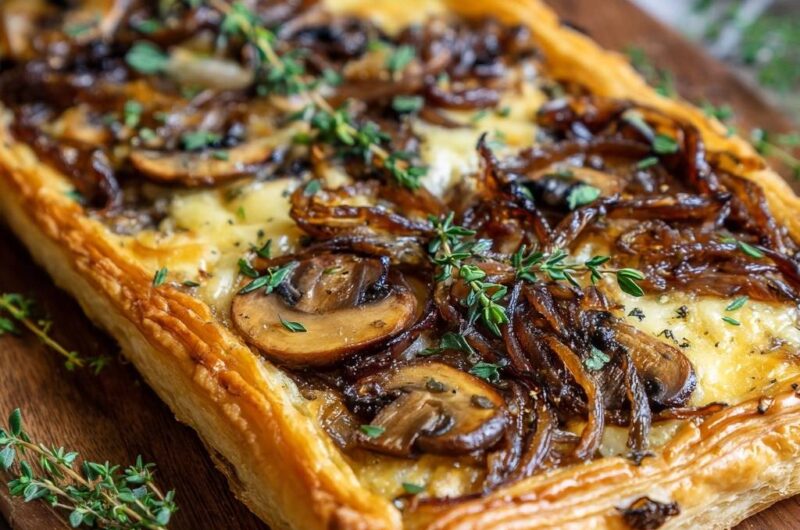
Caramelized Onion and Mushroom Tart
Course: Main CourseCuisine: French InspiredDifficulty: medium6
servings15
minutes55
minutes340
kcal70
MinutesThis savory tart uses a moisture-reduction technique by pre-roasting mushrooms and slow-cooking onions to ensure a shatteringly crisp puff pastry base topped with rich Gruyere cheese and fresh thyme.
Ingredients
1 sheet frozen puff pastry (approx. 10×15 inches), thawed but very cold
2 tablespoons unsalted butter
1 tablespoon olive oil
3 large yellow onions, thinly sliced
10 ounces cremini mushrooms, sliced 1/4 inch thick
1.5 cups shredded Gruyere or Swiss cheese
1 tablespoon fresh thyme leaves, plus extra for garnish
1 egg, beaten with 1 teaspoon water (egg wash)
1/2 teaspoon balsamic vinegar
Kosher salt and cracked black pepper to taste
Directions
- Preheat your oven to 400°F (200°C). Line a large, rimmed baking sheet with parchment paper.
- The Secret to No Sogginess: Spread sliced mushrooms in a single layer on a separate dry baking sheet. Roast for 12-15 minutes. This evaporates their internal water and intensifies flavor before they touch the pastry. Remove from oven and pat dry if any moisture remains.
- While mushrooms roast, heat butter and olive oil in a large skillet over medium heat. Add onions and a generous pinch of salt. Cook, stirring occasionally, for 25-30 minutes until deep mahogany brown and jammy. Stir in the balsamic vinegar at the end to deglaze the pan and add depth. Let cool slightly.
- Lay the cold puff pastry on the prepared parchment sheet. Use a sharp knife to lightly score a 1-inch border around the edge, being careful not to cut all the way through. Prick the center area (inside the border) thoroughly with a fork to prevent it from puffing up.
- Blind Bake (Optional for Maximum Crisp): For an extra-crispy base, bake the empty pastry for 8 minutes, then press the center down gently with a spatula before adding toppings.
- Assembly: Evenly distribute the shredded cheese inside the scored border. Layer the caramelized onions over the cheese, then arrange the pre-roasted mushrooms on top. Sprinkle with half of the fresh thyme, salt, and pepper.
- Brush the outer 1-inch border with the egg wash to ensure the deep golden, glossy finish seen in the image.
- Bake for 20-25 minutes until the pastry edges are tall, multi-layered, and a rich golden brown.
- Garnish with the remaining fresh thyme sprigs and a final crack of black pepper. Serve warm.
Notes
- To ensure the crispest base, pre-roast the mushrooms to evaporate internal water and consider blind baking the pastry for 8 minutes before adding toppings.