Mastering Ginger Soy Steamed White Fish
Most home cooks treat white fish with a certain level of fear, and honestly, I don’t blame them. We’ve all been served that sad, rubbery fillet that feels more like a pencil eraser than a meal. The “rubbery fish” epidemic happens because lean proteins like cod or halibut are incredibly sensitive to dry heat, which sucks out moisture faster than you can set the table.
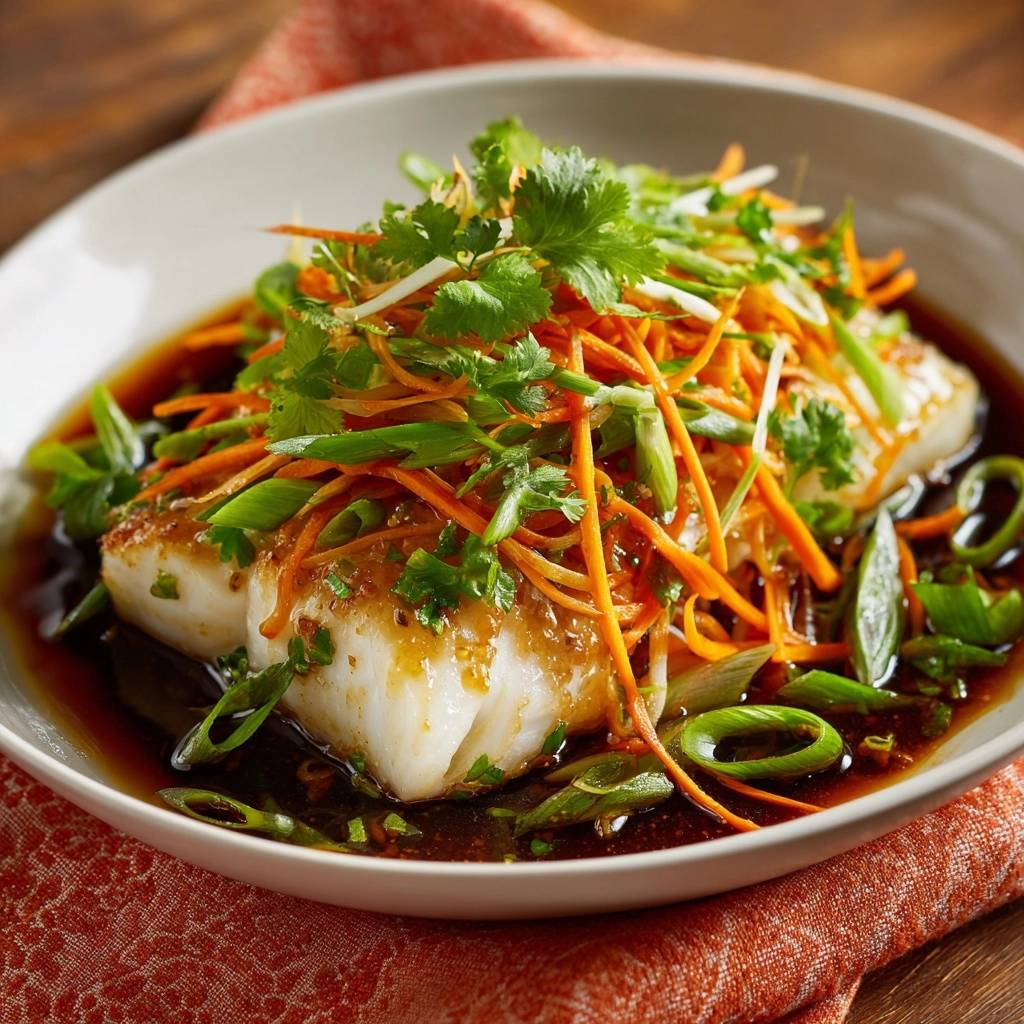
This Cantonese-inspired technique changes the game by using gentle, moist heat to cocoon the fish. You aren’t just cooking the protein; you’re hydrating it while infusing every flake with the sharp bite of ginger and the deep umami of soy. The real magic happens at the very end when a splash of smoking hot oil hits fresh aromatics, creating a fragrant, silky sauce right on the plate.
The secret to restaurant-quality results is the “lift” technique. By resting your fish on a bed of ginger matchsticks rather than flat on a plate, you allow steam to circulate 360 degrees. This prevents the bottom of the fillet from becoming soggy while the top overcooks, ensuring a uniform, buttery texture throughout.
The Physics of Steam and Protein Denaturation
Steaming is often misunderstood as a “diet” cooking method, but it’s actually a high-performance tool for delicate proteins. Unlike searing or roasting, steam maintains a constant temperature of 212°F in a high-moisture environment. This prevents the surface of the fish from drying out before the center is cooked through.
When you subject white fish to harsh, dry heat, the muscle fibers contract violently. This process, known as denaturation, squeezes out the natural juices, leaving you with a chalky, bouncy texture. Gentle steam allows the proteins to set slowly, preserving the structural integrity of the delicate flakes.
However, you must account for carry-over cooking. Because the fish is hot and sitting in a warm sauce, it will continue to cook for a minute or two after you pull it from the steamer. I always recommend pulling the fish when the very center is just barely opaque; by the time you hit it with the hot oil, it will be perfect.
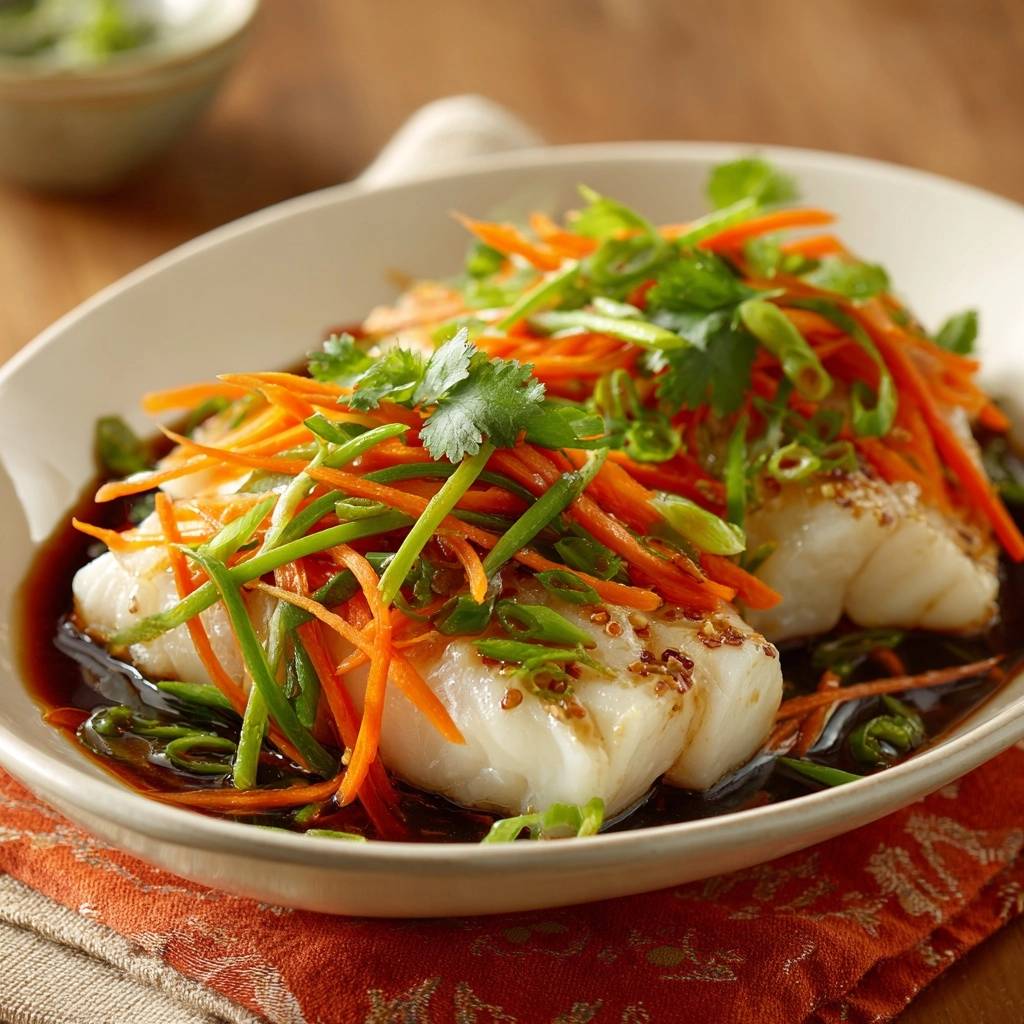
Selecting the Best White Fish Fillets
For this Ginger Soy Steamed White Fish, the species you choose dictates the final mouthfeel. Cod is a classic choice because its large, fat flakes hold onto the soy sauce beautifully. If you want something firmer and more substantial, Halibut offers a clean, sweet flavor that stands up well to the pungent ginger.
If you’re looking for a truly luxurious experience, Chilean Sea Bass is the gold standard. Its high fat content makes it almost impossible to overcook, resulting in a melt-in-your-mouth texture that feels like butter. Snapper is another great option, though it’s leaner and requires a more watchful eye on the timer.
Regardless of the species, aim for fillets that are 1 to 1.5 inches thick. This thickness allows enough time for the aromatics to penetrate the flesh without the exterior becoming mushy. Thinner fillets, like tilapia or sole, cook too quickly for the ginger infusion to truly take hold.
Freshness Indicators and Prep Standards
Freshness is everything when steaming because there’s no heavy breading or frying to hide behind. Look for fillets that are translucent and shimmering, not dull or matte white. The flesh should spring back immediately when pressed, and it should smell like the clean ocean, never “fishy.”
Before you even think about the steamer, you must pat the fish bone-dry with paper towels. Any surface moisture left on the fish from the packaging will turn into a “muddy” tasting liquid during the steaming process. Starting with a dry surface ensures the white pepper and ginger flavors stick to the protein rather than sliding off.
If you enjoy slicing fresh garnishes like these, the silky fillets in this sesame chili poached fish benefit from the same treatment.
Essential Aromatics for Ginger Soy Steamed White Fish
The ingredient list for this dish is short, so quality matters. Ginger is the backbone here, providing a spicy heat that cuts through the richness of the fish. By julienning it into thin matchsticks, you increase the surface area, allowing more essential oils to release into the steam and the final sauce.
A spoonful of broth with a splash of rice vinegar is the “secret” ingredient that separates home cooking from the pros. It adds savory depth and a gentle tang that neutralizes any residual fishiness.
Green onions and cilantro provide the necessary freshness and visual pop. I like to slice the onions on a long diagonal; it looks elegant and provides more surface area for the hot oil to hit. The cilantro stems are just as flavorful as the leaves, so don’t be afraid to include the tender upper stems in your pile.
The Role of High-Smoke Point Oils
The final “sizzle” requires an oil that can handle intense heat without breaking down or tasting bitter. Grapeseed, vegetable, or canola oils are mandatory here because they have high smoke points. They act as a neutral carrier for the flavors of the ginger and scallions.
Avoid using extra virgin olive oil or butter for the finishing step. Olive oil has a low smoke point and a strong peppery flavor that clashes with the soy and ginger. Butter will simply burn and turn bitter before it reaches the temperature needed to flash-sear the vegetables.
Step-by-Step: Achieving the Perfect Flake
Mastering this dish requires moving through three distinct phases with confidence. It’s a fast process, so I recommend having all your vegetables chopped and your sauce whisked before the water even starts to boil. Once the steam starts, the clock is ticking.
Phase 1: Creating the Ginger Elevation Bed
Start by laying half of your ginger matchsticks in a rectangular shape on your heatproof plate. When you place the fish on top, these ginger sticks act like a natural roasting rack. This “lift” is crucial because it prevents the bottom of the fish from sitting in a pool of its own purged juices.
Without this elevation, the bottom of the fillet becomes dense and waterlogged while the top steams. By lifting it, you ensure 360-degree steam circulation. This results in a uniform texture where the bottom is just as flaky and light as the top.
Phase 2: The Precise Seven-Minute Window
Timing is the difference between success and failure. For a 1-inch thick fillet, 7 to 8 minutes is usually the sweet spot. You’re looking for the flesh to turn from translucent to opaque. If you poke the thickest part with a paring knife, the flakes should just begin to separate easily.
When you remove the plate from the steamer, you’ll notice a pool of cloudy liquid. This is “fish liquor.” While it contains flavor, it’s often too diluted and can taste slightly metallic. Drain about 80% of it away before adding your sauce to ensure the final broth is concentrated and savory.
If you enjoy this ginger-soy marinade, you can pour it over this deconstructed egg roll soup for a similar savory kick.
Phase 3: The Signature Sizzling Oil Finish
This is the most exciting part of the recipe. Pile your fresh carrots, remaining ginger, and green onions directly on top of the hot fish. Pour the soy sauce mixture around the base of the fish, not over the greens. You want the soy to warm up from the plate’s heat without wilting the vegetables prematurely.
Heat your oil until it’s shimmering and just starting to send up a tiny wisp of smoke. Carefully but quickly pour it directly over the aromatics. You should hear a violent, loud sizzle. This instant heat sears the raw vegetables, locking in their bright color and releasing their oils into the soy sauce below.
Troubleshooting Common Steaming Obstacles
If you find the fish is still raw in the center after the timer goes off, don’t panic. This usually happens if the water wasn’t at a “vigorous” boil before you started. Simply pop the lid back on and give it another 2 minutes. The fish is forgiving as long as you don’t walk away for 10 minutes.
If your oil didn’t sizzle when you poured it, it wasn’t hot enough. The oil needs to be right at the smoking point to create that restaurant-style infusion. If this happens, the dish will still taste good, but the aromatics will taste “raw” rather than “flash-cooked.” Next time, wait for that first wisp of smoke.
For those using a metal steamer basket that leaks too much pressure, try wrapping the lid in a clean kitchen towel (keeping it away from the flame). This creates a tighter seal and keeps the steam concentrated. Just make sure the towel is tucked up so it doesn’t catch fire on a gas range!
Flavor Variations and Regional Swaps
While this recipe is a classic, you can easily adapt it to what’s in your pantry. If you don’t have green onions, thinly sliced leeks provide a similar mild onion flavor. For a deeper, funkier profile, add a tablespoon of rinsed fermented black beans to the ginger bed before steaming.
You can also play with the sweetness. If you prefer a glaze-like consistency, swap the granulated sugar for honey or palm sugar. This will give the sauce a slightly thicker body and a more complex sweetness that pairs beautifully with the heat of the ginger.
For a spicy kick, add some deseeded, julienned red chilies to the aromatic pile before the hot oil hit. The oil will carry the capsaicin throughout the sauce, giving you a gentle, glowing heat that doesn’t overwhelm the delicate white fish.
Optimal Side Dishes for Steamed Seafood
The sauce created by the soy, ginger, and sizzling oil is liquid gold. You need a side dish that acts as a sponge. Fluffy jasmine rice is the traditional choice, as it soaks up the emulsion without competing with the delicate flavors of the fish.
For a vegetable side, simple blanched bok choy or Chinese broccoli (gai lan) is perfect. The bitterness of the greens balances the salty-sweet sauce. I often place the greens right in the steamer for the last 2 minutes of the fish’s cook time to save on dishes.
What Goes With Ginger Soy Steamed Fish
These two dishes share the same savory-soy backbone and bring different textures to the table.
- For a cool, crunchy contrast, toss together a Spicy Sesame Wakame Salad — the sesame and chili mirror the ginger-soy notes while the seaweed adds a fresh bite.
- If you want something hearty alongside the fish, the Sticky Soy Glazed Meatballs use a similar soy glaze and make a good protein-packed partner for a shared meal.
Avoid heavy, creamy sides like mashed potatoes or cheesy gratins. The beauty of this dish is its lightness and clean flavors. A neutral, absorbent starch and a crisp green vegetable are all you need to make this a complete, restaurant-quality meal.
Expert Tips for Restaurant-Quality Presentation
The visual appeal of this dish relies heavily on your knife skills. The “Julienne” technique—cutting vegetables into matchsticks—isn’t just for looks. Thinly cut carrots and ginger soften instantly under the hot oil, whereas thick chunks would stay raw and crunchy.
Choose your steaming vessel wisely. A wide, shallow heatproof platter is better than a deep bowl. A platter allows the fish to lie flat and ensures the sizzling oil can reach all the aromatics evenly. Make sure the plate is at least an inch smaller than your steamer so the steam can actually rise past it.
Finally, don’t forget the cilantro garnish. Adding it just before the oil hit allows it to wilt slightly and release its citrusy aroma. If you add it too early, it turns brown; if you add it too late, it stays cold. That middle ground is where the magic happens.
Frequently Asked Questions
Can I use frozen fish fillets for this recipe?
Yes, you can use frozen fillets, but they must be completely thawed first. Thaw them in the refrigerator overnight and pat them extremely dry with paper towels. Frozen fish tends to release more moisture than fresh, so you may need to drain more “fish liquor” from the plate before adding your sauce.
What if I don’t have a bamboo steamer?
You don’t need fancy equipment! You can use a metal steamer insert or even create a makeshift one. Place three balls of crumpled aluminum foil in the bottom of a large pot, add water, and rest your heatproof plate on top of the foil balls. As long as the plate is above the water and the lid fits tightly, it will work perfectly.
Is there a substitute for the rice vinegar?
If you don’t have rice vinegar, a splash of white grape juice mixed with a tiny bit of lime juice works well. Use plain rather than seasoned rice vinegar, as the seasoned kind will throw off the balance of the soy sauce.
How do I store and reheat leftovers?
Steamed fish is best enjoyed immediately, but you can store leftovers in an airtight container in the fridge for up to two days. To reheat, do not use the microwave, as it will turn the fish rubbery. Instead, steam it gently for 3-4 minutes until just warmed through, or flake the fish into a hot bowl of rice or noodles.
Can I reuse the sauce if I have extra?
The sauce on the plate is a mixture of soy, oil, and fish juices. While delicious, it shouldn’t be saved for long periods because of the fish proteins. However, if you have extra sauce that hasn’t touched the fish yet, it makes a fantastic dressing for steamed vegetables or a quick stir-fry the next day.
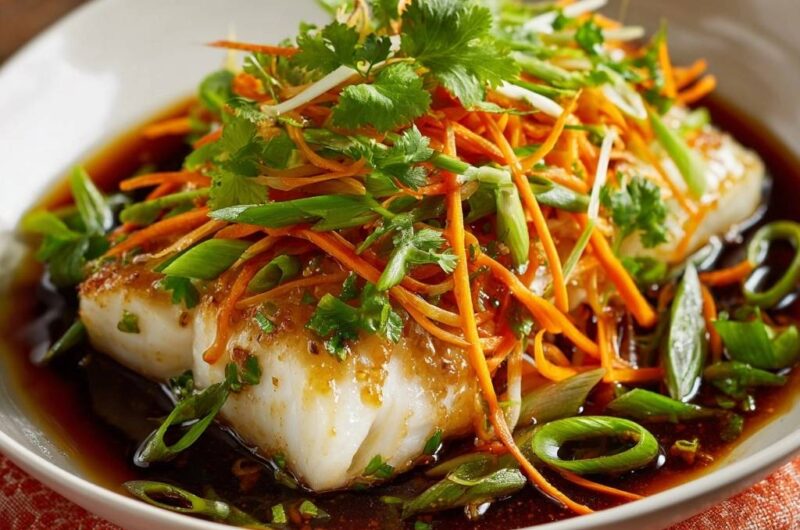
Steamed White Fish
Course: Main CourseCuisine: AsianDifficulty: easy2
servings15
minutes10
minutes285
kcal25
MinutesA foolproof method for steaming white fish fillets like cod or halibut. By using a precise steaming window and a flash-sear of hot oil over fresh aromatics, you create a silky, savory dish that flakes at the touch of a fork.
Ingredients
2 thick white fish fillets (6-8 oz each), such as cod, halibut, or Chilean sea bass
1 cup carrots, julienned into very thin matchsticks
3 green onions, sliced diagonally into long strips
1/2 cup fresh cilantro, leaves and tender stems
2 tablespoons fresh ginger, julienned into matchsticks (plus 1 tsp grated for the sauce)
1/4 cup high-quality soy sauce
1 tablespoon chicken or vegetable broth plus a splash of rice vinegar
1 tablespoon sugar
1/4 teaspoon white pepper
3 tablespoons neutral oil (vegetable or grapeseed)
1 teaspoon toasted sesame oil
Directions
- Prepare the fish by patting it completely dry with paper towels. Season both sides lightly with white pepper.
- Arrange half of the julienned ginger on a heatproof plate. Place the fish fillets on top of the ginger. This “lifts” the fish, allowing steam to circulate underneath for even cooking.
- Set up a steamer basket over a wok or pot with 2 inches of water. Bring the water to a vigorous boil first.
- Place the plate with the fish into the steamer. Cover tightly and steam over medium-high heat for 7 to 9 minutes (depending on thickness). The fish is perfectly done when the thickest part is opaque and just begins to flake.
- While the fish steams, whisk together the soy sauce, sugar, broth, rice vinegar, and the 1 teaspoon of grated ginger in a small bowl until the sugar dissolves.
- Carefully remove the plate from the steamer. You will see liquid on the plate; drain off about 80% of this liquid to ensure your sauce remains concentrated and flavorful.
- Immediately pile the julienned carrots, remaining ginger, green onions, and cilantro directly on top of the hot fish.
- In a small saucepan or ladle, heat the neutral oil and sesame oil over high heat until it is shimmering and just starting to smoke.
- Pour the soy sauce mixture around the base of the fish (not over the vegetables).
- Immediately pour the smoking hot oil directly over the pile of fresh ginger, carrots, and onions. You should hear a loud, violent sizzle. This flash-sears the aromatics, releasing their essential oils into the fish and the sauce below for a silky, restaurant-style finish.
Notes
- Draining the excess water from the plate after steaming is crucial to prevent the soy sauce mixture from becoming diluted. Ensure the oil is shimmering and just starting to smoke to achieve the necessary sizzle that releases the aromatic oils.