Mastering Pan-Seared White Fish with Chimichurri and Roasted Wedges
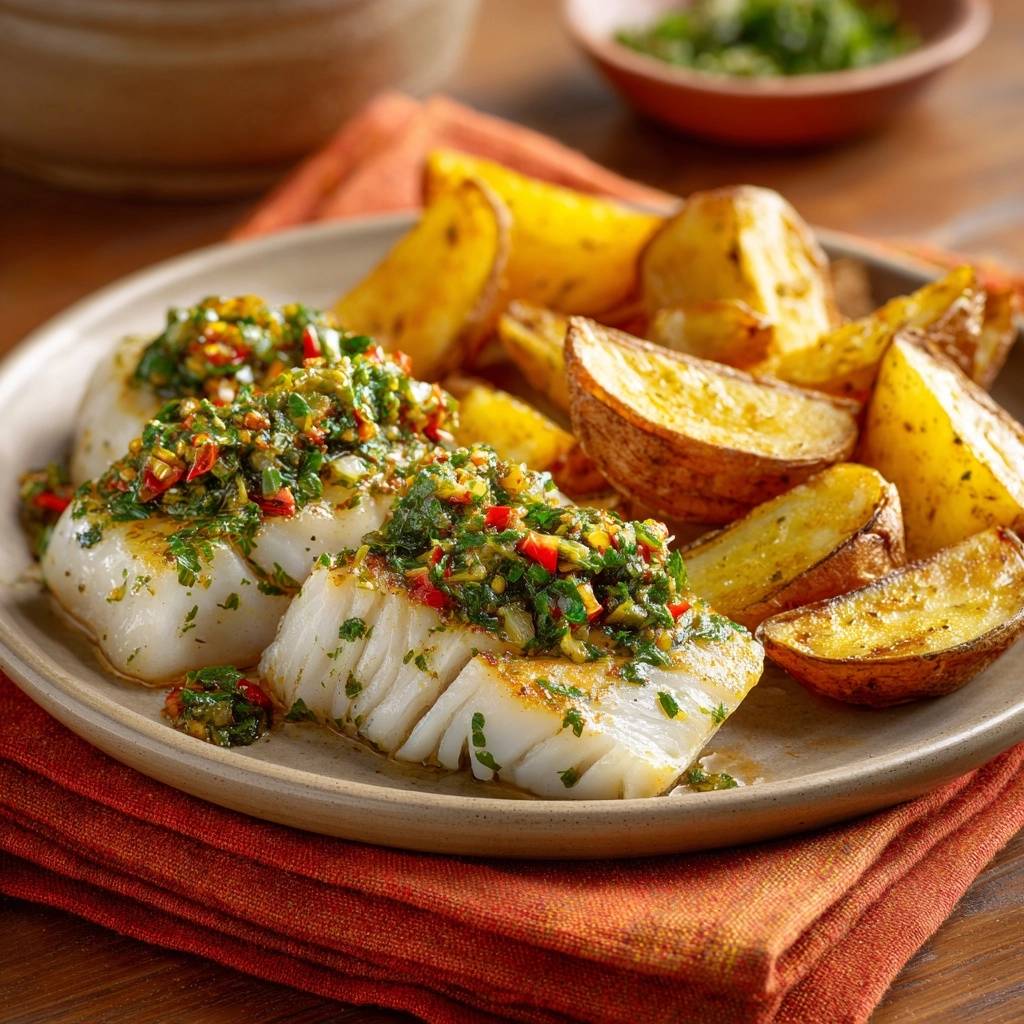
Imagine a fork sliding through a golden, crackling crust into a center so buttery and moist it practically melts on your tongue. That’s the power of a perfectly seared white fish, but the real magic happens when you top it with a zesty, herb-loaded chimichurri. The sharp acidity of the vinegar and the kick of fresh chili cut right through the richness of the fish, while crispy roasted wedges provide the ultimate salty crunch on the side.
Most home cooks shy away from delicate fillets because they’re terrified of the fish sticking or tearing into a million pieces. However, achieving that restaurant-grade sear isn’t about luck; it’s about mastering the moisture barrier and understanding heat. This guide provides the technical blueprint you need to ensure your fish releases from the pan with a flawless, mahogany crust every single time.
The secret to this entire meal lies in the “dry-touch” method. If there’s even a hint of moisture on the surface of your fish, it will steam instead of sear, leading to a rubbery texture and a stuck pan. By following these specific steps, you’ll transform a simple piece of seafood into a high-end dinner that’s as impressive to look at as it is to eat.
Selecting the Best White Fish Varieties
When you’re aiming for a high-heat sear, the type of fish you choose makes all the difference. Thick-cut fillets like Cod or Halibut are the gold standard for this recipe because they can withstand the intense heat required to build a crust without drying out in the middle. Their flaky, large-curd texture provides the perfect canvas for the chunky chimichurri sauce.
Freshness is paramount, so look for fillets that are firm to the touch and have a clean, oceanic scent rather than a “fishy” odor. If you’re buying frozen, ensure they are completely thawed and patted dry before you even think about seasoning them. Frozen fish often holds more internal water, so you’ll need to be extra diligent with your paper towels to prevent a soggy result.
Sustainable choices like wild-caught Alaskan Cod or Pacific Halibut are excellent options that offer a meaty bite. Avoid very thin fillets like tilapia or sole for this specific method, as they cook too quickly to develop a significant crust. You want a piece of fish that feels substantial and holds its shape when you lift it with a spatula.
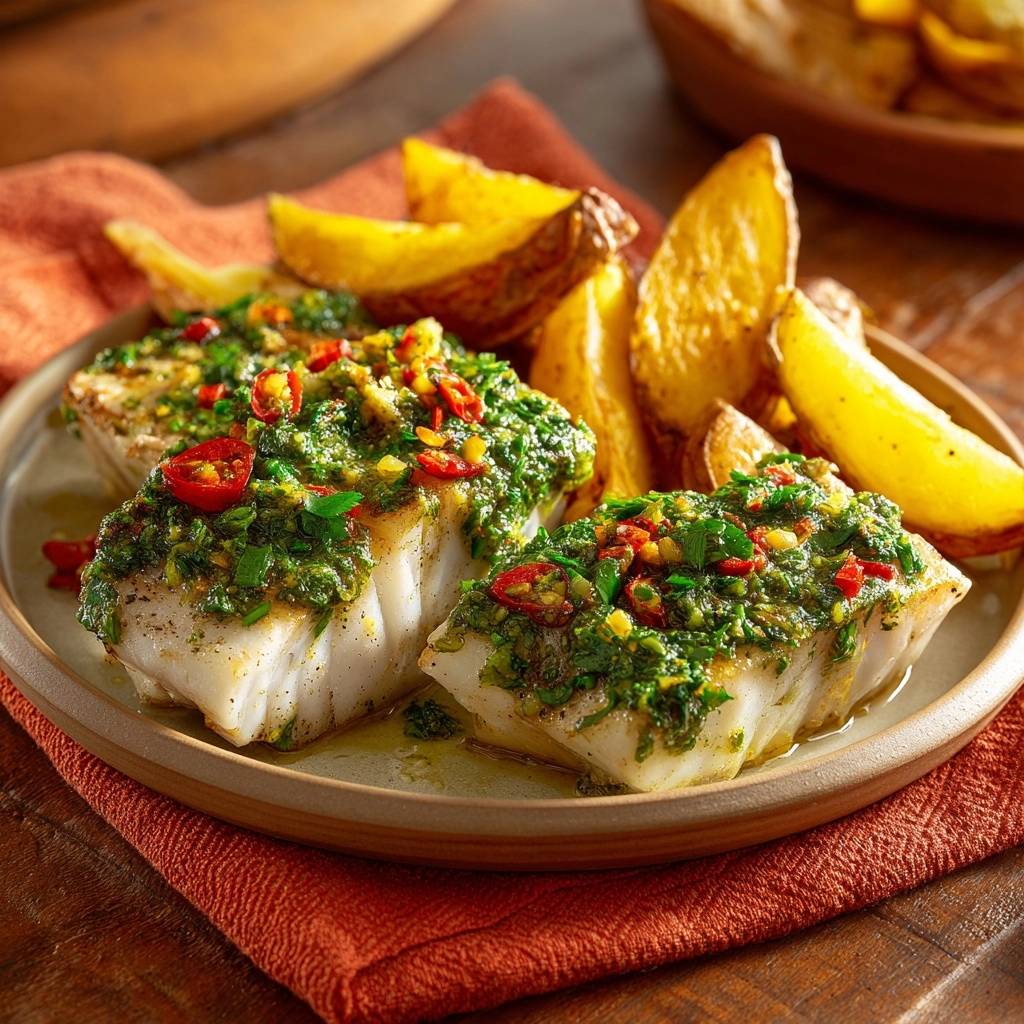
Why Thickness Matters for Searing
The physics of heat transfer dictates that a thicker fillet—ideally around 1.5 inches—is much more forgiving. This thickness creates a thermal buffer, allowing the exterior to undergo the Maillard reaction (browning) while the interior gently reaches a perfect, opaque doneness. A thin fillet would be overcooked and dry long before that beautiful golden crust has a chance to form.
Essential Components for the Chimichurri Sauce
Chimichurri is more than just a garnish; it’s a vibrant, raw sauce that brings life to the plate. Flat-leaf parsley is the backbone here because it has a more robust, peppery flavor and a smoother texture than the curly variety. When you mix it with cilantro, you get a complex, earthy brightness that pairs beautifully with white fish.
The red wine vinegar plays a crucial role by “blooming” the dried oregano and softening the sharp, pungent bite of the raw minced garlic. As the sauce sits, the acid breaks down the cell walls of the herbs, allowing their oils to infuse into the extra virgin olive oil. Therefore, using a high-quality, fruity olive oil is essential, as it acts as the primary flavor carrier for the entire dish.
Don’t skip the red chili! Even if you aren’t a fan of high heat, removing the seeds allows the floral notes of the pepper to shine through without overwhelming your palate. The contrast of the red flecks against the deep green herbs makes the dish look as professional as it tastes.
Fresh vs. Dried Herb Ratios
While the parsley and cilantro must be fresh to maintain that signature enzymatic brightness and vivid color, dried oregano is actually preferred in chimichurri. Dried oregano has a more concentrated, savory profile that anchors the sauce. However, because dried herbs are more potent, a little goes a long way—stick to the half-teaspoon measurement to keep the flavors balanced.
The Science of the Non-Stick Sear
To master the sear, you have to understand that moisture is the ultimate enemy. When water hits a hot pan, it immediately turns into steam. This steam creates a physical barrier that prevents the fish from reaching temperatures above 212°F, which is the point where browning begins. If your fish is wet, it will boil in its own juices rather than searing.
This is where the “Leidenfrost Effect” comes into play. When your oil is shimmering and just starting to show tiny wisps of smoke, it’s hot enough to create a protective vapor layer. This allows the protein to coagulate instantly upon contact, forming a crust that eventually “self-releases” from the metal. If you try to move the fish too early, you’ll tear those delicate protein bonds before they’ve had a chance to firm up.
Using a heavy stainless steel or cast-iron skillet is vital because these materials retain heat exceptionally well. When you drop a cold piece of fish into the pan, the temperature naturally dips. A heavy pan minimizes this drop, ensuring the sear continues uninterrupted and the crust stays crisp.
The Importance of the Dry-Touch Method
You should treat your fish fillets like they’re made of glass. Use several layers of paper towels to press firmly on all sides until the surface feels “bone-dry” to the touch. Additionally, only season with salt at the very last second. Salt is hygroscopic, meaning it draws moisture out of the flesh; if you salt too early, you’ll end up with a puddle of water on your perfectly dried fish.
Achieving Maximum Crispness in Roasted Wedges
For the best wedges, I always reach for Yukon Gold potatoes. They have a naturally creamy interior that contrasts perfectly with a roasted skin. While Russets are starchier and get very fluffy, Yukon Golds hold their shape better and develop a beautiful, waxy caramelization on the edges that feels incredibly indulgent.
The non-negotiable step for crispy potatoes is preheating your baking sheet. When the oiled wedges hit a screaming-hot tray, the bottom surface starts frying immediately. This jump-starts the crisping process and prevents the starch from sticking to the metal, ensuring you don’t lose that precious golden skin when it’s time to flip them.
Oil acts as a heat conductor, filling in the tiny nooks and crannies of the potato surface to ensure even browning. Don’t be shy with the olive oil here; it’s the difference between a dry, shriveled wedge and one that is deeply golden and shatteringly crisp on the outside.
The Single-Layer Rule for Airflow
Overcrowding is the most common mistake in roasting. If the wedges are touching or overlapping, the moisture escaping from the potatoes gets trapped, creating a humid environment. This leads to steaming rather than roasting. Give each wedge at least a half-inch of “breathing room” so the hot air can circulate and dehydrate the skin into a crisp shell.
Step-by-Step: Preparing the Roasted Potato Base
Start by cutting your potatoes into uniform wedges. Consistency is key here; if some are tiny and others are huge, the small ones will burn before the large ones are tender. Aim for about 8 wedges per potato. Toss them in a large bowl with the oil and salt until every single piece is thoroughly emulsified and glistening.
Once you spread them on the preheated tray, get them into the oven quickly to maintain the heat. At the 15-minute mark, use a spatula to flip them. You’ll notice the side touching the pan is already starting to turn a deep amber. This flip ensures both sides get that direct-contact crunch while the centers stay soft and pillowy.
If you enjoy these roasted wedges, you’ll love the same crispy texture in these crispy baby potatoes with herbed cream sauce.
Step-by-Step: Emulsifying the Chimichurri
There is a heated debate between using a food processor or a knife for chimichurri, but for the best texture, the knife wins every time. A food processor tends to pulverize the herbs, which can lead to a muddy, bitter sauce. Hand-chopping preserves the cell structure, giving you a chunky, vibrant salsa that looks beautiful on the plate.
Once you’ve combined the herbs, garlic, chili, and liquids, let the bowl sit at room temperature. This resting period is vital. It allows the dried oregano to rehydrate and the garlic to mellow out in the vinegar. By the time your fish is ready, the flavors will have married into a cohesive, punchy sauce that tastes much better than if it were served immediately.
Step-by-Step: Executing the Perfect Fish Sear
Choose an oil with a high smoke point, like avocado or grapeseed oil, to avoid a kitchen full of acrid smoke. Once the oil is shimmering, lay the fish in the pan away from you to avoid splatters. Immediately take a flexible metal spatula and press down firmly on the fillets for about 30 seconds. This prevents the fish from curling as the proteins tighten.
Now comes the hardest part: leave it alone. Do not poke, prod, or slide the fish for at least 4 minutes. You are waiting for that “self-release” moment. When the crust is fully formed, the fish will naturally detach from the pan. If you feel any resistance when you try to lift a corner, it’s the fish telling you it needs another 30 seconds to finish its crust.
Flip the fillets gently. The second side usually takes about half the time of the first. If you’re working with particularly thick halibut, you can toss a tiny knob of butter into the pan during the last minute and spoon it over the fish. This adds a final layer of richness and ensures the center is perfectly opaque and flaky without being overdone.
Determining Doneness Without a Thermometer
You can check for doneness using the “flake test.” Gently press the side of the fillet with a fork; if the layers of muscle begin to separate easily, it’s ready. Another pro trick is the metal skewer method: insert a thin skewer into the thickest part for 5 seconds, then touch it to your wrist. If it feels warm (not hot), the fish is perfectly cooked through.
Troubleshooting Common Searing Obstacles
If your fish does happen to tear, don’t panic! Simply finish cooking it and hide the tear under a generous spoonful of chimichurri—no one will ever know. If you notice the oil is smoking too aggressively before you’ve even added the fish, pull the pan off the heat for a minute to let it calm down before proceeding.
For potatoes that are browning too fast on the outside but remain hard in the middle, lower your oven temperature by 25 degrees and cover the tray loosely with foil. This traps a bit of heat to finish the interior without burning the exterior. Cooking is all about adjusting to your specific equipment, so stay flexible and watch for those visual cues.
Flavor Variations and Ingredient Substitutions
If you’re one of those people for whom cilantro tastes like soap, feel free to swap it out for fresh mint or even a bit of basil. While it won’t be a traditional chimichurri, it will still provide that necessary herbal lift. You can also swap the red wine vinegar for fresh lemon juice if you prefer a brighter, more citrus-forward acidity.
This searing technique isn’t just for white fish, either. You can use the same “dry-sear” method for jumbo shrimp or even thick-cut cauliflower steaks. The key principles—removing moisture, using high heat, and allowing for a self-release—apply to almost any protein or vegetable you want to give a high-quality crust.
Optimal Plating and Presentation Techniques
To keep that crust you worked so hard on as crispy as possible, don’t drown the fish in sauce. Instead, spoon the chimichurri in a thick ribbon down the center of the fillet, leaving the edges exposed. This maintains the crunch while ensuring every bite still gets plenty of herb-infused oil.
Arrange the wedges in a neat pile next to the fish rather than underneath it to prevent them from getting soggy. The contrast of the vibrant green herbs and the bright red chili flecks against the golden fish makes for a stunning presentation. Add a final sprinkle of flaky sea salt over the whole plate to make the flavors pop and add one last layer of texture.
How should I store and reheat leftovers?
Store the fish and potatoes in separate airtight containers in the refrigerator for up to two days. To reheat, avoid the microwave as it will make the fish rubbery and the potatoes soggy. Instead, place the wedges and fish on a baking sheet in a 350°F oven for about 8-10 minutes until warmed through. The chimichurri should be stored in a glass jar and is best served at room temperature; do not heat the sauce, as it will dull the fresh herb flavors.
Why did my fish stick to the pan even though I used oil?
Sticking usually happens for two reasons: moisture or impatience. If the fish wasn’t “bone-dry” when it hit the pan, the steam created a bond with the metal. Alternatively, if you tried to flip the fish before the crust had fully formed, the proteins were still “glued” to the surface. Next time, wait for the fish to self-release; it will literally slide across the pan once the sear is complete.
Can I use a non-stick pan instead of stainless steel?
You can use a non-stick pan, but you won’t get the same level of deep, caramelized crust. Non-stick coatings generally shouldn’t be heated to the high temperatures required for a professional sear. If you are nervous about sticking, a well-seasoned cast-iron skillet is the perfect middle ground, offering both high heat retention and a naturally slick surface.
What can I use if I don’t have red wine vinegar?
Apple cider vinegar is the best substitute as it has a similar fruity acidity. White wine vinegar also works well. If you are completely out of vinegar, fresh lemon or lime juice can provide the necessary acid, though it will change the flavor profile to be more “citrusy” than a traditional Argentinian chimichurri.
How do I know if my oil is hot enough to start searing?
Look for the “shimmer.” As oil heats up, it becomes thinner and moves more like water, creating shimmering ripples across the pan. You can also test it by dipping the corner of the fish into the oil; if it doesn’t sizzle vigorously and immediately, the pan isn’t ready. Wait for those first tiny wisps of smoke to ensure the Leidenfrost Effect will protect your fillet.
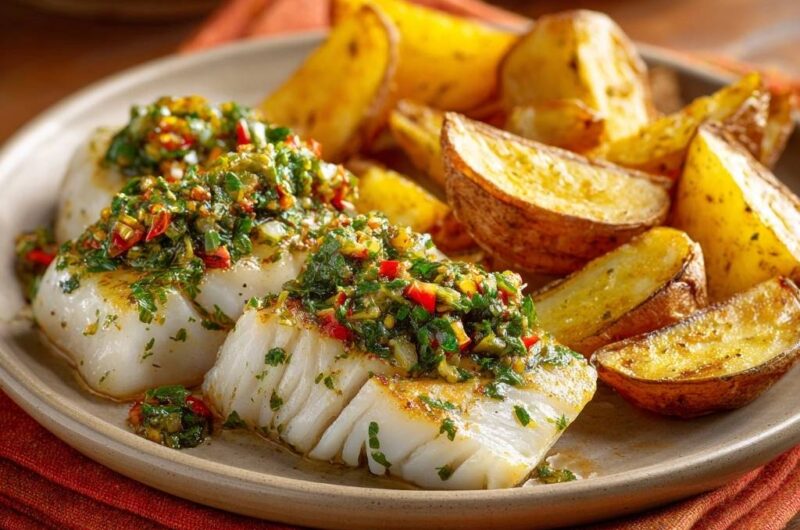
Pan-Seared White Fish
Course: Main CourseCuisine: AmericanDifficulty: medium2
servings15
minutes25
minutes480
kcal40
MinutesA foolproof method for searing delicate white fish fillets to achieve a golden crust without sticking. Paired with a zesty herb-based chimichurri and oven-roasted potato wedges for a complete, high-protein meal.
Ingredients
2 thick cod or halibut fillets (center-cut for thickness)
3 large Yukon Gold or Russet potatoes, cut into thick wedges
3 tablespoons olive oil (divided)
1 teaspoon sea salt
1/2 teaspoon black pepper
1/2 cup fresh parsley, finely chopped
1/4 cup fresh cilantro, finely chopped
2 cloves garlic, minced
1 red chili, finely diced (seeds removed for medium heat)
1 tablespoon red wine vinegar
1/4 cup extra virgin olive oil (for the sauce)
1/2 teaspoon dried oregano
Directions
- Preheat your oven to 425°F (220°C). Toss potato wedges with 2 tablespoons of olive oil, salt, and pepper. Arrange them in a single layer on a preheated baking sheet (this prevents sticking). Roast for 25-30 minutes, flipping halfway through, until the edges are deep golden brown and crispy.
- While potatoes roast, prepare the chimichurri. In a small bowl, combine the chopped parsley, cilantro, minced garlic, diced chili, red wine vinegar, oregano, and the 1/4 cup of extra virgin olive oil. Stir well and let sit at room temperature so the acids soften the herbs and the flavors marry.
- To solve the sticking problem, pat the fish fillets with paper towels until they are completely dry on all sides. Season with salt and pepper only immediately before cooking to prevent the salt from drawing out internal moisture.
- Heat a heavy stainless steel or cast-iron skillet over medium-high heat. Add 1 tablespoon of high-smoke-point oil. Wait until the oil is shimmering and just starting to wisps of smoke.
- Carefully place the fish in the pan. Use a flexible spatula to press down firmly on the fillets for the first 30 seconds. This ensures the entire surface area makes contact with the heat, creating the uniform golden crust seen in the image and preventing the fish from curling.
- Do not move the fish for 4 minutes. The fish will naturally “self-release” from the pan once the proteins have fully seared and formed a crust. If you feel resistance when trying to lift a corner, wait another 30 seconds.
- Flip carefully and cook for another 2 to 3 minutes. For very thick fillets, you may need to baste with a teaspoon of butter or simply cover the pan for the final minute to ensure the center is opaque and flaky.
- Plate the fish alongside the crispy potato wedges. Spoon the chunky chimichurri generously over the fish, ensuring the bright red chilies and green herbs are well-distributed for a vibrant finish.
Notes
- The secret to preventing sticking is ensuring the fish is bone-dry and waiting for the fish to naturally self-release from the pan before flipping. Use a high-smoke-point oil for the best searing results.