Mastering the Herb-Crusted Roasted Chicken and Sweet Potato Sheet Pan
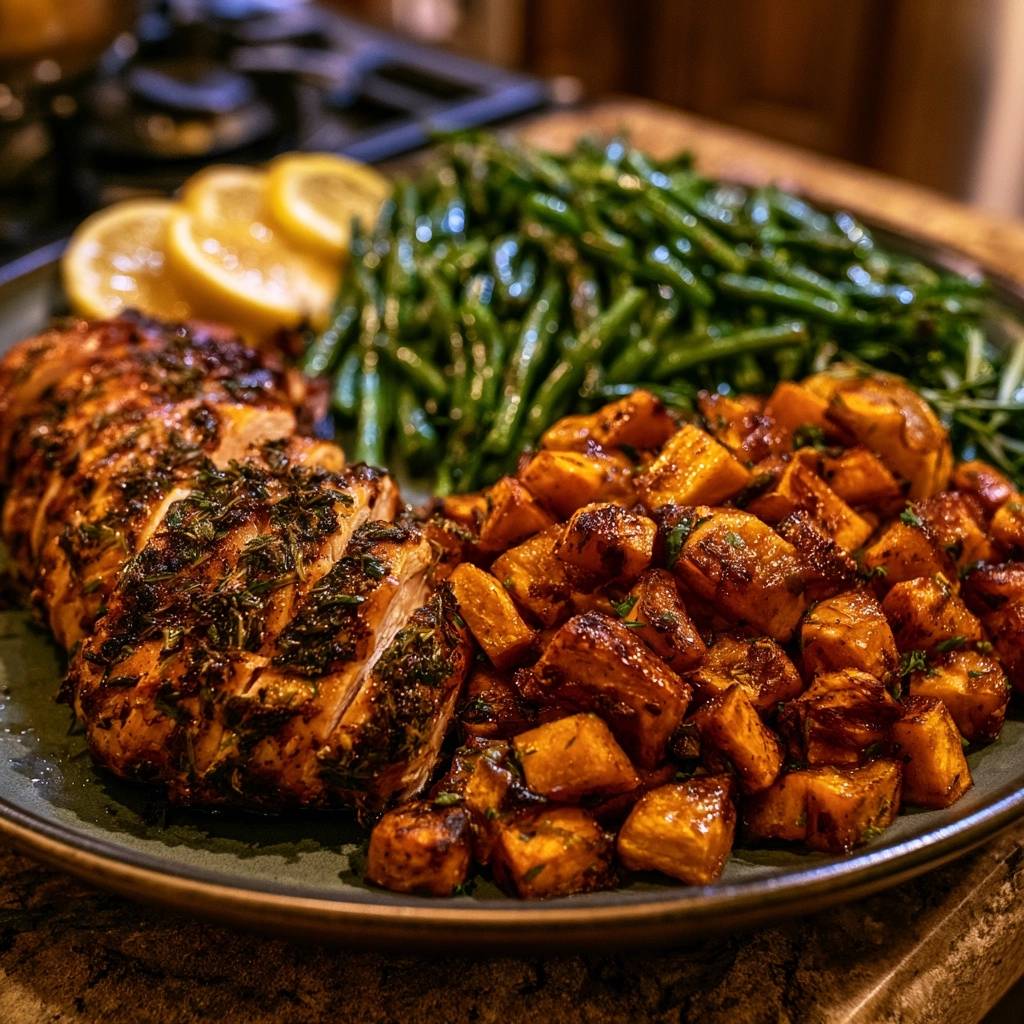
The sheet pan dinner has long been hailed as the ultimate weeknight savior, but let’s be honest about the results. Too often, you end up with a tray of mushy vegetables and chicken breasts that have the texture of a pencil eraser. This recipe changes that narrative by treating the sheet pan like a professional roasting tool rather than just a catch-all tray.
The secret to this transformation lies in two specific techniques: the “Preheated Pan Method” and the “Herb Shield.” Instead of letting the chicken sit in its own steam, we use high heat and a dense layer of fresh aromatics to create a micro-environment for the meat. This ensures the exterior gets that beautiful roasted color while the interior remains incredibly juicy.
If you want to guarantee success, you must pat the chicken completely dry with paper towels before applying the herb paste. Any surface moisture on the meat will turn into steam in the oven, which prevents the herbs from sticking and stops the Maillard reaction in its tracks. A dry surface is the only way to get that professional-grade crust you’re looking for.
The Science of the Preheated Baking Sheet
When you place cold vegetables onto a cold baking sheet and slide them into the oven, the temperature of the metal rises slowly. This slow climb causes the cell walls of the sweet potatoes to break down and release moisture before the outside can crisp up, leading to a soggy texture. By preheating the pan to 425°F, you’re essentially turning your baking sheet into a massive searing surface.
The moment those cubed sweet potatoes hit the hot steel, the moisture on the contact point evaporates instantly. This creates an immediate sear that locks the natural sugars inside the potato, leading to a creamy interior and a caramelized exterior. This contact heat mimics the intense energy of a cast-iron skillet, giving you those coveted browned edges without the need for constant flipping or stovetop work.
Essential Components for the Herb-Crusted Roasted Chicken
We use boneless skinless chicken breasts for this recipe because they provide a clean canvas for the bold herb flavors. However, because they lack fat and bone, they are prone to drying out quickly. To combat this, we look for air-chilled poultry when possible, as it hasn’t been bloated with excess water during processing, leading to a much better sear and more concentrated flavor.
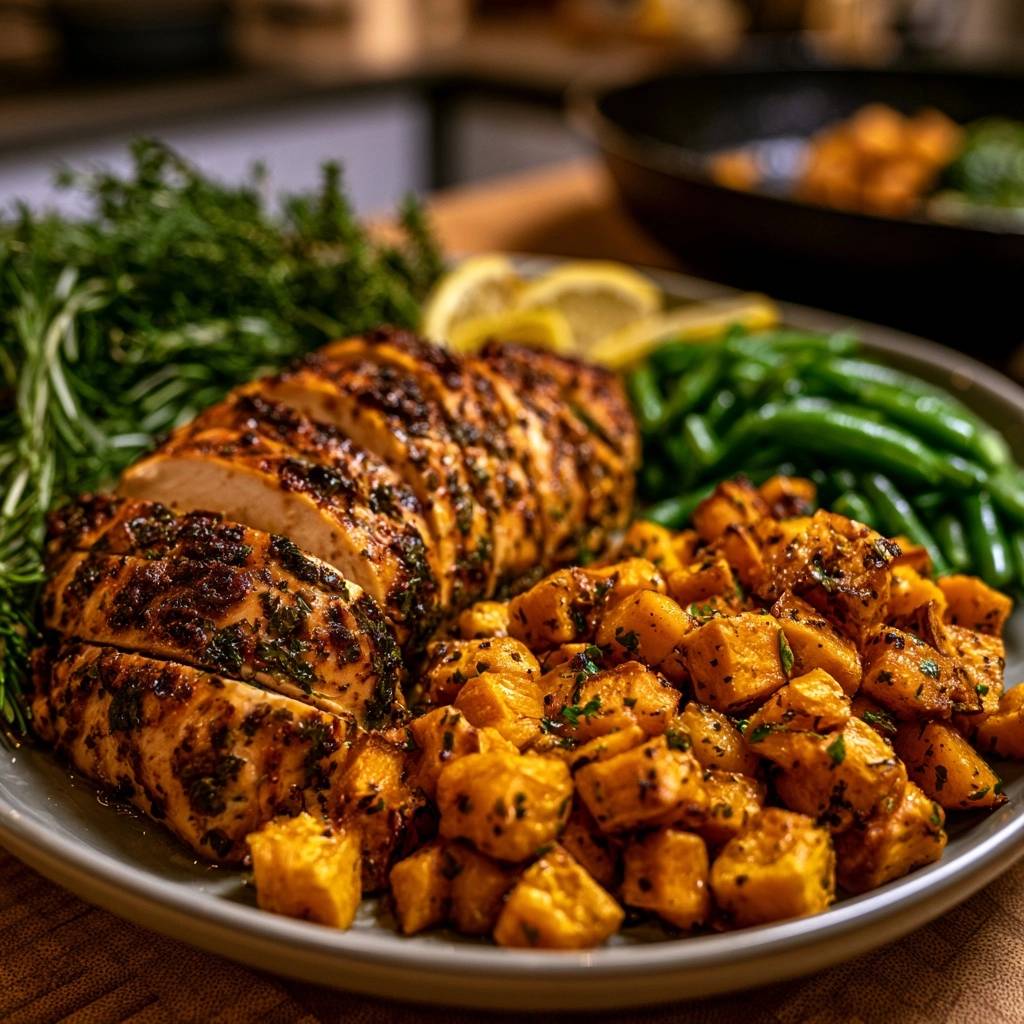
The herb paste is the heavy lifter here, and the teaspoon of honey is your secret weapon. While it adds a subtle hint of sweetness that balances the earthy rosemary, its primary job is functional. The honey acts as a biological glue, ensuring the thick layer of herbs stays plastered to the chicken rather than sliding off into the pan. Furthermore, the sugars in the honey accelerate the browning process, giving the crust a rich, golden hue.
Selecting and Prepping Sweet Potatoes
For the best results, look for Garnet or Jewel sweet potatoes, which have a higher moisture content and a deeper orange color than the tan-skinned varieties. These types caramelize beautifully in the high heat of the oven. The key to a successful sheet pan meal is ensuring everything finishes cooking at the exact same time.
Cutting your sweet potatoes into uniform 1/2 inch cubes is the “golden ratio” for this dish. This specific size allows the potatoes to soften and brown in the same 25-minute window it takes for the chicken to reach its safe internal temperature. If the cubes are too large, they’ll be crunchy in the middle; too small, and they’ll turn to mush before the chicken is done.
Fresh vs. Dried Herbs: The Potency Gap
While dried herbs are great for long-simmered stews, this high-heat roast demands fresh parsley, rosemary, and thyme. Fresh herbs contain volatile oils and moisture that create a protective steam barrier over the chicken fibers. This “Herb Shield” insulates the meat from the harsh, dry air of the oven, keeping it succulent.
If you absolutely must use dried herbs, remember the 1:3 ratio (one teaspoon of dried for every three teaspoons of fresh). However, be warned that dried herbs can easily burn and become bitter at 425°F. Fresh herbs will wilt and crisp into a fragrant, delicious crust that adds a textural element you simply cannot achieve with the bottled stuff.
Step-by-Step: Executing the Perfect Sheet Pan Roast
Success with this meal depends on your timing and your “zoning” of the ingredients. You aren’t just throwing things on a tray; you are managing different cook times and moisture levels to ensure every component shines. By following a phased approach, you maintain control over the textures and temperatures of the entire meal.
Phase 1: Creating the Insulating Herb Crust
Your herb paste should have the consistency of a thick pesto. If it’s too runny, it will drip off the chicken and burn on the pan; if it’s too dry, it won’t spread evenly. Mix the minced herbs with the garlic powder, smoked paprika, olive oil, and honey until it forms a cohesive, spreadable mash.
After seasoning your dried chicken breasts with salt and pepper, use the back of a spoon to apply the paste. Press it firmly into the meat. You want a thick, edge-to-edge coating on the top of the breast. This layer doesn’t just add flavor; it acts as a physical barrier that prevents the oven’s heat from stripping moisture away from the lean protein.
Phase 2: The High-Heat Sizzle and Timing
When you pull that preheated tray out of the oven, work quickly but safely. You want to hear a loud sizzle the moment the sweet potatoes touch the metal. Spread them out in a single layer on one side of the pan. Overcrowding is the enemy of crispiness; if the potatoes are touching too much, they will steam each other.
Place the chicken breasts on the other side of the tray, leaving at least an inch of space between them and the potatoes. This “zoning” allows the hot air to circulate around each item. Slide the tray back into the oven immediately to keep the pan temperature as high as possible for that initial 12-minute roast.
Phase 3: Integrating Green Beans and Lemon
Green beans cook much faster than sweet potatoes, which is why we add them halfway through. By tossing them in olive oil first, you ensure they blister rather than shrivel. Adding the lemon rounds at this stage is a game-changer. The high heat softens the lemon’s acidity and caramelizes the juices, creating a built-in sauce for the chicken.
Scatter the beans and lemons in the center of the tray, moving the potatoes slightly if needed. The lemons will release a bit of steam, which helps finish the chicken gently. Roast for the final 10 to 13 minutes until the beans are bright green with charred tips and the chicken is perfectly cooked through.
The “Never Dry” Resting Technique
The most common mistake home cooks make is slicing into the chicken the second it leaves the oven. When meat is hot, the muscle fibers are tight and the juices are pushed toward the surface. If you cut it now, all that moisture will flood onto the cutting board, leaving you with dry meat.
Transfer the chicken to a board and tent it loosely with foil for 8 minutes. During this time, carry-over cooking will bring the internal temperature from 160°F to the safe 165°F mark. More importantly, the muscle fibers will relax and reabsorb the juices like a sponge. This simple wait time is the difference between a “good” meal and a “restaurant-quality” experience.
Avoiding Common Sheet Pan Mistakes
If your potatoes are turning out mushy, check your pan size. A standard half-sheet pan (18×13 inches) is necessary for this amount of food. If the pan is too small, the ingredients will be piled on top of each other, creating a steam chamber that prevents browning. Always aim for “social distancing” for your vegetables.
If you find your herbs are burning before the chicken is done, check your oven rack position. The middle rack is ideal. If the tray is too close to the top heating element, the honey in the crust will scorch. Also, if your chicken breasts are uneven in thickness, use a meat mallet to gently pound the thicker end so the entire piece cooks at the same rate.
Flavor Variations and Ingredient Swaps
This technique works beautifully with other hearty vegetables. You can swap the sweet potatoes for cubed butternut squash or even carrots and parsnips. Just ensure you maintain that 1/2 inch size for consistent cooking. If you prefer a different flavor profile, try a Mediterranean twist by using dried oregano and lemon zest in the paste.
For those who want a bit more tang, you can whisk a tablespoon of Greek yogurt into the herb paste. The lactic acid in the yogurt acts as a tenderizer, further ensuring the chicken stays soft. However, if you use yogurt, skip the preheated pan for the chicken side and just preheat the potato side to avoid the yogurt sticking and burning.
Optimal Serving Pairings
Since this dish features earthy rosemary and sweet potatoes, you want a side that offers a bright, acidic contrast. A simple arugula salad tossed in a sharp lemon vinaigrette is the perfect companion. The peppery bite of the greens cuts through the richness of the herb crust and the starchiness of the potatoes.
For a refreshing drink, try a sparkling apple cider or a chilled ginger beer. The effervescence and slight spice of ginger complement the smoked paprika and roasted lemon beautifully. These pairings elevate the meal from a simple tray bake to a well-rounded dinner that hits every part of the palate.
Expert Troubleshooting and Prep Tips
Can I use chicken thighs instead of breasts?
Yes, you can certainly use boneless skinless chicken thighs. Thighs are more forgiving and stay moist easily due to their higher fat content. However, they may take 5-7 minutes longer to cook than breasts. If using thighs, start them at the same time as the potatoes and check for an internal temperature of 175°F for the best texture.
How do I prevent the honey from burning on the pan?
The honey should be mixed thoroughly into the herb paste so it is mostly on top of the chicken, not the pan. If any paste drips onto the hot metal, it may smoke slightly. To prevent sticking and burning, ensure the pan is well-oiled before adding the chicken, or place the chicken on top of a few lemon slices to act as a natural trivet.
What is the best way to reheat leftovers without drying out the meat?
To keep the chicken moist, avoid the microwave if possible. Instead, place the chicken and vegetables in a covered skillet with a splash of water or broth over medium-low heat. The steam will gently warm the meat through without toughening the fibers. If you must use a microwave, use 50% power and cover the plate with a damp paper towel.
Can I prep the herb paste 24 hours in advance?
Absolutely. In fact, prepping the herb paste a day early allows the flavors of the garlic and herbs to meld and intensify. Store it in a small airtight container in the fridge. You can also cube the sweet potatoes ahead of time, but keep them submerged in a bowl of water in the refrigerator to prevent them from turning brown; just be sure to dry them thoroughly before roasting.
Why are my sweet potatoes sticking to the preheated pan?
Sticking usually happens for two reasons: not enough oil or trying to move them too early. Ensure every cube is glistening with olive oil before they hit the pan. Also, let them roast undisturbed for the first 12 minutes. As the sugars caramelize and form a crust, the potatoes will naturally “release” from the metal surface, making them easy to toss later.
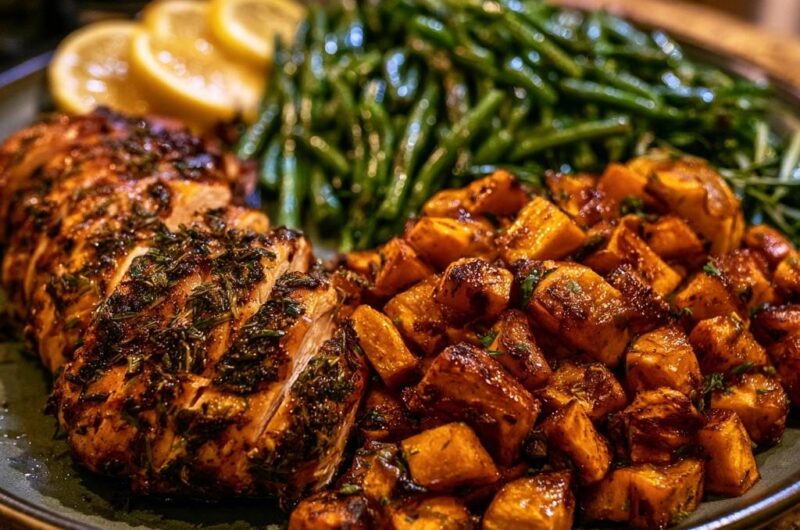
Herb-Crusted Roasted Chicken and Sweet Potato Sheet Pan
Course: Main CourseCuisine: AmericanDifficulty: easy4
servings15
minutes25
minutes40
Minutes420
kcalAmerican
Ingredients
2 large boneless skinless chicken breasts (approx. 1.5 lbs total)
2 large sweet potatoes, peeled and cubed into 1/2 inch pieces
1 pound fresh green beans, trimmed
4 tablespoons olive oil, divided
1/4 cup fresh parsley, finely chopped
2 tablespoons fresh rosemary, minced
1 tablespoon fresh thyme, minced
1 teaspoon garlic powder
1 teaspoon smoked paprika
1 teaspoon honey (to help the herb crust adhere and caramelize)
Salt and black pepper to taste
1 lemon, sliced into rounds
Directions
- Preheat your oven to 425°F (220°C). Place a large, heavy-rimmed baking sheet inside the oven while it preheats. A hot pan is essential for the deep golden-brown caramelization seen on the potatoes.
- In a large bowl, toss the cubed sweet potatoes with 1.5 tablespoons of olive oil, smoked paprika, salt, and pepper.
- In a small bowl, create the herb paste: Mix the parsley, rosemary, thyme, garlic powder, 1 tablespoon of olive oil, and the honey.
- Pat the chicken breasts completely dry with paper towels. Season both sides generously with salt and pepper. Spread the herb paste in a thick, even layer over the top of each chicken breast, pressing it down so it sticks.
- Carefully remove the hot baking sheet from the oven. Immediately spread the sweet potatoes on one side (they should sizzle). Place the herb-crusted chicken on the other side.
- Roast for 12 minutes. While roasting, toss the green beans with the remaining olive oil and a pinch of salt.
- Open the oven and quickly add the green beans and lemon slices to the center of the tray.
- Roast for another 10-13 minutes. Use a meat thermometer to check the chicken; remove it when it reaches an internal temperature of 160°F (it will rise to 165°F while resting).
- The Critical Step: Transfer the chicken to a cutting board. Tent loosely with foil and let it rest for 8 minutes. This prevents the juices from running out, keeping the meat “Never Dry.”
- Slice the chicken into thick medallions against the grain. Serve alongside the charred green beans and the caramelized sweet potatoes.
Notes
- The critical step is resting the chicken for 8 minutes after roasting to allow juices to redistribute. Preheating the baking sheet is essential for the caramelization of the potatoes.