Mastering the Creamy Walnut Chicken Salad
We have all experienced the disappointment of a sad, weeping deli salad. You prepare a beautiful bowl of chicken salad, only to find a pool of watery liquid at the bottom of the container an hour later. It is a common kitchen frustration that ruins the texture and dilutes the flavor you worked so hard to build.
The secret to a professional, high-end Creamy Walnut Chicken Salad lies in structural integrity and moisture management. By controlling how the vegetables release water and how the dressing binds to the protein, you can achieve a thick, rich consistency that stays perfect until the very last bite. This recipe focuses on a “deli-standard” finish that feels substantial and luxurious on the palate.
Expertise in this dish comes down to one specific rule: never mix your crunch and your cream too early. While most recipes tell you to toss everything together at once, the real pros know that toasted walnuts lose their “snap” the moment they hit moisture. If you want that satisfying contrast between tender chicken and crispy nuts, timing is your most important ingredient.
The Anatomy of a Non-Watery Chicken Salad
Understanding the physics of salad weeping is the first step toward culinary mastery. When you mix salt into a salad, it triggers osmosis, which draws water out of the cell walls of vegetables like celery. This excess moisture thins out your mayonnaise, leading to that dreaded “broken” dressing that looks oily and thin.
To combat this, we use a stabilized dressing base. By blending traditional mayonnaise with full-fat Greek yogurt, you create a more resilient emulsion. The proteins in the yogurt act as a structural net, holding the fats in place and preventing the dressing from turning into a liquid mess when the celery starts to breathe.
Why Large Cubes Outperform Shredded Poultry
Surface area is the enemy of a clean, structured chicken salad. When you shred chicken, you create thousands of tiny crevices that release moisture and soak up dressing like a sponge. This often results in a mushy, paste-like texture where the chicken loses its identity.
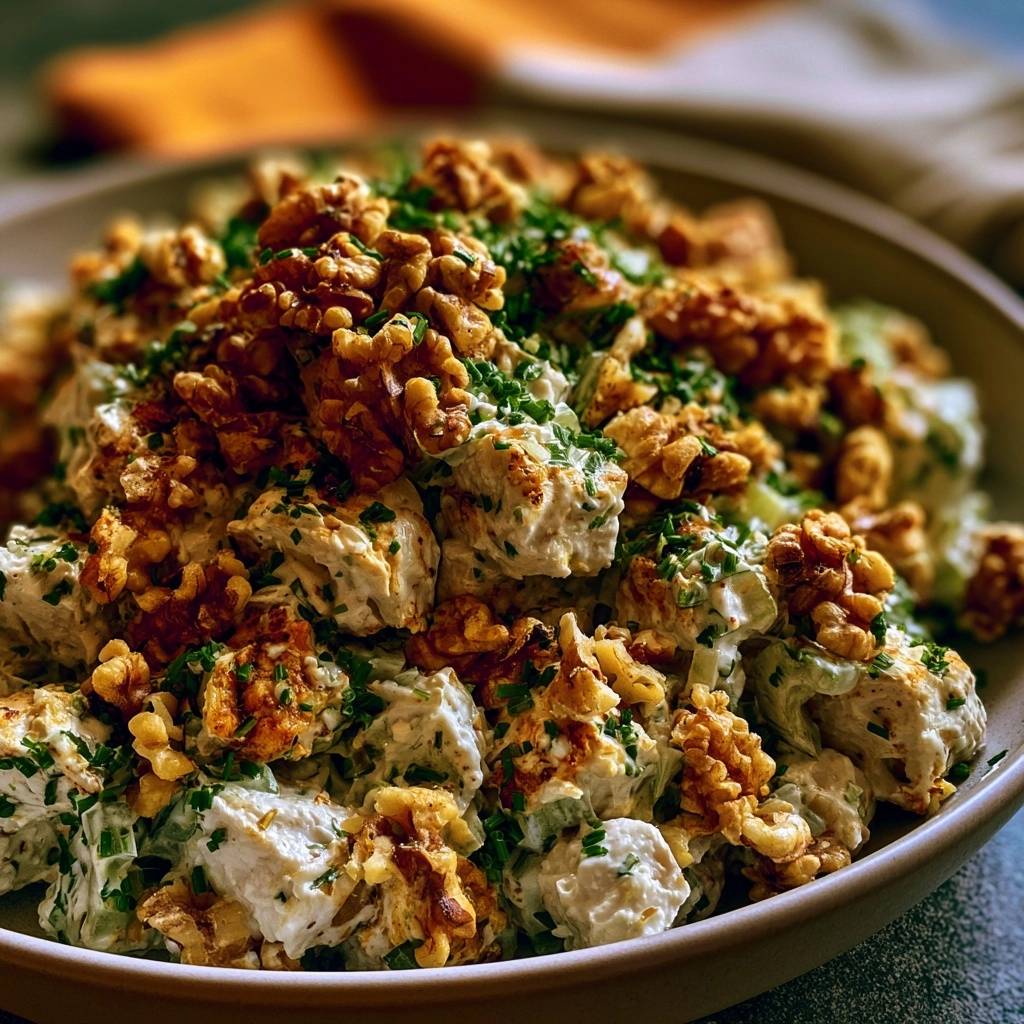
Using large, 1-inch cubes preserves the integrity of the Creamy Walnut Chicken Salad. These substantial bites provide a firm “chew” and allow the dressing to coat the outside without turning the meat into a soggy pulp. It ensures the chicken remains the undisputed star of the show.
The Role of Greek Yogurt in Emulsion Stability
Full-fat Greek yogurt is a secret weapon for texture. While mayonnaise is mostly oil and egg, Greek yogurt is packed with dense proteins that provide a thicker, more matte finish. This combination creates a binder that is significantly more stable than mayo alone.
In addition to the structural benefits, the yogurt adds a subtle tang that cuts through the heavy fats. This prevents the salad from feeling “cloying” or overly greasy on the tongue. Therefore, the dressing stays thick and clings to the chicken cubes rather than sliding off to the bottom of the bowl.
Essential Components for the Creamy Walnut Chicken Salad
Quality ingredients are paramount when there is no cooking involved to hide imperfections. For the chicken, using poached or roasted breasts provides the cleanest flavor profile. If you use a rotisserie chicken, ensure it is completely chilled before dicing, as warm meat will melt the fats in the mayonnaise and cause the dressing to break.
Fresh chives are non-negotiable here. While dried herbs have their place, fresh chives offer a bright, oniony “pop” and a vibrant green color that dried versions simply cannot match. Furthermore, the Dijon mustard acts as a functional emulsifier, helping the yogurt and mayo stay bonded while adding a sophisticated depth of flavor.
Selecting and Toasting the Perfect Walnuts
Raw walnuts are often bitter and have a soft, almost waxy texture. To unlock their full potential, you must toast them. A quick dry-toast in a skillet over medium heat releases the essential oils, transforming the nut from dull to deeply aromatic and crunchy.
Watch them closely, as walnuts can go from toasted to burnt in a matter of seconds. You are looking for a golden hue and a fragrant, woody scent. This “crunch factor” is the primary foil to the creamy dressing, providing the necessary textural variety that makes every bite interesting.
The Celery Prep: Moisture Extraction Techniques
Celery is roughly 95% water, making it the biggest threat to your salad’s consistency. To neutralize this threat, use the “Paper Towel” method. After finely dicing your celery, spread it out on a layer of paper towels and pat the top firmly to remove all surface moisture.
Some chefs prefer to lightly salt the diced celery in a colander for ten minutes to draw out internal water before rinsing and drying. Whichever method you choose, the goal is the same: ensure the celery is bone-dry before it touches the dressing. This simple step is what separates amateur salads from professional ones.
Step-by-Step: Constructing the Creamy Walnut Chicken Salad
Assembling this salad is a lesson in gentle handling. You want to avoid aggressive stirring, which can bruise the celery and break down the chicken cubes. Instead, use a large rubber spatula to fold the ingredients together, ensuring a thorough coat without damaging the components.
The process should feel intentional. You are building layers of flavor and texture, starting with a smooth, seasoned base and ending with the delicate addition of fresh herbs and toasted nuts. This careful approach ensures the salad looks as good as it tastes.
Phase 1: Creating the Stabilized Dressing Base
Start by whisking your mayonnaise, Greek yogurt, Dijon mustard, onion powder, salt, and pepper in a large bowl. You are looking for a specific visual cue: the dressing should be thick enough to hold a soft peak. If it looks runny at this stage, add another dollop of Greek yogurt to tighten it up.
Whisking the spices directly into the dressing ensures even distribution. This prevents “hot spots” of pepper or salt and allows the onion powder to begin hydrating. The result should be a smooth, ivory-colored cream that smells bright and savory.
Phase 2: Incorporating the Aromatics and Protein
Add your dried celery and cubed chicken to the bowl. Using a folding motion, bring the dressing from the bottom of the bowl up over the top of the chicken. Continue this until every cube is fully insulated by the dressing.
Add the minced chives during the final few folds. Chives are delicate; if you over-mix them, they can bleed green into the dressing or become bruised and limp. You want them to remain distinct, bright green flecks scattered throughout the creamy mixture.
Phase 3: The “Just-In-Time” Walnut Integration
This is the “Anti-Soggy Secret” in action. Do not mix the walnuts into the salad if you are planning to serve it later. Even the thickest dressing will eventually soften the nuts. Instead, wait until the exact moment of service to fold in half of the toasted walnuts.
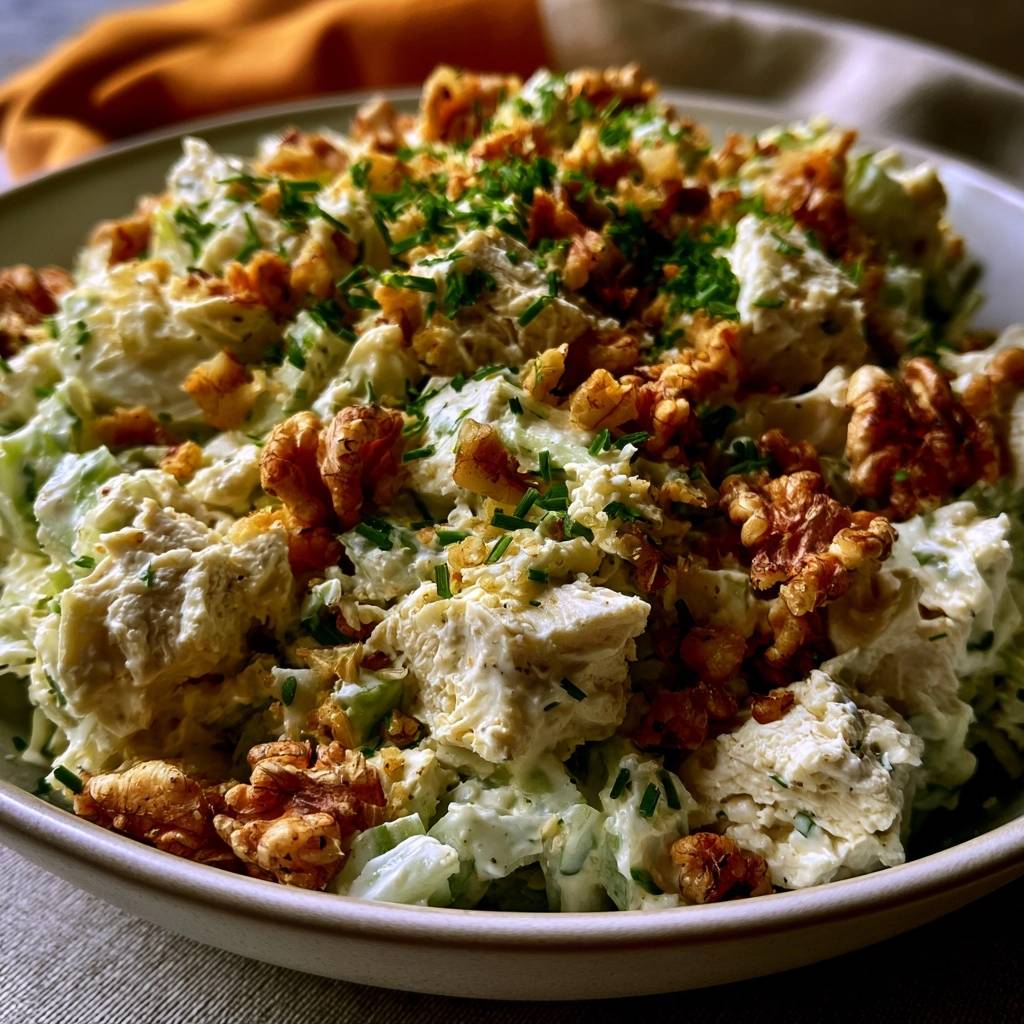
The remaining walnuts should be used as a garnish on top. This provides an immediate visual cue of the salad’s flavor profile and ensures that the first thing your guests experience is a loud, satisfying crunch. It is a small detail that makes a massive difference in the final eating experience.
Flavor Variations and Ingredient Swaps
While this recipe is a classic, you can easily adapt it to your pantry. If you don’t have Greek yogurt, labneh is an excellent substitute that offers even more thickness. For those who prefer a different nut, toasted pecans or slivered almonds provide a similar textural contrast with a slightly sweeter finish.
If you crave more acidity, a teaspoon of lemon zest or a splash of apple cider vinegar can brighten the profile. However, be careful with liquids; if you add vinegar, you may need to add a bit more yogurt to maintain the desired thickness. The goal is always to keep that “scoopable” consistency.
What to Serve with Creamy Walnut Chicken Salad
This salad is versatile enough to move beyond the basic sandwich. For a light, low-carb lunch, serve large scoops inside crisp butter lettuce cups. The soft leaves provide a fresh, cool wrapper that complements the rich chicken perfectly.
If you prefer something heartier, pile the salad onto a thick slice of toasted sourdough or a buttery croissant. The crunch of the toast against the creamy salad is heavenly. You can also pair it with a simple side salad tossed in a sharp vinaigrette to help cleanse the palate between rich bites.
Troubleshooting Common Texture Issues
If your salad feels too thick after chilling, do not reach for water. Instead, add a tiny teaspoon of lemon juice or a small amount of Dijon mustard. These liquids add flavor while thinning the dressing just enough to make it creamy again.
If the salad accidentally becomes watery because the chicken wasn’t dried properly, you can save it. Fold in a few more cubes of chicken or a tablespoon of extra Greek yogurt. Avoid adding more mayonnaise, as the oil content can make a watery salad look greasy rather than creamy.
How to Fix a Bland Batch
Cold temperatures tend to mute seasonings, a phenomenon known as the “Seasoning Shadow.” A salad that tastes perfectly salted at room temperature might taste flat after an hour in the fridge. Always give your salad a final taste test right before serving.
A pinch more salt or a fresh crack of black pepper can wake up the flavors. If it still feels like it’s missing something, a tiny pinch of celery salt or a dash of garlic powder can provide that “hidden” savory depth that makes people ask for the recipe.
Storage and Make-Ahead Logistics
This Creamy Walnut Chicken Salad will stay fresh in the refrigerator for up to three days when stored in an airtight container. However, for the best results, use the “Deconstructed Storage” method. Keep the chicken and dressing mixture in one container and the toasted walnuts in a small jar in your pantry.
By keeping the nuts dry and separate, you can enjoy a “fresh-made” texture every time you sit down for leftovers. Simply fold in a handful of walnuts right before you eat. Do not freeze this salad; the mayonnaise and yogurt will separate upon thawing, resulting in a grainy, unappealing texture.
Expert Tips for Professional Presentation
To give your salad a “chef-prepared” look, focus on the garnish. A heavy dusting of fresh chives across the top provides a professional finish and a burst of color. If you are serving this at a brunch, you can use a ring mold to create a perfectly circular stack on a plate for a sophisticated appetizer.
When serving in a large communal bowl, use a fork to “fluff” the salad rather than smoothing it down with a spoon. This creates peaks and valleys that catch the light and make the dish look voluminous and appetizing. A flat, smoothed-over salad often looks heavy and uninviting.
The Importance of Chilling Before Serving
Even though this is a zero-minute cook time recipe, it benefits greatly from a “marination period.” Letting the salad rest in the fridge for 30 to 60 minutes allows the onion powder and Dijon mustard to fully meld with the creamy base. This rest period softens the sharp edges of the raw aromatics.
During this time, the chicken also absorbs a tiny bit of the seasoning from the dressing, ensuring the flavor goes all the way through. Just remember to keep those walnuts on the sidelines until the very last second to preserve that signature crunch.
How long does this chicken salad stay fresh in the fridge?
You can safely store this salad in an airtight container for up to 3 days. For the best experience, keep the toasted walnuts in a separate dry container and only mix them in right before you eat. This prevents the nuts from becoming soft and ensures the salad maintains its intended texture.
Why did my chicken salad turn out watery?
Watery salad is usually caused by moisture from the celery or the chicken. If the celery isn’t patted dry with paper towels, it releases water into the dressing over time. Additionally, using warm chicken can cause the mayonnaise to break. Always ensure your ingredients are cold and dry before mixing.
Can I use something other than walnuts?
Yes, you can easily substitute walnuts with toasted pecans, slivered almonds, or even roasted sunflower seeds. The key is to ensure whatever nut or seed you use is toasted first to provide the necessary crunch and depth of flavor that defines this dish.
Is there a substitute for Greek yogurt?
If you don’t have Greek yogurt, you can use sour cream or labneh. Both provide the thickness and acidity needed to stabilize the dressing. If you must use only mayonnaise, the salad may be slightly thinner and richer, so be extra diligent about drying your celery to prevent it from becoming too runny.
Can I freeze Creamy Walnut Chicken Salad?
No, freezing is not recommended for this recipe. The emulsion of mayonnaise and Greek yogurt will break when frozen and thawed, leading to a separated, grainy texture. The celery will also lose its crispness and become mushy. This dish is best enjoyed fresh or within a few days of preparation.
How can I make this salad even creamier?
For an ultra-creamy result, ensure you are using full-fat Greek yogurt and high-quality mayonnaise. You can also finely mince a portion of the chicken to mix into the dressing, which creates a thicker, more cohesive “bind” around the larger 1-inch cubes. Always chill the salad for at least 30 minutes to allow the dressing to set.
Creamy Walnut Chicken Salad
Course: Main CourseCuisine: AmericanDifficulty: easy4
servings15
minutes15
Minutes420
kcalAmerican
Ingredients
3 cups cooked chicken breast, cut into large 1-inch cubes
1 cup celery, finely diced
1 cup walnut halves, toasted
1/2 cup mayonnaise
1/4 cup Greek yogurt (plain, full fat)
1 tablespoon Dijon mustard
3 tablespoons fresh chives, finely minced
1 teaspoon onion powder
1/2 teaspoon black pepper
1/2 teaspoon salt
Directions
- The most important step to prevent sogginess is to pat your diced celery dry with a paper towel after cutting. This removes surface moisture that thins out the dressing.
- In a large mixing bowl, whisk together the mayonnaise, Greek yogurt, Dijon mustard, onion powder, salt, and pepper. Using a portion of Greek yogurt provides a thicker structure than mayo alone, preventing the dressing from breaking.
- Add the large cubed chicken and dried celery to the bowl. Fold gently until every piece is thoroughly coated in the thick dressing. The large cubes ensure the chicken remains the star and doesn’t shred into a mushy texture.
- To keep the walnuts perfectly crunchy, do not mix them in yet. Moisture from the chicken will soften them over time. Instead, wait until the exact moment of serving to fold in half of the toasted walnuts.
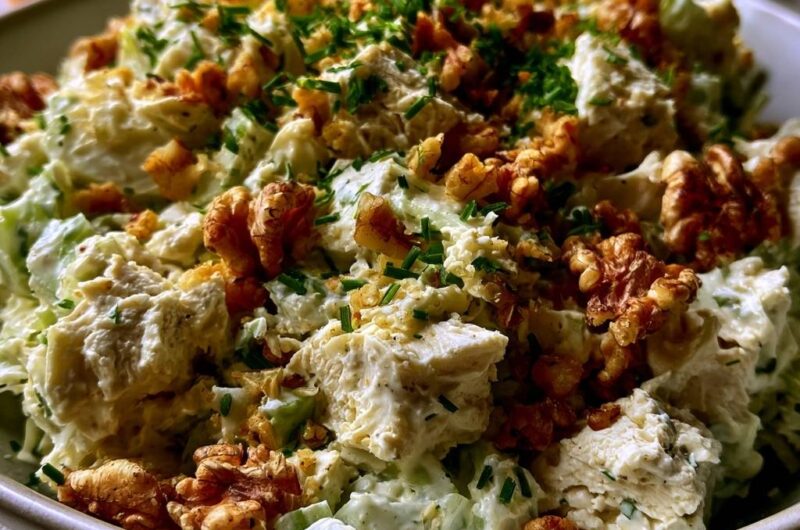
- Transfer the salad to a serving bowl. Top generously with the remaining walnut halves and a heavy dusting of the minced fresh chives. As seen in the visual, the chives should be distributed evenly across the top to provide a bright, sharp contrast to the creamy base.
- Serve immediately or chill. If chilling, add the walnuts only when you are ready to eat to maintain that perfect “snap” against the creamy chicken.
Notes
- To prevent the salad from becoming watery, pat the celery dry with a paper towel and only add the toasted walnuts immediately before serving to maintain their crunch.