Mastering the Peppercorn Crusted Steak with Creamy Pan Sauce
The sound of a steak hitting a hot pan should be a violent sizzle, not a pathetic hiss. Too many home cooks end up with “gray meat”—that unappealing, rubbery texture where the outside looks boiled and the inside is overcooked. This happens because moisture is the enemy of a good sear, and without a proper crust, you’re missing out on the deep, savory complexity that defines a world-class steak.
You’re about to learn how to create a high-contrast masterpiece with a crunchy, peppery exterior and a butter-tender center. We aren’t just following a recipe here; we’re mastering heat management and moisture control to ensure your kitchen smells like a high-end steakhouse. The secret to success starts with bone-dry meat and a pan that’s hot enough to make you hesitate just a little bit.
I’ve found that the biggest mistake people make is using pre-ground black pepper from a shaker. That dust burns instantly and tastes bitter. Instead, you must coarsely crack whole peppercorns using a heavy skillet or a mortar and pestle. These larger “cracked” pieces create a physical barrier that protects the meat while releasing fragrant oils that transform into a toasted, nutty crust when they hit the fat.
The Physics of the Perfect Steak Crust
To understand why steak turns gray, you have to understand the Maillard reaction. This is the chemical dance between amino acids and reducing sugars that happens at temperatures above 300°F. However, water boils at 212°F. If your steak is damp when it hits the pan, that surface moisture immediately turns into a layer of steam. This steam acts as a thermal blanket, trapping the temperature at 212°F and preventing the meat from ever getting hot enough to brown.
Therefore, if you don’t pat your meat dry, you’re essentially steaming your steak in its own juices. This leads to that dreaded gray ring of overcooked meat surrounding a tiny patch of pink in the middle. By removing every drop of surface moisture with paper towels, you allow the steak to jump straight to the browning phase. The heat can then focus on crisping the peppercorns and caramelizing the proteins rather than evaporating water.
In addition, temperature drops are a major culprit for gray meat. When you put a cold, wet steak into a lukewarm pan, the energy is sucked out of the metal instantly. You need a heavy pan with high thermal mass to maintain the heat. When the steak stays hot, the exterior dehydrates and browns rapidly, creating a seal that keeps the internal juices exactly where they belong.
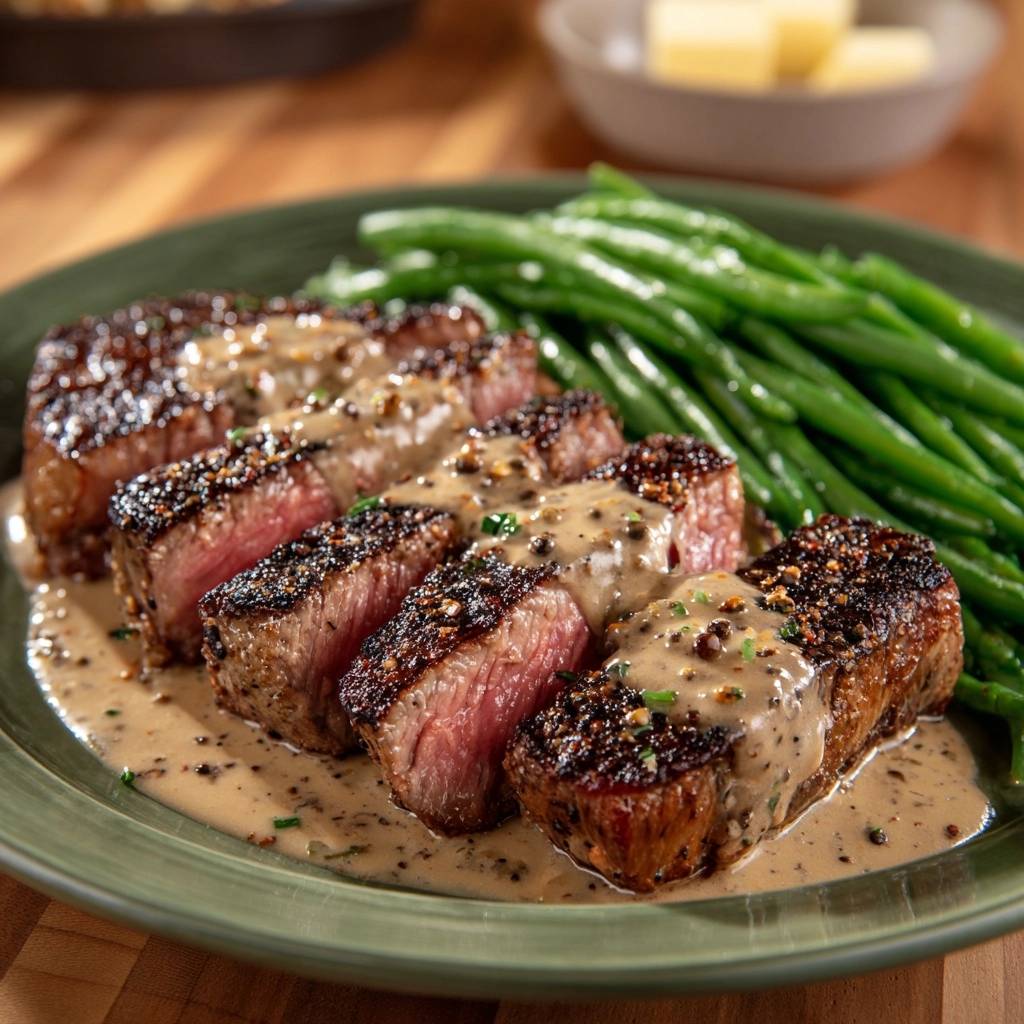
Essential Components for Peppercorn Crusted Steak
Quality ingredients are the foundation of this dish, and it starts with the thickness of your beef. You should always look for steaks that are at least 1.5 inches thick. Thinner steaks will cook through to the center before you’ve had enough time to develop a proper peppercorn crust. A thick New York Strip or Ribeye gives you the “runway” needed to sear the outside aggressively while keeping the inside a perfect medium-rare.
The peppercorns themselves are just as vital as the beef. Pre-ground pepper has lost its volatile oils and most of its flavor. When you crack whole peppercorns fresh, you’re releasing oils that provide a floral, spicy heat that balances the richness of the beef. These large fragments also provide a satisfying crunch that contrasts beautifully with the velvety cream sauce we’ll build later.
For the fat, you need a high-smoke point oil like avocado or grapeseed oil. Butter is delicious, but its milk solids burn at 350°F, which is far too low for the initial sear. We use the oil for the heavy lifting and save the butter for the final basting phase. Finally, the sauce relies on heavy cream and beef broth to create a stable emulsion. The cream provides the body, while the broth adds a savory depth that ties the pan drippings back to the meat.
Selecting the Right Cut of Beef
Choosing between a Ribeye and a New York Strip comes down to your preference for fat. A Ribeye is loaded with intramuscular fat, also known as marbling, which melts during cooking to provide a buttery flavor. However, the New York Strip offers a tighter grain and a more robust “beefy” chew. Both work excellently for a peppercorn crust, but the Strip’s uniform shape often makes it easier to get an even sear across the entire surface.
The Toolkit: Why Cast Iron is Non-Negotiable
If you’re using a thin, non-stick pan, you’ve already lost the battle. Non-stick coatings are designed to repel, but we want the meat to make intimate contact with the heat. Cast iron is the gold standard because of its incredible heat retention. Once a cast iron skillet gets hot, it stays hot, even when you drop two cold pieces of protein onto its surface.
This thermal mass ensures the pan temperature doesn’t plummet, which is the primary cause of meat “stewing” in the pan. Furthermore, you’ll need a sturdy mortar and pestle to crack those peppercorns. You want a variety of sizes—some fine powder to season the meat and large, cracked chunks to provide the crust. If you don’t have one, the bottom of a heavy saucepan works in a pinch.
Phase One: Preparing the Peppercorn Crust
Before the pepper even touches the meat, you must season the steaks generously with kosher salt. Salt does more than just season; it draws out a small amount of moisture and proteins to the surface. These proteins act as a natural “glue” for the peppercorns. If you skip the salt or apply it after the pepper, your crust will likely fall off the moment you flip the steak.
Once salted, press the cracked peppercorns firmly into both sides of the meat. Don’t just sprinkle them on; use the palm of your hand to physically embed the pepper into the muscle fibers. You want the steak to look like it’s wearing a suit of armor. This thick layer of spice will toast in the oil, creating a fragrant, crunchy barrier that protects the delicate meat underneath from the direct, harsh heat of the pan.
Phase Two: Searing for Maximum Color
Patience is your greatest asset during the sear. Once you place the steaks in the “wispy smoke” hot oil, do not touch them. It’s tempting to peek or move them around, but every time you lift the meat, you’re breaking the contact with the heat and venting steam. For the first 3 to 4 minutes, let the physics of the pan do the work. You’re looking for a dark, mahogany-colored crust to form.
If the meat is sticking to the pan, it’s usually telling you it isn’t ready to be flipped. Once the Maillard reaction is complete, the meat will naturally “release” from the surface. When you finally flip the steak, you should see a gorgeous, blackened (but not burnt) crust of peppercorns. This is the moment where the kitchen starts to smell like a professional kitchen, and the “gray meat” worries disappear.
Basting with Aromatics and Butter
After the flip, we introduce the “Arrosé” technique. By dropping a knob of butter and the minced shallots into the pan, you create a flavorful foam. Tilt the pan slightly and use a large spoon to continuously pour that hot, bubbling butter over the cooked side of the steak. This doesn’t just add a nutty, rich flavor; it also ensures the nooks and crannies of the peppercorn crust are fully cooked and seasoned.
Phase Three: The Critical Resting Period
The hardest part of this recipe is waiting. When a steak cooks, the muscle fibers tighten and push the juices toward the center. If you slice it immediately, those juices will pour out onto your cutting board, leaving you with a dry, tough dinner. You must let the steaks rest for at least 10 minutes on a warm plate.
The same resting principle applies when you’re aiming for that perfect tender-crisp texture in a summer vegetable medley.
During this time, the muscle fibers relax and reabsorb the moisture. This ensures that when you finally cut into the steak, the juices stay inside the meat where they belong. A well-rested steak will be pink and juicy from edge to edge, without that unappealing gray gradient. While the meat rests, we have the perfect window of time to build our pan sauce using the leftover heat.
Phase Four: Building the Creamy Pan Sauce
The brown bits stuck to the bottom of your skillet are called “fond,” and they are concentrated flavor gold. After removing the steaks, the pan will be full of toasted pepper bits and rendered beef fat. We start by sautéing the shallots until they’re soft, then we deglaze the pan. As you pour in the beef broth, the liquid will sizzle and lift that fond off the bottom.
Next, whisk in the heavy cream and Dijon mustard. The mustard acts as a natural emulsifier, helping the fat and liquid stay together in a smooth, velvety sauce. As the sauce simmers, the water evaporates, thickening the mixture until it “naps” or coats the back of a spoon. This reduction process intensifies the flavors, creating a sauce that is savory, sharp, and incredibly rich.
Finally, don’t forget the “secret” ingredient: the juices that accumulated on the plate while the steak was resting. Pour those back into the sauce at the very end. These juices contain concentrated beef flavor and salt that tie the entire dish together. Stir them in just before serving to ensure your sauce has a cohesive, professional finish.
Troubleshooting Common Steak Errors
If you notice your peppercorns are turning black and smelling acrid before the steak is done, your heat is too high. Simply turn the burner down to medium and add a little extra oil or butter to cool the pan’s surface. The fat will help distribute the heat more evenly and prevent the spices from scorching. It’s better to finish the steak at a slightly lower temperature than to serve bitter, burnt pepper.
If your sauce looks “broken” or oily, it usually means it boiled too hard or the cream was added to a pan that was too hot. You can often fix this by whisking in a tablespoon of cold water or an extra splash of room-temperature cream. Whisk vigorously over low heat until the sauce comes back together. Remember, the goal is a smooth, glossy finish that clings to the meat without being greasy.
Optimal Side Dish Pairings
Because the peppercorn sauce is so rich and bold, you need side dishes that offer a clean, bright contrast. Fresh green beans are the classic choice. When blanched quickly, they retain a snappy texture and a vibrant color that cuts through the heavy cream. The “snap” of the bean provides a necessary textural break from the tender beef and soft sauce.
Alternatively, a simple arugula salad tossed in a sharp lemon vinaigrette works wonders. The peppery bite of the greens echoes the peppercorn crust, while the acidity of the lemon cleanses your palate between bites of rich steak. If you want something heartier, roasted fingerling potatoes are great for soaking up any extra sauce left on the plate.
Expert Tips for Success
Stop relying on the “finger poke” test to check for doneness. It’s notoriously unreliable because every hand and every steak feels different. Invest in a digital instant-read thermometer. For a perfect medium-rare, pull the steak off the heat when it hits 130°F. The temperature will continue to rise about 5 degrees while it rests, landing you at a perfect 135°F.
Tempering your meat is another vital step. Take your steaks out of the fridge at least 30 to 60 minutes before cooking. If the center of the meat is ice-cold, the outside will overcook before the inside even reaches room temperature. A tempered steak cooks much more evenly, helping you avoid that “gray meat” look entirely.
Lastly, always slice your steak against the grain. Look for the direction the muscle fibers are running and cut perpendicular to them. This shortens the fibers, making the meat much easier to chew and giving it a melt-in-your-mouth quality. Even a perfectly cooked steak can taste tough if it’s sliced the wrong way.
Frequently Asked Questions
Can I use a different type of peppercorn like Green or Pink?
Yes, you can certainly experiment with different peppercorns. Green peppercorns are milder and more herbal, while pink peppercorns are actually dried berries with a fruity, delicate heat. However, black peppercorns are the standard for a reason; they have the structural integrity to form a true crust and a bold flavor that stands up to the richness of the beef and cream.
How can I add more depth to the pan sauce?
Beef broth provides the necessary liquid to deglaze the pan and lift the fond. For extra complexity and depth, add a teaspoon of Worcestershire sauce to the broth.
How do I prevent the cream from curdling when adding it to the pan?
Cream usually curdles due to extreme temperature shock or high acidity. To prevent this, turn your heat down to medium-low before adding the cream. It also helps to use heavy cream rather than half-and-half or milk, as the higher fat content makes it much more stable and less likely to separate when it hits the warm pan and the Dijon mustard.
Can this recipe be doubled for a dinner party without losing the sear?
You can double the recipe, but you must avoid crowding the pan. If you put four steaks in one skillet, the temperature will drop too much and the steaks will steam instead of sear. Cook the steaks in two separate batches or use two large cast iron skillets simultaneously. You can keep the first batch of steaks warm on a plate under foil while you finish the second batch and make the sauce.
How do I store and reheat leftovers without overcooking the meat?
Store leftovers in an airtight container in the refrigerator for up to three days. To reheat without turning the steak gray and tough, avoid the microwave. Instead, place the steak in a low oven (250°F) until it’s just warmed through, or slice it cold and serve it over a hot salad. Gently reheat the sauce in a small saucepan with a splash of water to loosen it up.
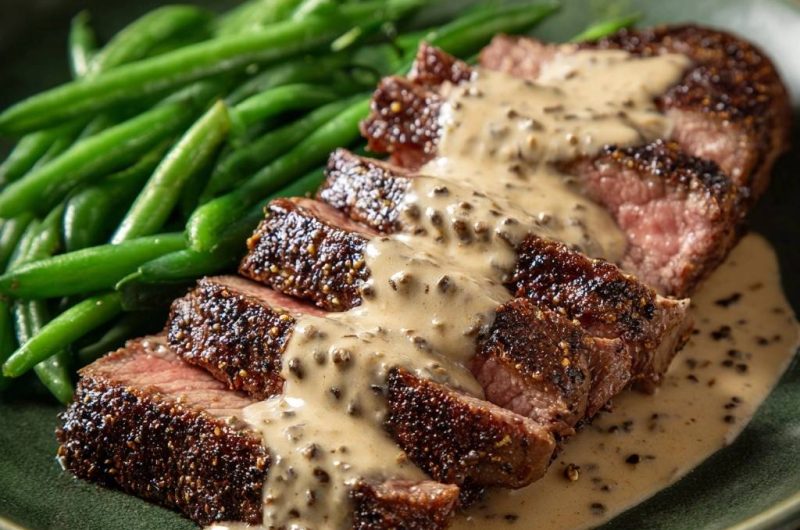
Peppercorn Crusted Steak
Course: Main CourseCuisine: AmericanDifficulty: medium2
servings10
minutes15
minutes680
kcal25
MinutesA professional-grade steak recipe focusing on moisture control and heat management to create a mahogany crust. Features New York Strip or Ribeye steaks paired with a apple juice and Dijon infused cream sauce.
Ingredients
2 New York Strip or Ribeye steaks (1.5 inches thick, room temperature)
3 tablespoons whole black peppercorns, coarsely cracked (use a mortar and pestle or the bottom of a heavy pan)
1 teaspoon kosher salt
2 tablespoons high-smoke point oil (avocado or grapeseed oil)
2 tablespoons unsalted butter
1 small shallot, finely minced
1/4 cup beef broth (for deglazing)
1/2 cup beef broth
1/2 cup heavy cream
1 teaspoon Dijon mustard
1 pound fresh green beans, trimmed and blanched
Directions
- The most critical step to avoid gray meat is to pat the steaks completely dry with paper towels. Any surface moisture will create steam, preventing a crust from forming.
- Season both sides of the steaks generously with salt. Press the cracked peppercorns firmly into both sides of the meat, using the palm of your hand to ensure they are embedded into the fibers.
- Heat a heavy cast iron skillet over medium-high heat until it is wispy with smoke. Add the oil.
- Place the steaks in the pan. Do not crowd them. To ensure a perfect sear, do not move the steaks for at least 3 to 4 minutes. Moving them too early tears the crust and drops the pan temperature.
- Flip the steaks once they have a dark, mahogany crust. Add the butter to the pan and baste the meat for another 3-4 minutes until the internal temperature reaches 130°F (54°C) for medium-rare.
- Remove steaks to a plate and tent loosely with foil. Let them rest for 10 minutes. This is the second secret to avoiding gray, dry meat; resting allows the juices to redistribute.
- While the meat rests, reduce heat to medium. Add the minced shallots to the pan drippings and sauté for 1 minute.
- Carefully pour in the beef broth to deglaze, scraping up all the brown bits (the fond) with a wooden spoon.
- Whisk in the heavy cream and Dijon mustard. Simmer for 3-5 minutes until the sauce reduces and coats the back of a spoon. Stir in any accumulated juices from the resting steak plate.
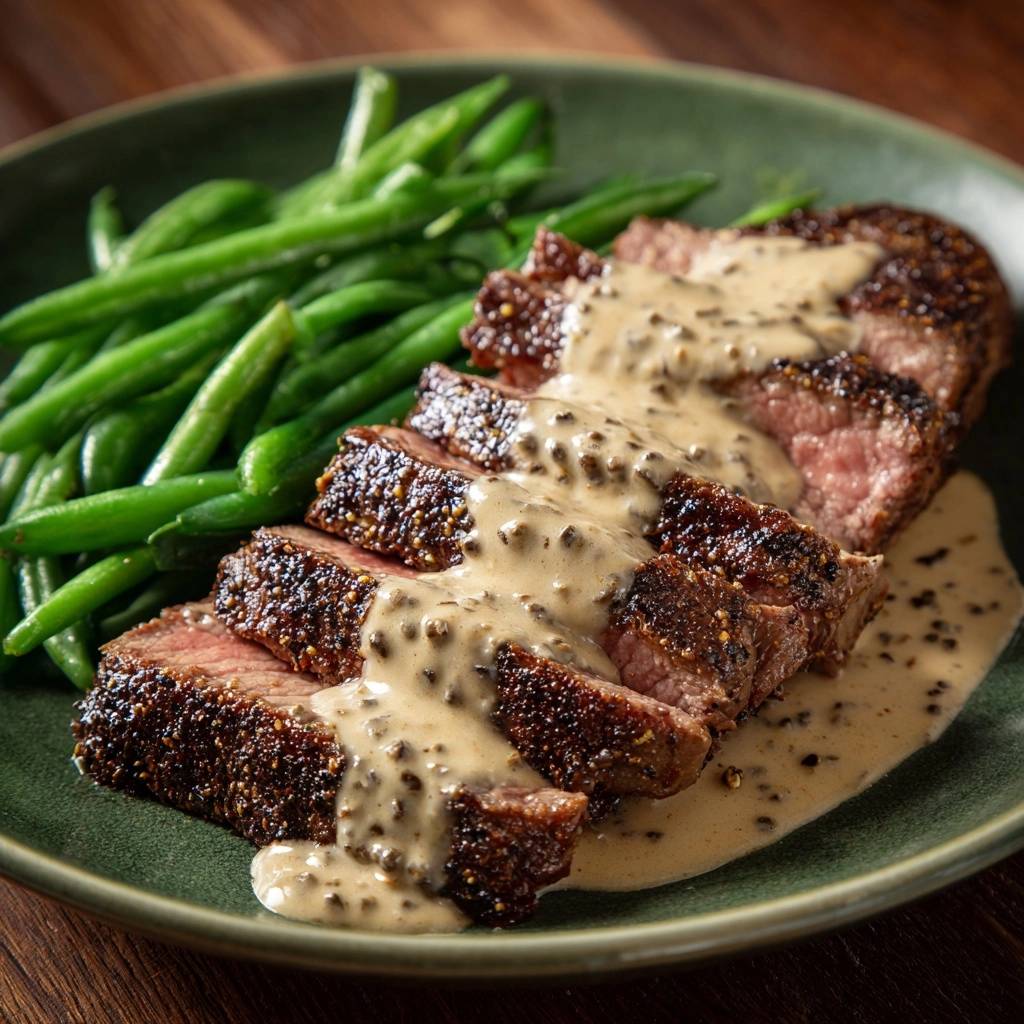
- Slice the steak against the grain into thick strips. Arrange on a plate next to the green beans and drape the velvety peppercorn sauce generously over the center of the steak slices as shown in the image.
Notes
- The most critical step to avoid gray meat is to pat the steaks completely dry with paper towels. Always rest the meat for 10 minutes before slicing to ensure juices redistribute.