Mastering Chicken and Vegetable Lo Mein: The Secret to Firm, Non-Mushy Noodles
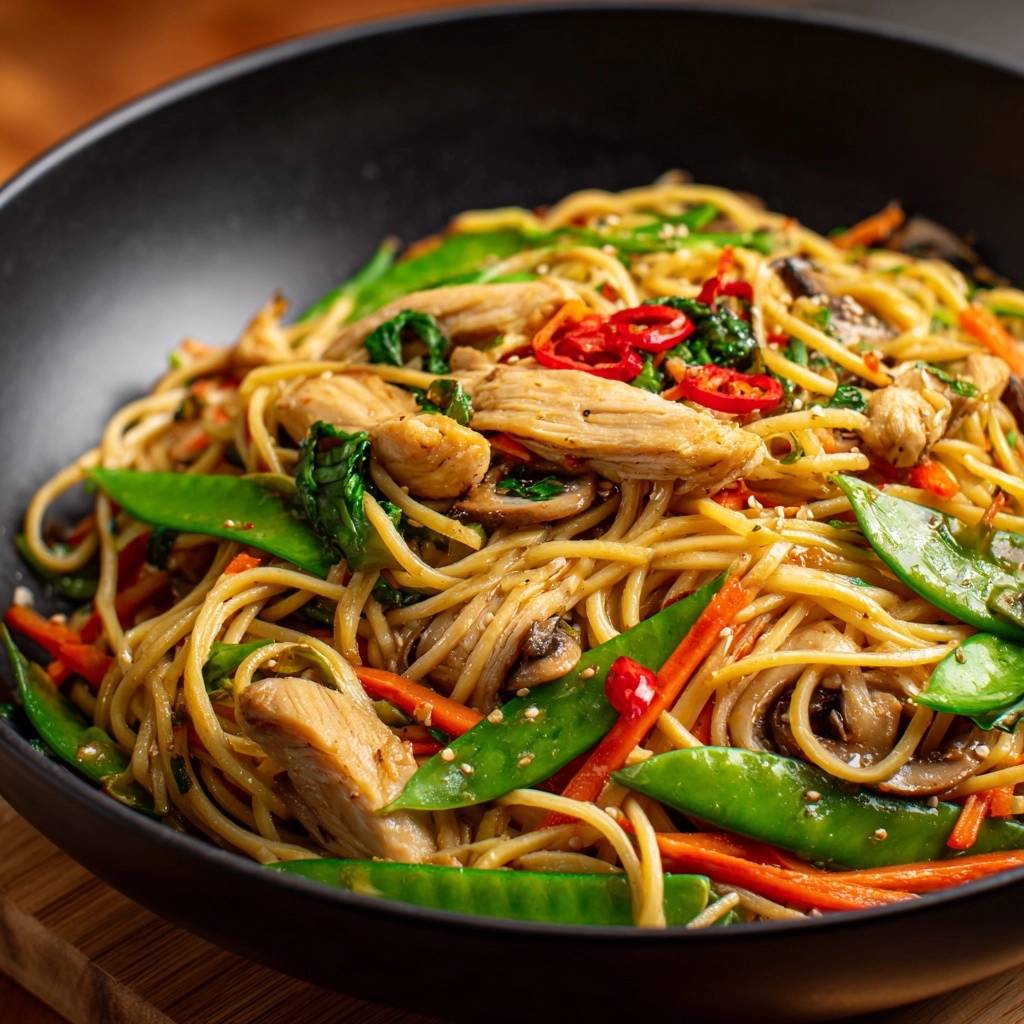
We have all been there: you try to make a quick stir-fry at home and end up with a clump of soft, overcooked pasta that sticks to the pan. It is incredibly frustrating when you crave that bouncy, slippery texture from your favorite takeout spot but get a gummy mess instead. The secret to restaurant-quality lo mein is not a hidden ingredient, but rather a specific focus on noodle prep and high-heat searing.
By slightly under-boiling your noodles and using a strategic oil-tossing technique before they ever hit the wok, you ensure every strand stays firm and distinct. This creates a beautiful contrast between the tender chicken, the snap of the vegetables, and the glossy sauce. You want a dish that stands tall on the plate rather than slumping into a soggy pile.
For a perfect pairing, try our Easy Chicken Lo Mein: The Secret to Silky, Flavorful Strands.
The real trick lies in the “oil barrier” method. After rinsing your par-boiled noodles in cold water to stop the cooking process, you must toss them in a small amount of vegetable oil. This coating prevents the starches from bonding together, allowing the noodles to slide past each other in the hot pan while they soak up the savory sauce. It is the single most important step for achieving that perfect mouthfeel.
The Anatomy of a Perfect Chicken and Vegetable Lo Mein
A great lo mein is a study in balance. You are looking for a deep umami base from the soy and oyster sauces, a hint of sweetness from brown sugar, and a gentle warmth from fresh ginger. The texture is just as important as the taste. Without the right vegetables, the dish feels heavy and one-dimensional.
Snow peas, julienned carrots, and sliced mushrooms are not just there for color. They provide the structural crunch needed to offset the soft noodles. The mushrooms add an earthy depth, while the carrots and snow peas offer a fresh, snappy bite. When you combine these with the heat from sliced red chilies, you get a complex flavor profile that hits every part of your palate.
Essential Components for the Savory Stir-Fry Sauce
The sauce is the soul of this dish, and it relies on a specific combination of ingredients to get that dark, glossy finish. Dark soy sauce is the key for that deep golden color you see in professional kitchens. While regular soy sauce provides the salt, dark soy sauce is thicker, less salty, and carries a hint of molasses-like sweetness that coats the noodles beautifully.
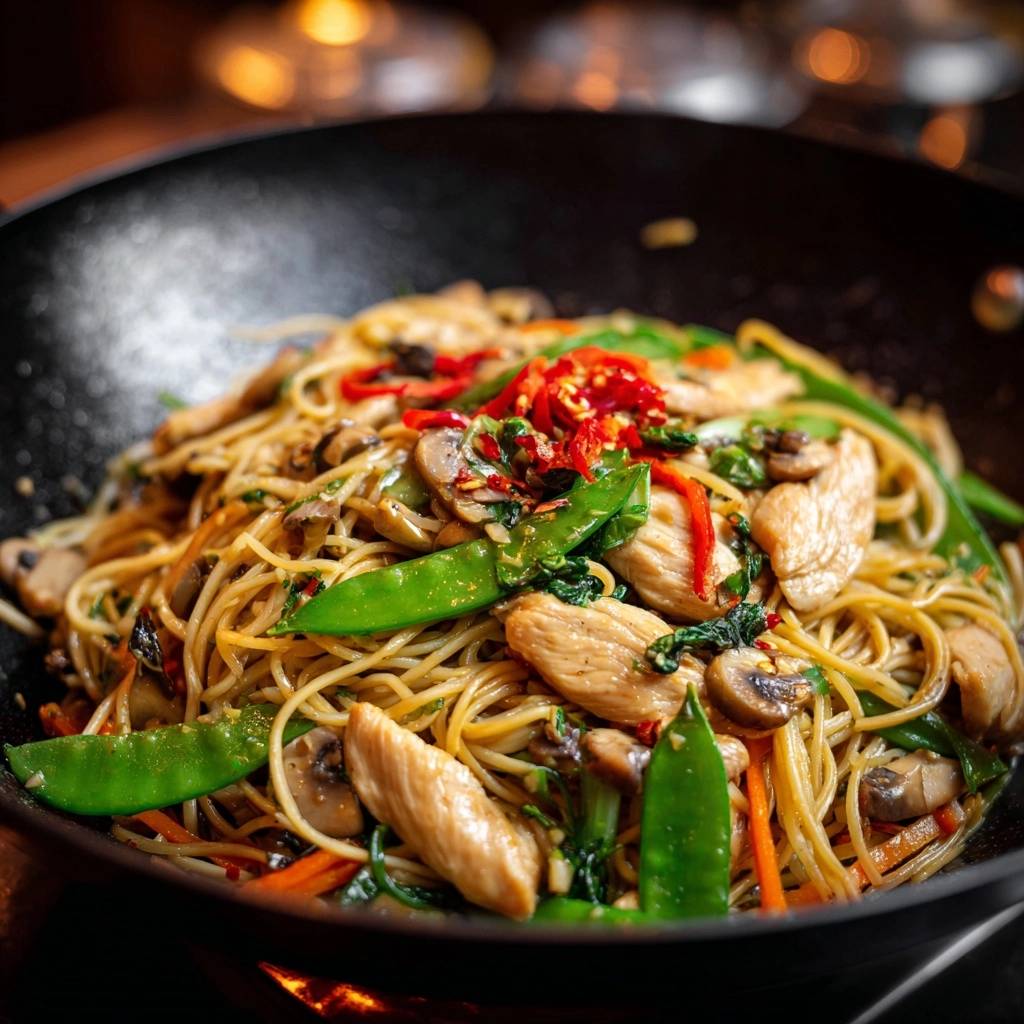
Oyster sauce acts as your secret weapon for viscosity. It adds a rich, savory thickness that helps the sauce cling to the chicken and vegetables rather than pooling at the bottom of the wok. Because we are not using any alcohol, the depth of flavor comes entirely from the toasted sesame oil and the pungent kick of freshly grated ginger and minced garlic. The brown sugar balances the sharp bite of the ginger, creating a smooth, rounded finish.
Choosing the Right Noodle: Lo Mein vs. Spaghetti
Traditional lo mein noodles are made with wheat and egg, giving them a yellow hue and a sturdy chew. If you cannot find fresh lo mein noodles in the refrigerated section, thick spaghetti is a surprisingly good substitute. However, spaghetti has a higher starch content, so you must be extra diligent about rinsing it in cold water.
Look for noodles that feel heavy and dense. Avoid very thin varieties like angel hair, as they will disintegrate under the high heat of a stir-fry. You need a noodle that can withstand being tossed vigorously with tongs without snapping or turning into mush.
Vegetable Selection for Maximum Crunch
Uniformity is your best friend when it comes to vegetable prep. Cutting your carrots into thin julienne strips ensures they cook at the same rate as the snow peas. If the pieces are too thick, they will stay raw while your other ingredients overcook.
Fresh spinach is added at the very last second for a reason. It wilts almost instantly upon contact with heat. By tossing it in right before the noodles, you preserve its vibrant green color and prevent it from releasing too much moisture, which would turn your stir-fry into a watery slurry.
The Science of Preventing Mushy Lo Mein Noodles
Preventing mushy noodles is all about controlling starch and temperature. When you boil noodles, they release starch into the water. If you drain them and let them sit while they are still hot, that residual heat continues to cook the interior, while the surface starch becomes sticky like glue.
The par-boiling method solves this. By cooking the noodles for exactly two minutes less than the package suggests, you leave the center slightly firm. Rinsing them under cold running water immediately after draining washes away the excess surface starch and drops the temperature instantly. This “shocks” the noodle, locking in its shape.
The final step is the oil barrier. Tossing the cold, dry noodles in a teaspoon of vegetable oil creates a microscopic film. When these noodles hit the hot wok, the oil prevents them from sticking to the pan or each other. This allows the sauce to glaze the outside of the noodle rather than being absorbed into a gummy exterior.
Step-by-Step: Preparing the Chicken and Vegetable Lo Mein
Cooking a stir-fry is a fast-paced process that requires your full attention. Once the heat is on, things move quickly. You want to hear a constant sizzle in the pan; if the sound dies down, your pan is losing heat and your food will start to steam instead of sear.
Phase 1: The High-Heat Chicken Sear
Start by getting your wok or large skillet incredibly hot. When the oil is shimmering and almost smoking, add your chicken strips in a single layer. Resist the urge to stir them immediately. Letting them sit undisturbed for about 60 seconds allows a golden-brown crust to form.
This crust adds a savory depth that you simply cannot get from boiling or steaming. Once the chicken is opaque and has a nice sear, remove it from the pan. If you leave it in while you cook the vegetables, the chicken will become tough and rubbery. Set it aside and let it rest while the veggies take center stage.
Phase 2: Flash-Frying the Aromatics and Vegetables
Add a bit more oil to the pan and toss in the carrots, mushrooms, and snow peas. You are looking for “Wok Hei,” or the breath of the wok. This happens when the high heat slightly chars the edges of the vegetables while keeping the centers snappy and bright. Keep the ingredients moving constantly with a spatula.
After about two minutes, add the spinach and red chili rings. The chilies will release their oils into the pan, flavoring the vegetables with a gentle heat. As soon as the spinach begins to wilt and turn dark green, you are ready for the final assembly.
Phase 3: The Final Toss and Sauce Reduction
Return the chicken and the prepped noodles to the pan and pour your sauce over everything. Use tongs to lift and drop the noodles repeatedly. This vigorous motion ensures every strand is coated and helps the sauce reduce and thicken into a glossy glaze.
You will see the noodles transform from pale to a rich, dark mahogany. The sauce should cling to the ingredients, leaving the bottom of the pan relatively dry. As soon as the dish is steaming and the noodles are heated through, kill the heat. Garnish with sesame seeds and serve it immediately while the textures are at their peak.
Troubleshooting Common Stir-Fry Hurdles
If your pan starts to pool with liquid, your heat is too low or you have overcrowded the pan. If this happens, remove the ingredients, boil off the liquid until it thickens, and then toss everything back in quickly. To avoid this next time, cook in smaller batches if your stove isn’t powerful enough.
If your sauce is too thin and won’t stick to the noodles, it likely needs another 30 seconds of high heat to reduce. However, be careful not to over-handle the noodles during this time. If you stir too aggressively with a spoon instead of tossing with tongs, you might break the long strands, ruining the classic lo mein look.
Flavor Variations and Protein Substitutions
This recipe is incredibly versatile. If you want to swap the chicken, thinly sliced beef or firm tofu cubes work beautifully. For tofu, make sure to press it dry first so it sears properly. If you are using beef, slice it against the grain to ensure it stays tender during the quick fry.
You can also play with the vegetable mix. Baby corn, bok choy, or bell peppers are great additions. Just remember the rule of thumb: harder vegetables go in first, and leafy greens go in last. This keeps the textures varied and prevents the dish from becoming a uniform mush.
Expert Tips for Restaurant-Quality Results
Mise en place is non-negotiable for stir-frying. Because the actual cooking takes less than 10 minutes, you cannot be chopping carrots while the chicken is in the pan. Have every ingredient measured and ready in small bowls next to your stove.
Using fresh ginger and garlic makes a massive difference compared to the jarred versions. Fresh ginger has a spicy, citrusy zing that cuts through the saltiness of the soy sauce. To save time, you can grate the ginger with a microplane instead of mincing it with a knife.
Finally, always toast your sesame seeds. Even if they come pre-toasted in the jar, a quick 30 seconds in a dry pan before you start cooking will wake up their natural oils and provide a much stronger nutty aroma to the finished dish.
Frequently Asked Questions
Can I use dried noodles instead of fresh?
Yes, you can use dried wheat noodles or even thick spaghetti. The main difference is the cooking time. Dried noodles often take longer to reach the al dente stage, so check them frequently. Regardless of the type, always aim to undercook them by two minutes before the final toss in the wok.
How do I store and reheat leftovers without losing texture?
Store leftovers in an airtight container in the fridge for up to three days. To reheat, avoid the microwave if possible, as it can make the noodles rubbery. Instead, toss them in a hot skillet with a tablespoon of water or a splash of soy sauce for two minutes to loosen the sauce and revive the texture.
Is there a substitute for Oyster Sauce?
If you cannot find oyster sauce or prefer an alternative, a vegetarian mushroom-based stir-fry sauce is the best substitute. It provides the same thick consistency and deep umami flavor. You can also use a mixture of extra soy sauce and a teaspoon of hoisin sauce, though the flavor will be slightly sweeter.
Why is my chicken dry even with the sauce?
Dry chicken is usually the result of overcooking or slicing the meat too thick. Ensure you slice the chicken into very thin, bite-sized strips against the grain. Searing it quickly over high heat and removing it while you cook the vegetables is the best way to keep the moisture locked inside.
Can I make this dish spicy?
The red chili rings in this recipe provide a medium heat. If you want it spicier, leave the seeds in the chilies or add a teaspoon of red pepper flakes to the sauce. You can also finish the dish with a drizzle of chili oil for an extra kick that doesn’t upset the salt balance of the soy sauce.
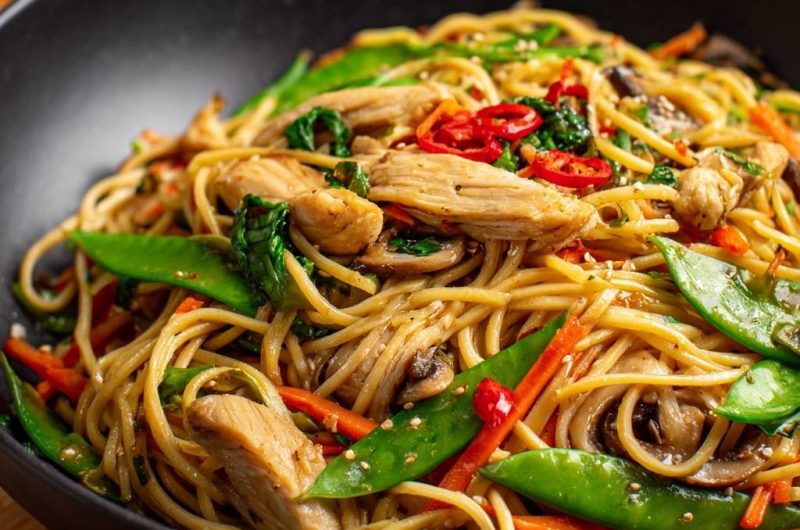
Chicken Lo Mein
Course: Main CourseCuisine: AsianDifficulty: easy4
servings15
minutes10
minutes420
kcal25
MinutesA delicious stir-fry featuring tender chicken, crisp vegetables, and perfectly textured noodles coated in a savory ginger and garlic sauce.
Ingredients
12 ounces lo mein noodles or thick spaghetti
1 pound chicken breast, thinly sliced into bite-sized strips
2 cups snow peas, trimmed
1 cup carrots, julienned
1 cup sliced mushrooms
2 cups fresh spinach
2 red chili peppers, sliced into rings
3 tablespoons soy sauce
1 tablespoon dark soy sauce (for the deep golden color shown)
1 tablespoon oyster sauce
1 teaspoon toasted sesame oil
1 tablespoon brown sugar
1 tablespoon freshly grated ginger
2 cloves garlic, minced
3 tablespoons vegetable oil, divided
1 tablespoon toasted sesame seeds
Directions
- Boil a large pot of water. Cook the noodles for exactly 2 minutes less than the package directions specify. They should be “al dente” or firm to the bite.
- Drain the noodles immediately and rinse under cold running water to remove excess starch and stop the cooking process. This is the critical step to prevent mushiness. Drain thoroughly and toss the cold noodles with 1 teaspoon of vegetable oil to create a barrier that prevents sticking.
- In a small bowl, whisk together the soy sauce, dark soy sauce, oyster sauce, sesame oil, brown sugar, ginger, and garlic until the sugar dissolves.
- Heat 1 tablespoon of vegetable oil in a large wok or skillet over high heat until it is shimmering. Add the chicken slices in a single layer. Let them sear undisturbed for 1 minute to get a golden crust, then stir-fry until cooked through. Remove chicken from the pan and set aside.
- Add the remaining 2 tablespoons of oil to the hot pan. Toss in the carrots, mushrooms, and snow peas. Stir-fry for 2 minutes over high heat. The high heat ensures the vegetables stay crisp-tender and vibrant rather than steaming.
- Add the spinach and sliced red chilies, tossing for 30 seconds just until the spinach begins to wilt.
- Return the chicken and the prepped noodles to the pan. Pour the sauce over the mixture.
- Using tongs or a spatula, lift and toss the noodles vigorously over high heat for 2 minutes. This “flash-frying” allows the noodles to absorb the sauce and develop a glossy finish while maintaining their structural integrity.
- Garnish with toasted sesame seeds and serve immediately while the texture is at its peak.
Notes
- The secret to preventing mushy noodles is under-boiling them by 2 minutes and rinsing with cold water to stop the cooking process before stir-frying.