Mastering the Creamy Roasted Mushroom Soup: A Guide to Deep Umami and Perfect Texture
Most homemade mushroom soups fall into a disappointing trap. You expect a rich, earthy bowl of comfort, but you end up with something grey, watery, and filled with rubbery, slimy mushroom bits. It’s a common frustration that usually stems from how the mushrooms interact with heat and moisture in the pot.
The secret to a professional-grade soup isn’t a hidden ingredient; it’s a fundamental shift in technique. By focusing on a high-heat sear before any liquid touches the pan, you transform the fungi from spongy to meaty. This process locks in a concentrated umami flavor that defines a truly great velouté.
I’ve found that the absolute key to success is the “no-salt” rule during the initial sear. Salt draws out moisture immediately, which causes the mushrooms to steam in their own juices rather than brown. If you wait to season until after they’ve developed a dark, caramelized crust, you’ll achieve a depth of flavor that rivals any high-end bistro.
The Science of Moisture: Why Most Mushroom Soups Fail
Mushrooms are biological sponges, consisting of roughly 80% to 90% water. When you toss them into a lukewarm pan or crowd them too closely, that water escapes and pools at the bottom. Instead of browning, the mushrooms essentially boil, leading to that dreaded “slimy” texture that ruins the mouthfeel of the dish.
To get a rich result, you need to trigger the Maillard reaction. This is the chemical reaction between amino acids and reducing sugars that gives browned food its distinctive, savory flavor. However, this reaction cannot happen in the presence of excess steam. You must evaporate the surface moisture quickly so the temperature can rise high enough to create that golden-brown crust.
Furthermore, the cellular structure of mushrooms contains chitin, a sturdy polymer also found in the shells of crustaceans. This makes them incredibly resilient to heat. Unlike beef, which can get tough if seared too long, mushrooms can handle intense heat. This allows you to push the browning process further than you might think, resulting in a complex, mahogany-colored base for your soup.
Essential Components for a Rich Creamy Roasted Mushroom Soup
Quality ingredients are the backbone of this recipe. While white button mushrooms are accessible, I always recommend Cremini or Baby Bella mushrooms. They are essentially younger versions of Portobellos and carry a much more robust, earthy flavor profile that holds up against the heavy cream and broth.
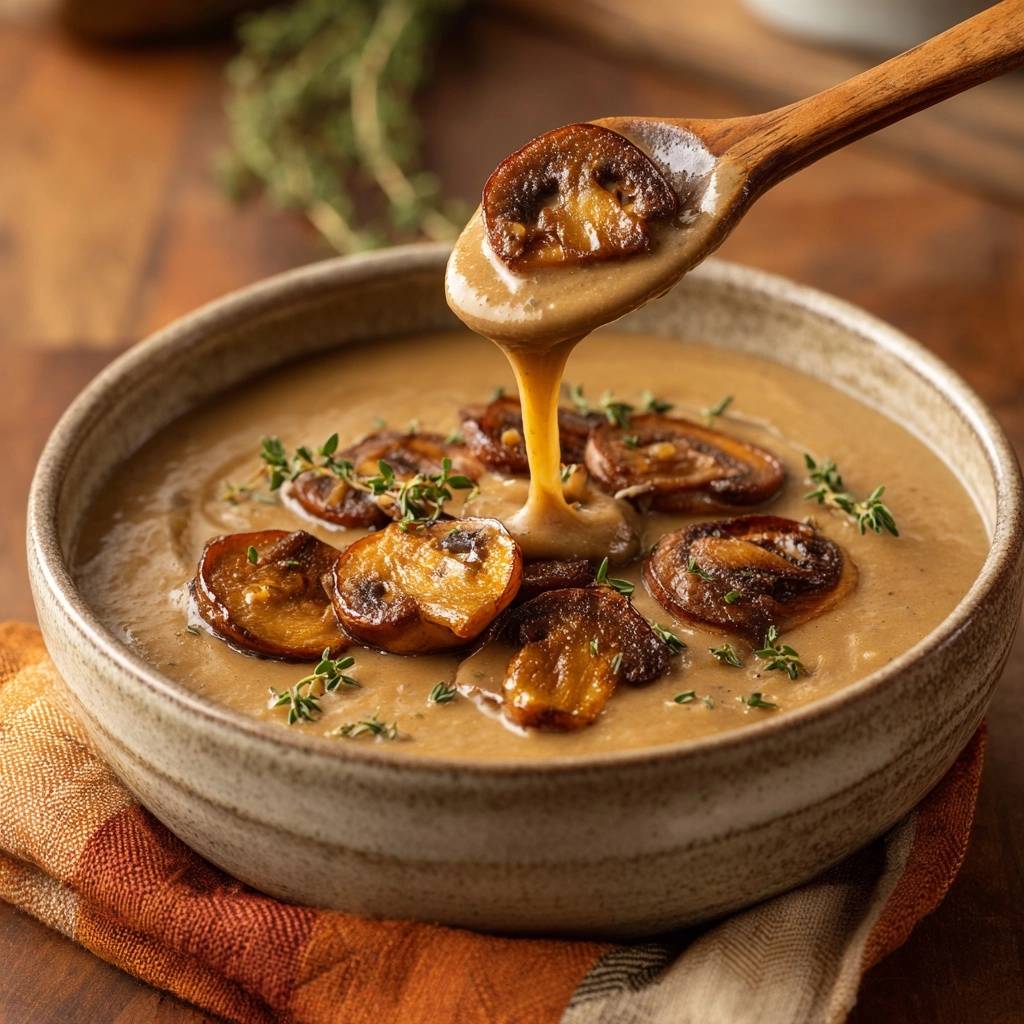
The choice of liquid is equally vital for the final aesthetic. Using a high-quality beef broth or a dark mushroom stock provides the deep, chocolatey hue you see in professional photography. If you use a light chicken or vegetable stock, the soup will lean toward a paler, tan color, which doesn’t always look as appetizing.
Finally, don’t skimp on the fat. Heavy cream provides the necessary viscosity and mouthfeel to coat the back of a spoon. While milk might seem like a lighter alternative, it lacks the stability to emulsify properly with the roux, often resulting in a thinner, less satisfying consistency.
Selecting and Prepping Your Fungi
When prepping your mushrooms, avoid soaking them in water. Because they are porous, they will absorb the liquid like a sponge, making a crisp sear impossible. Instead, use a damp paper towel or a soft brush to wipe away any lingering dirt or peat moss.
Consistency in slicing is your best friend here. Aim for a 1/4 inch thickness for every slice. If they are too thin, they’ll vanish into the broth; if they’re too thick, they won’t caramelize evenly. This “sweet spot” ensures they remain firm enough to provide a meaty bite after simmering.
The Role of Aromatics and Herbs
Yellow onions and garlic provide the aromatic foundation that supports the mushrooms. Yellow onions are preferred over white or red because their higher sugar content helps them caramelize beautifully alongside the butter. This adds a subtle sweetness that balances the salty broth.
Fresh thyme is a non-negotiable partner for mushrooms. The woody, lemony fragrance of fresh sprigs is far superior to the dusty flavor of dried thyme. When you sauté the fresh leaves in butter, the essential oils bloom, infusing the entire fat base with an herbal backbone that cuts through the richness of the cream.
Step-by-Step: Achieving the Perfect Dry Sear
This is the most critical phase of the entire recipe. Start by heating your olive oil in a heavy-bottomed pot until it’s shimmering and just starting to wisps of smoke. Add your mushrooms, but do it in batches. If the bottom of the pot is completely covered, the moisture won’t have room to evaporate, and you’ll end up steaming them.
Once the mushrooms hit the pan, resist the urge to stir. This is the “no-touch” rule. Let them sit undisturbed for at least 4 to 5 minutes. You want to hear a vigorous sizzle. When you finally flip them, you should see deep golden edges and a firm, shrunken center. This concentrated “mushroom steak” texture is what prevents the soup from feeling slimy later on.
Repeat this process with the remaining batches, adding a tiny bit more oil if the pan looks bone-dry. By the end, the bottom of your pot should be covered in a dark, sticky glaze. Don’t worry—that isn’t burnt; it’s pure flavor gold that we will unlock in the next step.
Deglazing and Building the Flavor Base
That dark glaze on the bottom of the pot is called “fond.” Once you add the butter and onions, the moisture from the onions will begin to loosen those flavorful bits. Use a wooden spoon to scrape the bottom vigorously as the onions soften. This incorporates all that roasted mushroom essence directly into the aromatics.
After the onions are translucent, stir in your flour. You’re creating a roux here, which is the thickening engine of the soup. Cook the flour for at least two minutes. You want it to smell slightly nutty. This step is vital because it cooks out the “raw” flour taste, ensuring your final soup is velvety rather than pasty.
Simmering and Developing the Broth
When it’s time to add the broth, do it slowly. Start with just half a cup, whisking constantly until a thick paste forms. Gradually add the rest of the liquid while continuing to whisk. This slow-pour technique prevents lumps from forming and ensures a perfectly smooth emulsion.
Keep the heat at a gentle simmer. A violent, rolling boil can cause the proteins in the mushrooms to toughen and may even break the roux-based emulsion. A slow bubble allows the flavors of the thyme, garlic, and Worcestershire sauce to penetrate the mushrooms while the broth reduces and thickens naturally.
Refining the Texture: The Partial-Blend Technique
Texture is where most home cooks struggle. If you leave the soup entirely chunky, it feels like a thin broth with vegetables. If you puree the whole thing, it can feel a bit like baby food. The professional secret is the “70/30” rule. You want to blend enough of the soup to create a thick, creamy body while leaving plenty of whole pieces for a “meaty” bite.
If you have an immersion blender, stick it directly into the pot and pulse a few times in different spots. If you’re using a traditional stand blender, only transfer about half of the soup. Be extremely careful with hot liquids in a closed blender; remove the center plastic piece of the lid and cover it with a folded kitchen towel to allow steam to escape safely.
The same immersion blender trick works perfectly for this creamy roasted squash soup, too.
Once blended, stir the creamy portion back into the chunky portion. You’ll immediately notice the soup takes on a luxurious, opaque appearance. This method gives you the best of both worlds: a velvety mouthfeel and a satisfying, rustic texture.
Troubleshooting Common Mushroom Soup Issues
If your soup tastes a bit flat or overly salty, don’t panic. A splash of acidity, like a teaspoon of lemon juice or balsamic vinegar, can brighten the flavors and balance the saltiness. Acidity acts as a foil to the heavy fats in the cream and butter, making the mushroom flavor “pop.”
If the soup looks too thin after simmering, you can easily thicken it. Mix a tablespoon of cornstarch with two tablespoons of cold water to create a slurry. Whisk this into the simmering soup and let it cook for another two minutes. It will clear up and thicken the broth without adding a floury taste.
In the rare event that your cream curdles or “breaks,” it’s usually because the soup was too hot when the cream was added. To fix this, you can try whisking in a small amount of warm broth or using the immersion blender to re-emulsify the fats. Next time, lower the heat to a bare simmer before stirring in the heavy cream.
Flavor Variations and Dietary Swaps
While this recipe is a classic, you can easily adapt it. For a sophisticated twist, add a tablespoon of apple juice or balsamic glaze at the very end. The fermented notes of the vinegar or fortified juice complement the earthiness of the mushrooms beautifully.
If you need a dairy-free version, swap the butter for a high-quality vegan butter or more olive oil. For the cream, full-fat coconut milk works, though it adds a slight tropical hint. A better option is cashew cream, made by blending soaked cashews with a bit of water until perfectly smooth. It provides the same fatty richness as heavy cream without the dairy.
For a gluten-free version, replace the all-purpose flour with a 1-to-1 gluten-free baking blend. Alternatively, you can skip the roux entirely and thicken the soup by blending a larger portion of the mushrooms and adding a potato to the simmer, which releases natural starches into the broth.
What to Serve with Creamy Roasted Mushroom Soup
Because this soup is incredibly rich and savory, you want sides that offer contrast. A thick slice of toasted sourdough bread is the classic choice. The tanginess of the bread and the crunchy crust are perfect for mopping up the last bits of creamy broth from the bowl.
A crisp arugula salad with a simple lemon and olive oil vinaigrette is another excellent pairing. The peppery bite of the arugula and the sharp acidity of the lemon cut right through the heavy cream, refreshing your palate between spoonfuls of soup.
If you want a heartier meal, consider serving this alongside roasted root vegetables or a simple grilled cheese sandwich made with sharp white cheddar. The sharpness of the cheese complements the deep umami of the mushrooms without overwhelming the delicate herbal notes of the thyme.
Make Ahead, Storage, and Reheating Instructions
Mushroom soup is one of those rare dishes that actually tastes better the next day. As it sits in the fridge, the mushrooms continue to release their savory compounds into the broth, deepening the overall flavor. It will stay fresh in an airtight container for up to three days.
When reheating, avoid the microwave if possible. The uneven heating can cause the cream to separate or the mushrooms to become rubbery. Instead, pour the soup into a small saucepan and heat it over low-medium heat on the stovetop. Stir frequently to keep the emulsion smooth.
If the soup has thickened too much in the fridge, simply whisk in a splash of broth or water during the reheating process. This will loosen the consistency back to its original velvety state without diluting the flavor too much.
Expert Tips for Professional Presentation
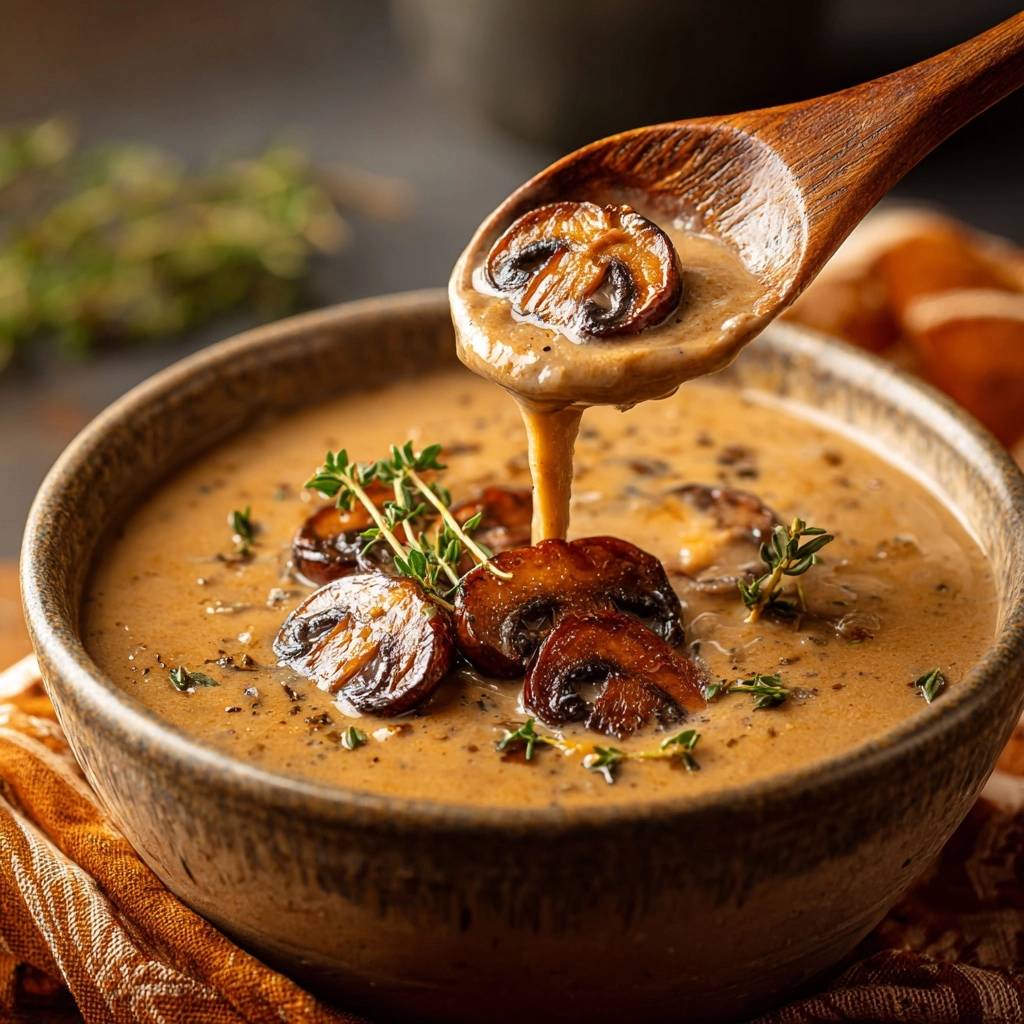
Presentation is what separates a home-cooked meal from a restaurant experience. Remember those reserved seared mushrooms from the beginning? Place three or four of them right in the center of the bowl just before serving. Because they weren’t simmered, they stay firm and look beautiful against the creamy base.
Add a final “swirl” of heavy cream or a drizzle of high-quality olive oil over the top for visual contrast. A generous crack of fresh black pepper adds a spicy bite and a professional look. Finally, garnish with a small sprig of fresh thyme to hint at the flavors hidden inside the soup.
Using wide, shallow bowls rather than deep mugs also helps. It allows the garnishes to sit on the surface rather than sinking to the bottom. This ensures that every person gets a visual and textural treat with their very first spoonful.
Frequently Asked Questions
Can I use dried mushrooms in this recipe?
Yes, you can use dried mushrooms like porcini or shiitake to add even more depth. Rehydrate them in warm water for 20 minutes, then squeeze them dry and chop them up. Use the soaking liquid (strained through a coffee filter) as part of your broth measurement for an incredible flavor boost. However, you still need fresh mushrooms for the main body of the soup to get the right texture.
Why is my soup grey instead of rich brown?
Grey soup usually happens for two reasons: the mushrooms were steamed instead of seared, or the broth used was too light. To get that rich brown color, ensure you get a dark crust on the mushrooms during the first step. Also, using beef broth and a dash of Worcestershire sauce provides the dark pigments necessary for a mahogany finish.
Is it possible to overcook the mushrooms?
It is actually very difficult to overcook mushrooms. Unlike meat, which has proteins that tighten and squeeze out moisture, mushrooms contain chitin. This structure is heat-stable, meaning they stay tender and “meaty” even after long simmering times. This makes them the perfect ingredient for soups and stews.
How do I store leftovers without losing the texture?
Store the soup in an airtight glass container in the refrigerator for up to 3 days. While you can freeze this soup, cream-based liquids sometimes separate when thawed. If you do freeze it, thaw it in the fridge overnight and whisk it vigorously while reheating on the stovetop to bring the creamy texture back together.
Mushroom Soup
Course: Soups and StewsCuisine: AmericanDifficulty: medium4
servings15
minutes35
minutes310
kcal50
MinutesA professional-grade mushroom soup that eliminates rubbery textures by using a dry-sear technique. This soup features caramelized Cremini mushrooms, fresh thyme, and a thick, creamy base finished with heavy cream.
Ingredients
1.5 pounds Cremini or Baby Bella mushrooms, sliced 1/4 inch thick
4 tablespoons unsalted butter
1 large yellow onion, finely diced
4 cloves garlic, minced
1 tablespoon fresh thyme leaves (plus extra for garnish)
3 tablespoons all-purpose flour
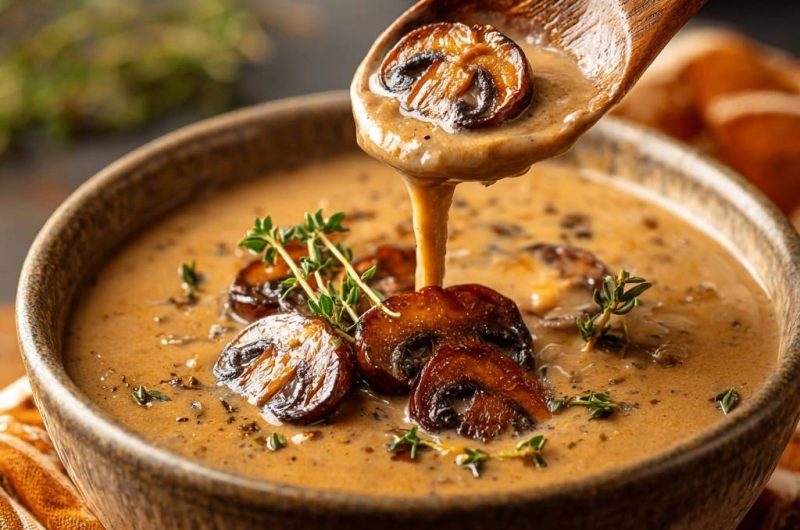
3 cups beef or mushroom broth (for a deeper color matching the image)
1 cup heavy cream
1 tablespoon Worcestershire sauce
1 teaspoon sea salt
1/2 teaspoon cracked black pepper
2 tablespoons olive oil
Directions
- The key to avoiding slime is the dry sear. Heat olive oil in a large heavy-bottomed pot or Dutch oven over medium-high heat. Add the mushrooms in batches to avoid crowding. Do not salt them yet. Let them sit undisturbed for 4 to 5 minutes until deep golden brown and caramelized. Flip and sear the other side.
- Remove about 1/2 cup of the most perfectly browned mushroom slices and set them aside on a paper towel to remain firm for garnish.
- Lower the heat to medium and add the butter and diced onions to the pot. Cook for 5-7 minutes, scraping the bottom of the pot to incorporate the brown mushroom bits (fond), until onions are soft and golden.
- Stir in the garlic and thyme, cooking for 1 minute until fragrant.
- Sprinkle the flour over the mixture and stir constantly for 2 minutes. This creates a roux that ensures a thick, velvety consistency rather than a watery broth.
- Slowly pour in the broth and Worcestershire sauce while whisking constantly to prevent lumps. Bring to a gentle simmer and cook for 10-12 minutes.
- For the professional texture shown in the image, use an immersion blender to blend roughly 70% of the soup. This creates a thick, creamy base while leaving some visible mushroom pieces for texture.
- Stir in the heavy cream, salt, and pepper. Simmer for another 5 minutes until the soup is thick enough to heavily coat the back of a spoon.
- Ladle into bowls. Top each serving with the reserved seared mushrooms, a generous crack of black pepper, and fresh thyme sprigs to match the visual presentation.
Notes
- The secret to avoiding slime is the dry sear; do not salt the mushrooms until they are browned. Use an immersion blender to blend 70 percent of the soup for the perfect balance of creaminess and texture.