Mastering the Roasted Spiced Cauliflower Salad
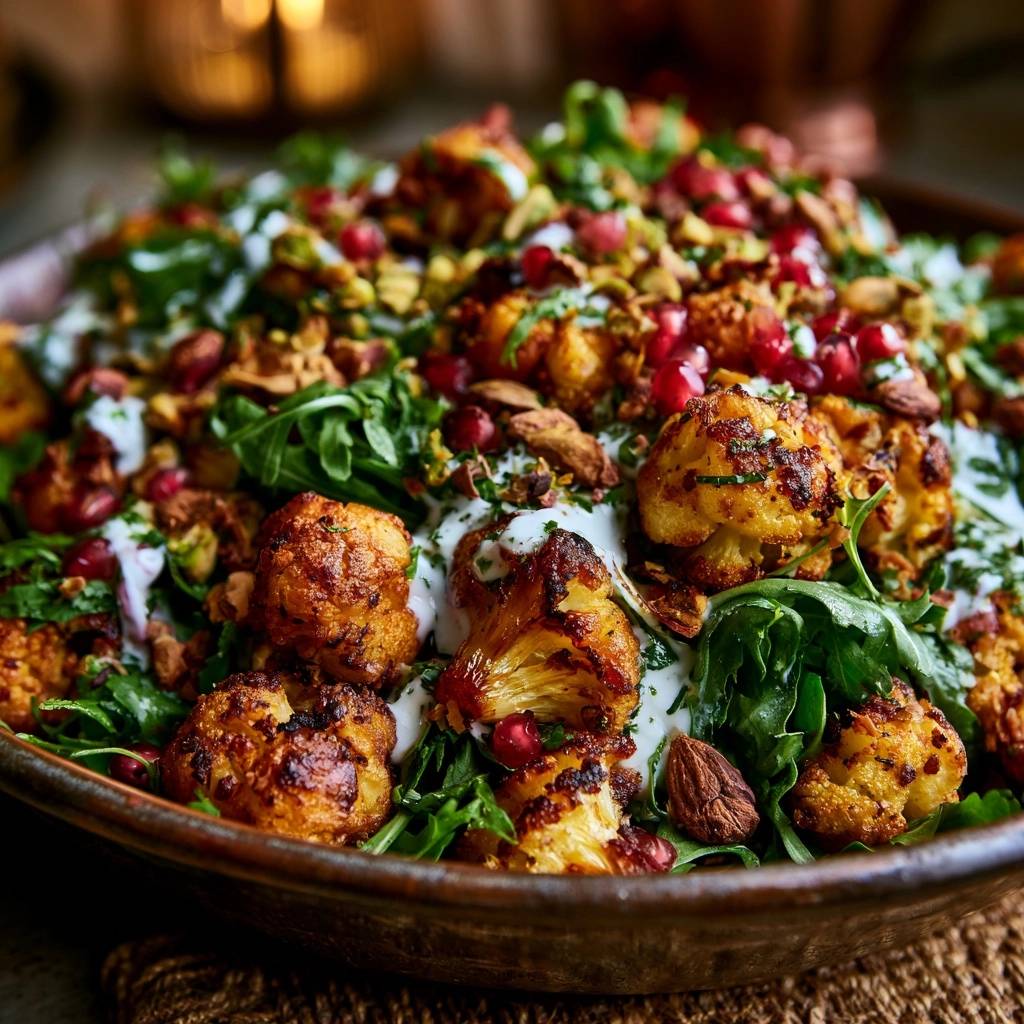
Forget everything you know about bland, mushy cauliflower that sits sadly on the side of a plate. When you treat this versatile vegetable with the respect it deserves, it transforms into a caramelized masterpiece that rivals any steak. This Roasted Spiced Cauliflower Salad isn’t just a side dish; it’s a vibrant, textured experience that hits every single taste bud with precision.
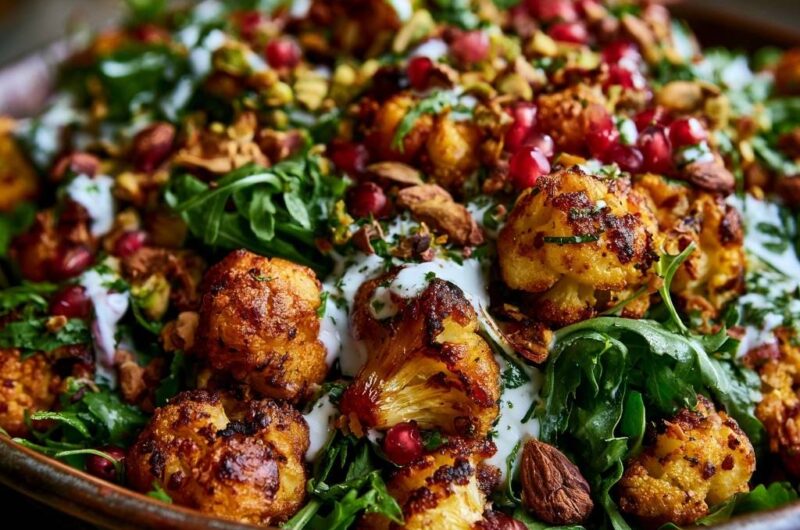
The beauty of this dish lies in the dramatic contrast between the warm, charred florets and the cool, velvety yogurt dressing. You get the earthy hum of cumin and turmeric, the sweet pop of pomegranate, and the sophisticated crunch of toasted pistachios. It’s a dish that feels indulgent and light all at once, making it the perfect centerpiece for a modern lunch or a standout dinner.
The secret to success here is moisture management. Most people fail because they wash the cauliflower and toss it straight into the oven while it’s still damp, which leads to steaming. I’ve found that thoroughly drying your florets with a clean kitchen towel before adding the oil is the only way to ensure that coveted, crispy exterior. If there’s water on the surface, you’ll never get that deep, golden-brown crust we’re after.
The Physics of Perfect Cauliflower Texture
Achieving the perfect roast is actually a matter of science, specifically the Maillard reaction. This is the chemical process where heat transforms sugars and proteins into those delicious brown, savory bits. To trigger this at home, you need a high-heat environment of 425°F, which is hot enough to crisp the outside before the inside turns to mush.
When cauliflower is crowded on a pan, it releases steam that has nowhere to go. That trapped moisture effectively boils the vegetable, resulting in a soft, gray texture that lacks flavor. By giving each floret at least half an inch of “personal space,” you allow the dry air to circulate, evaporating moisture instantly and locking in a firm, tender-crisp bite.
Essential Components for Roasted Spiced Cauliflower Salad
Every ingredient in this salad serves a specific purpose in the flavor architecture. We use smoked paprika because it adds a “grilled” depth that regular sweet paprika just can’t provide. Turmeric isn’t just there for the health benefits; it provides a stunning golden hue and a subtle, musky bitterness that balances the sweet pomegranate seeds.
When you’re at the market, look for a cauliflower head that feels heavy for its size with tightly packed florets. If you see dark spots or “fuzz,” it’s past its prime. Freshness is key because older cauliflower has a higher sulfur content, which can become unpleasantly pungent when roasted at high temperatures.
Selecting and Prepping the Brassica
Cutting the cauliflower is the most important prep step. You want “bite-sized” pieces, but they should be relatively uniform so they finish cooking at the same time. I like to cut the head into quarters first, then slice out the core, which allows the florets to naturally tumble apart into beautiful, tree-like shapes.
Don’t throw away the tiny crumbs and “dust” that accumulate on your cutting board! Toss those bits right in with the larger florets. They roast much faster and turn into salty, spiced “cauliflower sprinkles” that add an incredible layer of micro-crunch to the finished salad.
The Spice Profile: Earthy and Aromatic
The blend of cumin, turmeric, and garlic powder creates a flavor profile that feels warm and inviting. These spices are fat-soluble, meaning they need the olive oil to “bloom” and release their full aromatic potential. The oil acts as a vehicle, carrying the spices into every nook and cranny of the cauliflower’s bumpy surface.
Step-by-Step: Achieving the Perfect Char
Roasting is a hands-off process, but it requires a few strategic moves to get restaurant-quality results. You aren’t just cooking the vegetable; you’re developing a crust that can stand up to a creamy dressing without getting soggy.
Phase 1: The Preheated Sheet Pan Method
I always slide my empty baking sheet into the oven while it’s preheating. When you toss the oiled cauliflower onto a screaming-hot pan, you’ll hear a satisfying sizzle. This immediate contact heat sears the bottom of the florets instantly, preventing them from sticking and starting the browning process the second they hit the metal.
Phase 2: Spacing and Initial Roasting
Once the cauliflower is on the pan, resist the urge to move it around. For the first 15 minutes, let it sit undisturbed. This patience allows a dark, caramelized crust to form on the side touching the pan. If you stir too early, you break that contact and lose the chance for a deep, smoky flavor.
Phase 3: The Final Crisp and Cooling
After the initial sear, give the florets a quick flip. You’re looking for edges that are dark brown—almost black in some spots—and a center that yields easily to a fork. Once they come out, let them rest for just two minutes. This brief pause prevents the residual steam from wilting your fresh arugula the moment you assemble the salad.
Crafting the Creamy Tahini-Yogurt Dressing
The dressing is the bridge that connects the spicy cauliflower to the fresh greens. Greek yogurt provides a tangy, thick base, while tahini adds a luxurious, nutty richness. When you whisk these together with lemon juice, the mixture might look like it’s seizing or thickening up too much at first.
Don’t panic if it looks chunky! Just keep whisking and add a teaspoon of water at a time. You’re looking for the “ribbon stage,” where the dressing falls off the spoon in a smooth, continuous stream. This consistency ensures it coats the cauliflower beautifully without weighing down the delicate arugula leaves.
Assembly: Layering Flavors and Textures
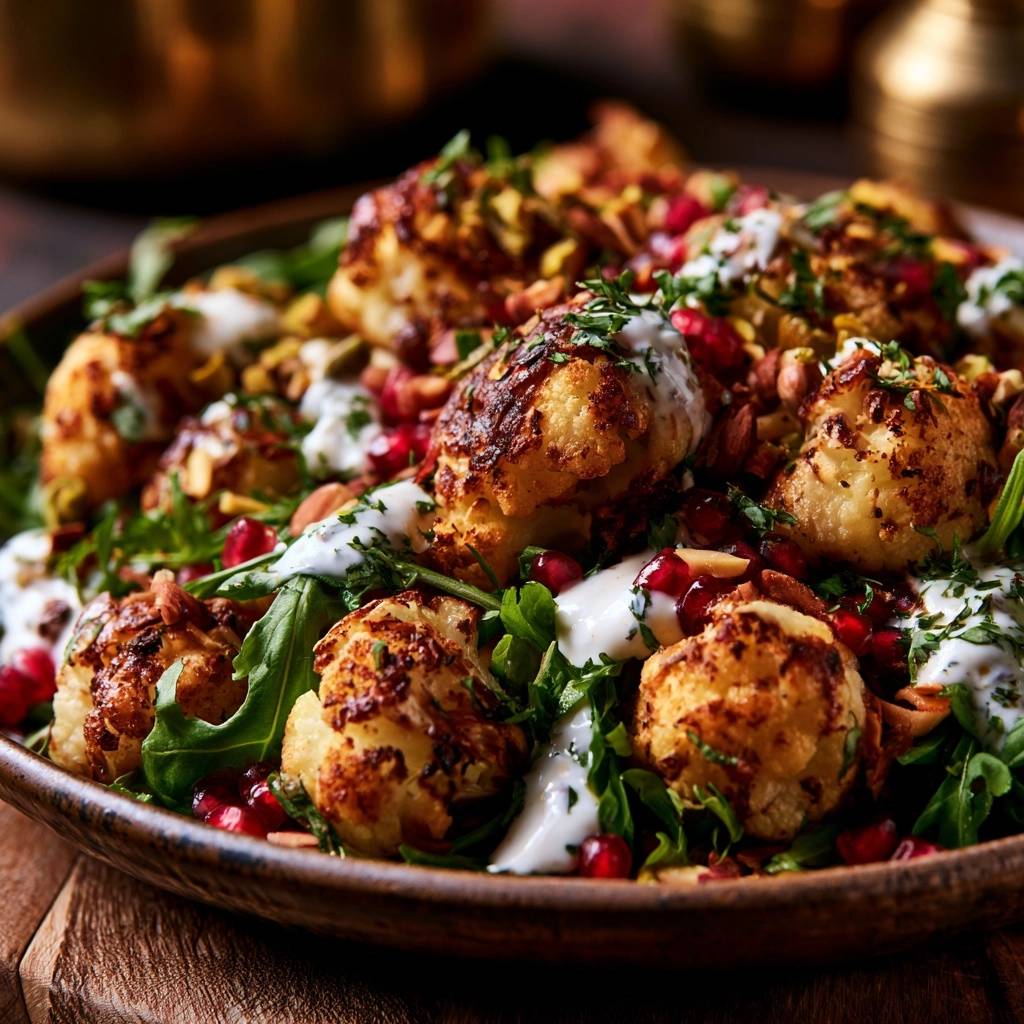
Think of assembly as building layers of experience. Start by lightly tossing your arugula with just a tiny bit of lemon and oil; this ensures the greens aren’t dry. Pile the warm cauliflower on top, then scatter your “jewels.” The pomegranate seeds provide a burst of acid, while the pistachios and whole almonds offer a double-hit of crunch.
The final drizzle of dressing should be generous. Because the cauliflower is still warm, it will slightly soften the dressing, allowing it to seep into the spices. Garnish with the fresh parsley and mint at the very last second to keep their bright, herbal aromas front and center.
Flavor Variations and Ingredient Swaps
This recipe is incredibly flexible based on what you have in your pantry. If you need a nut-free version, toasted sunflower seeds or pumpkin seeds (pepitas) provide a fantastic earthy crunch. For those avoiding dairy, a thick cashew-based yogurt works perfectly as a substitute for the Greek yogurt.
If you want more heat, a pinch of Aleppo pepper or red chili flakes in the spice mix adds a lovely glow. If you find arugula too peppery, baby spinach is a great mild alternative, though you might want to add an extra squeeze of lemon to compensate for the loss of the arugula’s natural bite.
Troubleshooting Common Roasting Issues
If your cauliflower is soft but hasn’t browned, your oven might be running cool, or you’ve used too much oil. Try moving the rack to the top third of the oven for the last five minutes to catch the intense rising heat. This usually fixes the color issue without overcooking the interior.
If you find the spices are burning or tasting bitter, it’s likely they weren’t evenly coated in oil. The oil protects the spices from the direct dry heat of the oven. Make sure every floret looks glossy before it goes on the pan. If the dressing feels grainy, it’s often due to low-quality tahini; a quick blitz in a small blender can smooth it right out.
Optimal Pairings for a Complete Meal
While this salad is a powerhouse on its own, it pairs beautifully with other Mediterranean-inspired flavors. I love serving it alongside some warm, pillowy pita bread and a big scoop of smooth hummus. The bread is perfect for swiping up any leftover tahini dressing at the bottom of the bowl.
For a more substantial meal, you can add some pan-seared halloumi cheese or a side of crispy roasted chickpeas. To drink, something bright and refreshing works best. A sparkling botanical tonic or a cold glass of mint tea with a slice of lemon complements the earthy spices and creamy dressing perfectly.
Make-Ahead Strategies and Storage
This salad is best enjoyed immediately while the cauliflower is at its peak crispness. However, life happens! If you have leftovers, store the cauliflower and dressing in separate airtight containers in the fridge for up to three days. The cauliflower will lose its crunch as it sits, but the flavors will actually deepen and marinate.
To revive the dish the next day, don’t use the microwave—it will make the cauliflower rubbery. Instead, pop the florets into an air fryer or a hot oven for 5 minutes until they sizzle again. Once they’re re-crisped, assemble the salad with fresh greens and cold dressing for a lunch that tastes almost as good as day one.
Expert Tips for Restaurant-Quality Results
Can I use frozen cauliflower for this salad?
I generally don’t recommend frozen cauliflower for roasting if you want that specific “crunch.” Frozen vegetables are blanched before freezing, which breaks down their cell walls. When they thaw in the oven, they release a lot of water, making it nearly impossible to get a true char. Stick to fresh heads for the best texture.
How do I get the pomegranate seeds out without making a mess?
The easiest way is the “water bowl” method. Cut the pomegranate into quarters and submerge them in a large bowl of water. Use your fingers to gently nudge the seeds out. The seeds will sink to the bottom, while the white pith floats to the top. Simply skim off the pith and strain the seeds!
Why does my tahini get thick and lumpy when I add lemon juice?
This is a common reaction called “seizing.” Tahini is a mixture of oil and tiny solids. When you add a small amount of liquid, the solids grab onto the moisture and clump together. The fix is simple: keep adding liquid (lemon juice or water) and whisking vigorously. Eventually, it will smooth out into a beautiful, creamy emulsion.
Can I roast the nuts at the same time as the cauliflower?
It’s tempting to save a dish, but I don’t recommend it. Cauliflower takes 25 minutes at high heat, which is long enough to turn most nuts into bitter, burnt charcoal. It’s much better to toast your pistachios and almonds in a dry pan on the stove for 3-5 minutes where you can keep a close eye on them.
How do I keep the arugula from wilting?
The key is temperature and timing. Never toss the greens with the cauliflower while it’s screaming hot. Let the cauliflower rest for a minute or two so it’s warm but not burning. Also, only dress the greens right before you are ready to eat, as the acid in the lemon juice will eventually break down the delicate leaves.
Roasted Spiced Cauliflower Salad
Course: SaladCuisine: Mediterranean and AmericanDifficulty: easy4
servings15
minutes25
minutes40
Minutes310
kcalMediterranean and American
Ingredients
1 large head cauliflower, cut into bite-sized florets
3 tablespoons olive oil
1 teaspoon smoked paprika
1 teaspoon ground cumin
1/2 teaspoon turmeric
1/2 teaspoon garlic powder
1/2 teaspoon salt
1/4 teaspoon black pepper
4 cups fresh arugula
1/2 cup pomegranate seeds
1/4 cup toasted pistachios, roughly chopped
1/4 cup whole roasted almonds
1/2 cup Greek yogurt
1 tablespoon lemon juice
1 tablespoon tahini (for richness and color)
2 tablespoons fresh parsley, finely chopped
1 tablespoon fresh mint, chopped
Directions
- Preheat your oven to 425°F (220°C). This high temperature is non-negotiable for preventing mushiness. Place a large rimmed baking sheet inside the oven as it heats; a hot pan ensures immediate searing.
- In a large bowl, toss the cauliflower florets with olive oil, paprika, cumin, turmeric, garlic powder, salt, and pepper until every crevice is evenly coated.
- Carefully pull the hot baking sheet from the oven. Immediately spread the cauliflower in a single layer. Ensure there is at least half an inch of space between florets. If they touch, they will steam and become soft.
- Roast for 20 to 25 minutes. Do not toss for the first 15 minutes to allow a deep brown crust to form on the contact side. Flip once and continue roasting until the edges are dark brown and crispy.
- While the cauliflower roasts, whisk together the Greek yogurt, lemon juice, tahini, and a pinch of salt. If the dressing is too thick to drizzle, add a teaspoon of water at a time until it reaches a creamy, pourable consistency.
- In a large shallow bowl, toss the arugula with a tiny drizzle of olive oil and lemon juice to prevent wilting.
- Top the greens with the hot, charred cauliflower.
- Drizzle the yogurt-tahini dressing generously over the florets. Garnish with pomegranate seeds, pistachios, whole almonds, parsley, and mint. Serve immediately to maintain the contrast between the hot, crunchy cauliflower and the cool dressing.
Notes
- To prevent mushiness, ensure the baking sheet is preheated and do not crowd the pan. Space florets at least half an inch apart to ensure they roast rather than steam.